
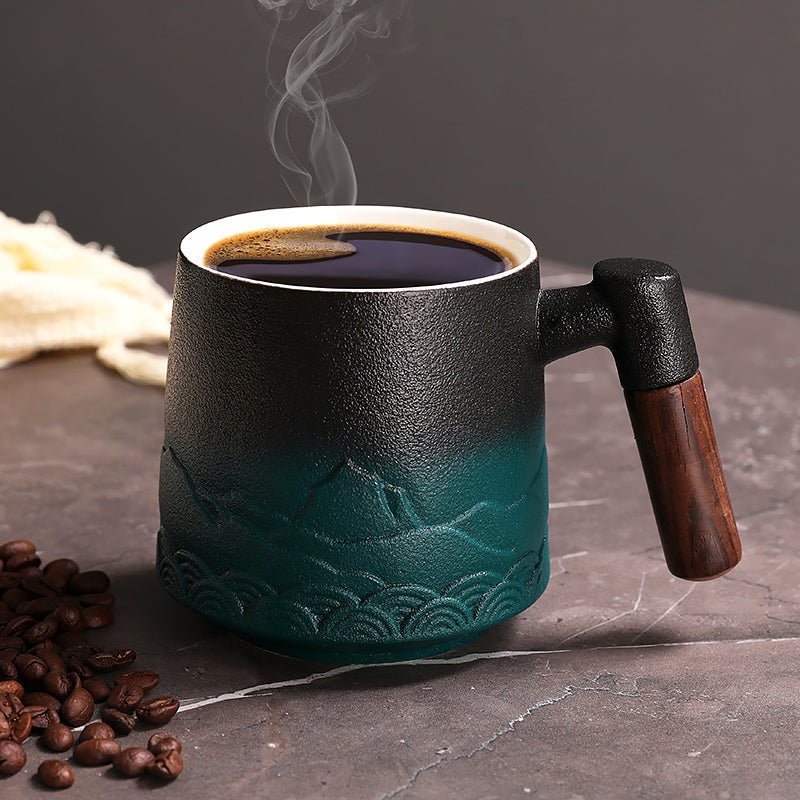
How Many Oz in a Coffee Mug? A Practical Size Guide
Reading time: about 9 minutes
The question shows up fast on a kitchen counter: a mug looks right in the cart, then coffee, milk, and foam enter the picture and the cup suddenly feels smaller than expected. That is why the answer to how many oz in a coffee mug matters more than the label alone.
Most everyday coffee mugs fall in the 8 oz to 12 oz range. Larger mugs often run 14 oz to 16 oz, and oversized cups can go beyond that. In our store, we look at the usable pour, not just the headline number, because real life includes steam, a quick carry to the couch, a desk full of papers, and the occasional overfilled first pour.
A mug that works for black coffee may feel cramped for a latte. A mug that seems generous for tea can be annoying if it takes too long to warm up or does not fit under a brewer. The right size depends on how you drink, how you carry, and how much headspace you want before the rim gets risky.
How many oz is a coffee mug, really?
There is no single standard that every manufacturer follows. A listing may say 12 oz, but the comfortable fill level can be lower once you leave room for splashing, crema, milk, or a spoon. We treat mug capacity as a practical range, not a hard promise, because a curved lip, thick wall, or tall shape can change how much drink the mug actually handles well.
For shoppers, the most useful way to think about mug size is by drink habit:
- 8 oz works well for a smaller black coffee, tea, or a compact desk mug.
- 10 oz to 12 oz is the everyday sweet spot for many households.
- 14 oz to 16 oz gives more room for milk drinks, long pours, or people who do not want a refill right away.
If you want a deeper compare-and-contrast view, we also covered the topic in How Many Oz Is a Coffee Mug? Common Sizes and Real-World Fit and How Many Oz in a Coffee Mug? Common Sizes and What Fits Best.
Which mug sizes do shoppers usually choose?
The size people buy is usually the size that matches the drink they actually make on weekdays. A kitchen mug used for a quick drip coffee on the way out the door is not the same as a mug used for a long latte on a work-from-home desk. The difference sounds small on paper and feels obvious in hand.
| Mug size | How it feels in hand | Best for | Trade-off |
|---|---|---|---|
| 8 oz | Compact, quick to warm, easy to finish | Black coffee, tea, smaller servings | Not ideal if you add a lot of milk or want a large pour |
| 10 oz | Balanced and easy to handle | Everyday drip coffee, tea, smaller cappuccino-style drinks | Can feel a little tight for a full milk-heavy drink |
| 12 oz | The common everyday middle ground | Most home coffee routines, office desks, gift giving | May still be too small for people who want a very full mug |
| 14 oz to 16 oz | Roomy, heavier, slower to empty | Large lattes, hot chocolate, long morning drinks | More mug than some espresso drinkers want; can feel bulky |
Stoneware mugs often feel heavier and hold warmth well, while porcelain usually has a finer rim and a lighter feel. Those differences matter more than people expect after a week of use. A thicker mug can be comfortable in winter, but if you want a light cup that cools a little faster, a slimmer build may suit you better.
How much coffee should a mug hold before it feels overfilled?
Most people do not want to fill a mug to the exact top edge. Leaving space keeps the drink easier to carry, and it matters even more if you add milk or stir sugar into a hot cup. We usually think in terms of a comfortable fill line rather than a brim-to-brim fill.
A practical rule is to leave about a finger-width below the rim for everyday coffee. That extra space helps with movement from the kitchen to the couch, the office printer, or the car if the mug has a lid. It also reduces the chances of a first-sip spill when the mug is still very hot.
- Black coffee usually fits well in a smaller mug because it needs less headspace.
- Milk-based drinks need more room so the liquid does not crowd the rim.
- Hot chocolate often benefits from a larger mug if you add whipped cream or marshmallows.
There is a flip side. A large mug is not automatically better. If you only drink a small pour, an oversized cup can make the drink cool faster and feel underfilled. That is one reason some shoppers prefer a 10 oz mug over a 16 oz mug even if both technically hold coffee.
Another real-world factor is heat stress. Pouring boiling water into a cold ceramic mug can be rough on a cup with a hidden hairline crack near the handle or rim. We inspect for those weak points because the failure mode is rarely dramatic at first; it often starts as a tiny chip, a wobbly base, or a fine line that grows after repeated hot-and-cold cycles.
What should you check before buying a mug online?
Pictures can hide the details that matter most. We handle mugs every day, and the small stuff is what separates a mug that feels right from one that ends up at the back of the cabinet.
- Handle clearance. Make sure your fingers fit comfortably without scraping the body of the mug. A handle that looks stylish can still be annoying if it only fits two fingers and pinches the knuckles.
- Rim thickness. A thicker rim feels sturdy, while a finer rim can feel more refined. Some people love the heavier feel; others find it distracting when sipping.
- Base stability. A mug should sit flat on the counter. If the base rocks even slightly, it is harder to trust on a crowded desk or beside a laptop.
- Interior finish. A smooth glaze is easier to rinse clean than a rough interior. That matters if you drink coffee with milk, cocoa, or sweetener.
- Care instructions. If a mug is going through dishwasher cycles, printed decoration can wear differently than plain ceramic. If the listing does not clearly say dishwasher safe, hand washing is the safer choice for preserving the finish.
Those checks sound small, but they are the ones customers remember after the first week of use. A mug is not just a volume measurement. It is a daily object that lives on a counter, gets knocked against a sink, and gets picked up before the first sip of the day.
If you are comparing materials, the practical differences are usually simple: ceramic is common and familiar, stoneware tends to feel sturdier, porcelain often feels more refined, and glass shows the drink but usually loses heat sooner. None of those is universally better. The right one depends on whether you want warmth, weight, or a lighter hand feel.
Which mugs from our store fit different drink habits?
If you want to narrow things down after deciding on size, start with our Mountain Sea Coffee Tea Mug, Planet Coffee Tea Mug, and Spittoon Coffee Tea Mug. They are good examples to compare once you know whether you want a smaller everyday cup or a larger statement mug. You can also browse our full collection if you want to compare styles in one place.
We usually tell shoppers to match the mug to the drink and the setting:
- For a desk mug: choose something compact enough to sit beside a keyboard without crowding the workspace.
- For milk-heavy drinks: give yourself more room so the cup does not look filled to the edge.
- For gift buying: a medium-size mug is often the safest pick because it works for more than one routine.
- For a small kitchen cabinet: avoid oversized mugs unless you really want the extra volume, because they take more shelf space and can be awkward to stack.
That last point matters more than people expect. A mug that looks great online can be the wrong shape for shallow shelves, narrow dishwasher racks, or a coffee machine with low clearance. The size on the listing only helps if it fits the space where you actually use it.
If you are still comparing common capacities, our store also points shoppers to size-first reads like How Many Oz Is a Standard Coffee Mug? and How Many Oz Is a Standard Coffee Mug? A Buyer’s Guide for a more direct side-by-side view.
Frequently asked questions
How many oz is a standard coffee mug?
Most shoppers think of a standard coffee mug as 8 oz to 12 oz. In practice, 12 oz is a common everyday size because it gives enough room for black coffee without feeling oversized. The exact usable amount still depends on the mug shape and how much headspace you leave.
Is a 12 oz mug enough for a latte?
Often, yes, but it depends on how much milk and foam you use. A 12 oz mug can work for a smaller latte or a home pour with modest milk, but many people prefer a 14 oz or 16 oz mug for a fuller, less crowded drink. If you like a lot of foam, bigger is easier.
Why does my mug overflow before it reaches the listed ounces?
Listings usually refer to capacity close to the rim, not the amount you should actually pour every day. A curved interior, thick walls, or a wide lip can also make the usable fill feel smaller than the stated number. That is why we check real fit, not just the printed capacity.
Should I choose ceramic or stoneware for everyday use?
Both can work well. Ceramic is common and often a little lighter, while stoneware usually feels more substantial in the hand and can hold warmth well. If you want a mug that feels sturdy on a desk or breakfast table, stoneware is worth considering; if you prefer a lighter cup, ceramic may be the better fit.
Can I put a coffee mug in the dishwasher?
Many mugs can go in the dishwasher, but the finish matters. Plain glazed mugs usually handle washing more easily than decorated ones, and printed designs can fade faster if they are constantly exposed to harsh cycles. If the care instructions are unclear, hand washing is the cautious choice.
If you want the simplest next step, check the mug you use most often, compare its capacity to the table above, and then browse the styles in our collection to find the size that matches your real routine.
Read more
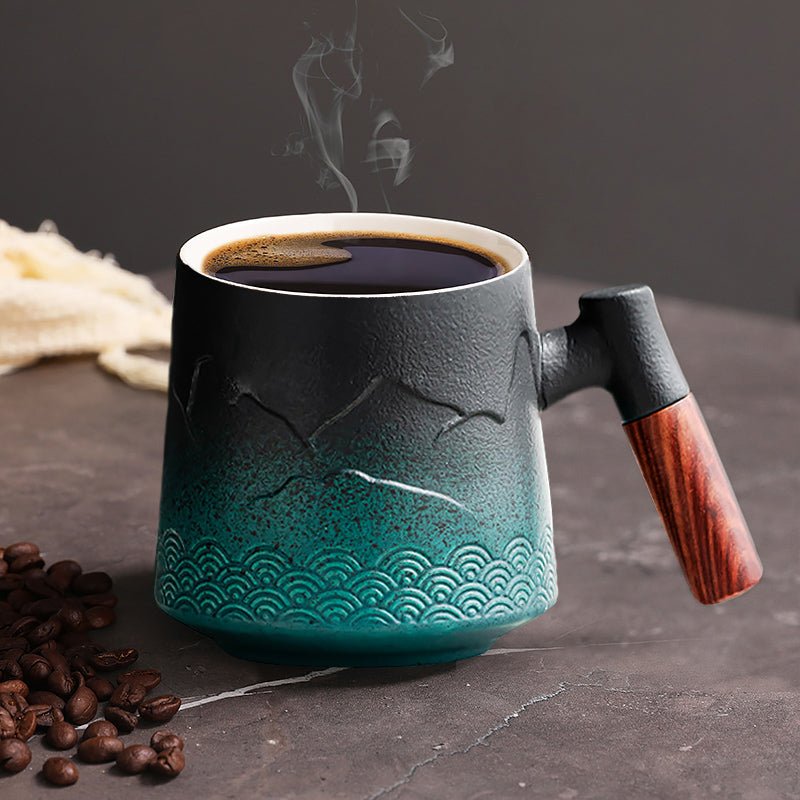
Coffee Mugs with Large Handle: What to Check Before You Buy
Coffee mugs with large handle are worth choosing for more than looks. The right shape changes grip, balance, and comfort on a desk, in the kitchen, or when you are carrying a full mug one-handed.
Read more
Patriotic Coffee Mugs: How to Choose the Right One
Practical help for choosing patriotic coffee mugs that actually fit daily use, gifting, and display. We cover size, handle style, care trade-offs, and which designs work best at home or in the office.
Read more
Leave a comment
This site is protected by hCaptcha and the hCaptcha Privacy Policy and Terms of Service apply.