
What Size Cup for Affogato? Best Sizes in Oz and ML Compared
Reading time: about 8 minutes
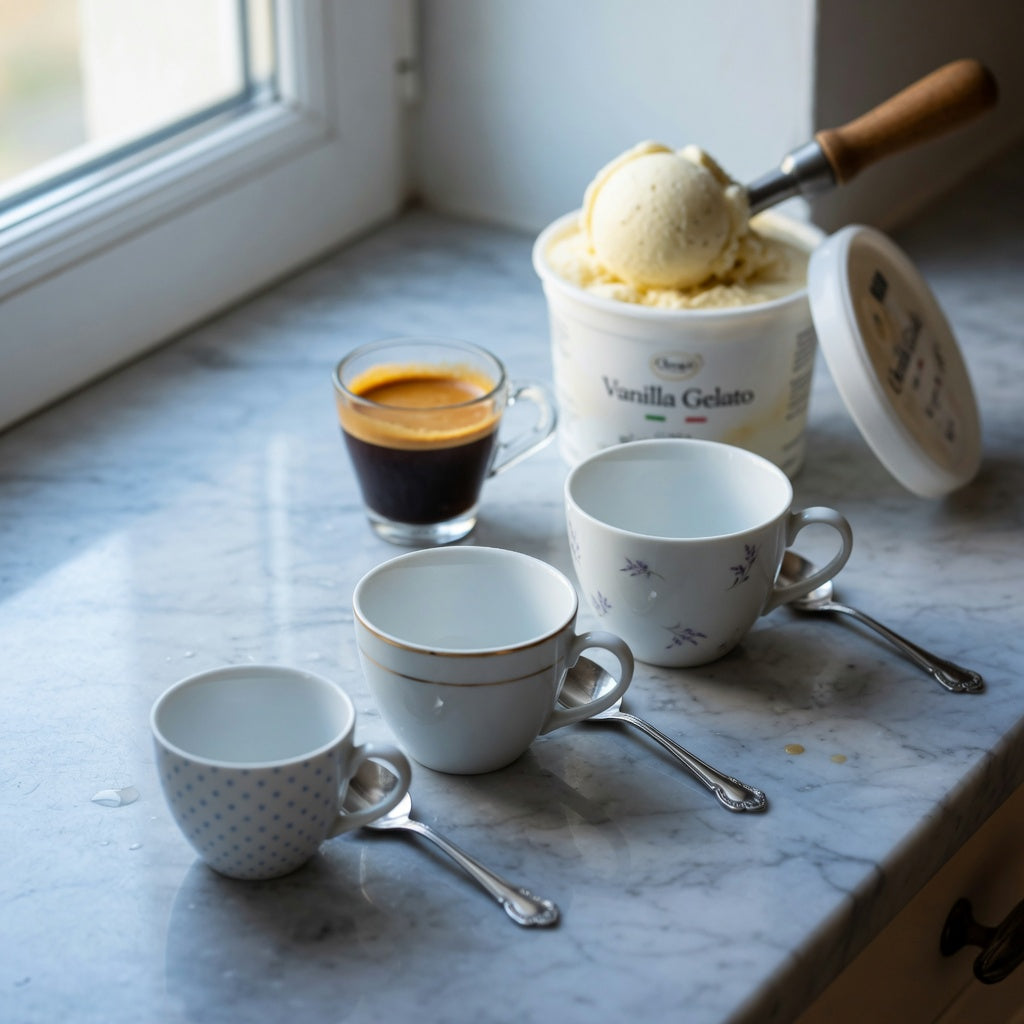
A customer emailed us a photo of her first homemade affogato last winter: one scoop of vanilla gelato sitting at the bottom of a 12-ounce latte mug, already dissolved into pale, sweet liquid by the time she reached the table. Her recipe wasn't the problem — a shot of espresso over gelato barely counts as cooking. The vessel was. A mug that size holds roughly twice the volume the dessert needs, and every extra milliliter gives melting gelato room to turn into sweetened coffee. Capacity is the first number we publish on each cup listing in our store for exactly this reason, and it's the question this guide answers in plain numbers: what size cup for affogato actually works?
What size cup for affogato? The 4–6 oz (120–180 ml) answer
A vessel in the 4–6 oz (120–180 ml) range is the working standard. That capacity holds a single hot espresso shot — 25–30 ml — plus one or two scoops of gelato, with just enough headroom for the pour to swirl and a dessert spoon to reach the bottom. Drop below about 3 oz and a standard demitasse (typically 75–90 ml) leaves the scoop wedged against the rim. Climb past 8 oz and you've added dead space where the dessert loosens before you finish the first few spoonfuls.
One espresso shot plus one or two scoops of gelato needs roughly 120–180 ml of capacity. Beyond that, extra volume isn't holding dessert — it's holding melt.
How a 25–30 ml espresso shot sets your cup size
The classic Italian single shot runs 25–30 ml, and that number anchors the entire sizing decision. Add gelato — a generous home scoop lands in roughly the same volume neighborhood as the shot itself — plus a small buffer for the pour, and the math points straight at 120–180 ml:
- Single shot: 25–30 ml, poured hot over the gelato
- One to two gelato scoops: the classic build, small enough to finish before it loosens
- Capacity target: shot + scoops + a modest swirl buffer = 120–180 ml (4–6 oz)
- Double-shot variation: roughly 50–60 ml of espresso, which pushes your minimum capacity toward 6 oz and shifts the dessert coffee-forward
One habit we'd push on every buyer: verify capacity yourself before committing. Fill the cup with water and pour it into a measuring jug. "Coffee cup" can describe anything from 60 ml to 350 ml depending on who's doing the labeling, which is why we list exact milliliters on ours instead of vague size names.
Demitasse, rocks glass, or dessert coupe? Vessel sizes compared
Three vessel styles dominate affogato service, each sitting at a different point on the capacity scale:
| Vessel | Typical capacity | How it handles the dessert | The trade-off |
|---|---|---|---|
| Demitasse / espresso cup | ~2.5–3 oz (75–90 ml) | Holds the shot; a scoop barely fits alongside | Cramped — you eat in shifts |
| Small rocks / old-fashioned glass | 4–6 oz (120–180 ml) | Shot plus one or two scoops, room for a spoon | Confirm heat suitability before a hot pour |
| Dessert coupe / tall glass | 6–8 oz+ (180–240+ ml) | Fits double shots and extra scoops | More surface area, faster loosening |
On paper the small rocks glass wins because it matches the sizing math almost exactly, and clear glass shows the espresso clouding into the gelato — half the appeal of the dessert. Coupes and tall glasses photograph beautifully but build in the headroom that shortens the thick-eating window. A cup or mug hides the layers, yet works on every functional level as long as capacity stays near the target.
Does cup size change how an affogato eats?
Yes — and it's the trade-off most recipe posts skip. In a small vessel the gelato sits snug against the espresso, the dessert stays thick longer, and the coffee flavor stays concentrated. In a larger one, more surface meets warm air, liquid pools in the headroom, and by the final spoonful you're drinking cold sweetened espresso:
- Smaller cup (120–180 ml): thick longer, stronger coffee presence, no room to linger
- Larger cup (200 ml and up): relaxed pace, more liquid finish, generous presentation — the loosened stage arrives sooner
Neither outcome is wrong. Plenty of people order affogato precisely because it ends as a coffee. The vessel simply decides which version lands in front of you.
Hot espresso over frozen gelato: what to verify before you pour
An affogato pour is a sharp temperature swing — hot espresso straight onto frozen gelato — and that makes material a genuine purchase criterion, not a nitpick. Tempered, heatproof glass tolerates hot-over-cold service; thin decorative dessert glasses often aren't rated for thermal shock, and most listings never say either way. Before buying any vessel for this dessert, open the product page and read the material and care details. If they don't address hot liquids, ask the seller directly.
We hold our own listings to the same test. Our product pages state exact capacity in milliliters and show each cup's shape in the photos; what we don't claim is hot-and-cold thermal performance we can't verify. If you plan to pour espresso straight from the machine into one of our cups, check the material and care guidance on the current listing first. There's also the barista's workaround: pull the shot into a separate small cup, let it settle a few seconds, then pour. It softens the temperature extremes and costs nothing.
Mouth width matters here too. A dessert spoon needs to reach the corners where melted coffee collects, so study the photos for a wide enough opening — a narrow-waisted shape that looks elegant can fight you on the last spoonful.
170, 200, or 270 ml? Matching our cups to real affogato moments
We stock three sizes, and each lands somewhere different relative to the 120–180 ml target. All three live in our unique coffee mugs collection — here's the affogato-specific read on each.
Retro Coffee Tea Cup — 170 ml (about 5.7 oz)
The closest of the three to the classic window. A single shot plus one generous scoop fills it with almost no dead space, so the dessert stays thick from first spoonful to last. This is the pick for readers who serve one affogato at a time, straight after the shot is pulled. See the Retro Coffee Tea Cup listing.
Pleated Coffee Tea Cup — 200 ml (about 6.8 oz)
Just past the classic ceiling, which buys room for two modest scoops or a more generous pour. The upside beyond dessert: at 200 ml it still functions as an everyday coffee or tea cup, so it earns its shelf space between affogatos. Check the Pleated Coffee Tea Cup's capacity and shape.
Emerald Coffee Tea Mug — 270 ml (about 9 oz)
Outside the traditional window by design. It suits double shots, bigger scoops, or anyone who treats affogato as a dessert that ends drinkable — expect the loosened, liquid stage to arrive sooner than in the 170 ml Retro. It's also the roomiest everyday mug of the three. View the Emerald Coffee Tea Mug.
An honest limitation: none of these are marketed as dessert glassware engineered for affogato, and a cup — however well sized — won't show the espresso-and-gelato layers the way clear glass does. Choose on capacity and visible shape, not presentation. If you want the same comparison from other angles, our 170 vs 200 vs 270 ml size decision guide and our affogato cup buying guide covering capacity, shape, and serving walk through the same choices in more depth.
Frequently asked questions
Can you serve affogato in a mug instead of a glass?
Yes. Capacity and mouth width decide the experience — a properly sized affogato mug in the 4–6 oz range serves the dessert exactly as well as a rocks glass. The only loss is visual: glass shows the espresso swirling into the gelato, while a mug hides the layers until the first spoonful.
What size cup for affogato works with a double shot?
A double shot runs roughly 50–60 ml, so aim for at least 6 oz (180 ml) of capacity. Our 200 ml Pleated cup covers a double plus one scoop, and the 270 ml Emerald adds room for two. Expect a more coffee-forward, runnier dessert either way.
How many scoops of gelato go in one affogato?
One to two. In a 4–6 oz vessel, one generous scoop plus the shot fills it with little room to spare; two smaller scoops work if you keep the pour tight. Three scoops push you into coupe territory, where the extra headroom speeds up melting.
Does a bigger cup make affogato melt faster?
Not by magic — a wider bowl exposes more gelato surface to warm air and creates headroom where melted gelato and espresso pool together. In a 270 ml mug you'll reach the sweetened-coffee stage sooner than in a 170 ml cup. If you like affogato thick, size down.
Spoon or straw — how should you eat affogato?
Spoon, always. The dessert is eaten in stages: gelato and espresso together, then the cold coffee collected at the bottom. A straw only becomes relevant once everything has melted, and by then the dessert you ordered is gone.
Your 30-second checklist before ordering a cup
Run any candidate through this list before checkout:
- Capacity in milliliters: 120–180 ml for the classic single-shot build; 180 ml and up for doubles
- Mouth width: photos should show a dessert spoon can reach the bottom corners
- Material and care: stated on the listing, especially if you'll pour hot espresso directly
- Shape: low and wide seats a scoop; tall and narrow shows layers but fights the spoon
- Your shot style: single and thick points to the 170 ml Retro; flexible daily use to the 200 ml Pleated; doubles and sippers to the 270 ml Emerald
If you're weighing how each size fits an ordinary morning routine rather than dessert service, our daily-use trade-offs guide for 170–270 ml cups covers that ground. Otherwise, compare the three listings side by side or browse the full unique coffee mugs collection and pick the size your next affogato deserves.
Read more
Round Coffee Mug for Coffee Lovers: What to Compare Before You Buy
Capacity, glaze safety, grip and heat behavior decide whether a round coffee mug earns a daily slot or shelf space. Here's the comparison checklist our store team runs on any round mug listing — in...
Read more
Mocha Cup Size: What Buyers Should Compare
Mocha cup size is a capacity decision: café servings run 8 to 20 fl oz, and our three mugs hold 400, 440, and 480 ml. We compare headroom, everyday fit, and where a large mocha mug is the wrong pic...
Read more
Leave a comment
This site is protected by hCaptcha and the hCaptcha Privacy Policy and Terms of Service apply.