
Affogato Cup Size Decision Guide: 170, 200, or 270 ml?
Reading time: about 10 minutes
The size mismatch usually becomes obvious after the dessert is assembled: a compact serving sits low in a roomy mug, or a generous scoop reaches the rim before the coffee is added. Our affogato cup size decision guide starts with that practical moment. Instead of treating one capacity as correct for everyone, we compare the serving you already make with CoffeifyMug's current 170 ml, 200 ml, and 270 ml options.
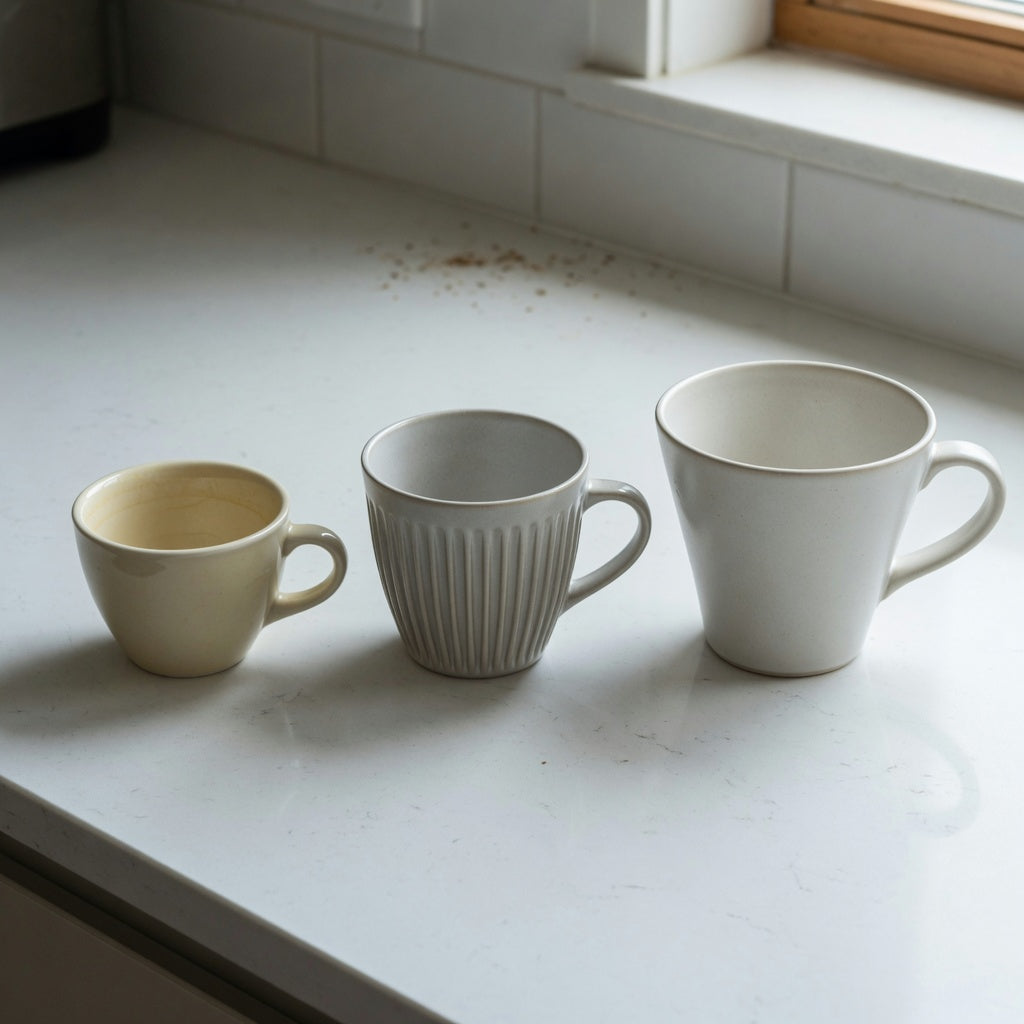
Handling the three cups side by side gives us three firm comparison points. The Retro holds 170 ml, the Pleated holds 200 ml, and the Emerald holds 270 ml. That means the step from Retro to Pleated is 30 ml, the step from Pleated to Emerald is 70 ml, and the difference between the smallest and largest choices is 100 ml.
We are deliberately keeping the comparison to those verified capacities and each cup's visible shape. There is no universal affogato scoop size or required coffee pour behind our recommendations. We also are not assigning material, care, temperature-change, or drink-specific performance claims that are not part of this size comparison.
170 ml, 200 ml, and 270 ml: what changes in practice?
A capacity number is useful only after it is connected to your serving habits. This table shows the practical role of each current option without turning the millilitre figure into a recommended fill line.
| Current option | Capacity | Visible character | Practical fit | Main trade-off |
|---|---|---|---|---|
| Retro Coffee Tea Cup | 170 ml | Compact retro profile | Controlled servings that should look visually full | Least room for a larger scoop, added coffee, or toppings |
| Pleated Coffee Tea Cup | 200 ml | Mid-size form with a pleated exterior | Serving routines that need a modest buffer without moving to the largest mug | Only 30 ml more than the Retro, so it is still limited for substantial extras |
| Emerald Coffee Tea Mug | 270 ml | Larger, more open mug profile | Generous servings, multiple components, or a deliberately lower fill level | A restrained serving can look sparse inside it |
The 200 ml option is a numerical midpoint in the range, but that does not make it the automatic answer. The right cup depends on how much room your own scoop, pour, and extras require, plus how full you want the finished dessert to appear.
When does the affogato cup size decision guide point to 170 ml?
The 170 ml Retro makes sense when your assembled affogato is consistently compact and you want it to occupy a noticeable share of the cup. A smaller listed capacity can give a restrained serving a more deliberate presentation without asking you to add more ice cream or coffee simply to fill visual space.
Picture a small after-dinner serving placed on a dessert tray, or an occasional affogato prepared at an office coffee station. If you use one modest scoop tool, keep the coffee pour controlled, and rarely add toppings, the 170 ml Retro cup is the logical first product to inspect. Its retro outline also makes it visibly different from an everyday oversized mug, which can be useful when the cup is intended as a dedicated dessert piece or a gift for someone who already owns larger drinkware.
The limitation is straightforward. The Retro gives you the least capacity of the three. If your scoop varies from serving to serving, you add biscuit pieces or other toppings, or you prefer visible room above the dessert, 170 ml may feel restrictive. Capacity also does not prove exterior footprint, rim width, or height, so do not assume that the smallest volume automatically has every smallest exterior measurement.
Why choose 200 ml instead of moving straight from small to large?
The Pleated adds 30 ml over the Retro while remaining 70 ml below the Emerald. That smaller first step is useful for shoppers who like the focused appearance of a compact dessert cup but know their usual serving occasionally needs a little more room.
In our store, we use the 200 ml capacity as a comparison point rather than calling it a universal middle choice. A shopper whose scoop is usually restrained but sometimes rounded more generously may find that the additional 30 ml resolves the decision. The visible pleated exterior also gives the cup a textured profile, so it can feel distinct on an open shelf or during a gift unboxing without relying on a larger capacity for visual interest.
Choose the 200 ml Pleated cup if your situation is small serving plus modest buffer. Do not choose it solely because the number sits between 170 and 270. If your extras already make the Retro look crowded, a 30 ml increase may not be enough; the larger step to the Emerald will be more practical.
When is the 270 ml Emerald the more practical affogato mug?
The Emerald offers 100 ml more capacity than the Retro and 70 ml more than the Pleated. Those are meaningful differences when your usual affogato includes a larger scoop, more than one scoop, an additional coffee pour, or toppings that occupy space above the ice cream.
This is the option we would put forward for a kitchen-island or brunch-table scenario where the host wants visible room around the serving. The larger, more open mug profile allows the dessert to sit lower instead of pressing every component toward the rim. That does not mean a larger affogato is more correct. It simply means the vessel better matches a shopper who already prefers a more generous build.
The 270 ml Emerald mug is not the strongest fit for a consistently minimal serving. A small scoop and restrained pour may occupy only the lower part of the mug, producing more empty visual space than some shoppers want. If that would bother you on the table or in a product gift, the Retro or Pleated is the more coherent choice.
How does visible shape affect the size decision?
Millilitres describe volume, not silhouette. Two cups can differ in how open, compact, tall, or textured they appear, and those visible characteristics influence how full an affogato looks before anyone takes a bite.
- Retro at 170 ml: The compact retro profile supports a tight, focused presentation. It suits shoppers who want the cup and serving to read as one small dessert.
- Pleated at 200 ml: The pleated exterior draws attention to the cup's contour. Its visual texture gives the middle capacity its own identity rather than making it look like a plain compromise.
- Emerald at 270 ml: The larger open mug profile creates more visible space around a restrained serving. That space is useful for generous builds but can make a small portion appear lower in the vessel.
These observations concern appearance only. We are not using the shapes to make claims about heat retention, grip, stacking, resistance to temperature changes, or any other unlisted performance. Product galleries may also use different photography scales, so use the listed capacities as your reliable comparison anchor rather than estimating exact dimensions from separate images.
Which size fits a kitchen counter, office desk, or gift?
The setting can clarify the decision, but it should not replace a check of your actual serving. Here is how we map common shopper situations to the current choices:
- Compact after-dinner ritual: Start with the Retro. Its 170 ml capacity fits a deliberately restrained dessert and avoids the empty appearance that a small serving can have in the Emerald.
- Serving size changes slightly from day to day: Inspect the Pleated. Its extra 30 ml provides a modest buffer while retaining a more compact role than the 270 ml option.
- Brunch serving with toppings or a larger pour: Move to the Emerald. The 270 ml capacity gives the assembled dessert the most room of the three.
- Cup used at an office desk: Do not infer desk fit from capacity alone. If the goal is a visually compact serving, the Retro is the starting point, but exterior dimensions shown on the live listing should settle any tight-space question.
- Gift for someone who already owns large mugs: The Retro or Pleated can feel more purpose-specific. For someone known to make generous desserts, the Emerald is the more useful gift direction.
- Large iced coffee, full latte, or another high-volume drink as the main use: These compact capacities may not be suitable. Compare broader styles in the unique coffee mugs collection instead of forcing an affogato-sized option into a larger-drink role.
For gifting, verify the current product listing for exactly what is included. This guide compares the vessels themselves and does not imply that food, spoons, saucers, or other serving accessories come with a cup.
How can you test the capacity with your own serving?
A quick check in your kitchen is more reliable than borrowing another person's definition of a small or generous affogato. Use the scoop, coffee portion, and extras you normally reach for.
- Start with your usual scoop tool. Count the number of scoops you actually serve rather than substituting a supposed standard size.
- Note your usual coffee pour. Measure it once if you need a firmer reference, especially if the amount changes depending on the cup at hand.
- List every space-taking extra. Biscuit pieces, toppings, or a second scoop matter because they occupy room before the dessert begins to soften.
- Choose your preferred visual fill. Decide if you like the dessert near the upper part of the cup or lower with clear space around it.
- Allow for carrying and eating. A serving moved from the kitchen counter to a table may need more open room than one eaten where it is assembled.
- Match the pattern, not just the total. Use 170 ml for a compact presentation, 200 ml for a modest buffer, and 270 ml for the roomiest current option.
A listed capacity is a comparison figure, not an instruction to fill the cup to its limit. Your practical serving level will depend on the space occupied by the ice cream, coffee, and any extras you add.
What can cup capacity not tell you?
Capacity cannot settle every product question. It does not confirm exterior dimensions, material, care method, dishwasher suitability, temperature-change performance, or included accessories. We do not use any of those unverified details to favor one current option over another in this article.
Use this affogato cup size decision guide to narrow the choice by volume and visible form, then review the live product page for the latest listing details that matter to your household. A shopper with strict cabinet dimensions or specific care requirements should resolve those points before ordering, even if one of the three capacities already looks ideal.
Frequently asked questions
How should I use this affogato cup size decision guide if my scoop size changes?
Base the decision on your larger recurring serving, not the smallest one you occasionally make. The 200 ml Pleated provides 30 ml more room than the Retro, while the 270 ml Emerald provides 100 ml more than the Retro. Choose the extra capacity only if you are comfortable with smaller servings sitting lower on other days.
Is the difference between a 170 ml and 200 ml affogato cup noticeable?
The numerical difference is 30 ml. That can matter when your serving is already close to the comfortable limit of the Retro, but it will not transform a compact cup into a roomy mug. The pleated exterior also changes the visible character, so compare both capacity and shape.
Will a small affogato look lost in a 270 ml mug?
It can look comparatively sparse because the Emerald is the largest current option and has a more open mug profile. Some shoppers prefer that breathing room, while others want the serving to occupy more of the vessel. If visual fullness matters, consider the 170 ml Retro or 200 ml Pleated.
Which cup size makes the most practical affogato gift?
Choose according to the recipient's serving habits. The Retro suits controlled portions and gives someone who owns large mugs a visibly compact alternative; the Pleated adds a modest buffer and textured shape. The Emerald is the better direction for a recipient who regularly builds generous desserts with extras.
Can capacity tell me which cup is easier to care for?
No. The 170 ml, 200 ml, and 270 ml figures compare internal volume, not care requirements or material performance. Check each live product listing for current care information rather than assuming the smaller or larger cup is easier to maintain.
Your next step: set out the scoop, coffee portion, and extras you actually use, then decide how much visible room you want around them. Choose the Retro for a compact presentation, the Pleated for a modest buffer, or the Emerald for the most available room, and compare all three through CoffeifyMug's current unique mug selection before ordering.
More from our blog
Read more
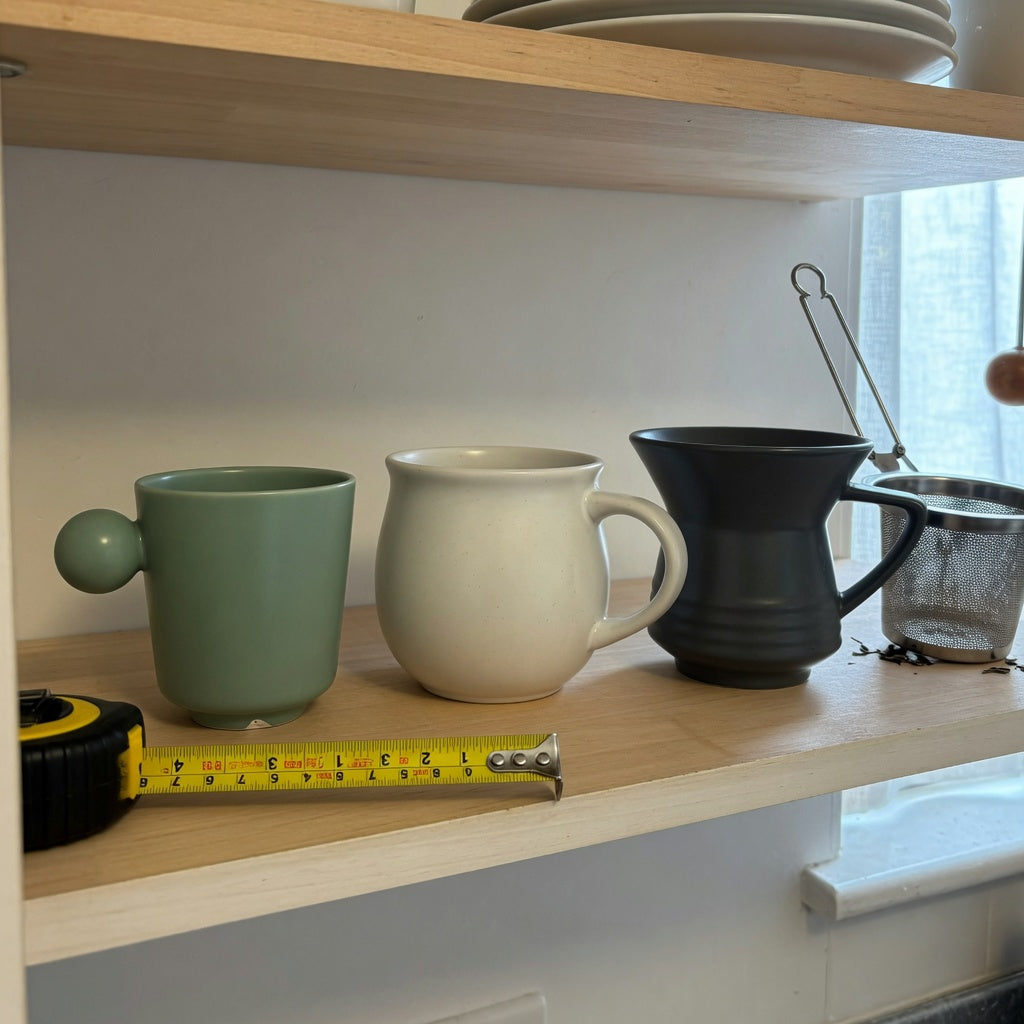
Loose Leaf Tea Mug Storage Fit Guide: Compare 3 Shapes
Compare the verified 250 ml, 390 ml, and 400 ml capacities, the Ball Handle mug's listed 11.2 cm diameter, and the storage trade-offs created by each visible shape. Includes a practical cabinet-mea...
Read more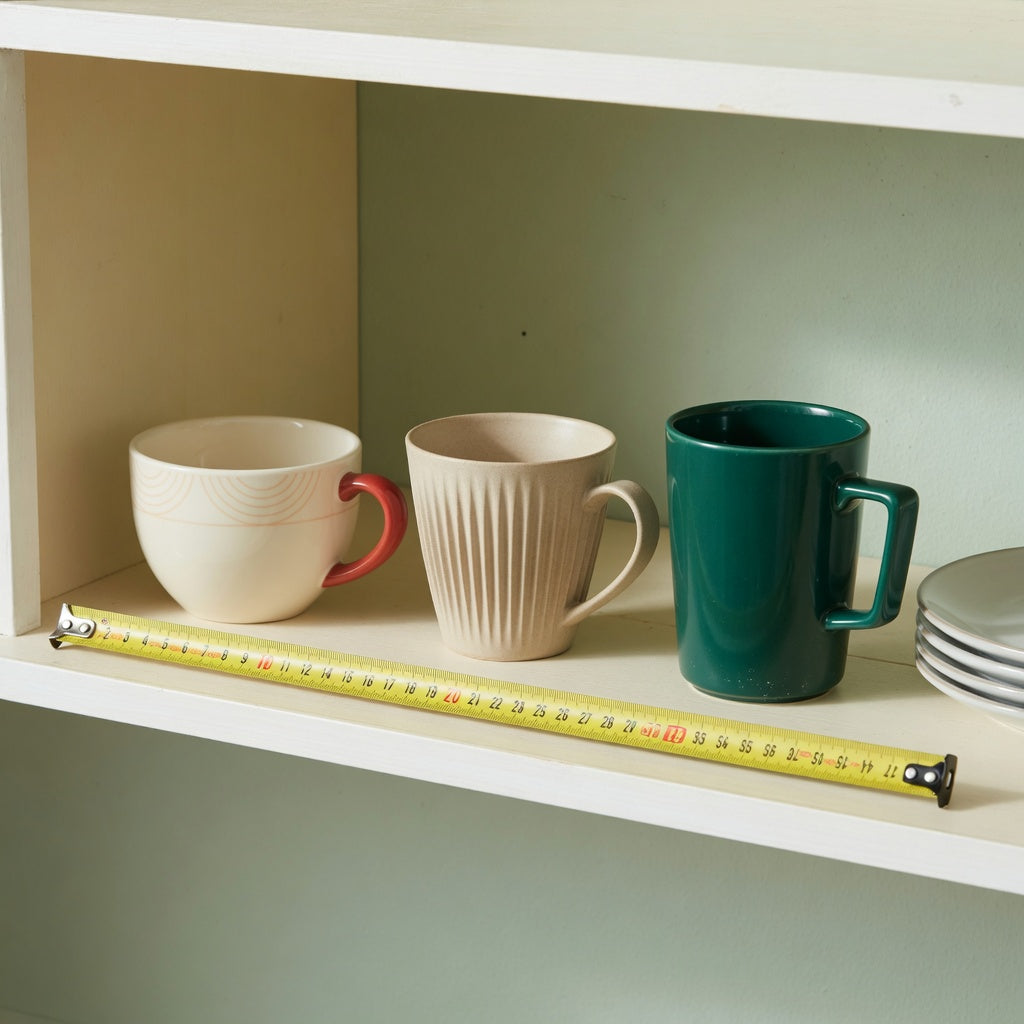
Affogato Cup Storage Fit Guide: Retro, Pleated, or Emerald?
Compare the verified capacities and visible profiles of the Retro 170 ml, Pleated 200 ml, and Emerald 270 ml, then use practical checks for shelf height, cabinet depth, handles, and everyday access.
Read more
Leave a comment
This site is protected by hCaptcha and the hCaptcha Privacy Policy and Terms of Service apply.