
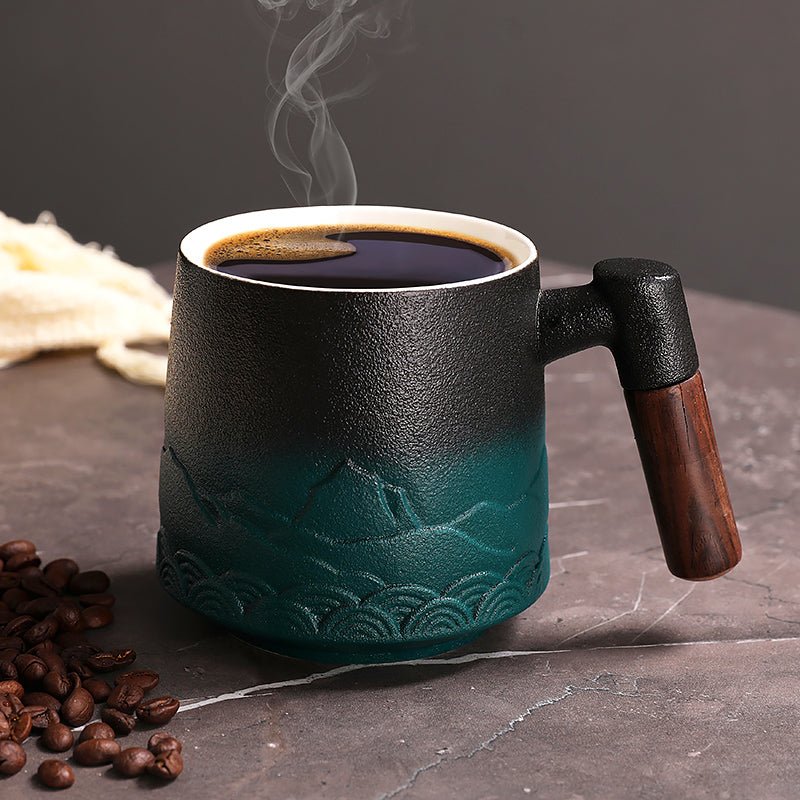
Vintage Pottery Coffee Mugs Morning Routine Practical Purchase Checklist
Reading time: about 9 minutes
A mug can derail a 7:15 a.m. routine in small ways: it runs dry before the first email, the handle crowds your knuckles, or its foot rocks on the desk. Our vintage pottery coffee mugs morning routine practical purchase checklist starts with three less-photogenic facts—morning timing, the volume you actually pour, and how willing you are to refill. In our store, those details often matter more to daily fit than the front-facing pattern alone.
Product-claim boundary: The live linked pages are the source of truth for each mug’s material, capacity, dimensions, included pieces, and care instructions. The measurement and inspection advice below is general category guidance, not a specification for every linked mug.
Vintage pottery coffee mugs morning routine practical purchase checklist
Run this five-part audit with your current mug during one ordinary morning. It produces a more useful shortlist than choosing from styled photos alone.
- Time the drinking window. Count from the first pour to the moment you leave home or join your first meeting. A larger mug adds bulk but does not create more drinking time.
- Measure the complete recipe. Pour your usual coffee, water, milk, or creamer into a measuring jug. Use the total volume rather than the nominal setting on your coffee machine.
- Set your refill tolerance. Zero-refill shoppers need the complete drink plus carrying headspace. If one refill is acceptable, a smaller mug may feel lighter and help you finish each serving while it is still warm.
- Trace the mug’s route. Note stairs, laptops, crowded counters, narrow desks, and any walk from kitchen to office. An open handled mug is a poor substitute for a sealed travel cup.
- Set a cleanup limit. Decide whether you will hand-wash a decorated mug. If dishwasher use is non-negotiable, shortlist only a product page that explicitly supports it.
Turn each item into a pass-or-fail rule. Vintage styling does not compensate for an unwanted refill, a painful grip, or care instructions that conflict with your household routine.
How much usable volume do you need before the first refill?
A capacity number, if a listing provides one, may not equal a comfortable carrying volume unless the page explains how it was measured. Our practical approach is to leave roughly 12 to 20 mm of space below the rim. That buffer gives milk, stirring, and the walk to your desk some room without requiring a brim-full mug.
| Your measured morning pour | Shortlist rule | Trade-off to check |
|---|---|---|
| 180–240 mL, about 6–8 fl oz | Look for a mug that holds the recipe plus headspace. | An oversized body may add weight and expose more liquid surface than you need. |
| 250–300 mL, about 8.5–10 fl oz | Measure after adding milk or creamer, not before. | A compact-looking mug may be too tight once the full recipe is included. |
| 330–355 mL, about 11–12 fl oz | Test the expected loaded weight with your current mug. | A water-like 355 mL drink adds roughly 355 g before the mug’s own weight. |
| Volume changes by day | Choose around the most common recipe or accept one planned refill. | Buying for the occasional largest drink can make every smaller serving feel awkward. |
In our experience, shoppers frequently compare advertised capacities but overlook loaded balance. Fill your present mug to the measured amount, carry it one-handed, and notice wrist strain, handle pressure, and slosh. There is no universal ideal size; the useful number is the amount you can comfortably carry and finish.
If your mornings alternate between coffee and tea and you want a broadly retro-labeled starting point, review the Retro Coffee Tea Cup. Its listing title maps to that use case; your next step is to confirm the live capacity, material, dimensions, and care details against your measured recipe.
Will the mug clear your brewer, hand, shelf, and office desk?
Capacity is only one dimension. Measure the places the mug must occupy, preferably in millimetres or to the nearest quarter inch, instead of judging scale from a close-up product photo.
- Brewer clearance: Check mug height and the angled path needed to move it under the outlet. A mug can fit vertically yet still be difficult to insert or remove.
- Pour-over support: If a dripper rests directly on the mug, compare its support base with the rim diameter. A narrow or strongly shaped rim may not provide a stable platform.
- Handle opening: Decide whether you use a two-finger or three-finger grip. The outside handle shape does not reveal the internal opening or the space between your knuckles and the hot mug wall.
- Base and foot ring: Compare the base with your coaster, cup warmer, or desk space. A rough exposed foot ring may call for a coaster on a finished wood surface.
- Storage and washing: Check cabinet height, shelf depth, and dishwasher-rack clearance if the product is confirmed dishwasher safe.
The unique coffee mugs collection is the practical place to compare different silhouettes before opening individual listings. If desk bumps are your main concern, our ceramic wide-bottom coffee mug morning checklist focuses more closely on footprint and stability. A handled pottery-style mug is not the best choice for sealed commuting or a narrow vehicle cup holder; use a purpose-built travel mug for that job.
Which material and glaze details control morning cleanup?
Pottery is a useful shopping term, but the technical material description still matters. Earthenware, stoneware, and porcelain are all ceramic categories with different bodies and typical handling characteristics. If a live page says only ceramic, do not silently upgrade that claim to stoneware, porcelain, handmade production, or a particular firing method.
- Dishwasher and microwave use: Treat both as unknown unless the listing states them. Do not use the first dishwasher cycle as an experiment.
- Decorated surfaces: Decals, metallic-looking details, relief work, and specialty finishes can require care beyond a plain glossy glaze. Follow the page rather than assuming every ceramic mug has identical limits.
- Unglazed contact points: Dry an exposed foot ring after washing and use a coaster if it feels abrasive against the counter or desk.
- Thermal shock: Avoid moving a very cold mug directly to boiling liquid unless the maker provides instructions allowing it. Rapid temperature change can stress ceramic bodies and glazes.
- Surface texture: Deep relief and matte or textured areas may need more brushing around coffee residue than a smooth glazed wall.
Fine glaze crazing is a network of lines in the glaze; a hairline running through the ceramic body or across a handle joint is a different concern. If you cannot tell which you are seeing, stop using the mug and contact the seller. Shoppers who need effortless microwave use, repeated dishwasher cycles, sealed carrying, or hours of heat retention may be better served by a simple mug with explicit care claims or an insulated travel style.
Which CoffeifyMug listing matches your style direction?
The product names provide three honest routes into the shortlist. They do not, by themselves, establish antique age, handmade production, exact clay composition, or appliance safety. Use each name to select a visual direction, then let the current page specifications decide practical fit.
| Morning situation | Why it enters the shortlist | Relevant next step |
|---|---|---|
| You switch between coffee and tea and want broad retro styling. | The listing title explicitly combines retro, coffee, and tea language. | Open the Retro Coffee Tea Cup and verify usable volume, dimensions, material, included quantity, and care. |
| You want a scenic direction combining mountain and sea cues. | The product name is the closest direct match to that visual theme. | Review the Mountain Sea Coffee Tea Mug, then compare its live options with your morning measurements. |
| You prefer a mountain-led theme rather than a general retro label. | The listing title puts the mountain concept first. | Check the Great Mountain Coffee Tea Mug and confirm the specifications the page currently provides. |
| You have not settled on a motif or silhouette. | A wider comparison prevents one appealing product photo from setting the whole decision. | Scan the unique coffee mugs collection and eliminate options that fail your volume, fit, or care rules. |
If your measured recipe is milk-heavy, compare it with our cappuccino coffee mug morning checklist. That extra step helps distinguish the coffee portion from the complete drink volume before you return to a vintage-style product page.
What should happen between unboxing and the first 7 a.m. pour?
Inspect the mug before discarding its packaging or starting a hot drink.
- Match the order. Confirm the selected variant, quantity, and any included pieces against the order and live listing.
- Use angled light. Examine the rim, body, base, and both handle joints for chips, sharp glaze edges, pinholes, glaze skips, or hairline cracks. Decorative variation may be intentional, but a chipped drinking rim or structural crack is not suitable for use.
- Run a wobble check. Put the empty mug on a clean, flat, dry counter and press gently at several points around the rim. Rocking can come from the mug’s foot or an uneven test surface, so repeat the check elsewhere.
- Test the grip before heat. Hold the empty mug, then use room-temperature water if the return policy permits. Check loaded balance, finger crowding, and whether your knuckles touch the mug wall.
- Follow the listed wash method. Use a non-abrasive sponge for the first hand wash unless the page directs otherwise. Photograph shipping damage and contact the seller before using a questionable mug.
Keep the vintage pottery coffee mugs morning routine practical purchase checklist to five pass-or-fail boxes: the measured drink fits with headspace; the refill plan is acceptable; the mug fits your brewer, hand, shelf, and desk; the care instructions match your household; and the live page supports every product-specific claim you are relying on. If one box remains unknown, ask before buying rather than filling the gap with an assumption.
Frequently asked questions
What size vintage pottery mug is best if I do not want a refill?
Use the vintage pottery coffee mugs morning routine practical purchase checklist with your complete measured recipe. Add roughly 12 to 20 mm of carrying headspace, then check the loaded weight. A universal ounce recommendation is less reliable than the amount you actually drink before leaving home or starting work.
Can vintage-style pottery coffee mugs go in the microwave and dishwasher?
Only if the individual product page explicitly supports those uses. Ceramic appearance alone does not confirm appliance safety, especially where a mug has decals, metallic-looking details, or specialty finishes. Follow the live care instructions for the selected variant.
Does retro or vintage styling mean a coffee mug is an antique?
No. Treat retro and vintage as aesthetic descriptions unless the listing explicitly provides age, provenance, or other supporting details. A product name is not proof that a mug is old, handmade, or produced with a historical technique.
What defects should I check for when a glazed mug arrives?
Inspect for rim chips, sharp glaze edges, body cracks, hairlines at both handle joints, an uneven foot, and unexpected glaze pinholes or skips. Do not drink from a mug with a chipped rim or suspected structural crack. Keep the packaging and photograph any shipping damage before contacting the seller.
Which CoffeifyMug page should I open first?
Start with the Retro Coffee Tea Cup for broad retro coffee-and-tea positioning, the Mountain Sea Coffee Tea Mug for combined scenic cues, or the Great Mountain Coffee Tea Mug for a mountain-led direction. If you are still comparing, open the unique coffee mugs collection in separate tabs and remove any option that does not confirm your volume, fit, and care requirements.
More from our blog
Read more
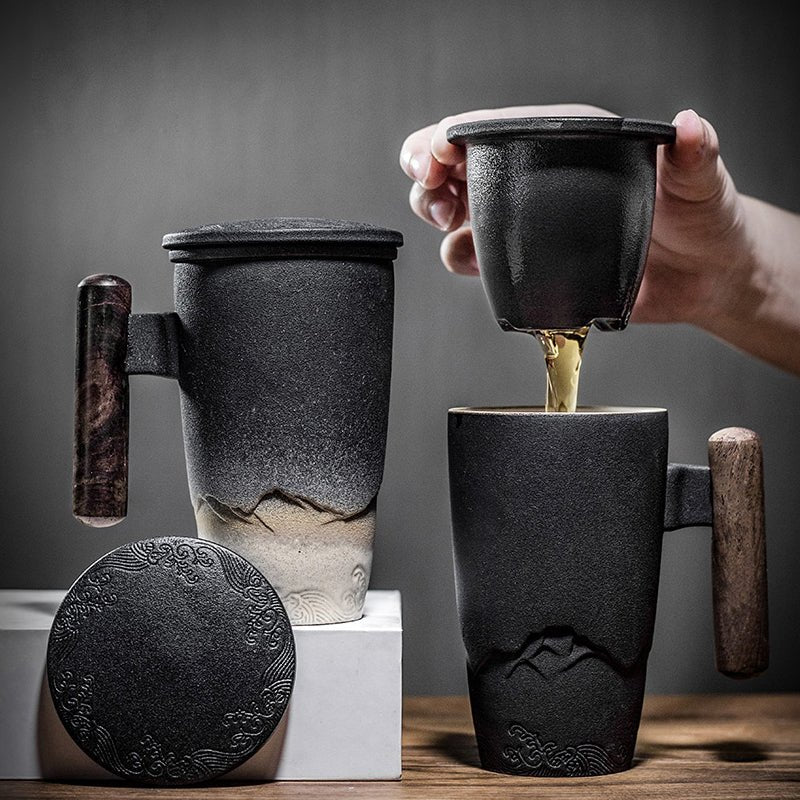
High Quality Ceramic Coffee Mugs: Morning Routine Buying Checklist
Measure your full morning pour, refill limit, brewer clearance, grip, and care habits before choosing a design. This checklist maps those decisions to three CoffeifyMug options without guessing at ...
Read more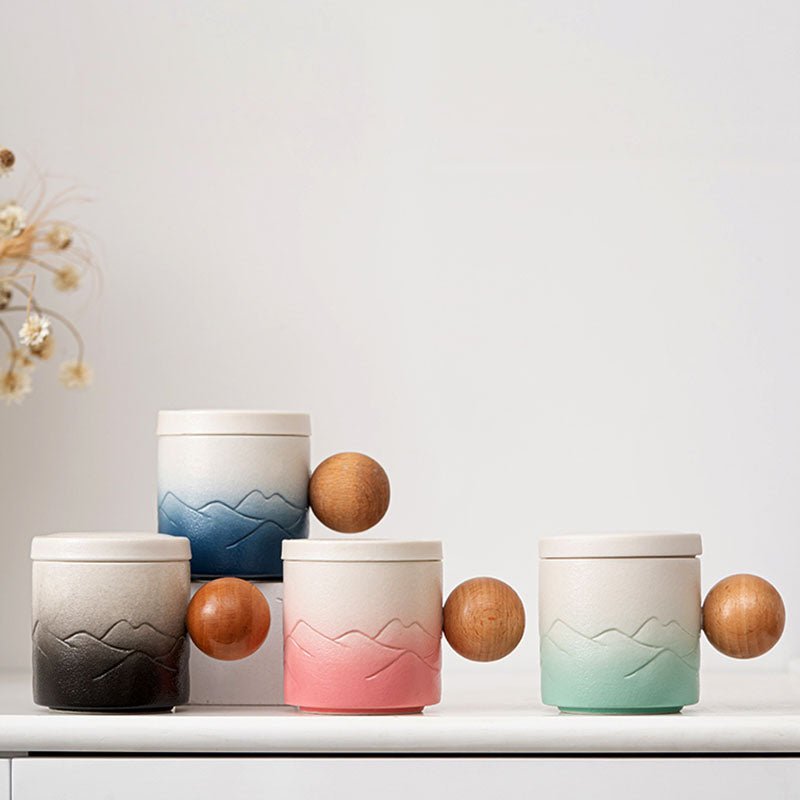
Your piccolo cup morning routine practical purchase checklist
Compare CoffeifyMug's 170 ml Retro, 250 ml Ball Handle, and 270 ml Emerald options against your real morning pour, available time, refill tolerance, machine clearance, and care needs. The checklist...
Read more
Leave a comment
This site is protected by hCaptcha and the hCaptcha Privacy Policy and Terms of Service apply.