



Unique Espresso Cups for Small Coffee Setup: Compare 3 Sizes
Reading time: about 12 minutes
A 24-inch run of kitchen counter disappears fast. Espresso machine, grinder, tamper, a stack of filters, and suddenly the only open square is where the cup has to land. On a setup that tight, a pretty cup is not enough. It has to clear the spout, sit flat on the drip tray, and fit under the shelf without becoming the thing you move every morning.
That is the practical filter behind most searches for unique espresso cups for small coffee setup. We handle and pack these cups in our store, and the buying questions we get are rarely about style alone. They are about capacity, footprint, handle clearance, interior color, and whether a decorative glaze is actually safe for hot coffee.
Why does a 24-inch counter change which unique espresso cups for small coffee setup you buy?
On a large kitchen, you can own a cup for every drink and never think about storage. On a compact counter, every cup competes with the machine, the grinder, and the shelf above. A cup that is beautiful but too tall, too wide at the base, or too fussy to wash will end up in the cupboard while you reach for the same plain mug you already own.
The fix is to choose the drink first, then the cup. A small setup rewards one versatile cup or two well-chosen ones far more than a matching set of six. We would rather sell you the cup you will actually use every morning than a display piece that only looks right on an empty counter.
How do you match a cup to a single, double, cortado, or tea drink?
The number printed on a cup is capacity, not the amount of coffee you should put in it. A straight espresso is a small pour; common references put a certified Italian espresso around 25 ml and an older specialty range at 25–35 ml. A demitasse cup is usually listed nearer 50–100 ml, with about 60 ml often cited, because crema and headspace need room. If you see '3 oz espresso cups,' that is roughly 90 ml — still small, but not a thimble.
For our three cups, the drink match is straightforward:
- 170 ml: a double shot with crema or a tight cortado; also tea when one cup has to do both jobs.
- 200 ml: a cortado, small flat white, or a longer black coffee.
- 250 ml: a small latte, long black, or tea at a desk — not a straight espresso cup in the strict sense.
A single 25 ml shot in a 170 ml cup will look lost and cool faster because there is a lot of empty wall above the liquid. That is a trade-off, not a defect. If you only pull singles, shop a smaller demitasse first; if doubles and milk drinks are your normal, the compact ceramic sizes below make more sense.
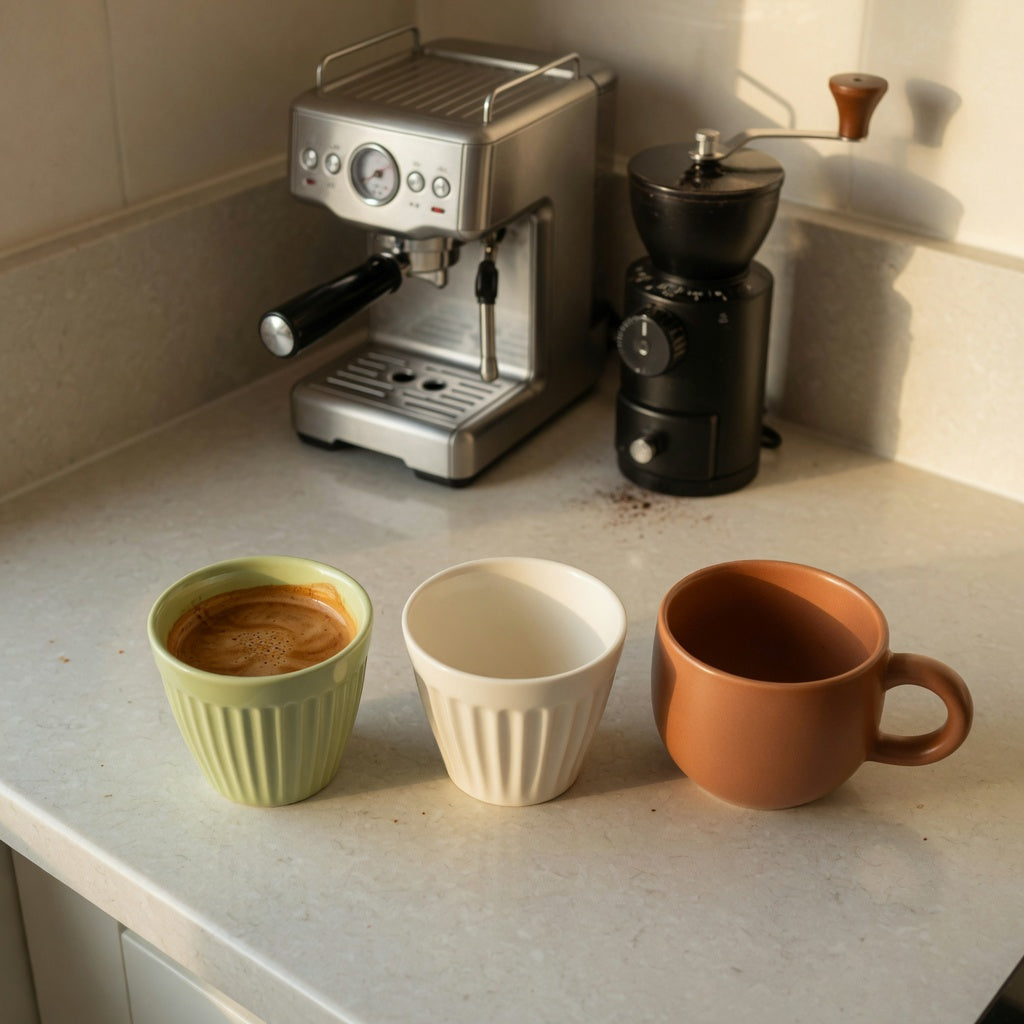
Which of our three compact ceramic cups fits your counter and routine?
We carry three compact ceramic vessels in this band. The difference is not just the glaze — it is listed capacity and how much shelf room the shape asks for. Here is the current catalog comparison, kept to the facts we publish:
| Cup | Listed capacity | Best drink match | What to verify on the listing |
|---|---|---|---|
| Retro coffee and tea cup | 170 ml | Double shot, tight cortado, tea | Outer height, base diameter, care note |
| Pleated coffee and tea cup | 200 ml | Cortado, small flat white, longer black coffee | Dimensions, ridge cleanup, care note |
| Ball-handled coffee and tea mug | 250 ml | Small latte, long black, tea at a desk | Handle clearance, outer height, care note |
Retro coffee and tea cup: 170 ml for a double shot when shelf space is tight
The Retro coffee and tea cup is listed at 170 ml, the smallest capacity of the three. In a tight setup, that makes it the first cup to try for a double shot with crema or a cortado that runs short on milk. The visible ceramic finish is the style decision; the capacity is the routine decision. What we cannot confirm from the catalog facts alone is outer height, base diameter, or care instructions, so check those on the current listing before you buy — especially if your group head sits low or your shelf is shallow. It is not the right cup for a single ristretto or for anyone who wants espresso to fill the cup.
Pleated coffee and tea cup: 200 ml for cortado and small flat-white drinkers
The Pleated coffee and tea cup sits at 200 ml. This is the middle size we point to when the drink usually has milk but the machine still pulls a double underneath. The pleated surface is the reason to choose it — and the reason to be honest about cleanup. Ridges give dried milk more places to sit than a smooth wall does; a soft brush and hot water are more realistic than a quick rinse. Confirm the care note and outer dimensions on the exact listing before ordering. If you drink straight espresso every day, the extra capacity is mostly empty space.
Ball-handled coffee and tea mug: 250 ml for the drink after the shot
The Ball-handled coffee and tea mug is the outlier at 250 ml. We do not pitch it as a strict espresso cup. It is the cup for a small latte, a long black, or tea at a desk, when you want the second drink to match the first one visually. The ball handle is a design feature you notice every time you pick it up, and it also needs clearance beside the machine. Check handle position, outer height, and care instructions on the listing; those are the details that decide whether it lives on the counter or in the cupboard.
If you are still comparing pattern and glaze, browse the unique coffee mugs collection before you lock in a size. Pick the drink first, then the finish.
Does a handle, saucer, or stackable shape earn its shelf space?
Handleless cups nest closer and take less shelf depth. There is nothing to snag when you slide a tray out. Handled cups keep your fingers off a wall that has just taken a hot shot and a hot-water preheat. The split is about travel: if you drink standing at the machine and the cup goes straight to the sink, handleless is efficient. If you carry the cup to a desk, hold it while you talk, or have anyone in the house with limited grip strength, the handle is worth the inch.
Saucers are the same trade. A saucer adds shelf depth, a second item to wash, and one more thing to steady on a crowded drip tray. It earns its place if the cup leaves the machine; it is dead weight if the cup never travels. Stackability is also trickier than it looks. Double-wall glass and one-off pottery often do not stack, and a stack of cups rim-down inside each other is how rims get chipped. If your storage is an open shelf above the machine, measure full height including the handle, not just capacity.
Will the cup clear the group head and sit flat on the drip tray?
Three measurements decide whether a cup is pleasant or quietly annoying:
- Spout-to-tray height. Measure from the drip tray grate to the lowest point of the group spout. A tall mug with a high-set handle is the usual offender. If clearance is tight, pulling into a smaller cup and transferring costs crema.
- Base diameter against the grate. A base wider than the flat area can tip when you set it down one-handed. A narrow base is more forgiving on a small tray.
- Shelf clearance above. If cups live on an open shelf over the machine, full height with the handle is the number that matters.
We would rather you measure twice than order once. The catalog facts we can confirm are listed capacities — 170 ml, 200 ml, and 250 ml — plus the visible ceramic finish. Outer dimensions, handle clearance, and care notes need to come from the current product listing or a quick message to us. Ask before ordering if those numbers are not shown; we will measure the actual piece rather than guess from a photo.
How do you judge crema and lip feel in a decorative cup?
Crema is a reading tool. Its color, tiger flecking, and how fast it thins tell you whether a shot ran long or short. A white or very light interior gives contrast. A dark glaze, metallic luster, or heavily patterned inside swallows that contrast, and you end up judging the shot by taste alone. Look at the interior in the listing photos before ordering, and check the rim while you are there. A thin, slightly flared rim puts coffee where your lips expect it; a thick rolled rim feels sturdy in the hand but can feel clunky on a 25 ml sip. Neither is wrong — it is the same trade as a heavy fork versus a thin one.
If you drink espresso black and care about crema, prioritize the interior view. If the cup is mostly a vehicle for milk, choose the finish you want to look at. Unique shapes — square cups, novelty mugs, heavy art pieces — can look better than they drink; check that the rim is comfortable and the base is stable before you fall for the silhouette.
Are handmade or brightly glazed cups safe for hot coffee?
Not automatically. The FDA's guidance on lead-glazed pottery is direct: lead in glaze or decoration can leach into food and drink if the piece is not properly fired, and washing or boiling will not remove it. The FDA's chemical-contaminants listing sets an action level of 0.5 µg/ml of leaching solution for ceramic cups and mugs. Under 21 CFR 109.16, ceramicware not intended for food use has to carry a conspicuous 'Not for Food Use' statement — or a hole through the food-contact surface — if it otherwise looks usable.
The FDA also names the higher-risk categories: handmade pieces with a crude or irregular look, antiques, damaged or worn ware, flea-market finds from unknown makers, and pieces brightly decorated in orange, red, or yellow. That does not mean every handmade cup is unsafe. It means the burden is on the buyer to ask.
- Turn the cup over. A 'Not for Food Use' mark means display only, however good it would look with a shot in it.
- Ask for lead test results on brightly glazed or imported artisan sets. A careful maker will have them and will not be offended.
- Avoid chipped, crazed, or worn secondhand cups — worn glaze is exactly the condition the FDA flags.
- Treat gold rims, lusters, and decals as decoration first. They are also what a dishwasher removes first.
We keep our own claims to what is published on each listing — listed capacity and the visible ceramic finish — rather than implying a certification we have not posted. If food-contact documentation is part of your decision, ask us before ordering and we will tell you exactly what we have. That is the trust trade on decorative ceramics: the more unusual the glaze, the more you should ask.
What care routine keeps a small cup rotation alive?
Tight setups punish careless handling faster than big kitchens do. A two- or three-cup rotation has no slack; lose one and you have lost a third of it.
- Preheat gently. A cold, thick-walled cup pulls heat out of a small shot in seconds. Hot tap water, thirty seconds, pour it out. Do not go from a cold cupboard to a boiling rinse — thermal shock is how rims crack.
- Hand-wash metallic decoration. Gold rims, lusters, and hand-painted detail survive a lot of things; a hot dishwasher cycle with strong detergent is not one of them.
- Do not nest mugs rim-down inside each other. It saves shelf space and it chips rims because the foot ring of one cup lands on the rim of another.
- Dry the foot. Unglazed foot rings hold water, and a damp cup on a wooden shelf leaves a ring you will not get out.
- Read the care note on that exact cup. Dishwasher and microwave suitability varies by finish, so check the listing rather than assuming it carries across the whole range.
If the material question is still open — thick stoneware body versus a thinner porcelain one — compare how each behaves with heat, weight, and chipping before you add a fourth cup to a three-cup shelf.
What should you measure before buying another cup?
- Decide the drink first: single shot, double, cortado, or milk drink. That sets your capacity band.
- Measure the spout-to-tray gap and the shelf height above the machine.
- Choose handle or handleless based on whether the cup travels.
- Check the base for a food-use mark, and ask for lead documentation on bright glazes.
- Read the care note on the exact cup — not the category.
Short version: 170 ml for a double or a tight cortado when you want the smallest listed capacity, 200 ml if milk is usually involved, 250 ml if the cup has to double as a tea mug. Start with the unique coffee mugs collection and pick the size that matches the drink you make most often — not the one that photographs best on an empty counter.
Frequently asked questions
Will a 170 ml cup make a single espresso go cold?
It gives a 25 ml shot a lot of empty wall to sit under, so yes, it will cool faster than a 60–90 ml demitasse. The 170 ml size is better suited to a double shot with crema or a tight cortado. If you only pull singles, buy a smaller demitasse first and add a larger cup for milk drinks later.
Do unique espresso cups for small coffee setup need saucers?
Only if the cup leaves the machine. A saucer adds shelf depth, a second item to wash, and one more thing to steady on a crowded drip tray. If you drink standing at the counter, skip it; if you carry the cup to a desk or sofa, a saucer catches the drip that would otherwise land on your keyboard.
Are handmade or brightly glazed cups safe for hot coffee?
Not automatically. The FDA treats brightly decorated orange, red, and yellow glazes, irregular handmade ware, and unknown-maker pieces as higher risk for lead leaching, and it sets an action level of 0.5 µg/ml of leaching solution for ceramic cups and mugs. Check the base for a 'Not for Food Use' mark and ask the seller for test results before you drink from a decorative piece.
Can these cups go in the dishwasher or microwave?
It depends on the finish, so check the care note on the specific cup rather than the whole collection. Metallic decoration — gold rims, lusters, decals — should be hand-washed, and any cup with metallic trim is a poor microwave candidate. Plain glazed ceramic is usually the most forgiving, but confirm it on the listing.
Which is the smallest cup you list for a compact setup?
The Retro coffee and tea cup at 170 ml listed capacity, followed by the Pleated cup at 200 ml and the Ball-handled mug at 250 ml. If 170 ml is still more cup than you want for a straight shot, you are shopping in the demitasse range and should look at 60–90 ml cups instead.
More from our blog
Ready to pick your mug? Two ways to save on today's order:
Ordering 1–3 mugs? Get an extra 10% off your 1st order with code 10_OFF Apply 10% Off & Shop Wooden-Handle Mugs →
Gifting 4+ mugs? Buy 3, Get the 4th Free applies automatically at checkout (no code needed; offers do not stack) · Free standard shipping (Nov pre-Christmas delivery: 15–20 calendar days US) · Free replacement if chipped in transit.
Popular mug buying guides: Ceramic Mugs with Lids Compared · Wooden-Handle Tea Infuser Mugs Compared · Christmas & Secret Santa Mugs 2026 · Espresso & Cortado Cups Guide · Cup & Saucer Gift Sets · All 25 Mugs Spec Table · Mug Size Guide · Shipping & Promo FAQ
FIRST ORDER 10% OFF (CODE: 10_OFF) · OR BUY 3, GET THE 4TH FREE


Read more
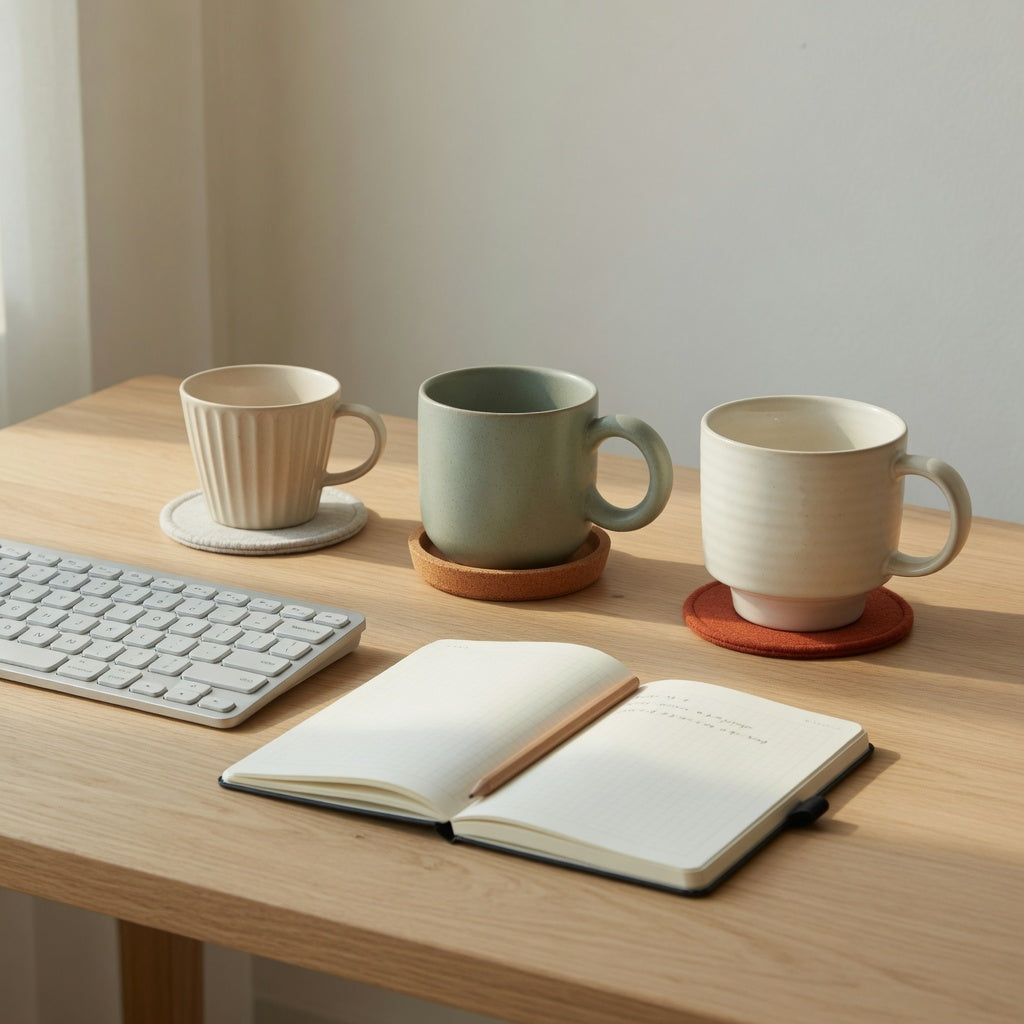
Ceramic Mug Shapes for Desk Use: Capacity, Footprint, Handle Fit
A desk mug is a footprint decision before it is a style one. We compare our 200 ml, 250 ml, and 400 ml ceramic silhouettes by refill math, handle projection, rim comfort, and the space left beside ...
Read more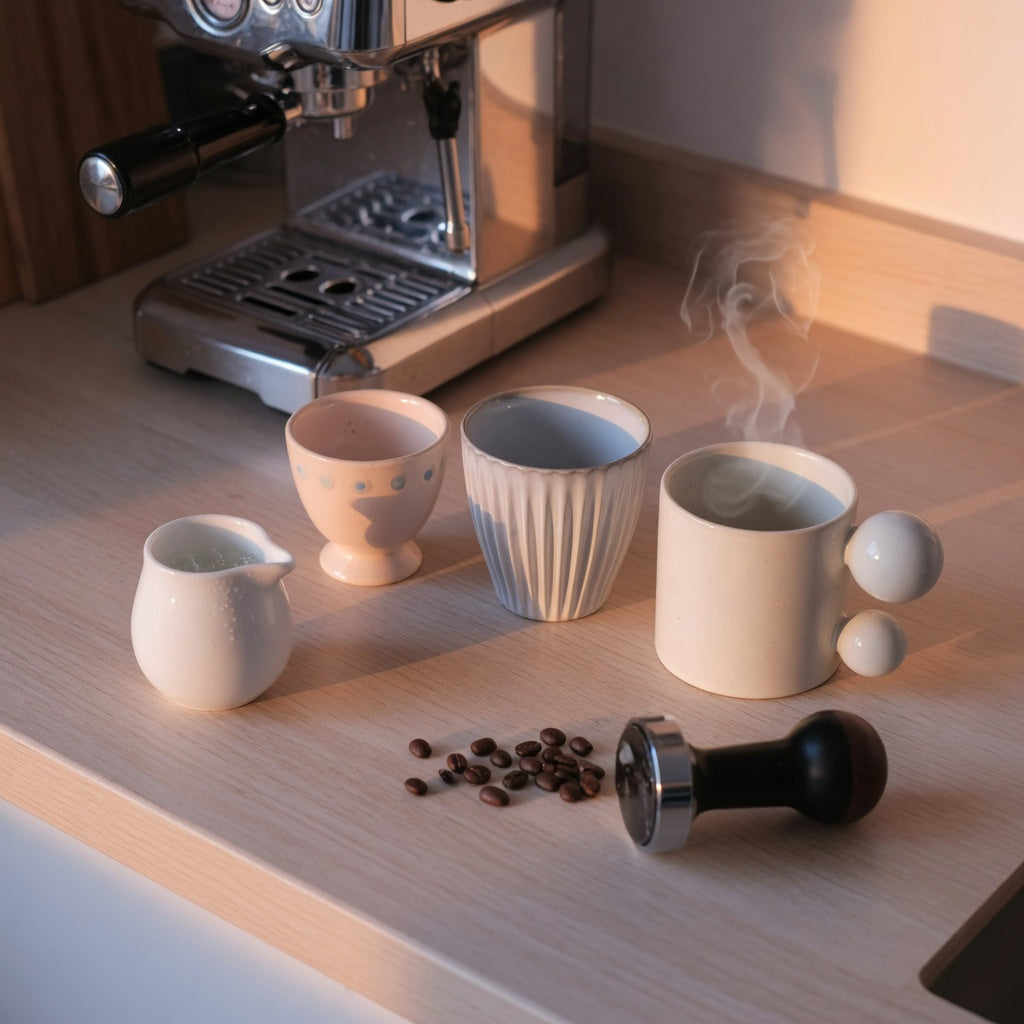
Unique Espresso Cups Morning Routine Product Shortlist Guide
A schedule-first shortlist: we match our 170 ml, 200 ml, and 250 ml ceramic cups to real morning volumes, then cover group-head clearance, preheating, crema visibility, glaze safety, and the mornin...
Read more
Leave a comment
This site is protected by hCaptcha and the hCaptcha Privacy Policy and Terms of Service apply.