



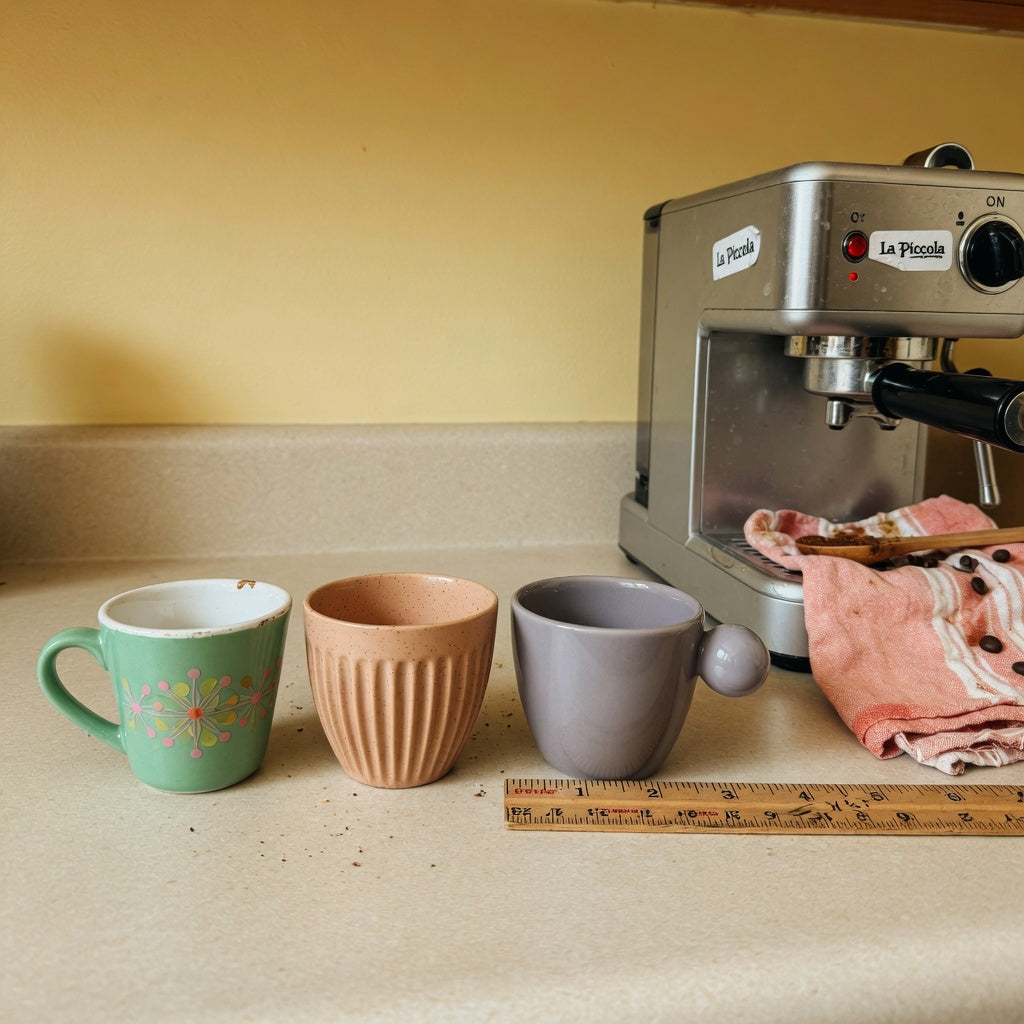
Unique Espresso Cups First Time Buyer Product Shortlist Guide
Reading time: about 10 minutes
The first cup we ever sold to a self-described espresso beginner came back with a note: beautiful glaze, but the shot vanished into it. That one sentence covers most of what goes wrong on a first purchase. The finish sells the cup; the capacity, the rim, and the clearance under the group head decide whether you actually reach for it on a Tuesday morning. This unique espresso cups first time buyer product shortlist guide works as a filter rather than a catalogue — you'll see which listing details to confirm, which ones sellers tend to leave blank, and which of our three ceramic cups matches a specific habit, with the reasons to skip each one stated plainly.
What do the ml numbers on an espresso cup listing actually mean?
A certified Italian espresso is a tiny drink, roughly 25 ml, and the older specialty definition ran 25–35 ml. The cup is always larger than the liquid because crema and headspace need somewhere to sit. That's why demitasse cups cluster in the 50–100 ml range, with about 60 ml being a very common single-shot size.
So when a listing says 170 ml, 200 ml, or 250 ml, nothing is broken. Those cups are aimed at a different pour:
- 25–35 ml single shot: a 60 ml demitasse keeps the coffee deep, keeps it hot, and lets you watch the crema.
- Double shot or cortado-style drink: roughly 150–200 ml of cup gives the crema room and cuts down sloshing.
- Coffee, tea, or a longer milk drink: 250 ml and up, which is closer to a small mug than a demitasse.
The number that trips people up isn't the drink volume, it's the working capacity. A 170 ml cup does not hold 170 ml in daily use — you leave headspace, and a wide bowl loses heat faster around a small pour. That trade-off is why the same shot tastes hotter in a narrow 60 ml wall than in a wide 200 ml one.
Which listing details do most unique espresso cups leave unstated?
Buyers forward us listings almost every week asking whether a cup is "the same as yours." Nine times out of ten the photography is complete and the fit information is missing. Treat silence as unknown, not as a yes.
- Brim capacity vs working capacity: is the ml figure measured to the lip or to a sensible fill line?
- Height: measure from your drip tray to the underside of the group head, then subtract about 10 mm so you can lift the cup out without tilting it.
- Outer base diameter: a foot wider than your machine's cup-warmer plate will perch instead of sit.
- Handle projection: a generous handle can collide with a low spout or the drip tray lip. Ask for the width across the handle, not just the body.
- Interior colour: white or clear shows crema colour and flow; dark, metallic, or heavily patterned interiors look dramatic and hide extraction faults.
- Rim thickness: a thin, smooth rim reads cleaner on the lip. A thick, irregular rim is charming right up until you drink quickly.
- Food-contact statement: a clear claim that the piece is for food use, plus test information on handmade or brightly decorated ware.
- Care instructions: dishwasher and microwave claims should be stated for that exact item, not inferred from the material.
- Saucer footprint and stackability: one-off pottery and double-wall glass usually don't stack, and a saucer roughly doubles the shelf space each cup needs.
In our experience the clearance question is what sends cups back. A beautiful cup that doesn't fit under the spout loses to a plainer one every single morning, and no glaze makes up for that.
Which of our three ceramic cups matches your daily pour?
Our current range is three compact ceramic vessels, listed at 170 ml, 200 ml, and 250 ml. They were chosen for double-shot and cortado-style routines, so none of them pretends to be a 60 ml Italian demitasse. Here is the honest mapping.
Retro Coffee & Tea Cup, 170 ml — the double shot with diner looks
Choose it if: you pull doubles, you like a splash of milk in a cortado-style drink, or you want a cup that looks at home on an open kitchen shelf. At 170 ml the Retro Coffee & Tea Cup sits between a strict demitasse and a cappuccino cup — enough headroom for crema, not so much that the coffee looks stranded.
Skip it if: you mostly drink 25–35 ml singles and want the liquid to fill the cup, or if you need a documented dishwasher or microwave claim before you commit. We'd rather you ask than assume, so confirm care details on the current listing.
Pleated Coffee & Tea Cup, 200 ml — texture plus room for a short milk drink
Choose it if: you want visible texture that catches light on open shelving, you drink doubles with a little more milk, or you want one cup that moves between espresso and a short filter coffee. The Pleated Coffee & Tea Cup is listed at 200 ml.
Skip it if: your cabinet is tight, you want a traditional 60 ml demitasse, or you expect a 200 ml vessel to hold a tiny pour hot through a long conversation. One caveat from handling these daily: pleated walls give water somewhere to sit, so they need a proper dry rather than a quick wipe.
Ball Handle Coffee & Tea Mug, 250 ml — grip comfort and a bigger serving
Choose it if: you want a handle you can get a whole hand around, you drink larger coffee or tea from the same cup, or you like to keep a cup out for guests. The Ball Handle Coffee & Tea Mug is listed at 250 ml, which puts it in small-mug territory rather than demitasse territory.
Skip it if: you're building a true espresso-only shelf, your machine sits under a low cabinet, or your drip tray area is cramped — the handle and the taller body both take up space you may not have. Skip it too if you want the cup to warm through from a single shot; at 250 ml, more of your heat goes into the ceramic.
If you want to see how these sit beside the rest of the range, browse the unique coffee mugs collection and compare capacities before you fall for a finish.
When is ceramic the wrong answer for a first espresso cup?
Ceramic is forgiving — it feels solid, holds heat well once preheated, and doesn't scratch. It is not the only sensible choice.
- Double-wall glass: shows the shot and keeps fingers cool, but it's more fragile, usually doesn't stack, and moisture trapped between the walls is hard to spot.
- Single-wall glass: the best view of crema forming, the fastest heat loss, and more prone to rim chips.
- Plain white china demitasse: still the easiest cup to judge extraction in, and the easiest to replace as a set.
- Handleless cups: compact and stackable, but a hot 200 ml body with no handle is genuinely unpleasant to pick up.
Skip decorative ceramic if you want a blind-tasting cup, if you need six matching cups that nest into a small office cupboard, or if you routinely heat milk in the same vessel. In those cases a plain stackable set serves you better and the distinctive cup becomes the second purchase. Our ceramic espresso cup shortlist digs into wall thickness if that turns out to be your deciding factor.
How do you vet a decorative glaze before hot coffee touches it?
Unique glazes deserve a direct question, not a vibe check. The FDA warns that lead in ceramic glazes or decorations can leach into food or drink when pottery isn't properly fired, and that washing or boiling cannot remove lead from pottery once it is there. The agency also notes that some traditional pottery labelled lead free has still shown extractable lead at or above FDA action levels.
The FDA's own risk list is worth knowing before you buy anything handmade or imported. It flags ceramicware with a crude or irregular look, antiques, damaged or worn pieces, items from flea markets or unknown makers, and ware brightly decorated in orange, red, or yellow. For cups and mugs specifically, the FDA chemical-contaminants listing sets an action level of 0.5 µg/ml of lead in leaching solution. Separately, 21 CFR 109.16 requires ornamental ceramicware that looks usable to carry a conspicuous "Not for Food Use" statement or a hole through the food-contact surface.
At checkout that means one thing: if a listing doesn't state food-use status, glaze information, and care instructions, those points are unknown. Ask the seller — including us. A bright reactive glaze isn't automatically a problem, but it is a good reason to request test information. For pottery-style mugs beyond the espresso shelf, our unique pottery coffee mugs guide covers the same questions.
What does daily care look like for a textured or glazed cup?
Three habits keep a distinctive cup in rotation instead of at the back of the cupboard.
- Preheat before the shot. Fill the cup with hot water while the machine comes up to temperature, then tip it out and dry it. Thick ceramic pulls heat out of a 30 ml pour fast, and a preheated wall is the cheapest improvement you can make to a small shot.
- Dry the outside properly. Pleated walls, ball handles, and foot rings all trap water. Stand cups upside down on a rack with airflow instead of stacking them damp on a shelf, and dry the foot ring so it isn't sitting wet against a saucer.
- Check before you machine-wash. Metallic rims, hand-painted decoration, and some reactive glazes are hand-wash only, and a dishwasher cycle is a harsh test for any decorative surface. If the listing doesn't confirm dishwasher and microwave safety, hand wash and keep the cup out of the microwave until the seller tells you otherwise.
One more thing we've learned from packing these: chips almost always appear on the rim, not the base. Stacking heavy mugs directly on a glazed rim is how that happens.
Frequently asked questions
What's the most common first-time mistake with unique espresso cups?
Buying for the look before checking the fit. Shoppers fall for a glaze, then discover the cup is too tall for the group head or too wide for the cup-warmer plate. Starting a shortlist with capacity and clearance — the way this unique espresso cups first time buyer product shortlist guide does — saves a return.
Is a 170 ml cup too big for a single espresso?
It can be. A 25–35 ml shot looks and cools differently in a 170 ml cup than in a 60 ml demitasse. If you want the coffee to fill the cup, go smaller. If you pull doubles or add a splash of milk, 170 ml is a practical, comfortable size.
Do I need to preheat a ceramic espresso cup?
Yes, especially with thicker handmade walls. Hot water from the machine, tipped out just before you pull the shot, is enough. It takes ten seconds and makes a noticeable difference to a small pour that would otherwise lose heat into the ceramic.
Are handmade or brightly glazed espresso cups safe for hot coffee?
Only when the seller confirms food-use status and glaze safety. The FDA notes that improperly fired glazes can leach lead, and a "lead free" label is not by itself proof. For handmade, brightly decorated, or imported ceramics, ask for the food-contact statement and any test information before buying.
Can these cups go in the dishwasher or microwave?
Don't assume either. Decorative glazes, metallic details, and hand-finished rims often need hand washing, and microwave safety has to come from the seller's care instructions for that exact item. If the listing is silent, treat both as a no and hand wash until you have an answer.
Compare the three capacities side by side before you choose
| Cup | Listed capacity | Best for | Main reason to skip |
|---|---|---|---|
| Retro Coffee & Tea Cup | 170 ml | Double shots, cortado-style drinks, retro shelf styling | Single-shot drinkers who want the cup filled |
| Pleated Coffee & Tea Cup | 200 ml | Short milk drinks, texture on open shelving, espresso-to-coffee crossover | Tight cabinets and buyers who want simple drying |
| Ball Handle Coffee & Tea Mug | 250 ml | Larger servings, comfortable grip, guest cups | True demitasse use and cramped machine clearance |
Then do one last thing before you add to cart: put a ruler against your machine. Measure from the drip tray to the group head, check your widest shelf gap, and confirm the care information on the exact listing you're buying. The gap between a cup you love and a cup you actually use is usually five millimetres of clearance — and the full unique coffee mugs collection is the fastest place to compare all three capacities in one view.
More from our blog
Ready to pick your mug? Two ways to save on today's order:
Ordering 1–3 mugs? Get an extra 10% off your 1st order with code 10_OFF Apply 10% Off & Shop Wooden-Handle Mugs →
Gifting 4+ mugs? Buy 3, Get the 4th Free applies automatically at checkout (no code needed; offers do not stack) · Free standard shipping (Nov pre-Christmas delivery: 15–20 calendar days US) · Free replacement if chipped in transit.
Popular mug buying guides: Ceramic Tea Cups & Infuser Mugs · Ceramic Mugs with Lids Compared · Wooden-Handle Tea Infuser Mugs Compared · Christmas & Secret Santa Mugs 2026 · Espresso & Cortado Cups Guide · Cup & Saucer Gift Sets · All 25 Mugs Spec Table · Mug Size Guide · Shipping & Promo FAQ
FIRST ORDER 10% OFF (CODE: 10_OFF) · OR BUY 3, GET THE 4TH FREE


Read more
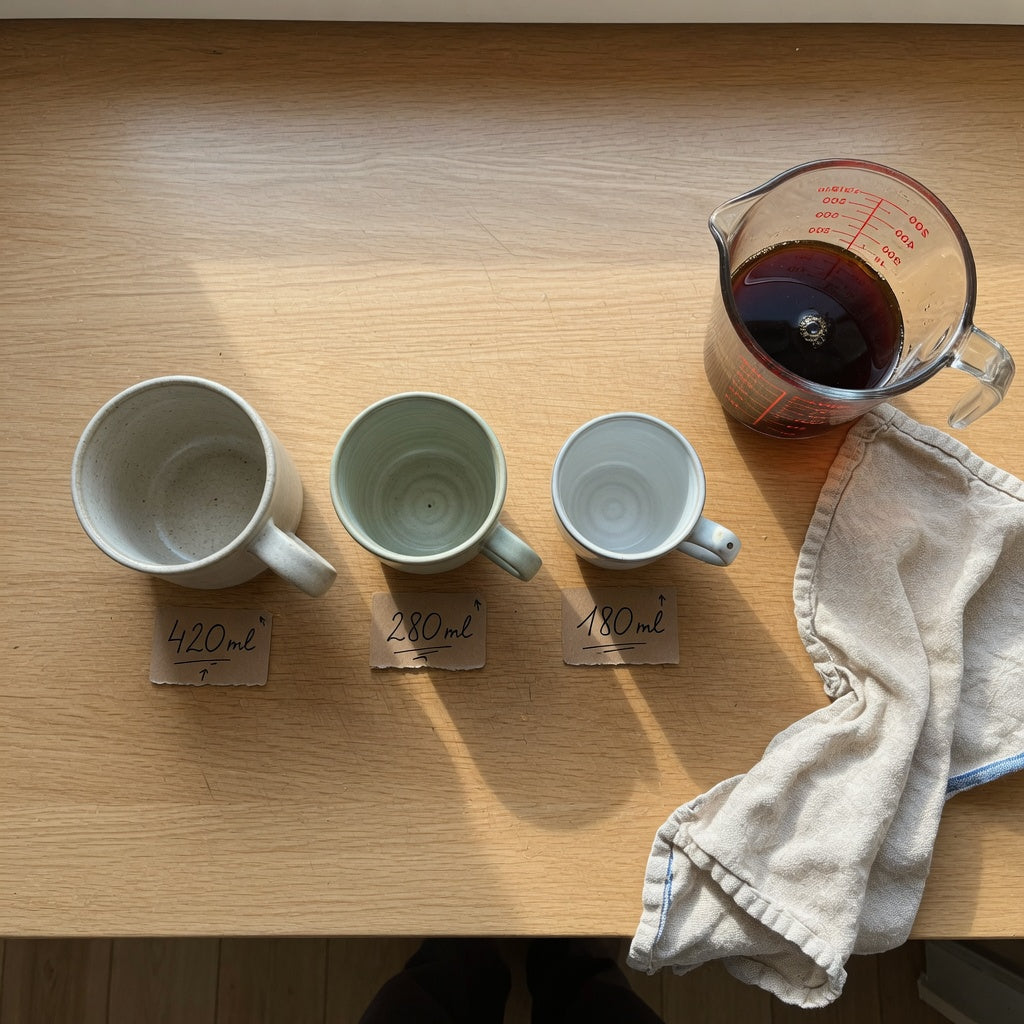
14 Oz Ceramic Coffee Mugs First Time Buyer Product Shortlist Guide
A 14 oz ceramic mug can mean 414 ml to the brim or noticeably less in the cup. We compare our three shapes in exact milliliters, flag the listing fields worth verifying, and match each one to a rea...
Read more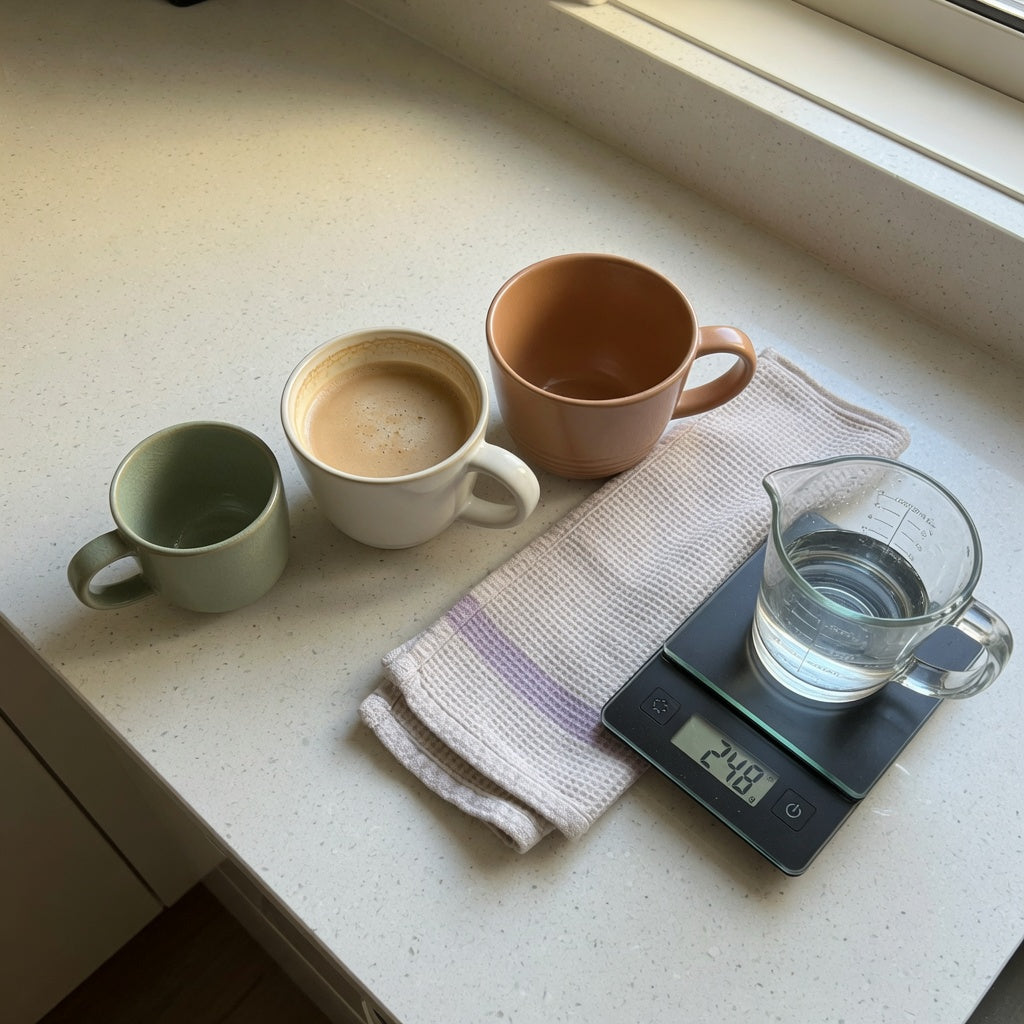
Big Latte Mug Replacement Purchase: A Practical Purchase Checklist
Measuring the mug that failed is the step most shoppers skip. Here is the working checklist we run with customers before they swap a big latte mug — capacity, shape, handle room, and machine fit.
Read more
Leave a comment
This site is protected by hCaptcha and the hCaptcha Privacy Policy and Terms of Service apply.