

Unique Ceramic Mugs for Tea Drinkers: What to Compare Before Buying
Reading time: about 9 minutes
The question that lands in our inbox most often isn't about color or price. It's some version of why does my tea go lukewarm before I'm halfway through the cup? Nine times out of ten, the mug is the reason. Loose-leaf tea rewards a vessel chosen for capacity, heat retention and a food-safe glaze — and plenty of unique ceramic mugs for tea drinkers photograph beautifully while underperforming on a real kitchen counter. This is the same comparison our team runs before any piece earns shelf space in our store.
Everything below applies to drinkware you'll use daily, not display pieces. Most of what we carry lives in our unique coffee mugs collection, and tea drinkers shop it right alongside coffee buyers — the same shapes cross over between both drinks, as long as you size and spec them for tea.
How big should a tea mug be? Size it to what you actually drink
Coffee mugs have drifted larger; 14 to 16 oz is common in most kitchens now. Tea doesn't reward the same instinct. Pour 16 oz of water over a single measure of leaf and you over-dilute delicate teas — and if the leaves stay submerged, a big mug gives them a long runway to turn bitter.
For most brewed tea, 8 to 12 oz is the practical range: enough volume for a proper steep, small enough to finish while the tea is still good. Larger mugs earn their keep with tisanes and milk teas, which tolerate long steeps and extra volume without punishment.
| What you drink | Practical capacity | Why it matters |
|---|---|---|
| Green and white tea | 8–10 oz | Smaller volume cools to drinkable faster, with less water to over-extract if leaves sit in the cup |
| Black tea | 10–12 oz | Room to add milk without brewing extra water |
| Herbal tisanes | 14–16 oz | Herbs tolerate long steeps, and these are slow-sipping cups by nature |
| Gongfu-style sessions | 3–6 oz | Multiple short steeps; intentionally small |
Shape changes how a size feels, too. A wall that rounds and tapers inward holds heat a touch longer than a straight cylinder and cradles in both hands — the round profile our Round Coffee Tea Mug is named for, and the reason slow sippers keep gravitating to it. Check its current listing for exact capacity, material and care details, since we update specs as new batches arrive. If you're torn between sizes, remember that 350 ml — the figure many ceramic listings use — is roughly 12 oz, the middle ground where most tea drinkers land.
Is the glaze food-safe? The lead and cadmium questions worth asking
Glaze safety sounds technical, but it rests on three plain facts. Lead and cadmium have historically appeared in some ceramic glazes and painted decoration because they make colors vivid and lower firing temperatures. Health authorities including the World Health Organization treat lead as harmful, with no identified safe level of exposure. And regulators such as the FDA set leaching limits for ceramic tableware sold for food contact in the US.
For a mug you'll use every morning, run through four checks:
- Confirm the piece is sold as drinkware, not decoration — ornamental wares are often labeled exactly that way.
- Ask whether the glaze is food-safe and the clay fired to vitrification, the point where the body stops absorbing water. Well-fired stoneware and porcelain won't wick tea into the mug itself.
- Look at the interior. A fully glazed interior wipes clean; unglazed interiors are more porous and hold tannin stains.
- Check for crazing — fine hairline lines in the glaze. On good stoneware it's often cosmetic, but those lines collect stain, which matters if you love a pale matte finish.
If a listing doesn't answer the food-safety question, ask the seller before buying. Anyone selling daily drinkware should respond directly — we get that question weekly and answer it in writing.
Do thick walls, thin walls or a lid actually keep tea hot longer?
Three construction choices drive heat retention, and every one of them is a trade-off:
- Thick-walled stoneware: real thermal mass that holds temperature once warmed, but heavy in the hand and hungry for the first pour's heat. Pre-rinse with warm tap water and the difference is noticeable.
- Thin-walled porcelain: heats fast, cools fast. A feature with green teas you want drinkable in two minutes; a flaw with the black tea you nurse for half an hour.
- A lid: the single most practical heat tool. It traps steam, slows surface cooling and keeps desk dust out of an office mug.
Double-walled ceramic is a fourth option — the air gap insulates while the outside stays comfortable to hold. The trade-off is care: many double-walled pieces have a small vent hole and can't be submerged, so read the care notes before committing.
Worth knowing: the WHO's cancer research agency (IARC) classifies drinking very hot beverages — above roughly 65°C — as probably carcinogenic. A lid and a pre-warmed mug aren't only about flavor. They let tea settle toward a comfortable sipping temperature gradually instead of inviting a scalding first gulp.
Should you brew loose leaf in a mug with an infuser and lid?
Two designs dominate single-vessel brewing, and they behave differently:
- Removable stainless basket: handles most leaf sizes, lifts out cleanly and takes the spent leaves with it. The all-around workhorse for daily brewing.
- Lid-strainer design: the lid doubles as a strainer you sip or pour through. Elegant and fewer parts to lose — but fine cuts like rooibos can clog the slots.
Workflow matters as much as hardware:
- Warm the mug with hot tap water, then empty it.
- Measure leaf into the basket — about one teaspoon for an 8–12 oz pour.
- Pour, lid on, steep to the tea's recommended time.
- Lift the basket and rest it on the inverted lid, which doubles as a drip tray on many designs.
- Sip. Over-extraction stops the moment you lift.
Honest limitation: an infuser mug is overkill if you only drink teabags, and single-vessel brewing punishes forgetfulness — a basket left in for fifteen minutes over-steeps even a forgiving black tea. If bags are your path, spend the budget on capacity and glaze instead of hardware you won't use.
Unique ceramic mugs for tea drinkers: which styles hold up to daily use?
Style isn't just aesthetics. It changes grip, heat behavior and how visible every tannin stain will be. The three looks customers ask for most:
- Japanese-inspired tea bowls (no handle): you cradle the bowl itself, which suits slow drinking and smaller pours. Wrong choice for anyone who wants a handle or drinks while walking around the office.
- Scandinavian minimal, straight-sided: even glaze, easy to clean, stacks in a cabinet. The safe pick when you don't know someone's taste.
- Speckled stoneware and reactive glazes: every piece fires slightly differently, so no two are identical. Trade-off: matte and reactive finishes show tannin film sooner than glossy interiors do.
Handmade or mass-produced? The trade-offs we see at the counter
Small-batch ceramic arrives with millimeter-level variations in height, slight glaze pooling and weight that shifts piece to piece. We treat those as features — they're a maker's fingerprint — but they're not for everyone. If you want four identical mugs for matching guests, or you refuse to hand-wash anything, uniform factory stoneware will make you happier and usually costs less.
Handmade pieces also ask a little more care. Thermal shock is the enemy: don't pour boiling water into a mug that just came in from a cold car, and don't park a hot mug on a cold stone or steel surface. Warm it first — that one habit prevents most of the cracks customers tell us about.
Gifting rather than buying for yourself? Prioritize the two things the recipient can't fix later: a handle that fits their grip (or a bowl shape they'll actually cradle) and, for loose-leaf drinkers, a lid. Speckled stoneware is the safest aesthetic bet across tastes — shortlist from our unique mugs collection, which doubles as a ready-made gift list.
Keeping tannin stains off the glaze: care that actually matters
Tannin stains are inevitable with daily tea and easy to reverse. Make a paste of baking soda and a few drops of water, spread it on the stain, wait ten minutes, then wipe with a soft cloth and rinse. Skip scouring powders and steel pads — they permanently dull matte and reactive glazes, and we've seen finishes ruined that way.
- Dishwasher: most well-fired, fully glazed drinkware tolerates the machine, but confirm on the listing — some artisan finishes specify hand-washing.
- Microwave: fully glazed ceramic without metallic decoration is generally microwave-friendly; verify on the listing, especially with metallic-luster finishes.
- Storage: space mugs on the shelf or hang them by the handle. Rim-to-rim stacking chips glazes — the most common self-inflicted damage we hear about.
A 60-second checklist before you buy any tea mug
Run any candidate — ours or anyone else's — through this list:
- Capacity matches what you drink: 8–12 oz for most brewed tea, larger for tisanes and milk teas.
- Sold as food-safe drinkware, with a fully glazed interior.
- Wall thickness suits your pace — thick for slow sipping, thin for quick-cooling greens.
- Lid or infuser only if you brew loose leaf and will actually use the extra parts.
- Handle or handle-less shape matches how you physically hold a cup.
- Dishwasher and microwave compatibility confirmed on the current listing, not assumed.
- Glaze color that won't make every tannin stain obvious by week two.
Ready to compare? Start with the Round Coffee Tea Mug listing, then browse the full unique mugs collection and shortlist two or three shapes. A week of real mornings with the right mug settles the argument faster than any spec sheet.
Frequently asked questions
What size ceramic mug is best for daily tea?
For most brewed teas, 8–12 oz is the sweet spot: enough volume for a full steep, small enough to finish while the tea is still good. Go larger — 14 to 16 oz — if you mainly drink herbal tisanes or milky chai, both of which tolerate long steeps without turning bitter.
Are glazed ceramic mugs safe for hot tea?
Glazes formulated for food contact and fired properly are the standard for drinkware, and regulators such as the FDA set leaching limits for lead and cadmium in ceramic tableware. Buy pieces sold specifically as drinkware, confirm the glaze is food-safe on the listing, and skip anything labeled decorative-only for your daily brew.
How do I remove tea stains from a ceramic mug?
Make a paste of baking soda and water, spread it over the tannin stains, let it sit about ten minutes, then wipe with a soft cloth and rinse well. Avoid abrasive scouring powders on matte or reactive glazes — they can permanently dull the finish.
Can I pour boiling water straight into a handmade ceramic mug?
For drinkware fired to full vitrification, yes — but protect against thermal shock. Never pour boiling water into an ice-cold mug, and don't set a hot mug on a cold stone counter or steel sink. Warming it with hot tap water first prevents most of the cracking we hear about from customers.
Where can I find unique ceramic mugs for tea drinkers that aren't mass-produced?
Look for small-batch makers and brand stores that fire stoneware in limited runs — ours included. Expect small variations in height, weight and glaze between pieces; that's the signature of handmade work, not a defect. Start with our unique mugs collection and check each listing for capacity and care details.
More from our blog
Read more
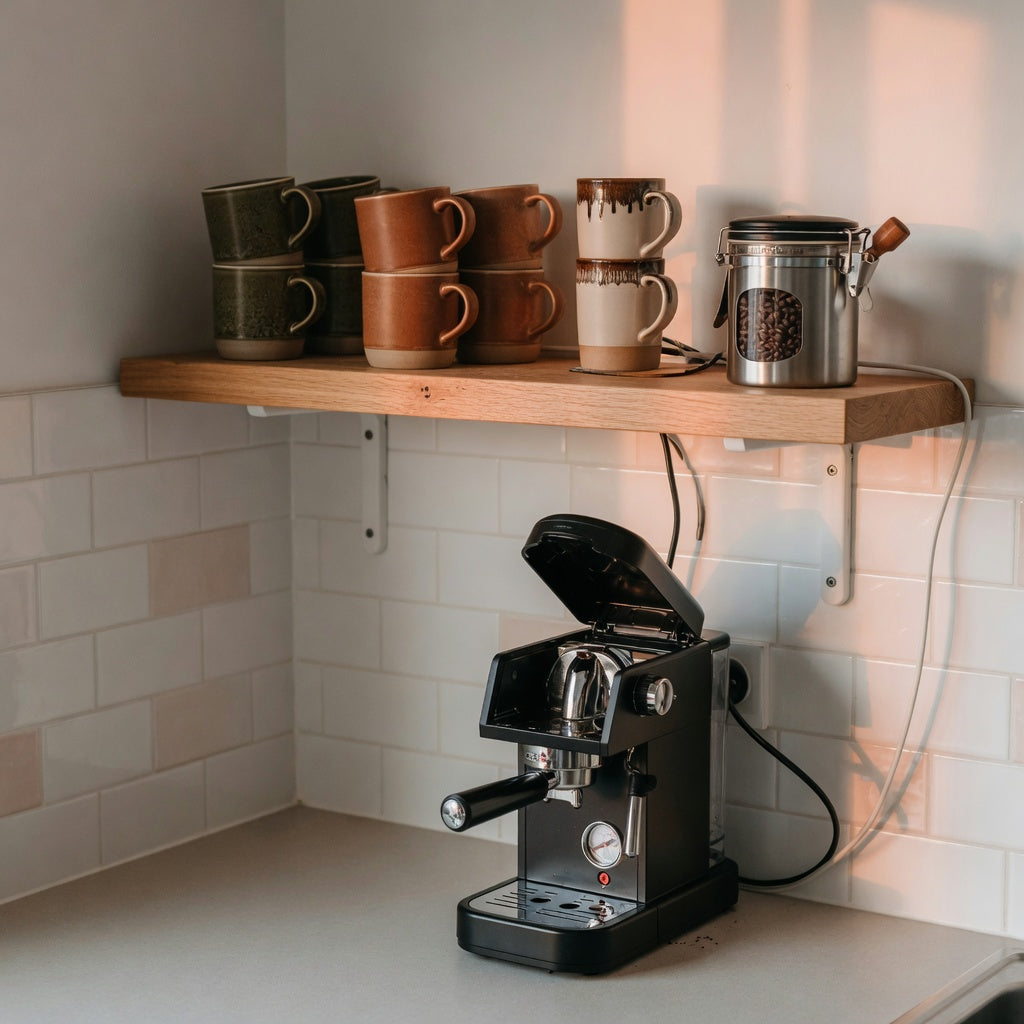
Open Shelf Coffee Corner Ideas With Mugs: What Buyers Should Compare
Shelf load math, mug clearance, display capacity, outlet placement, and rental-safe mounting — compared from real customer photos and daily packing-bench experience, plus which mugs actually earn d...
Read more
Unique Christmas Mugs for Office Gifts: What to Compare Before Buying
A store-side comparison guide to unique christmas mugs for office gifts: matching mugs to Secret Santa budgets, verifying food-safe glazes, handling metallic trim near the microwave, sizing for off...
Read more
Leave a comment
This site is protected by hCaptcha and the hCaptcha Privacy Policy and Terms of Service apply.