



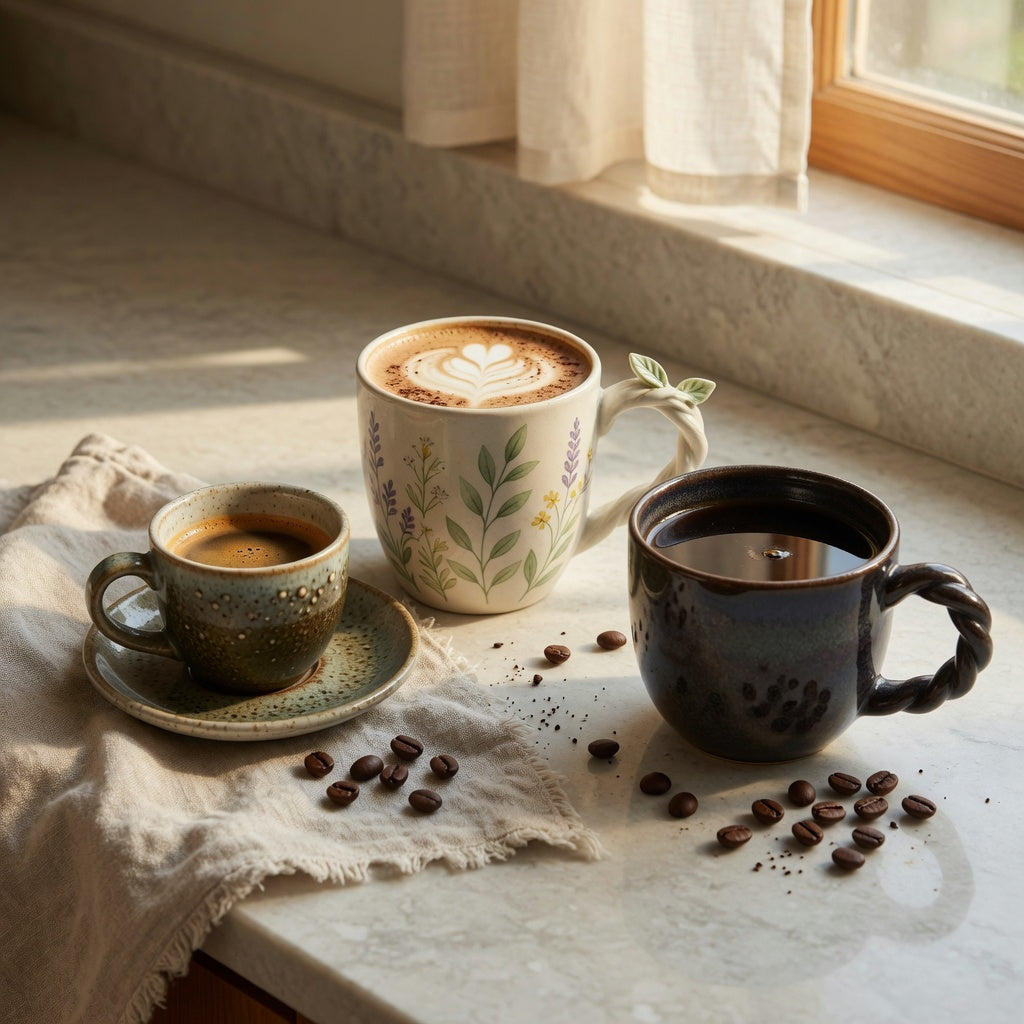
Unique Ceramic Mug Ideas: What to Compare Before You Buy
Reading time: about 10 minutes
A mug can look one-of-a-kind on a shelf and still fail at 7:10 a.m. The handle pinches your knuckles, the rim sends coffee down the side, or a 170 ml cup is empty before the toast pops. We pack and ship ceramic mugs from our own store, and the returns we see rarely come from a good-looking mug. They come from a mismatch between the idea and the drink. So this comparison of unique ceramic mug ideas runs on what you can actually check: listed capacity, clay body, rim feel, glaze safety, and care.
Which unique ceramic mug ideas earn counter space instead of shelf space?
Most unusual mugs fall into six families. Each one has a different failure point, and the failure point matters more than the style label.
- Sculptural and organic forms - twisted handles, faceted walls, small feet, asymmetrical rims. Check base stability and cabinet clearance. A tall, top-heavy shape is awkward under a low shelf or a drip coffee maker.
- Animal faces and figural shapes - ears, snouts, beaks, tails. Memorable as gifts, but raised details are the first thing to chip and can sit against your upper lip. Ask whether the sculpted areas are glazed as smoothly as the rim.
- Botanical, hand-lettered, and illustrated surfaces - the key question is whether the decoration sits under the glaze or on top of it. Under-glaze work wears better; on-glaze decals and metallic accents need gentler handling.
- Speckled, reactive, and kiln-varied glazes - two mugs from the same batch can differ in color and surface texture. That variation is the appeal, but do not buy a pair expecting a matched set unless the listing says so.
- Color-block and dip glazes - run a fingertip along the glaze line near the rim. A sharp ridge feels odd against your mouth and traps residue.
- Personalized names, dates, or photos - practical gifts, but confirm production time and whether the print or decal is rated for the dishwasher on that exact listing.
A display-only mug is a perfectly good purchase. Just decide that before you spend on a set. A piece that is beautiful and uncomfortable is a buying decision, not a defect.
Do sculptural mugs hold enough for the drink you actually make?
Capacity is the first number to compare, and looks mislead. A wide bowl with a small handle can photograph like a 12-ounce mug and hold far less. The FDA describes typical coffee cups and mugs as small hollowware of roughly 240 ml (8 fl oz), but that is a regulatory category, not a rule for your latte. Here is where our three mugs sit:
| Mug | Listed capacity | Sensible drink fit | What to verify on the listing |
|---|---|---|---|
| Retro Coffee and Tea Cup | 170 ml | Espresso, cortado, or a short tea | Handle opening, rim diameter, and the care field |
| The Flow Coffee and Tea Mug | 400 ml | Drip coffee, cappuccino, or a latte with room for foam | Height under your machine, handle clearance, care instructions |
| The Rock Coffee and Tea Mug | 480 ml | A large coffee, an iced drink, or a long desk session | Weight when full, base width for a cup holder, handle comfort |
Those figures are listed capacity, not a promise about heat retention or appliance compatibility. Material and care details belong to the individual listing. If a field is blank, ask before you buy rather than borrowing the answer from a similar-looking mug.
Filter by drink first and the glaze choice gets easier. If you want to compare shapes rather than sizes, browse our unique coffee mugs collection - settle the size, then pick the finish.
Why does the clay body change how a unique mug ages?
Two mugs can share a glaze color and behave nothing alike, because the body underneath decides porosity, weight, and how the rim chips.
Earthenware is fired at roughly 600-1100 degrees Celsius and stays porous, above 15 percent by the Western Australian Museum's ceramics guide. It gives warm, rustic color, but a porous body stains more readily and is less forgiving of thermal shock. Stoneware is fired around 1200-1300 degrees Celsius and is vitrified, with porosity under 3 percent - the practical middle ground for a daily mug: dense, less likely to take on stains through the body, and sturdy in the hand. Hard-paste porcelain is fired near 1400 degrees Celsius and is vitreous and non-porous. It can be thin and light, but a thin wall passes heat quickly, so handle design matters more than the number on the scale.
Those labels describe the body, not the care routine. Ceramic is a family, not an instruction. Our product pages list capacity; where a material or care field is not shown, treat it as unverified and ask us. We would rather answer a question before purchase than explain a cracked mug afterward.
What do FDA lead limits tell you about a brightly glazed mug?
For cups and mugs, FDA compliance guidance sets a lead action level of 0.5 micrograms per milliliter, applied to any one of six tested units. Flatware is measured against a 3.0 micrograms per milliliter average. Cadmium action levels are 0.5 micrograms per milliliter for small hollowware under 1.1 liters and 0.25 micrograms per milliliter for large hollowware of 1.1 liters or more. Drinking vessels get the tighter treatment because hot coffee or tea sits against the glaze, often for a long time.
An action level is a regulatory threshold, not a certificate you can print on a mug. The FDA also warns that lead can leach from improperly formulated or fired glazes and decorations, and that washing, boiling, or other home processes cannot remove lead from pottery. Its guidance flags extra caution for handmade pottery with a crude or irregular look, antique or damaged pieces, pieces from a maker who cannot be verified, and bright orange, red, or yellow decoration, where lead has often been used to intensify pigment. None of that makes every bright glaze suspect. It does mean the seller should be able to answer a direct question about glaze and firing.
We treat food-contact safety as a separate question from style. A hand-painted floral mug can be a sensible daily choice when the glaze and firing are documented, and a plain mug of unknown origin can still be a poor bet.
Is microwave-safe the same as dishwasher-safe or lead-free?
No. Those are three different claims, and listings blur them constantly.
Microwave safety is about how the mug and its glaze behave under microwave energy. USDA FSIS guidance says to use only cookware manufactured for microwave use, lists china with metallic paint or trim as not safe in a microwave, and describes a screening test: microwave a cup of water alongside the piece; if the piece becomes hot, it contains metal in the body or glaze and should stay out. A gold rim can be perfectly food-safe and still be a bad microwave candidate.
Dishwasher safety is about heat, detergent, and mechanical wear. Repeated cycles dull metallic lusters, wear on-glaze decals, and stress a thin handle. If the listing does not state dishwasher-safe care, hand wash it. For our mugs, use the care field on the current product page; if it is blank, contact us before ordering instead of assuming.
Food-contact safety is about what can leach from the glaze into the drink. Keep all three checks separate. A mug can pass a lead-leach test and still have a handle that pinches or a rim that drips.
How do you check handle clearance, rim comfort, and pour lip before the first fill?
Photos hide the details that decide whether a mug becomes a favorite. Work through this sequence:
- Handle. Look for clear open space between handle and body. On a mug you already own, slide two fingers through; if your knuckles touch the wall, a full hot mug will feel worse. Large hands and arthritic grips should prioritize an open handle over a sculptural loop.
- Rim. Run a fingertip around the lip. A thick rolled rim feels soft but can trap liquid; a thinner tapered lip usually pours more cleanly. Chips start at the rim, so inspect that edge the day it arrives.
- Pour lip. Fill with water and pour over the sink. A slight outward flare helps; coffee running down the outside is a daily annoyance even when it is not strictly a defect.
- Base. Set it on the counter and press one edge. A wobble means hot liquid moves more than you want.
- Usable capacity. A thick-walled, sculptural mug can hold noticeably less than its exterior suggests. Look for a stated fill capacity or ask.
One more test: can the mug sit upside down on your dishwasher tines? A decorative handle or a wide foot can make that awkward. If it will not sit stable and drain, hand washing stays the safer routine even when the glaze carries a dishwasher-safe label.
What should you ask before buying a mug you cannot hold first?
Six questions cover most of what a photo cannot show:
- What is the exact fill capacity, and is it measured to the rim or to a comfortable fill line?
- Which clay body is it, and at what temperature was it fired?
- Is there a written food-safe glaze statement?
- Is it microwave-safe, dishwasher-safe, both, or neither?
- Do metallic trim, decals, or raised sculptural details change the care routine?
- What happens if it arrives chipped or wobbles?
A seller who answers these in writing is easier to buy from than one who only posts styled photos. If the answers stay vague, treat the mug as a display piece and budget for it that way.
Should a unique mug be a gift, a display piece, or a daily driver?
Start with the recipient's routine, not the design. A gift mug that is beautiful but too small for the recipient's morning coffee becomes a pen cup by February.
Gift-first choices include animal faces, hand-painted botanicals, names and dates, and kiln-varied glaze. They photograph well and feel personal. They are also the pieces most likely to carry raised details or metallic accents, so put care instructions in the card. If a birthday is the occasion, our comparison of ceramic birthday mug gift ideas covers personalization and capacity.
Daily-first choices are simpler: an open handle, a comfortable rim, and a capacity matched to the usual drink. For espresso and short tea, the 170 ml Retro is the sane scale. For drip coffee or a latte, the 400 ml Flow leaves room without constant refills. If someone fills a desk mug and forgets it, the 480 ml Rock cuts refills but is heavier to lift when full and may not suit a shallow cup holder. Those trade-offs are exactly why one size never fits every drinker.
Display-first choices include sculptural mugs with ears, bows, or delicate feet. They are not good candidates for a crowded dishwasher or a cabinet that gets rearranged weekly - and that is fine, as long as you do not buy a set for daily use and then blame the mug. For animal motifs, our Elk Moon ceramic mug gift guide covers shape and occasion. Buying two? Read ceramic mug pair styling ideas first, because kiln variation can make two identical mugs look like cousins.
Frequently asked questions
How do I compare unique ceramic mug ideas without overbuying?
Start with the drink you make most often, then the handle and rim. Check listed capacity, the clay body if it is stated, and the care field on the exact product page. A mug that fits your routine beats a shelf piece you are afraid to use.
Are handmade ceramic mugs dishwasher safe?
Not automatically. Tolerance depends on the clay body, the glaze, and any applied decoration, especially metallic lusters and on-glaze decals. If the maker does not state dishwasher-safe care, hand wash. For our mugs, read the care field on the current listing rather than assuming all ceramic is the same.
Does microwave-safe mean the glaze is lead-free?
No. Microwave safety concerns how the mug responds to microwave energy, while lead safety concerns what can leach from the glaze into a drink. A mug can be labeled microwave-safe and still need a separate food-contact glaze statement. Metallic trim is a specific reason to keep a mug out of the microwave.
What capacity is best for espresso, cappuccino, or drip coffee?
For espresso or a short tea, 170 ml is a practical small format. A standard drip coffee or cappuccino fits comfortably in 400 ml. For a large desk mug or an iced drink, 480 ml is the generous option, though a full large mug is heavier and can be awkward in a shallow cup holder.
Which mug should I start with for daily coffee?
For a standard coffee, start with the 400 ml Flow. For a large desk mug, compare the 480 ml Rock. For espresso or short tea, look at the 170 ml Retro. Confirm handle clearance and care on the exact listing before ordering, or browse the unique coffee mugs collection and compare capacity first.
Ready to pick your mug? Two ways to save on today's order:
Ordering 1–3 mugs? Get an extra 10% off your 1st order with code 10_OFF Apply 10% Off & Shop Wooden-Handle Mugs →
Gifting 4+ mugs? Buy 3, Get the 4th Free applies automatically at checkout (no code needed; offers do not stack) · Free standard shipping (Nov pre-Christmas delivery: 15–20 calendar days US) · Free replacement if chipped in transit.
Popular mug buying guides: Ceramic Tea Cups & Infuser Mugs · Ceramic Mugs with Lids Compared · Wooden-Handle Tea Infuser Mugs Compared · Christmas & Secret Santa Mugs 2026 · Espresso & Cortado Cups Guide · Cup & Saucer Gift Sets · All 25 Mugs Spec Table · Mug Size Guide · Shipping & Promo FAQ
FIRST ORDER 10% OFF (CODE: 10_OFF) · OR BUY 3, GET THE 4TH FREE


Read more

Office Desk Coffee Mug Gift Ideas: What Buyers Should Compare
A store-side comparison of desk mugs, lidded cups, tumblers, and heated mugs for office gifting — covering capacity, handle clearance, desk footprint, dishwasher and microwave risks, food-safety la...
Read more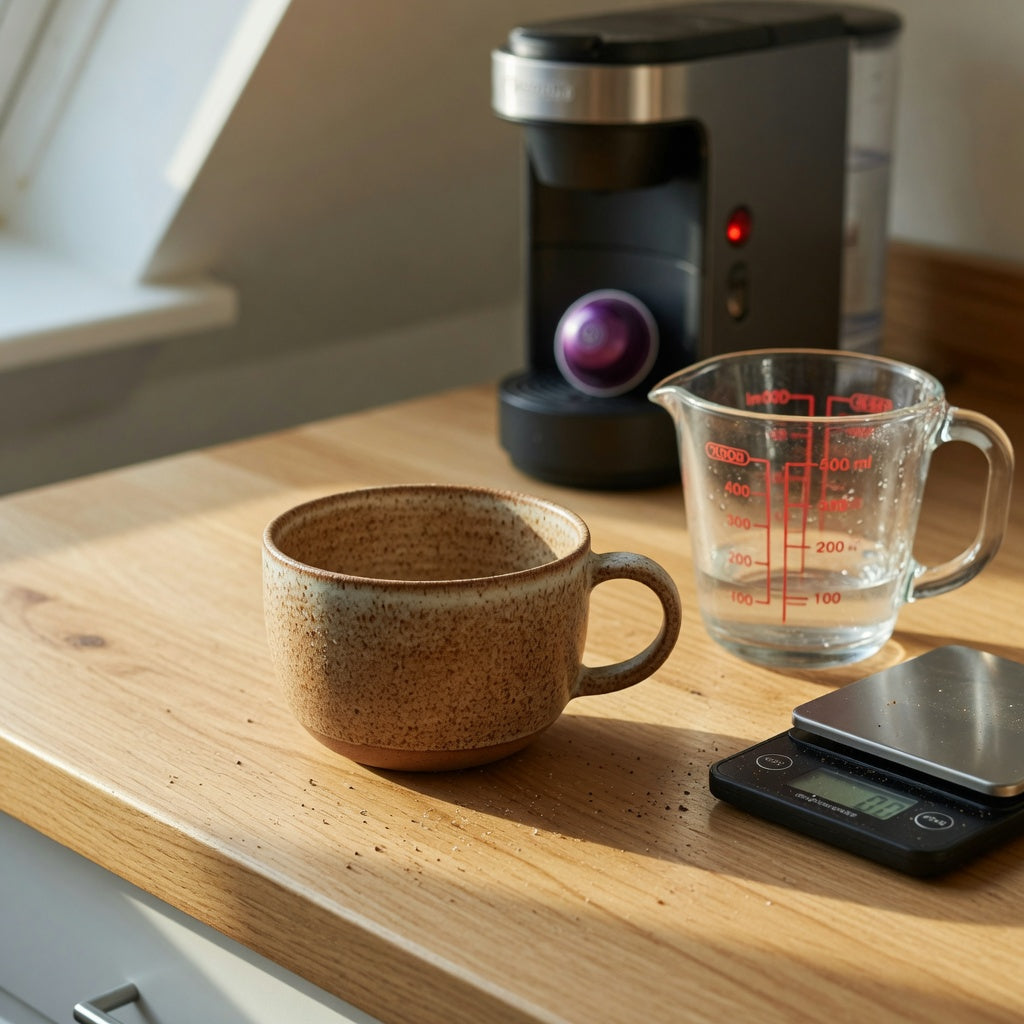
Large Round Ceramic Coffee Mug: What Buyers Should Compare
The ounces on the label are rarely what you pour. Here is how our team compares large round ceramic mugs — usable fill, rim shape, brewer clearance, handle fit, microwave labels, and glaze testing.
Read more
Leave a comment
This site is protected by hCaptcha and the hCaptcha Privacy Policy and Terms of Service apply.