
Ceramic Mug Pair Shelf Styling Ideas: What Buyers Should Compare
Reading time: about 9 minutes
Last month a customer emailed us a photo of her new floating shelf with a politely worded question attached: what did she do wrong? Two mugs, evenly spaced, dead center, nothing else in sight. The mugs themselves were lovely. The spacing made a brand-new pair read as leftovers. That photo is why we put together these ceramic mug pair shelf styling ideas — because a two-mug display lives or dies on three variables you control before you buy anything: height, breathing room, and what sits beside the pair. Handle those and two mugs look intentional. Ignore them and even the nicest glaze disappears into the wall.
Ceramic mug pair shelf styling ideas: the four moves that work
The displays in our store that stop people mid-aisle all follow the same four moves. They take about two minutes once you know them:
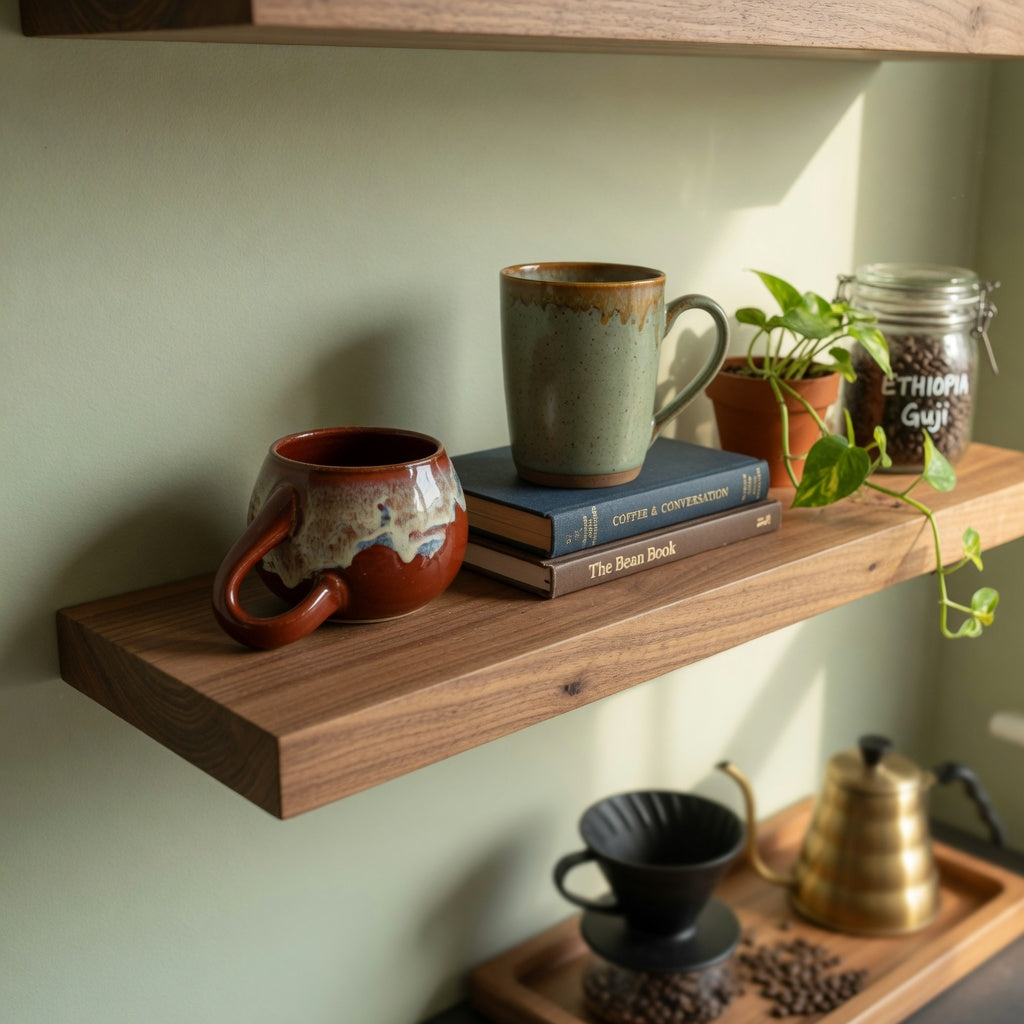
- Create a height offset. Raise one mug two to four inches on two stacked hardcovers or a short wooden riser. Two objects at identical height read as a flat line; a few inches of difference creates depth in person and on camera.
- Add one anchor object. A pair plus a third element — a trailing plant, a canister, a leaning print — turns a line into a vignette. Two items alone rarely hold a longer shelf.
- Leave negative space. Keep visible shelf or wall on both sides of the group. Air is what signals arranged on purpose instead of storage ran out.
- Angle the handles. Set both handles to ten and two o'clock so the mugs face the room. Handles pointed dead-ahead read stockroom, not styled.
Matched pair or split pair: which layout fits your shelf width?
Before styling comes the buying decision, and it hinges on shelf width more than taste:
| Layout | What it does on the shelf | Best fit | The trade-off |
|---|---|---|---|
| Matched — two of the same mug | Calm, symmetrical, deliberately tidy | Narrow shelves, above a coffee station, minimal kitchens | Reads flat without the height offset, and chip one mug and the symmetry breaks |
| Split — two different silhouettes | Builds contrast; feels collected over time | Longer shelves, open-plan walls, eclectic kitchens | Tips into accidental clutter faster, so the anchor object matters more |
If you lean matched, two of our round coffee tea mugs side by side give you tidy symmetry with a rounder profile that suits tighter shelves. For the split look, set that same round shape against our Landscape Tall Coffee Tea Mug — a tall silhouette beside a round one delivers contrast without any extra decor. One thing we insist on before any of that: confirm exact capacity, dimensions, and current glaze colors on each listing. We rotate colorways and details can shift between batches, so check rather than assume. Still deciding? Build the pair from our unique coffee mugs collection instead of committing to the first shape you see.
Want the pair to earn its keep at the table too? Our shelf-to-table mug pair styling guide walks through that transition in detail.
How your shelf type changes what you can style — and what to check first
- Floating shelves: confirm the shelf manufacturer's rated load and your wall anchors before treating the shelf as display furniture. Keep the taller mug toward the wall side — front-edge items get clipped by sleeves and dish towels. And skip walls directly above a stovetop or kettle, where grease and steam film the glaze within weeks.
- Ledge shelves: shallow depth means display only. Set the pair a finger's width back from the edge and skip anything that overhangs.
- Under-shelf mug hooks: hanging a pair frees the shelf top for your anchor object. Test the actual mug's handle on the hook before committing hardware — measure the handle's inner opening against the hook's thickness and leave a little wiggle room. A handle that almost fits will annoy you daily.
- A coffee-station shelf: style the pair within arm's reach of the machine so displaying and drinking stay the same habit.
One detail most guides skip: handmade ceramics sometimes ship with an unglazed foot ring that can scuff painted or lacquered shelf finishes. A thin cork or felt pad under each displayed mug protects the surface — check the listing photos or ask the seller about the base before setting a pair on delicate shelving.
We can't rate your wall from here, so treat every load figure as coming from the shelf or hardware maker, not from us. Anchor type, stud placement, plaster versus drywall — those set the real ceiling of what's safe. Working with a shallow or awkward wall? Our mug shelf ideas for small kitchens cover which shelf types earn their footprint. If the structural questions stay unresolved, style the pair on a counter tray instead. A styled surface beats a sagging shelf every time.
What belongs next to a mug pair — and what crowds it out
- A pour-over cone or small dripper, which signals the shelf is a working station, not a museum
- An airtight canister of beans or tea, which repeats the ceramic texture without competing with it
- A trailing plant such as pothos, whose soft leaves break up all those hard glazed edges
- A small framed print leaned against the wall behind the pair, adding depth the height offset started
- Two stacked cookbooks, which moonlight as the riser for your offset mug
Three things crowd a pair out fast: more than about five objects on a short shelf, one oversized item (a big French press dwarfs two mugs instantly), and anything crumb-prone. Open snacks and loose-leaf tea near displayed ceramics mean grease film and dust on the glaze. Style food only in sealed containers, or not at all.
Display-only or daily driver? Care questions to settle first
Displayed mugs collect a fine dust film within a few weeks, and it settles on rims first — exactly where your mouth goes. Wipe a displayed mug inside and out, then wash it before the first pour after any stretch on the shelf, and don't let yesterday's coffee sit in a displayed mug for days.
Finish matters too. In our experience a matte glaze shows dust film and fingerprints sooner than a glossy one, so weigh that before choosing a colorway if you hate dusting. Glazed ceramic made for food use is generally fine to drink from after a display stint, but generally fine is not a specification. Read the care and food-contact notes on each listing, because specialty glazes and hand-finished surfaces sometimes carry different guidance, and dishwasher or microwave suitability varies by finish. If a listing doesn't answer the question, ask the seller before the mug meets a dishwasher.
The honest trade-off: a display pair is furniture. If you bought these mugs to drink from, style them where you can lift them down one-handed. The mugs people regret, in our experience, are the ones shelved so preciously they never pour a single cup.
Renter-friendly styling: the no-drill version
- Adhesive under-shelf hooks — only when the packaging states a weight rating, your empty mug sits comfortably under it, and the surface is smooth and clean. Textured or freshly painted surfaces are where adhesive lets go, and heat from a nearby kettle shortens its life.
- A ledge shelf on a dresser, console, or the top of the fridge — zero wall contact, full styling range.
- A wooden tray vignette on the counter — corrals the pair plus one anchor, and it moves with you at lease end.
If a hook fails, ceramic meets tile. We would rather see a favorite pair styled on a tray at counter height than hanging at head height on adhesive and hope.
Save the hooks for lighter mugs on smooth surfaces, and keep the pair you love at drop-proof altitude.
Rotating the pair through the seasons (and the gifting angle)
Swap one element at a time rather than restyling from scratch: the plant steps out for a pine sprig in December, the canister gets refilled with a different roast, or one mug trades places with a seasonal glaze to shift the whole color story without touching hardware.
Mug pairs are also one of the easier ceramic gifts to land, because the styling test happens in the recipient's home, not yours. If a pair is headed out the door as a gift, our round ceramic mug gift ideas comparison covers what to weigh first — and check whether each listing sells singles or true sets of two before you order two of anything.
Frequently asked questions
What are the easiest ceramic mug pair shelf styling ideas for a first attempt?
Raise one mug on two stacked hardcovers, angle both handles to ten and two, add one small plant as the anchor, and keep a hand's width of clear shelf on each side of the group. That single arrangement covers the height offset, anchor rule, and negative space in about two minutes.
How far apart should two mugs sit on a shelf?
Close enough to read as one group — roughly a hand's width between them — rather than spread across the shelf. If the pair starts looking like bookends for an empty middle, slide them together and let the anchor object absorb the leftover space.
Can I hang ceramic mugs under a shelf with adhesive hooks?
Only with hooks whose weight rating is printed on the packaging, mounted on a smooth, clean surface, and holding empty mugs. Test the handle fit first, and accept the trade-off: adhesive that lets go drops ceramic onto whatever sits below. For heavier stoneware or textured walls, style on a surface instead.
Do mugs kept on display stay safe to drink from?
Glazed ceramic made for food use generally is, but verify the food-contact and care notes on the specific listing, since specialty finishes can carry different guidance. Dust settles on displayed rims first, so wash the mug before the first pour, and don't leave liquid sitting in it on the shelf.
Should I buy two identical mugs or two different ones?
Two identical mugs suit narrow shelves and minimal kitchens, where symmetry is the style — just remember that chipping one breaks the match. Two different silhouettes suit longer shelves and collected-over-time looks, provided you add the anchor object. Pick based on your shelf width first, taste second.
A two-minute comparison before you commit the pair
- Measure the shelf's length and usable depth, and note what hangs above it and what sits below.
- If anything will be hung, confirm the shelf or hook manufacturer's rated load and your wall-anchor situation.
- Decide matched or split based on shelf width first, taste second.
- Pick one anchor object, then stop adding.
- Read the care, dishwasher, and food-contact notes on each listing before the mugs enter daily rotation.
Ready to build the pair? Start with the round coffee tea mug for a lower profile or the Landscape Tall Coffee Tea Mug for vertical contrast, confirm the current specs on each listing, and browse the rest of our unique coffee mugs to finish the mix. Two mugs, one offset, one anchor — that's the whole formula.
Read more
Dandelion Ceramic Mug: 6 Things to Compare Before You Buy
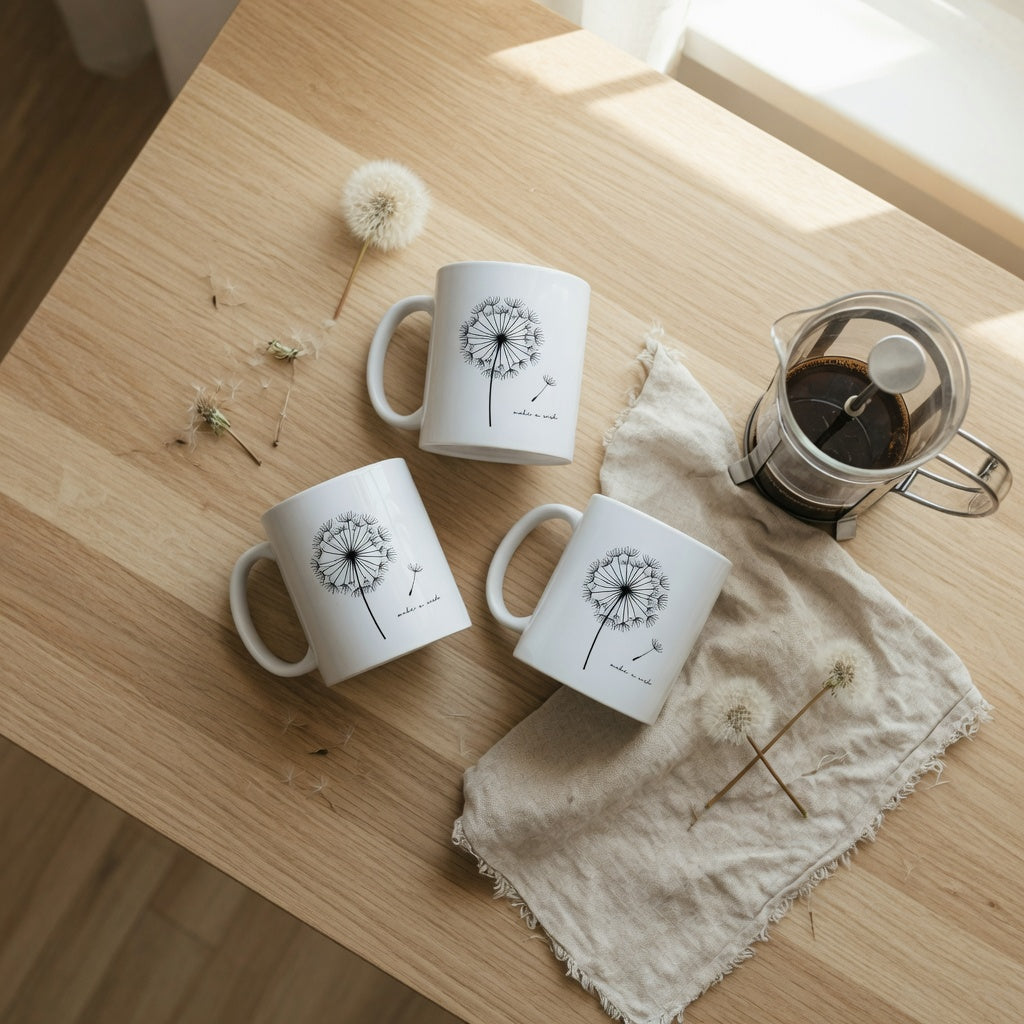
Printed, hand-painted, or real pressed flower? Our dandelion ceramic mug comparison covers design types, 400 ml vs 480 ml capacity, handle fit, dishwasher and microwave care, and the six checks to ...
Read more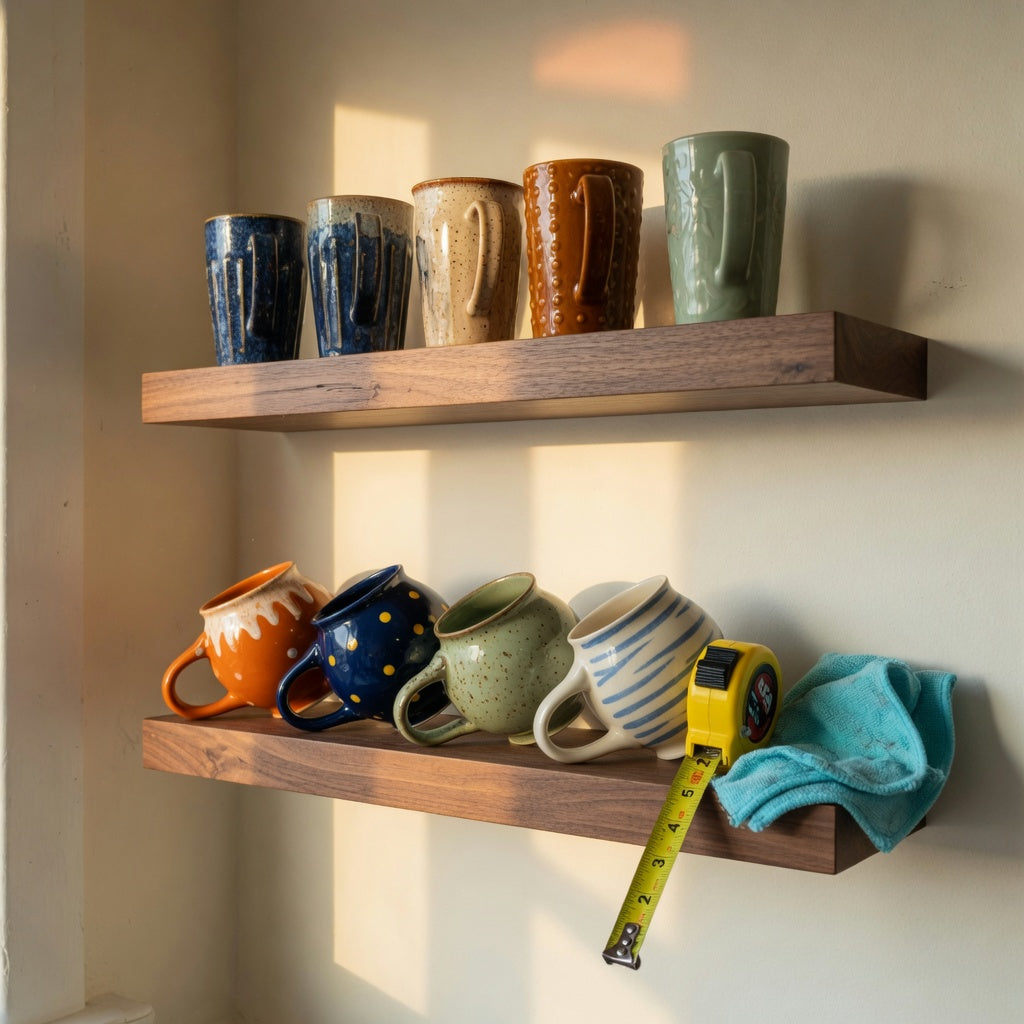
Ceramic Mug Shelf Ideas: Clearance, Load, and Dust Compared
Most ceramic mug shelf ideas online are photo galleries with no numbers. This guide adds the measurements buyers actually need: clearance above tall mugs, load math for a full wall, dust and grease...
Read more
Leave a comment
This site is protected by hCaptcha and the hCaptcha Privacy Policy and Terms of Service apply.