

Tall White Ceramic Coffee Tea Mug: What Buyers Should Compare
Reading time: about 13 minutes
The tape measure comes out before the ounce claim does. A shopper wants a tall white ceramic coffee tea mug because the last wide cup swallowed the mouse pad, or because a short diner mug meant a second walk to the kettle. The next cup is tall enough to hit the brewer spout. Another looks light in the photo and turns heavy once it is full. Tall is a shape. The ounce figure is a volume claim. Neither one tells you whether the rim clears the machine, whether a smaller hand wants to keep holding it, or whether a white glaze still looks decent after a month of coffee.
In our store we handle this shape often enough to see which details change the purchase. Height, rim, base, usable fill, handle opening, wall heat, and how the glaze looks after dishwashing matter more than a styled photo. A blank line on the page is still an open question.
Why ounces alone mislead on a tall white ceramic coffee tea mug
There is no shared definition of tall in drinkware. One listing means a narrow latte profile. Another means any cup bigger than the one already in the cupboard. You will see advertised fills from the mid-teens of ounces into the 20s, and buyers often dispute whether the drinkable line matches the number on the box. Usable capacity is what you can carry from the kettle to a chair without the liquid climbing the lip. That is less than a brimful pour.
Headroom is the part the headline ounce count skips. Milk, cream, or a cap of foam needs space above the coffee. A tea infuser, on mugs that actually include one, takes width and depth. Fill to a generous advertised mark and then add milk, and the cup is already over full.
The U.S. National Institute of Standards and Technology defines 1 U.S. fluid ounce as 29.57353 milliliters. Use that when a page mixes ounces and milliliters. In its pottery guidance, the U.S. Food and Drug Administration describes a typical cup or mug as small ceramic hollowware for drinks such as coffee or tea served above room temperature, normally but not exclusively about 240 milliliters (8 fluid ounces), and usually made with a handle. A mug marketed as tall often sits well above that everyday reference, which is why the first full pour feels different from the photo.
The figures below are rounded from that NIST definition. They are a unit check, not the capacity of any mug we sell.
| Listed U.S. fluid ounces | About this many milliliters | How we talk about it at the counter |
|---|---|---|
| 8 fl oz | 237 mL | Near the FDA typical cup size of about 240 mL |
| 12 fl oz | 355 mL | A regular mug with a little room for milk |
| 16 fl oz | 473 mL | Large; leave headroom so you are not sipping off the rim |
| 20 fl oz | 591 mL | Extra large; check full weight and machine clearance first |
If a product page does not show fill, height, rim diameter, and base diameter together, the ounce claim is unfinished. On the current listing for our White Golden Waves tall coffee tea mug, read those four numbers yourself. Do not infer them from the product name or the camera angle.
Will the height clear the brewer, the shelf, and the dishwasher rack?
Ounces do not tell you whether the mug fits the kitchen. A wide 16-ounce mug can be short enough for a low brew head. A narrower cup with a smaller fill can still be too tall. Measure the open space you actually have, then set the listing numbers next to it.
If the rim does not clear the spout, the ounce count does not matter.
- Brewer or home espresso clearance. Measure from the drip tray or cup platform up to the spout or group head. Leave a small gap so the rim does not strike the outlet when you slide the mug in.
- Cabinet shelf. A tall body plus a handle that rises above the rim will not live on a short shelf. This shape rarely stacks, so do not plan on nesting a set.
- Dishwasher rack. Check the gap on the rack you actually use, and whether the handle catches tines. A dishwasher word in a title is not a description of the cycle or the glaze.
- Desk bump and car cup holder. A narrow base under a tall wall tips when someone knocks it. Many console holders are sized for a shorter, wider cup.
A tall white ceramic coffee tea mug sheds heat through a single wall. It belongs where it can sit still: a kitchen counter, a reading chair, a desk. It is the wrong tool for a sealed lid, a car-console commute, or coffee you want hot an hour later. If a shorter or wider silhouette would clear your machine, run the same tape-measure test through our unique coffee mugs collection before you commit to height.
How heavy is a full pour, and does the handle stay holdable?
Ceramic is heavier than a product photo suggests, and the water is the first surprise. Sixteen times 29.57353 milliliters is about 473 milliliters. At about a gram per milliliter, that pour is near 473 grams. A pound is about 454 grams, so the liquid alone is a little over a pound before clay, glaze, or milk. Add a thick wall and the third trip from the kitchen can feel like a small dumbbell. Shoppers with smaller hands tell us they like the look, then set the cup down more often than they expected.
Handle comfort is separate from capacity. We look for an opening the fingers can pass through without pinching, and a join at the body that feels solid rather than like a thin loop added at the end. A larger hand needs a taller opening. A smaller hand can still struggle if the full mug is simply heavy. On a single-wall cup the handle usually stays cooler than the body, but it is not an insulator. Heat moves through the clay. If grip is why you are still comparing, our guide to ceramic coffee mugs with large handles separates opening size from the ounce claim.
A thicker wall or a double-wall ceramic body can take the sting out of the grip. The tradeoff is more bulk, sometimes more weight, and a rim that drinks differently. An insulated travel tumbler solves heat and spills and leaves the ceramic-on-the-table brief behind. Pick the problem you are actually solving.
Titles swap ceramic, porcelain, and stoneware as if they were different families of product. Shoppers meet porcelain on thinner white cups and stoneware on thicker opaque ones. Those are selling habits, not a test of the mug in the cart. If the listing only says ceramic, that is all you know until the page says more. On the White Golden Waves page, confirm material, any published weight, handle notes, and care there. The name will not answer them. If the mug is also meant to sit out between pours, treat drinkware first. A display piece still has to be something you would hand someone with hot coffee.
What coffee and tea do to a white glaze
White is honest. Coffee and tea show on it. Tannins leave a brown line where the lip meets the mouth, especially if a mug sits all afternoon. In our experience a rinse once the cup has cooled does more than a weekend soak. Skip steel wool and gritty powders. They dull the glaze, and a roughened surface stains faster the next day.
Crazing is the fine crackle some glazes develop after repeated hot washes and hot pours. A light surface pattern can be cosmetic. A crack you can catch with a fingernail, a chip on the drinking rim, or a fracture where the handle meets the wall is a different object. Stop drinking from it. Cracks hold residue, and the chipped lip is where the mouth actually lands.
FDA treats damaged or excessively worn ceramicware as a higher-risk pattern for lead problems, along with handmade pieces that look crude, antiques, ware from uncertain sources, and items brightly decorated in orange, red, or yellow. Washing does not repair a broken food surface, and washing or boiling will not remove lead from pottery that can leach it. This style is a weak choice if you want a cup that hides tea stains, rides in a toolbox, or survives a weekly fall onto tile. Ceramic chips. A hard impact can break a thick body as well as a thin lip.
Which lead, cadmium, and microwave claims are actually readable?
Intact, factory-made everyday pottery is much less likely to be a lead problem than the ware FDA flags: handmade pieces with a crude look, antiques, damaged or excessively worn cups, pottery from uncertain sources, and items brightly decorated in orange, red, or yellow. California’s public health department adds that lead rarely turns up in plain white dishes. None of that is a leach test for a decorated design. A wave reference in a product name is not a plain-white cup, and it is not a lab report.
FDA’s action level for lead leaching from ceramic cups and mugs is 0.5 micrograms per milliliter of leaching solution. Cadmium’s action level is 0.5 micrograms per milliliter for small ceramic hollowware and 0.25 micrograms per milliliter for large hollowware. Those are enforcement thresholds. They do not prove the mug on your screen was tested, and they are not a statement about what is in your coffee.
There is no known safe level of lead exposure, and fetuses, infants, and children are particularly vulnerable. FDA has linked childhood lead poisoning with learning disabilities, delayed development, and lower IQ scores. Lead can move from a glaze or decoration into food or drink if the pottery was not manufactured and fired properly. Correct firing binds the lead into the glaze. Washing or boiling will not remove it. If a home test finds leachable lead, do not cook, serve, or store food or drinks in that piece. Anything labeled not for food use stays off the table.
Heat matters on ware that actually contains lead. Cooking or microwaving can speed leaching. Dishwashing a leaded piece can damage the glaze, raise later leaching, and sometimes contaminate other dishes in the load. Lead on a non-food surface is generally a different issue from glaze that touches the drink. Pull a suspect older bowl out of the wash with your everyday mugs. Do not read that as a warning on every new commercial mug, and do not read plain-white guidance as a pass for a decorated one.
A lead-free badge is narrow. FDA says ceramicware should not be called lead free if the agency’s test still finds extractable lead. If the listing does not explain the test in language you can follow, treat the badge as marketing. Look for a food-use purpose, any origin the maker actually states, and an intact glaze. We do not expect a home test on every new mug from our store. A cracked cup still comes out of service.
Microwave use is a separate line. Heat food only in ceramic or other cookware the maker says is microwave-safe, not on melamine tableware. Melamine is a different material that shows up in searches for white dishes. If gold-looking decoration is metallic, do not assume the microwave is safe. On a name that includes golden waves, read the current page for a metallic-trim note and an explicit microwave line. The name is not a yes or a no.
Is a tall coffee refill the same mug as a tea steeper?
Coffee drinkers usually want fewer trips to the pot, room for milk, and a rim that is comfortable for a long sip. A tall cup does that when the base is stable and the handle works. It does it badly when the opening is so narrow a spoon cannot stir the bottom, or when the mug is so tall it has to live beside the brewer instead of under it. If the real issue is a large daily pour rather than a narrow footprint, our capacity notes on oversized ceramic coffee mugs are the wider comparison. A big ounce number in a short wide body solves a different problem than a tall narrow wall.
Tea drinkers often want another object: room for leaves to open, a way to lift those leaves out, and sometimes a lid for a short steep. Some tall tea mugs are sold with an infuser and a lid. Plenty of ceramic coffee mugs are not. Do not infer a basket, a lid, or a spare from a tall silhouette, or from the words coffee and tea in a title. On the White Golden Waves listing, look for an accessories line. If it is absent, you are buying a drinking cup and should steep loose leaf in a separate pot.
Hot soup is the other mismatch we hear at the counter. A tall narrow mug can hold broth, but a deep tight opening is awkward with a spoon, and a single wall runs hot against the hand. A wider, lower bowl mug is the better fit when soup is the job.
A counter check before the mug goes in the cart
Write these next to the listing. If a line is blank, leave it blank. Do not fill it in from the photo.
- Usable fill in fluid ounces and milliliters, and whether that number is to the rim or to a line you can walk with.
- Height, outside rim diameter, and base diameter, set against your brewer gap, shelf, and dishwasher rack.
- A published weight if the page has one, plus the liquid. A 16-ounce pour of water is already a little over a pound.
- Handle opening, and whether a hot single wall is acceptable. Skip the mug if you need a cool grip for a long carry.
- White-glaze reality: coffee and tea will mark the lip. A chip or a crack you can feel retires the mug.
- Microwave and dishwasher wording from the maker, plus whether any gold-looking detail is metallic.
- Lid or infuser, stated or not. Daily coffee does not need one. Loose-leaf convenience does.
- A food-use purpose you can read, origin only if the maker states it, and a glaze claim stronger than an unexplained lead-free badge.
Write the brewer gap and the shelf height down, then read them against the current White Golden Waves listing. If the height fails that test, compare a different silhouette in the unique coffee mugs collection with the same checklist.
Frequently asked questions
Does a tall white ceramic coffee tea mug hold the ounces printed on the listing?
Not always. A brimful number, or a generous marketing figure, is often more than you can carry without the drink climbing the lip. Read the stated ounces next to height and rim diameter, and leave room for milk or foam. When the page mixes units, NIST’s definition is 29.57353 milliliters per U.S. fluid ounce.
Will a tall mug fit under a single-serve coffee maker?
Only if the mug’s height is shorter than the gap from the cup platform to the spout, with room to slide it in. The same ounce claim can belong to a short wide mug or a tall narrow one. Measure the machine, then read the height on the current listing. A photo cannot prove clearance.
Is a large ceramic mug too heavy or too hot to hold once it is full?
It can be both. The water in a 16-ounce pour already weighs a little over a pound, and the ceramic body is extra, so smaller hands often set a full tall cup down sooner than they planned. A single wall also passes heat. The handle is usually cooler than the body, but it is not an insulator. Choose a shorter mug, a smaller fill, or a double-wall cup if you need a cool grip for a long carry.
Will coffee or tea stain a white ceramic mug, and when should I stop using it?
Often, especially at the lip, where the drink rests against the glaze. Rinse after the cup cools, and do not scour the glaze with steel wool or gritty powder. A light craze can be cosmetic. A chip on the rim, a crack you can catch with a fingernail, or a break at the handle is a reason to retire the mug.
Is plain white commercial ceramic a lead risk, and can gold-looking trim go in the microwave?
FDA and California public-health guidance treat intact, factory-made plain white dishes as much less likely to be a lead problem than antique, handmade, damaged, or brightly colored orange, red, or yellow ware. That is not a test report for every mug, and a decorated white cup is not automatically plain. Microwave the mug only when the maker says it is microwave-safe. If gold-looking decoration is metallic, confirm that label before you use the microwave.
More from our blog
Read more

Best Everyday Coffee Mug Gift: What Buyers Should Compare
The best everyday coffee mug gift is the cup they actually use on a weekday, not the one that only looks good unboxed. Compare capacity, handle, material, care marks, and glaze safety before you buy.
Read more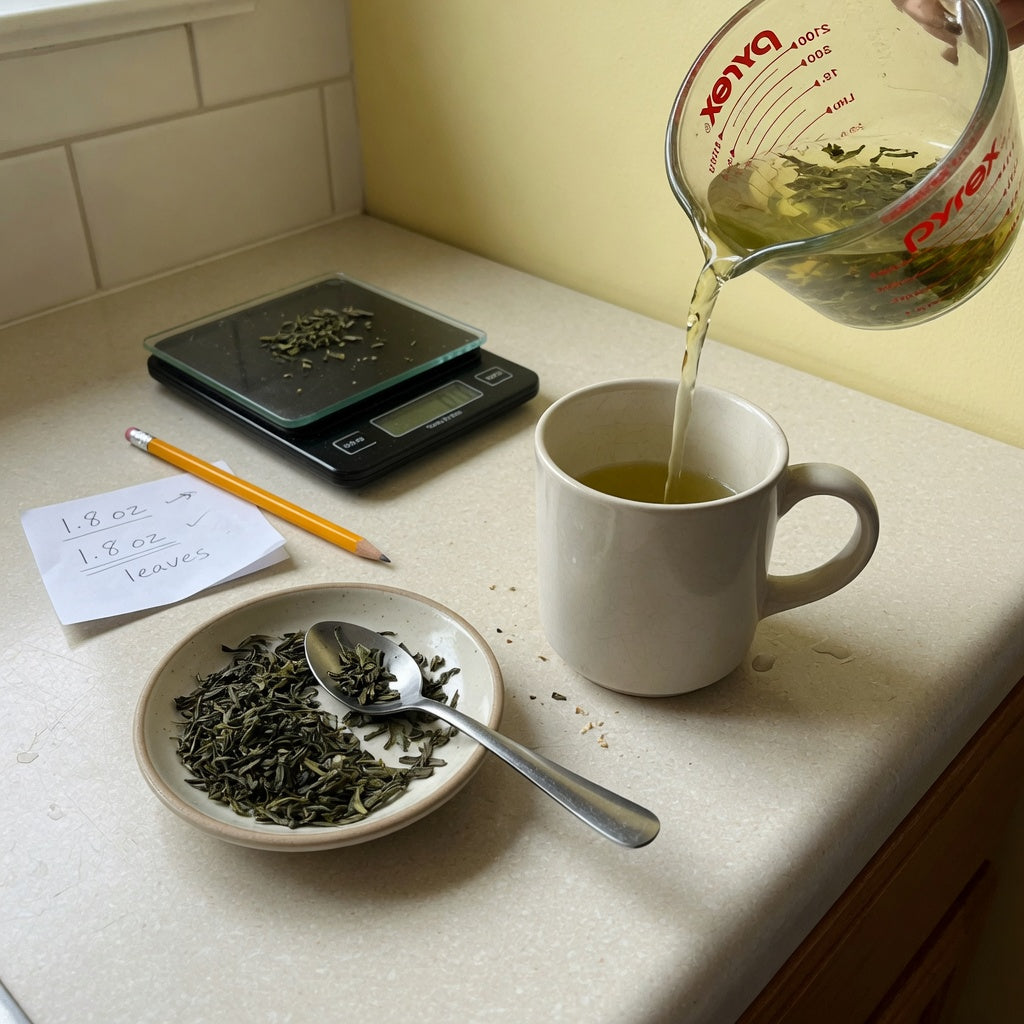
Mug Size for Green Tea: What Buyers Should Compare
A tin that says one teaspoon per cup never says whether that cup is 6, 8, 12, or 16 fl oz. We show how mug size for green tea depends on the pour you measure, the leaf dose, and the steep, not the ...
Read more
Leave a comment
This site is protected by hCaptcha and the hCaptcha Privacy Policy and Terms of Service apply.