

Best Everyday Coffee Mug Gift: What Buyers Should Compare
Reading time: about 14 minutes
The mug that looks best in tissue paper is often the one still sitting on the shelf in March. We see that split after the holiday rush: a decorative cup gets a thank-you, then a chipped diner mug keeps the morning shift. The best everyday coffee mug gift is the cup that matches how that person actually drinks, not the one that wins the unboxing photo.
Maybe they take drip coffee and need room for milk. Maybe they reheat a half cup at a desk. Maybe tea is the real habit and coffee is only for guests. Capacity, handle clearance, filled weight, and care marks decide whether the gift stays in rotation. A pattern can start the conversation. It cannot finish it.
Does the mug survive a normal weekday, or only the unboxing?
In our experience, the gifts that stay out share a few unglamorous traits. They stand steady on a kitchen counter. The rim does not dribble down a shirt. The handle does not bite a palm when the mug is full. And nobody has to hand-wash a special object before work.
Pin the routine down before you fall for a glaze:
- Table or travel: home sipping can live in ceramic. A car cup holder wants a lidded, insulated mug that will not shatter in a bag.
- Black, milky, or iced: milk and ice need headroom. A small cup overflows the moment cream hits it.
- Shared cabinet or one favorite: a stackable set helps a new kitchen. A single mug is kinder when the shelf is already full.
- Dishwasher household or sink washers: a finish that only survives hand washing loses to the plain mug that can go in the rack.
A blank white mug is easy to replace and easy to ignore. If you want something they will recognize as theirs on a crowded drying rack, start with our unique coffee mugs, then run the same practical checks you would use on any daily cup. The look is why they pick it up. Comfort is why it stays out of the cabinet. A mug that only works as a shelf object is a weak everyday gift, even when the picture is the reason you clicked.
What capacity, handle, and weight belong in the best everyday coffee mug gift?
There is no single correct size. U.S. food-safety guidance describes cups and mugs as small ceramic hollowware often used for coffee or tea served above room temperature, commonly but not always around 240 milliliters, about 8 fluid ounces, and usually made with a handle. That is a category definition used for leach testing. It is not a breakfast prescription.
Shoppers comparing daily mugs usually look wider than that 8-ounce reference. A smaller cup suits short black coffee, a tidy tea, or someone who reheats a leftover instead of pouring a huge serving that goes cold. Many people also compare a larger pour in the 12- to 16-ounce range, because milk and a longer sit need headroom. That larger cup is heavier, and it feels clumsy if the handle is tight.
Handle fit shows up in complaints more often than color does. Two fingers should pass through without scraping. The grip should not force the wrist into a pinch when the mug is full. A very small loop looks neat in a photo and fails for larger hands. Cracks often start where a thin handle joins the body, especially if someone lifts a full mug by that narrow loop. Left-handed drinkers are rarely offered a mirrored handle, so a centered, open grip is the safer everyday shape. Buying online, do not guess clearance from a straight-on product photo. Check whether the listing states dimensions, and use the return window if the handle feels wrong in the hand.
Weight is the other quiet trade-off. Thick walls feel sturdy and can hold a little warmth in the body, yet they tire a smaller hand and nick neighboring dishes when someone stacks them wet. Thin porcelain is lighter and often kinder at the lip. It is also easier to knock over beside a laptop. A foot that sits flat matters more than a dramatic silhouette on an office desk.
Rim shape is the detail gift roundups scatter across separate reviews. A wide, thin lip lets drip coffee cool a little as you sip. A narrower opening keeps tea or a milky drink hotter and sloshes less on a breakfast tray. If they switch between the two, favor a rim that does not feel sharp once the mug is hot. You can only confirm that from the listing copy, or by holding the piece.
Treat capacity, material, and handle size as facts you still have to read on the current page. For a home or desk drinker, put three listings side by side and let the page settle the choice. Open the Golden Waves Kio coffee and tea mug as one candidate. Set The Crane coffee and tea mug next to it and compare stated volume, handle opening, material, and care marks, not the title. Use the Mountain Sea coffee and tea mug as the third column in that same check. Names do not tell you ounces, dishwasher status, microwave status, or whether the rim is comfortable for hot tea. If those lines are missing, ask before you buy rather than assuming a standard diner spec.
Do not assume any of those three is a travel mug. If the current listing describes an open cup and does not mention insulation or a lid, it is a kitchen or desk gift. It is the wrong object for a cup holder.
Ceramic at the breakfast table, or steel for the commute?
Material is a use-case choice, not a quality ranking. We walk customers through it this way when they are stuck between a handsome home mug and a travel bottle.
| Material | Fits this routine | Skip it when |
|---|---|---|
| Porcelain, stoneware, or other ceramic | Home coffee or tea, a breakfast tray, reheating only if the maker marks it microwave-safe | The drink lives in a car, or they need heat held for a long slow sit |
| Double-wall glass | Desk sipping when they like to see the drink, and a lighter look beside a kettle | They are clumsy with glass, or the piece is not rated for the dishwasher they actually own |
| Insulated stainless steel | Commuting, cup holders, and slow sippers who will not reheat | They want to microwave leftovers or set out a guest mug without a lid |
A regular ceramic mug will not keep coffee hot the way a vacuum wall does. If they nurse one cup through most of an hour, insulation or a heated mug can be the more honest gift. Heated and temperature-control mugs are optional tools for slow sippers, not the default. Cords, charging bases, and apps get abandoned. The extra cost is hard to justify if the person simply wanted a cup that feels good at 7 a.m.
Ceramic still wins for most house and office gifts. The lip is pleasant, the piece can sit next to a pour-over setup without looking like camping gear, and plenty of daily drinkers finish a serving before heat loss becomes the complaint. An insulated camp mug is the better gift only when heat retention, a leak-resistant lid, and a cup-holder footprint are the actual job.
What a ceramic home mug is not good for: dashboard commutes, packed gym bags, and anyone who drops drinkware into a sink full of pans. If that is the routine, do not wrap a fragile cup and hope they change habits. A piece from our unique coffee mug collection belongs on the table or the desk only after the listing confirms material and care. It is the wrong wrap if their real mug already has a lid.
When is glaze a safety question, not just a color?
Most people only notice lead and cadmium when a product page says lead-free or flashes a warning. The label still does not say what was tested. FDA compliance guidance treats cups and mugs as their own ceramic category and uses a lead action level of 0.5 micrograms per milliliter of leaching solution. A result over that level in any one of six units can support regulatory action when the piece is suitable for food use.
Some ceramic foodware can leach significant lead from the surface that touches the drink. Food can pull that lead out. With continued use, the agency notes adverse effects that include chronic lead poisoning. Cadmium is tracked separately. Imported and domestic ceramic ware has turned up with significant extractable cadmium, which acid foods can pull out, and continued use could contribute to chronic cadmium poisoning. For small hollowware under 1.1 liters, the cadmium action guidance is 0.5 micrograms per milliliter for any one of six units. Large hollowware is held to 0.25 micrograms per milliliter. Testing referenced in those guides includes ASTM C738. A printed claim on a box is not that test.
Firing time and temperature are what make a leaded glaze stable. Done properly, the lead stays bound in the glaze and any move into food is insignificant. Done poorly, that glaze may contaminate the drink. A wash, even a boil, does not strip lead out of pottery. Anything marked not for food use should not cook, serve, or store food or drinks. Some traditional pottery sold as lead-free has still shown extractable lead at levels comparable to lead-glazed ware, in some cases above those FDA action levels. The words on a sticker are not proof.
Give extra caution to handmade crude or irregular pottery, antiques, damaged or worn glaze, flea-market and street-vendor pieces, unknown makers, and brightly decorated orange, red, or yellow traditional ware. Commercially factory-made everyday pottery is described as much less likely to have lead problems. A CDC investigation of a New York City family found elevated blood lead associated with traditional glazed ceramic ware used for cooking, storing meals, and making coffee. Levels declined after the family stopped using that ware. Lead in glaze or paint on that kind of traditional ware can transfer into food or drink prepared, served, or stored in it.
That is the rule we use in our store for a daily coffee gift. Choose a current commercial mug sold for food use. Skip the antique, the unmarked souvenir, and the chipped cup. Be stricter if infants, young children, or a pregnant person share the kitchen. Chronic lead exposure can affect a developing fetus and children without obvious symptoms, and FDA links childhood lead poisoning with learning disabilities, developmental delays, and lower IQ scores. A coffee mug is a poor place to gamble on an unmarked glaze.
Do not read a lead or cadmium test into any design we sell unless the current listing states one. If food-contact wording is missing, ask. Silence is not a certification.
Will the dishwasher, the microwave, or a printed design give up first?
Care marks are part of the gift. FDA microwave guidance is plain enough to use at the counter. Microwaves are reflected by metal, pass through glass, paper, plastic, and similar materials, and are absorbed by food. Glass, paper, ceramic, or plastic containers are used because the waves pass through them. The container can still get hot from the food. Metal pans and aluminum foil are generally a bad idea in the oven, because reflected waves can cook unevenly and possibly damage the appliance.
Gold trim and metallic paint are metal. So is a stainless-steel travel mug. That reflection is why those pieces do not belong in a microwave, even when the body looks like ordinary ceramic or the lid is off. Follow the maker's dishwasher and microwave marks. Assuming every ceramic piece is fine is how trimmed mugs spark and how printed mugs shed their design.
Personalized and surface-printed decoration is the other failure we hear about after the first month. A name, a photo, or a graphic can look sharp on day one and fade, peel, or craze after hot dishwasher cycles. Most durability talk comes from sellers, not from a test you can repeat at home. If this household runs the dishwasher daily, favor a design fired into or under a glaze, and still read the care line. Metallic decoration changes the rules even on an otherwise sturdy mug. Hand-wash anything the listing does not explicitly clear. Retire a mug once the rim is chipped or the glaze is worn through. Damaged food-contact surfaces are the pieces safety guidance tells people to stop using for hot drinks.
Stacking is a quiet chip risk. Nesting sets save a cabinet, and the rims and foot rings rub every time someone pulls a cup. Staining shows up faster on a rough, unglazed foot that never quite dries. A single mug on a hook or a small tray avoids that grind. If the gift is meant to live in view, on a housewarming tray or a desk, compare how the foot and rim will wear, not just the photo.
Shipping is part of care, too. Ceramic breaks when a handle takes the load or a box has empty space. Double-wall the carton, keep the mug off the outer wall, and do not let tissue paper count as cushioning. A steel travel mug forgives a rough carrier. A ceramic one does not.
One mug, a pair, or a set they will store and forget?
Gift format should follow the kitchen they already have.
- Coworker or desk neighbor: one mug they can leave at work. Skip a four-piece set, and skip a joke that only works if they display it.
- Housewarming: a pair makes sense if two people drink together and the cabinet is not already packed. A stackable set is useful only when storage is the problem you are solving. Nesting saves space and also rubs rims.
- Coffee lover with gear: they often care more about rim and handle than about another slogan. A single distinctive mug can be the right object if it is for drinking. It is the wrong object if you only want a shelf ornament.
- Slow sipper: say out loud that a standard ceramic cup cools. Offer insulation or a heated mug as the alternative, and mention the cord or the lid so the gift does not feel like homework.
- Personalized print: only when you know their dishwasher habits and the print method. A design that cannot be replaced is a bad bet if the decoration sits on the surface.
A pricey mug is worth it when the extra money buys a handle they like, a glaze suited to daily hot drinks, and a form they will not baby. It is not worth it when you are paying for a gadget, a metallic rim they cannot microwave, or a fragile showpiece for someone who drinks from a travel cup. A well-made porcelain or stoneware mug is enough for most homes. Match the listing's care marks to the routine, then stop upgrading.
Frequently asked questions
What should I compare before buying the best everyday coffee mug gift?
Compare the routine first, then the mug. Check listed capacity and whether milk or tea needs extra room, handle clearance for the hand that will hold it, and filled weight if dimensions are published. Read the dishwasher and microwave marks on the current page. A pattern you like is the last filter, and if size or care lines are missing, ask before you wrap it.
Is an expensive mug worth giving, or is solid porcelain or stoneware enough?
A well-made porcelain or stoneware cup is enough for most everyday drinkers. Spend more only when you can name the gain: a handle that fits, a glaze meant for daily hot drinks, or heat retention they will actually use. A heated mug or a luxury metallic rim is a weak default if they will never plug in the base or cannot reheat the cup.
Can I microwave a mug with gold trim or a stainless travel mug?
No. Metal reflects microwaves. Gold trim, metallic paint, and stainless-steel travel mugs can heat unevenly and may damage the oven, which is why metal pans and foil are kept out of the microwave. Use a container the maker marks as microwave-safe. The cup can still get hot from the drink, so a towel or a dry handle still matters.
How do I tell whether a ceramic gift mug is appropriate for daily hot coffee?
Pick commercial drinkware sold for food use, and avoid antiques, damaged glaze, flea-market pottery, unknown makers, and anything labeled not for food use. FDA lead guidance for cups and mugs uses an action level of 0.5 micrograms per milliliter of leaching solution, but you cannot run that test in a kitchen. A lead-free sticker on traditional pottery has not always matched leach results, and washing does not remove lead.
Should a slow sipper get ceramic, or a mug that holds heat?
If they finish a cup in one short sitting, ceramic is the more pleasant everyday gift. If one serving has to stay hot through a long desk session, an insulated mug is the better match, with the trade-off that it is usually not microwave-safe and the lid needs cleaning. A heated mug can suit that person and often turns into clutter when the base does not match the routine.
Run the listing check, then choose the mug
Use this list on the product page when you are narrowing the best everyday coffee mug gift, not from memory of a similar cup:
- Name the routine: table, desk, or commute.
- Confirm listed capacity and whether milk or tea needs extra room.
- Check handle clearance and filled weight if dimensions are published.
- Read dishwasher and microwave marks. Skip metallic trim if they reheat.
- Prefer commercial food-use ware over antiques, worn glaze, or unknown handmade pieces.
- Choose one mug, a pair, or a set based on cabinet space, not on how full the gift looks.
- Pack ceramic so the handle is not the thing holding the box together.
If the routine is home or desk coffee and they will actually see the mug every morning, compare the current details on the Golden Waves Kio, The Crane, and Mountain Sea pages, then browse the rest of the unique coffee mugs with that same checklist open. The right gift is the one that still has coffee in it next Tuesday.
More from our blog
Read more
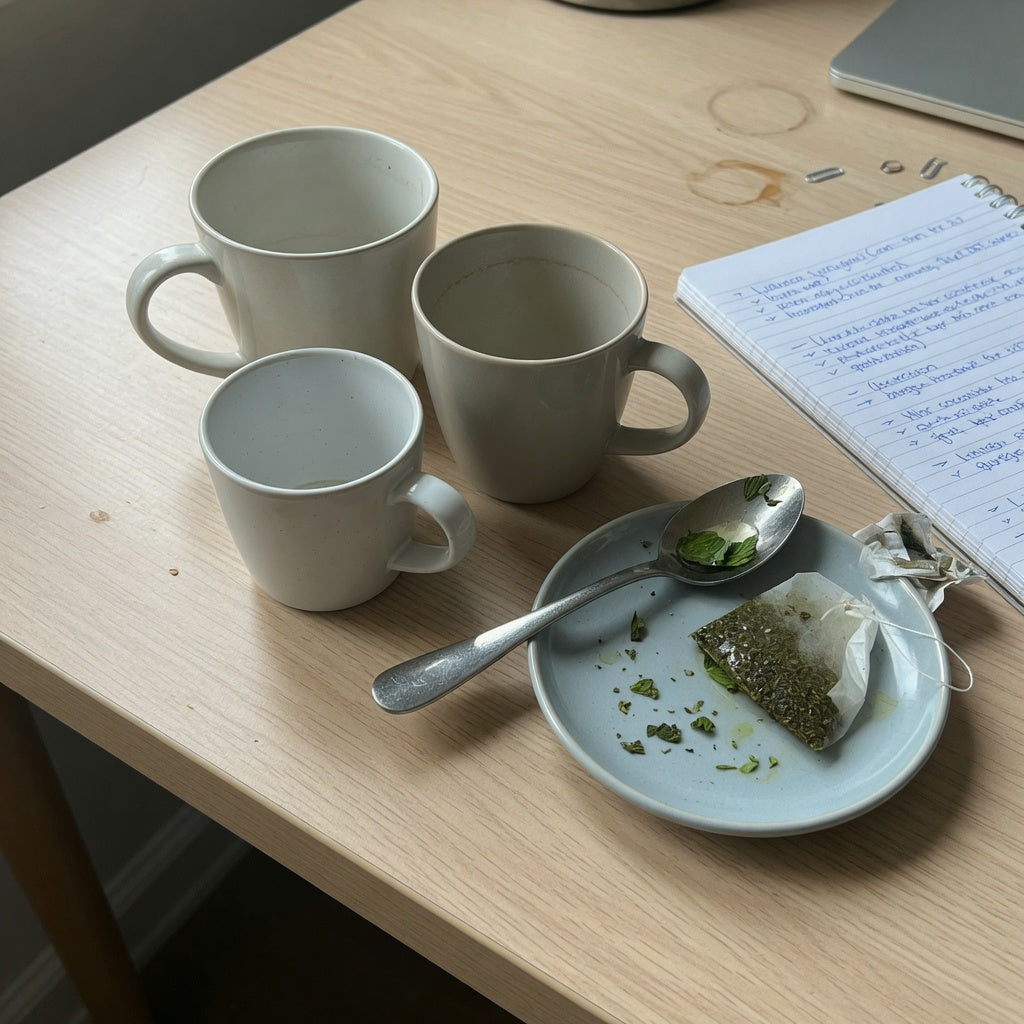
Peppermint tea mug for office: capacity and handle
Shoppers asking for a peppermint tea mug for office use usually want a printed coworker gift or a desk mug they will refill. We compare 400 ml, 440 ml, and 480 ml listings that support tea, plus th...
Read more
Tall White Ceramic Coffee Tea Mug: What Buyers Should Compare
Shoppers comparing a tall white ceramic coffee tea mug need height, rim, base, and usable fill together, not ounces alone. We cover brewer clearance, full weight, single-wall heat, white-glaze stai...
Read more
Leave a comment
This site is protected by hCaptcha and the hCaptcha Privacy Policy and Terms of Service apply.