
Tall Ceramic Coffee Mug vs Tea Cup: Size, Heat, Fit
Reading time: about 14 minutes
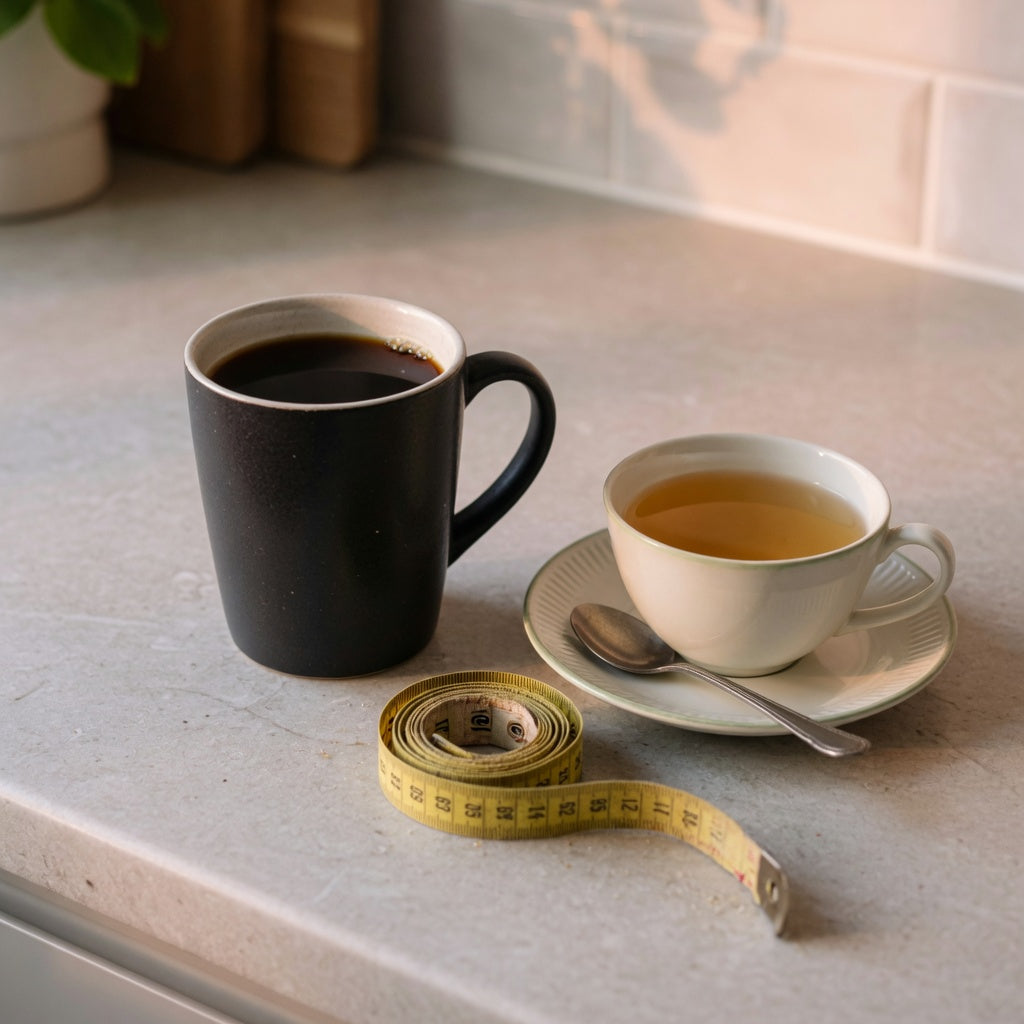
Shoppers keep setting the same pair on our packing table: a tall straight mug and a smaller curved tea cup with a saucer. On a phone screen the mug looks huge. The tea cup looks too small for a morning drip pour. Neither guess tells you how much you will actually drink, how fast the heat falls off, or whether the tall piece clears a cabinet rail. A tall ceramic coffee mug vs tea cup decision is about serving size, sipping pace, handle comfort, and the gaps in your kitchen.
In our store the mismatch shows up after the unboxing, not in the product photo. The tall mug kisses the shelf and will not sit under the drip head. The tea cup gets refilled three times before breakfast is over. Or green tea sits too long in a big hot mug and turns harsh in the last third. The name on the box will not settle that. Listed ounces or milliliters will.
If a taller everyday piece is already on your short list, open the Mountain Tall Coffee Tea Mug and read the live capacity, height, and care lines before you compare it with a tea cup you already own. Those facts belong to the current listing, not to a lifestyle photo. For other silhouettes in the same aisle, the unique coffee mugs collection is the faster way to see what else is actually in stock.
What changes in a tall ceramic coffee mug vs tea cup comparison?
U.S. foodware guidance draws a plain line on form, and it is narrower than most shopping photos suggest. Cups normally have a base and curved sides. Mugs have cylindrical sides. Both are described as small ceramic hollowware, commonly used for coffee or tea served above room temperature, normally but not exclusively about 240 mL (8 fl oz), and usually made with a handle. Hollowware, in that same guidance, means ceramicware with an internal depth greater than 25 mm. That is a shape note for regulators. It is not a size chart for your morning pour.
Retail moved past that 8 fl oz picture. In our experience, coffee mugs are often sold well above it, while a tea cup in a formal set is still a smaller serving, sometimes with a saucer that catches drips and gives the cup a place to rest. The words mug and cup are weak signals. The printed volume is the strong one.
On the counter, we sort the pieces like this:
- Tall ceramic coffee mug: straighter walls, more height, a handle built for a casual pour you do not want to refill immediately.
- Tea cup: often shorter and more curved, sometimes thinner at the rim, frequently paired with a saucer, meant for a smaller, slower serving.
- Shared middle: a mid-size mug one person uses for both black tea and coffee, if the shelf and the handle agree.
You can drink coffee from a tea cup. You can drink tea from a tall mug. The clay does not forbid it. What changes is pace, temperature, and whether the last sips are still pleasant. A short espresso in a tall mug looks lost and cools as a thin film. A long green-tea session in one huge pour often tastes tired at the bottom. Pick the vessel for the drink you actually finish, not for the drink printed on a gift box.
How many usable ounces fit drip coffee versus tea?
Brim-full capacity is not your sip amount. A number measured to the rim still needs headroom, or the first tilt spills on a laptop or a saucerless desk. We tell shoppers to leave a gap and to ask what they actually pour. Once photo scale is separated from pour size, the tall ceramic coffee mug vs tea cup choice gets simpler.
Match the vessel to the drink, not to the product name:
- Espresso or a short traditional tea. Stay near a smaller handled cup. A tall mug leaves a thin layer that cools fast, or it tempts you to over-pour a drink meant for a few sips.
- One modest coffee or a cup of black tea. A middle capacity works if you leave space under the rim and you are willing to refill once. This is the piece most mixed households actually use on a weekday.
- Drip coffee, a milk drink, or a morning with no refills. A taller mug earns its height here, but only if the usable fill matches what the brewer puts out. If the carafe dumps more than the mug can hold with headroom, you still need a second vessel.
- Green or white tea. A large hot volume is a poor place to park leaves. Drinkers tell us the later sips taste harsher when the tea stays hot in a big mug. A smaller cup and a fresh pour beat one long steep. Treat that as a tasting habit, not a timed lab rule. We do not have steep measurements for every leaf.
Photos lie about scale. A tall narrow mug can look like a vase beside a spoon and still hold less than a wide, short cup. If ounces and milliliters are missing, treat capacity as unknown until the listing states it. Our notes on mountain tea cup versus coffee mug size go further into why a printed volume beats a silhouette.
We do not publish one best ounce size. Brewers, pots, and appetites differ. Read the number on the page you are buying, and ask whether that number is filled to the brim or to a comfortable drinking line. If the page skips height as well as fill, measure the piece against the cup you already like before you retire it.
Does a taller body keep coffee hot while a wide cup opens aroma?
Shape is a drinking choice, not a minute count we can print on a label. A wider opening puts more liquid surface in contact with room air. Shoppers associate that with faster cooling and an easier path for aroma. A taller, narrower body is what people reach for when they want coffee to stay hot through a meeting. We have not found a controlled cooling comparison we would cite for every tall narrow mug versus every wide tea cup, so the claim stays qualitative. Wall thickness, fill level, and the room all move the result. How full the piece is can matter as much as the outline.
Material is separate from shape. Stoneware usually feels heavier and more casual. Porcelain and bone china are often thinner and lighter, and a thin rim chips when it clips a faucet or a stacked plate. All three are ceramics. They are not the same in the hand. A heavy tall mug, full of coffee, tires a smaller hand on the walk from kitchen to desk, and a narrow foot can feel top-heavy on a stack of mail. That weight is useful if you want a planted cup. It is the wrong gift if the person likes to cradle a light cup for a long time.
In our experience, people reach for a wide cup with delicate tea because they want aroma and a quicker cool-down, and they reach for a taller mug with coffee because they want the drink to stay hot. One large mug is a clumsy tool for both jobs if you never change the pour. For another shape-and-care walkthrough from our catalog, see how a gradient ceramic coffee mug versus tea mug splits form, heat, and washing without treating every ceramic as identical.
Will this tall mug clear the cabinet, dishwasher, brewer, and cup holder?
Tall is not a standard size. One maker's tall mug is another's ordinary coffee mug. Before you buy, measure the gaps that actually fail in the kitchens customers describe to us:
- Cabinet shelf. Measure to the top of the handle, not just the rim. The door and the shelf lip steal space an open-shelf measurement forgets. We have packed mugs that looked fine on a counter and would not stand upright once the door closed.
- Dishwasher upper rack. Many tall pieces fit only if you drop a tine row or skip the top rack. If the listing has no height, plan to check after unboxing rather than assuming ceramic means it will clear the rack.
- Coffee maker or kettle clearance. A mug that will not slide under the drip head becomes a two-handed transfer and a spill on the warming plate.
- Car cup holder. Diameter at the foot matters more than height. A wide base that feels stable on a desk will not drop into a holder, and a tall piece that does fit can still slosh because the liquid sits high.
- Handle clearance. Two fingers should pass without scraping the body. A delicate tea-cup handle can look right in a photo and still pinch when you carry a full cup across a room.
- Full weight and stability. Ceramic plus a large pour is heavier than the empty piece suggests. Narrow feet tip. Thick rims feel sturdy. Paper-thin rims chip.
These limits depend on your appliances. We cannot promise a fit from a product name, including pieces we sell. The same trap is covered in mistakes shoppers make with a landscape tall mug: buying on the photo, then finding the piece fights the rack, the shelf, or the hand.
A tea cup dodges most of those clearance problems and creates others. Small curved handles, thin walls that chip at the sink, and saucers that will not stack in a crowded basin are the usual complaints. If the cup is headed for a desk with no room for a saucer, a mug is the more honest tool. If the ritual is a quiet pot of tea with a spoon rest, the saucer earns its footprint.
Which glaze is for hot drinks, and what stays out of the microwave?
Microwave ovens heat by agitating water in the drink. The waves pass through glass, paper, ceramic, and plastic, so the cup is not heated by the waves themselves. It can still become hot from the liquid inside. The first time you microwave a ceramic you have not used that way, use a short heat and a careful hand. Metal is different. Microwaves reflect off metal, which can cook unevenly and may damage the oven. Gold or silver trim is metal decoration. Unless that exact piece is stated safe, keep it out of the microwave. We will not infer safety from a pretty rim in a photo, including on our own listings.
Dishwasher safety is a separate sentence on the label. A piece can survive the rack and still be wrong in the microwave, or the reverse, especially with hand-painted or metallic detail. Check both claims on the current page. If they are absent, hand-wash and do not microwave. That is the cautious default, not a hidden defect.
Glaze safety is not the same statement as "it is ceramic." Lead has been used in some glazes and decorative decals, and food can pull it from the surface. With continued use, that exposure can contribute to chronic lead poisoning. For cups and mugs, the regulatory action level is 0.5 micrograms of lead per milliliter of leaching solution if any one of six tested units exceeds it, using ASTM C738 or the other methods named in that guidance. Health authorities also say no known safe level of lead exposure has been identified. Cadmium is a separate problem: pigments based on it may leach into food, and cadmium is not authorized as a color additive or as a component of a food-contact surface.
Decorative ware is not a backup mug. If a piece is sold as ornamental, marked not for food use, or pierced through the surface that would hold a drink, do not brew or serve in it. Ware that looks suitable for food is treated as food-use ware unless it carries a specified not-for-food-use warning or has that kind of hole. A CDC investigation connected elevated blood lead in a New York City family with traditional glazed ceramic they used to cook, store meals, and make coffee. Lead on a glaze or paint can transfer into food or drink prepared, served, or stored in that ware. That is not a reason to fear every modern mug on a retail shelf. It is a reason to buy food-use ware, and to retire anything crazed, chipped through the glaze, or offered only as decoration.
A lead-free marketing line and a food-use claim are not the same sentence. If the listing does not explain food-contact status, ask before you pour a daily hot drink. Judge the Mountain Tall Coffee Tea Mug on its own page for microwave, dishwasher, and food-contact wording. Do not copy those answers from a different mug, a marketplace lookalike, or a general ceramic guide.
Who should buy the tall mug, and who should keep the tea cup?
Choose a tea cup when the serving is small, you want aroma and a quicker cool-down, and you like a saucer for an unhurried or more formal tea. It is the better tool for delicate teas and for a table where the cup belongs to a set. It is a poor tool if you hate refills, drink a large drip serving in one sitting, or need something that lives in a car holder.
Choose a tall ceramic mug when you want a larger casual coffee, fewer trips to the pot, and a handle you can actually grip. It is not the right piece for a low cabinet, a short dishwasher rack, a tight brewer opening, a slow green-tea ritual, or a formal service. A full tall mug is also the wrong gift for someone who wants a light cup. If you are buying for a desk that already has a favorite, measure that favorite first so the new piece is a real change in the routine, not a taller duplicate that does not fit.
Pick a middle size only when the same person drinks both and you have measured the shelf. One household does not need every drink in one vessel. Two correct pieces beat one compromise that stews the tea and cools the coffee.
| Buyer question | Lean tea cup | Lean tall ceramic mug |
|---|---|---|
| Serving size | Smaller, slower pours | Larger coffee or milk drinks |
| Heat and aroma | More open surface, faster cool, easier aroma | Chosen to hold heat longer; aroma less open |
| Table habit | Often wants a saucer | Usually stands alone |
| Kitchen fit | Easier on shelves and racks | Check height, rack, brewer, and holder |
| Hand feel | Lighter, sometimes a small handle | Heavier when full; fingers must clear the handle |
Run this list against the live page before either piece goes in the cart:
- Exact capacity in ounces or milliliters, and whether that number is brim-full.
- Height, rim diameter, and base diameter.
- Material named by the maker, not guessed from the glaze color.
- A handle opening you can picture two fingers inside.
- Whether a saucer is included.
- Microwave and dishwasher statements for this exact piece.
- Any metallic paint or gold trim called out in the description.
- A food-use claim, not a decorative-only description.
If the tall mug still wins for your coffee, and the listing's height and ounces clear your kitchen, go back to the Mountain tall coffee and tea mug listing and confirm those eight lines on the page that is live today. If you are still comparing silhouettes, stay in the mug collection and sort by the drink you pour most mornings, not by which photo looks largest.
Frequently asked questions
What should I compare in a tall ceramic coffee mug vs tea cup?
Compare usable capacity, not the photo. Then compare how fast you want the drink to cool, whether your fingers fit the handle, and whether the height clears your cabinet, dishwasher, brewer, and cup holder. A tea cup is often the smaller, more curved, saucer-friendly piece. A tall mug is the larger everyday pour. Confirm ounces, height, and care labels on the current listing, because neither name has one legal size.
Can I put green tea in a tall coffee mug?
You can, and plenty of people do. The trade-off is time and temperature. A big hot mug keeps the tea hot longer, and later sips often taste harsher, especially with green or white tea. A smaller cup and a fresh infusion give you more control. Black tea and coffee are more forgiving in the taller piece.
Is a gold-trimmed tea cup safe in the microwave?
Do not assume it is. Microwaves pass through plain ceramic, but the cup can still become hot from the drink. Metal reflects microwaves, which can heat unevenly and may harm the oven. If the listing does not clearly say that exact cup is microwave-safe, keep gold or silver decoration out of the microwave. If dishwasher wording is also missing, wash it by hand.
Why do coffee mugs look bigger than the ounces suggest?
Height and a narrow camera angle exaggerate volume. A wide, short cup can hold as much as a tall slim one. Regulatory language still describes a typical handled cup or mug as about 8 fl oz, while many retail coffee mugs are sold larger. The only trustworthy figure is the listed milliliters or ounces, with headroom left below the rim.
Do I need a saucer if I skip the mug?
You need one if you want a place for a wet spoon, a catch for drips, or a more formal tea service. A tall mug is built to stand alone on a desk or counter. Buying a tea cup and then having nowhere to put the saucer is a common mismatch. If the saucer will live in a drawer, buy the mug.
Read more

Christmas Ceramic Coffee Mug Gift: What to Compare
A christmas ceramic coffee mug gift has to work after the wrapping comes off. Compare usable ounces, glaze and metal-trim care, food-use labeling, and whether the box protects the mug.
Read more
Everyday Ceramic Mug Morning Routine: What Buyers Should Compare
An everyday ceramic mug morning routine depends on the pour you finish, the handle you can grip half awake, and glaze plus appliance lines on the live listing. A photo does not prove ounces, heat h...
Read more
Leave a comment
This site is protected by hCaptcha and the hCaptcha Privacy Policy and Terms of Service apply.