
Everyday Ceramic Mug Morning Routine: What Buyers Should Compare
Reading time: about 14 minutes
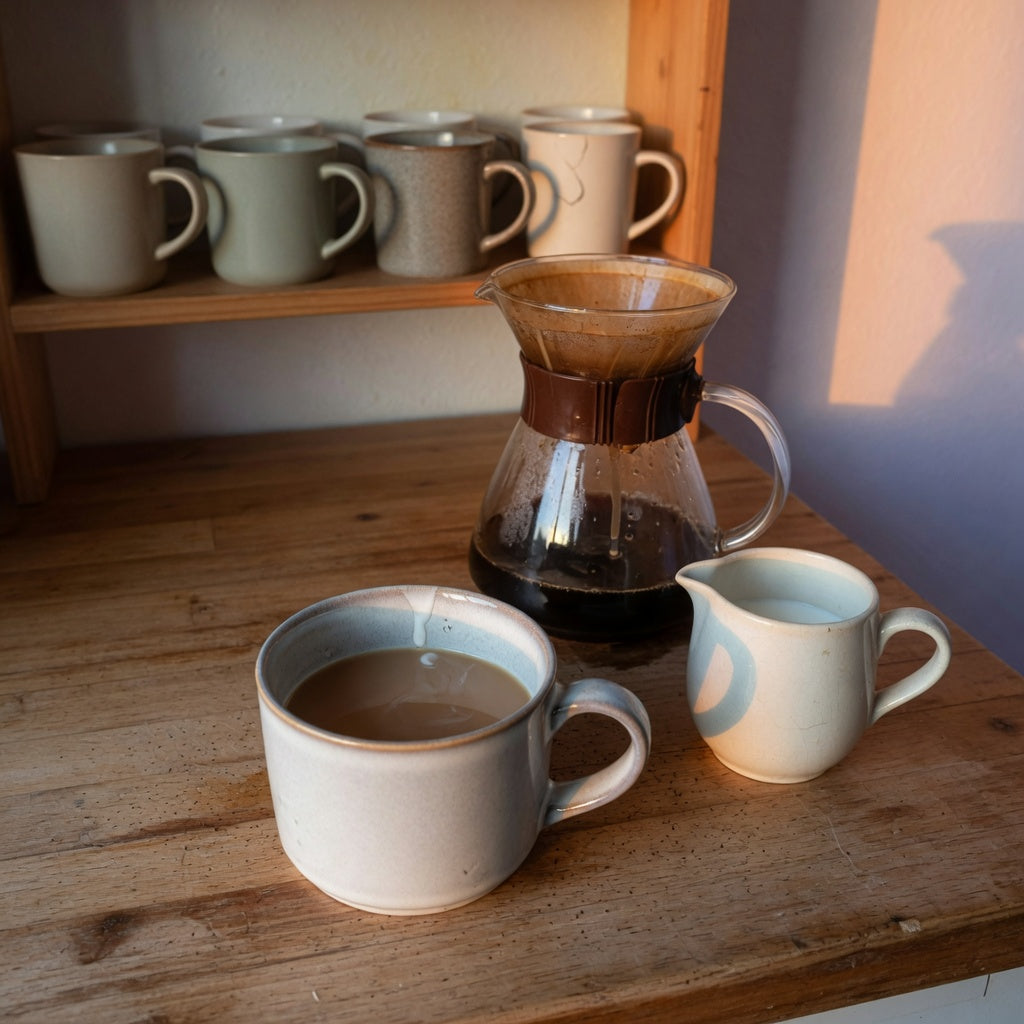
The mug that looks settled on an open shelf at night is often the one that fails at 6:40 a.m. You take it down one-handed. The brewer finishes. A splash of milk lifts the surface too close to the lip. Two fingers fit the handle, and your knuckles meet a hot wall. Twenty minutes later the last third is lukewarm and headed for the microwave. An everyday ceramic mug morning routine is that repeated job: one familiar cup, the pour you actually finish, and a piece you are willing to wash again tomorrow.
In our store, glaze is what shoppers choose first. The notes we hear after a week of real use run the other way. A pinch at the grip. A dribble along the rim. A brown line that will not wipe off. A chip. Or a safety phrase the product photo cannot prove. Cozy copy does not tell you whether this cup belongs in hot, acidic coffee every morning.
What belongs in an everyday ceramic mug morning routine?
The routine is short. One mug you already trust. A pour sized to the brewer plus whatever you add, not to the biggest number on a competing page. Enough time that the last swallow is still pleasant, or a clear plan to reheat. That is the whole brief.
When we pack a mug, the question we wish the buyer had settled is simple: what happens to the last third of the cup, and can they hold it without thinking?
A good-looking cup can still be the daily one, but only if the live listing supports daily use. If you are comparing a taller-looking profile, open the Landscape Tall Coffee Tea Mug and read that page as the spec sheet. If you are comparing a rounder body for a small counter, open the Round Coffee Tea Mug the same way. Neither link is a measurement. Capacity, handle opening, foot, glaze notes, and any dishwasher or microwave line have to be on the current listing. We will not treat the title, the photo, or a similar mug elsewhere as the spec. Those lines can change when a listing is updated.
If you are still between shapes, start in our unique coffee mugs collection and open each product page before you decide. Open-shelf styling will not show headroom for cream.
How much mug does the pour need, 12 ounces or closer to 16?
Labeled capacity is usually brimful: liquid to the lip. Almost nobody drinks a mug that full. Leave room for milk and for the tilt of a sip, and a 12 ounce cup can be a short black coffee. A 16 ounce cup can be the right home for drip coffee plus creamer, or too much ceramic if you drink a small pour and dislike a heavy wall.
Match the number on the listing to the drink you finish:
- About 8 to 10 ounces, filled short of the rim: a small milk drink, a single tea, or anyone who reheats instead of nursing a large cup.
- About 12 ounces labeled: a modest drip or pod pour with little or no milk. Confirm whether 12 ounces means to the rim.
- About 14 to 16 ounces labeled: a full home brew plus cream, or a latte that would crowd a smaller cup. Use the output in your brewer's own manual, then add the milk you actually pour.
- 18 ounces and up: one pour for a long, slow morning. You pay for that in filled weight, and in coffee that cools before you finish it.
If the last third always goes back in the microwave, a larger mug is not doing you a favor. In our experience, a smaller cup you empty beats a large one that lives half full and stains in a ring.
Shape changes the same ounce count. A tall body raises the center of gravity and can feel tippier beside a laptop. A rounder body sits lower and takes more counter width. That is general drinkware behavior, not a measured claim about either mug above. We compared footprint questions, including size and material, in our guide to a round ceramic mug on the morning counter.
Before you buy, pour water into a mug you already own. Stop where you would stop with coffee. Note that volume and set it next to the capacity printed on the new listing. If the page only says large or tall, treat ounces as unknown.
Will the handle, rim, and filled weight still work half awake?
This is where pretty mugs fail. A handle that looks generous in a thumbnail can refuse a full grip once the cup is hot. Knuckles then rest on the body. On single-wall ceramic, that contact is the heat, not a gentle warm-up.
When we talk a shopper through a daily mug, we ask three things before color:
- Finger span. Can the fingers you actually use pass through the opening without your thumb jamming the rim? A two-finger pinch is a reason to pass for many daily drinkers, even when the glaze is perfect.
- Filled balance. Picture it full. A tall cup with a high handle attachment can torque the wrist. A round cup with a thick wall can simply feel heavy by the second refill.
- Rim. A thin, even lip tends to release cleanly. A thick, rounded, or slightly uneven rim is where dribbles start, especially once a little milk is in the cup.
Lightweight is not automatically better. Very thin walls cool faster and chip sooner if you stack them hard. Heavier walls feel steady and keep the outside warm longer, which is pleasant until the handle is short and your fingers have nowhere else to go. Listings rarely print a filled weight. Water weighs about a pound per pint, so a 12 ounce pour is already three-quarters of a pound before you add the ceramic. A light body still feels serious once it is full.
Do not guess a finger count from the product name. Open the current photos and description for the landscape mug and the round mug, and compare the opening with your own hand, not with a styled shot. On an open shelf the foot has another job: it should sit flat so the mug does not rock when you set it down one-handed. If the cup lives in view between washes, our notes on open-shelf ceramic mug ideas go further into footprint and what you are willing to look at every day.
What ceramic does for the drink, and what it will not hold hot
Customers describe the difference in plain language. A glazed interior does not add the metallic note some people notice in bare stainless steel, and the rim is quiet against the lip compared with a steel edge or a plastic travel lid. That is comfort and a neutral surface. It will not rescue a burnt brew, and it is not a wellness tool. A mug cannot make a morning calmer. A mug that does not dribble, pinch, or demand a second trip to the microwave can make the same ten minutes less annoying. Those are different claims.
Single-wall ceramic is a poor thermos. It sheds heat into the room and into your hand. Insulated steel keeps coffee hotter much longer, which helps a commute and hurts anyone who sips slowly and is still facing a scalding cup twenty minutes later. If leaving the house is the job, use a lidded travel cup. Ceramic breaks if you drop it on tile or toss it in a bag. That is the trade for the lip feel. For a gift, match the morning the person actually has. We laid out that split in our comparison of ceramic versus insulated mugs as gifts.
| Morning job | Single-wall ceramic fits | Look elsewhere |
|---|---|---|
| Where you drink | Counter, desk, open shelf | Bag, commute, jobsite |
| Heat | You finish soon, or you reheat the last third | You need it very hot an hour later |
| Rim and taste | You want a quiet, neutral lip | A sealed lid matters more than flavor |
| Durability | Careful daily use, or a stated dishwasher rating | Drops on tile, camping, rough carry |
Temperature belongs in the decision because the mug only influences it a little. A 2019 review in the Journal of Food Science found that the temperatures people prefer for hot drinks sit well below typical brewing temperatures near 200 F, and it pointed to a serving range of 130 to 160 F as a balance of preference and safety. A hospitality consumer test from researchers at Michigan State University and Cornell University put preferred drinking temperatures around 145 to 155 F (62.8 to 68.3 C), cooler than the holding temperatures many cafes use. Those ranges describe preference in those studies. They do not mean a ceramic wall will hold your cup inside that band for ten or twenty minutes. We have no timed single-wall versus double-wall test to offer. Doubt any page that quotes a precise stays-hot minute count without a method.
There is a separate line for very hot drinks. IARC, the cancer agency of the World Health Organization, classified beverages consumed above 65 C (149 F) as probably carcinogenic to humans, based on evidence related to cancer of the esophagus. Coffee itself was not classifiable as to carcinogenicity (Group 3). That classification does not prove coffee is risk-free, and it is not a reason to shop for a mug as protective equipment. A temperature some drinkers call pleasant can sit at or above 65 C. Letting a fresh pour stand is ordinary kitchen sense, not a feature you can buy.
Porcelain and stoneware are both ceramic, and the words are not interchangeable. Porcelain is often fired hotter and can feel thinner at the rim. Stoneware is often thicker through the wall. Either can be a sound daily cup if the glaze is intact and the listing supports food use plus the appliances you actually own. Neither word tells you the ounce capacity, and neither word means a specific mug is dishwasher-rated. If the material line is missing, ask before you buy. Do not infer stoneware, porcelain, ounces, or appliance ratings from a silhouette.
How should you read lead and cadmium claims before daily coffee?
Cups and mugs draw tighter attention than a dinner plate because the lip and the hot drink both stay on the glaze. FDA's compliance policy for lead in ceramic cups and mugs sets an action level of 0.5 micrograms of lead per milliliter of leaching solution, judged on any one of six units tested. In that policy, cups and mugs are small hollowware commonly used for coffee or tea above room temperature. They normally, though not always, hold about 8 fluid ounces and are made with a handle. The agency has also said that some ceramic foodware has leached significant quantities of lead from food-contact surfaces, and that continued food use can contribute to the effects of chronic lead poisoning.
Cadmium sits in separate guidance. For small hollowware under 1.1 liters, the action level is 0.5 micrograms per milliliter, judged on any one of six units. For large hollowware it is 0.25 micrograms per milliliter. The agency notes that extractable cadmium from acidic foods could contribute to chronic cadmium poisoning under continued use. Hot coffee is acidic enough that this is a daily-mug question, not a display-shelf question. You still cannot see the answer in a glaze photo.
California's public health department says you cannot tell whether a dish has lead just by looking at it. Higher concern applies to homemade or handcrafted tableware unless the maker uses a lead-free glaze, and to bright color or decoration on surfaces that touch food or drink, including the upper rim. Lead is rarely found in plain white dishes. Rarely is not a test result for the mug in your hand.
A lead-free badge on a product page is a claim to read, not a lab report. Better copy says which surface it covers: the interior, the lip, or paint on the outside. A home color-change swab is only a screen. It is not the leach test regulators use, and a clean swipe does not prove a mug is suited to years of hot coffee. Exterior artwork is a different surface from the well of the cup. The rim still counts, because that is where your lip rests.
Vintage finds, unmarked imports, and brightly glazed handmade cups can be right on a shelf and wrong at breakfast. Silence on a page is not reassurance. For anything we sell, use the current listing. We do not apply one food-contact sentence across every design in the catalog.
When do stains, crazing, or a chipped rim mean the mug is done?
Daily coffee marks a porous or crazed surface faster than an intact glossy glaze. A brown line that wipes off with a non-abrasive sponge is residue. A brown line caught in a web of fine cracks is crazing. Those cracks hold oils and detergent. For a cup on your mouth every morning, retire it from hot drinks. Do not keep the stain as patina.
Stop using a mug for coffee or tea when you see:
- A chip on the rim, or any flake of glaze inside the cup.
- A crack running from the handle joint into the wall. Handle cracks do not settle with time.
- Crazing across the drinking surface, especially if it stains darker after each wash.
- Metal decoration, if reheating is part of your routine. Metal and a microwave do not belong together.
- A foot that rocks on a flat counter. Half awake and one-handed, a rocking base spills.
Dishwashers are inconsistent. Shoppers tell us one ceramic mug comes out filmed or dull while the bowls beside it look fine. Hard water, a harsh detergent pod, and a glaze never rated for the machine will do that. If the listing does not say dishwasher-safe, wash by hand with a non-abrasive sponge and skip scouring pads. Even a rated mug usually lasts longer on the top rack, clear of the heating element, and not nested rim to rim. If you want a set for a small kitchen, check whether the listing says the pieces stack. Stacking saves a shelf and chips lips. Those goals fight each other.
Microwave language works the same way. No stated rating means no assumption, and no metal trim goes in the microwave. Rinse the cup the same day so coffee oils do not sit overnight. Ceramic is also the wrong single tool if you want hot coffee at the counter and a lidded cold drink on the way out. Condensation on a single wall, plus no lid, makes iced coffee a different product decision.
Frequently asked questions
What capacity works for an everyday ceramic mug morning routine?
Start from the pour you finish, not from a trend size. A labeled 12 ounce mug is often enough for black coffee if you leave the brim empty, while 14 to 16 ounces labeled gives more room for milk. If the last third always goes back in the microwave, a larger cup is not helping. Confirm the number on the current listing. A photo cannot show headroom.
Does coffee taste better in ceramic than in stainless steel?
Many drinkers prefer a glazed ceramic lip because it stays neutral and does not add a metallic note. Steel usually wins on durability and on keeping the drink hot for a commute. Ceramic will not fix a bad brew, and it is a weak choice if you need a sealed cup in a bag. Pick the material for the place you actually drink.
How can I tell if a ceramic mug is lead-free enough for every morning?
You cannot tell by color, a white body, or a home swab alone. Look for listing language that names the drinking surface, not only exterior art, and be more cautious with handmade, vintage, or brightly decorated rims. FDA's cup and mug lead action level is 0.5 micrograms per milliliter in a leach test, which a photo cannot show. If the page is silent, do not assume the piece is meant for daily hot coffee.
Is a handle I cannot fit my fingers through a reason to pass?
For a daily mug, yes. A two-finger pinch puts your knuckles on a hot single wall and gets old by the second morning. Check the opening against your own grip, and picture the balance once the cup is full. A beautiful glaze does not fix a handle that only works when the mug is empty.
Should I keep a crazed or chipped mug for morning coffee?
Not for everyday hot coffee or tea. Crazing holds stains and residue, and a chipped rim can shed glaze into the drink. Retire it from food use. Hand-wash intact glaze that is not stated as dishwasher-safe, and avoid nesting rims if you want the lip to stay even.
A counter check before the mug joins the shelf
Run this against the live product page before you clear a spot:
- Capacity is a number, larger than the pour you finish, with room for milk if you use it.
- The handle opening matches your grip, not just the thumbnail.
- The rim looks even, and there is no metal trim if you reheat.
- Dishwasher and microwave status are written on the page, or you have already decided to hand-wash and skip the microwave.
- Interior and rim glaze are intact, and any lead or cadmium language names the drinking surface.
- You are not buying it to keep coffee scalding for an hour. That job belongs to a different product.
If a taller-looking profile is what you want to compare on a narrow counter, open the Landscape Tall Coffee Tea Mug and verify every line above on that page. If a rounder body is the comparison you want beside the kettle, do the same with the Round Coffee Tea Mug. If you are still between shapes, use the unique coffee mugs collection as the wider set, one listing at a time.
Read more
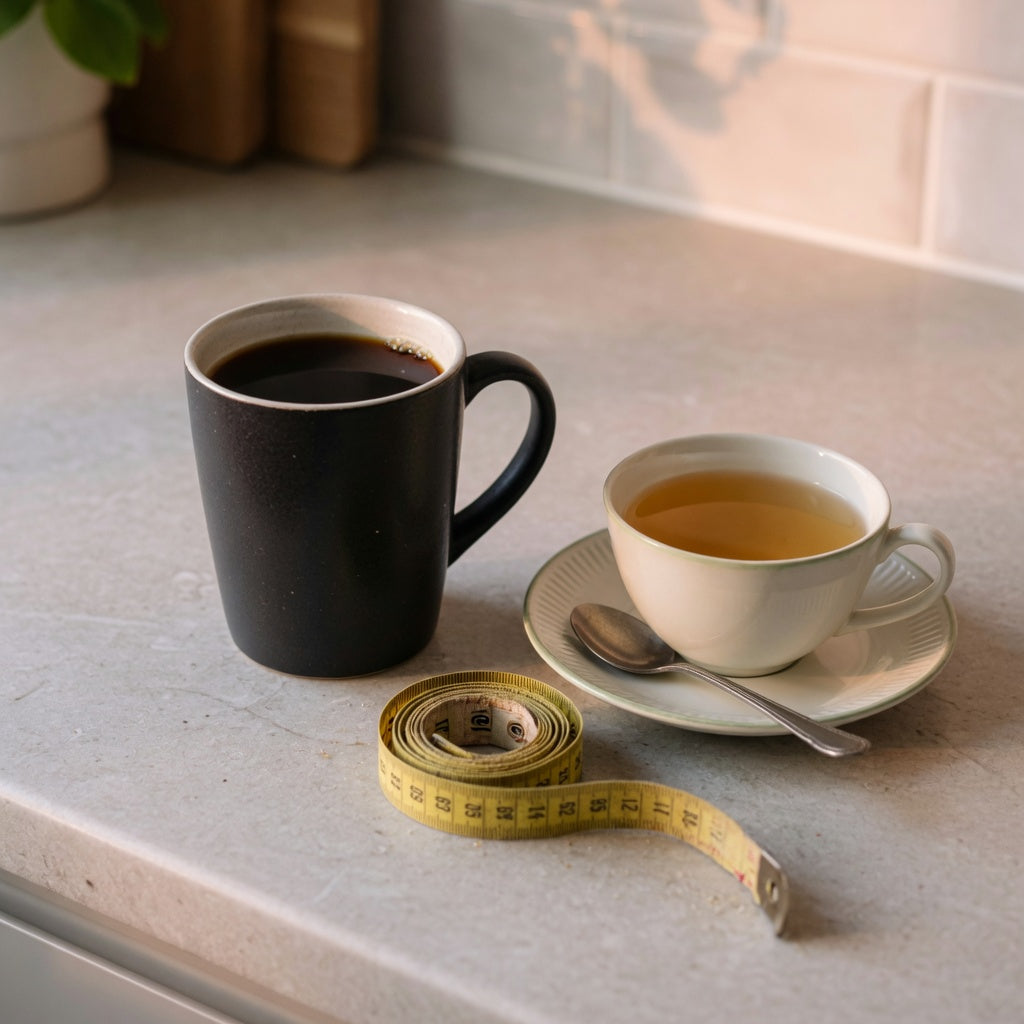
Tall Ceramic Coffee Mug vs Tea Cup: Size, Heat, Fit
A tall ceramic mug and a tea cup solve different pours. We compare usable capacity, heat and aroma, handle comfort, kitchen clearance, and glaze safety so you can see when the smaller cup is the be...
Read more
Gradient Coffee Mug Home Decor: What Buyers Should Compare
Shoppers often buy a fade for the shelf and then find it will not survive the dishwasher or a daily pour. We compare finish, clearance, care labels, and food-use questions so gradient coffee mug ho...
Read more
Leave a comment
This site is protected by hCaptcha and the hCaptcha Privacy Policy and Terms of Service apply.