
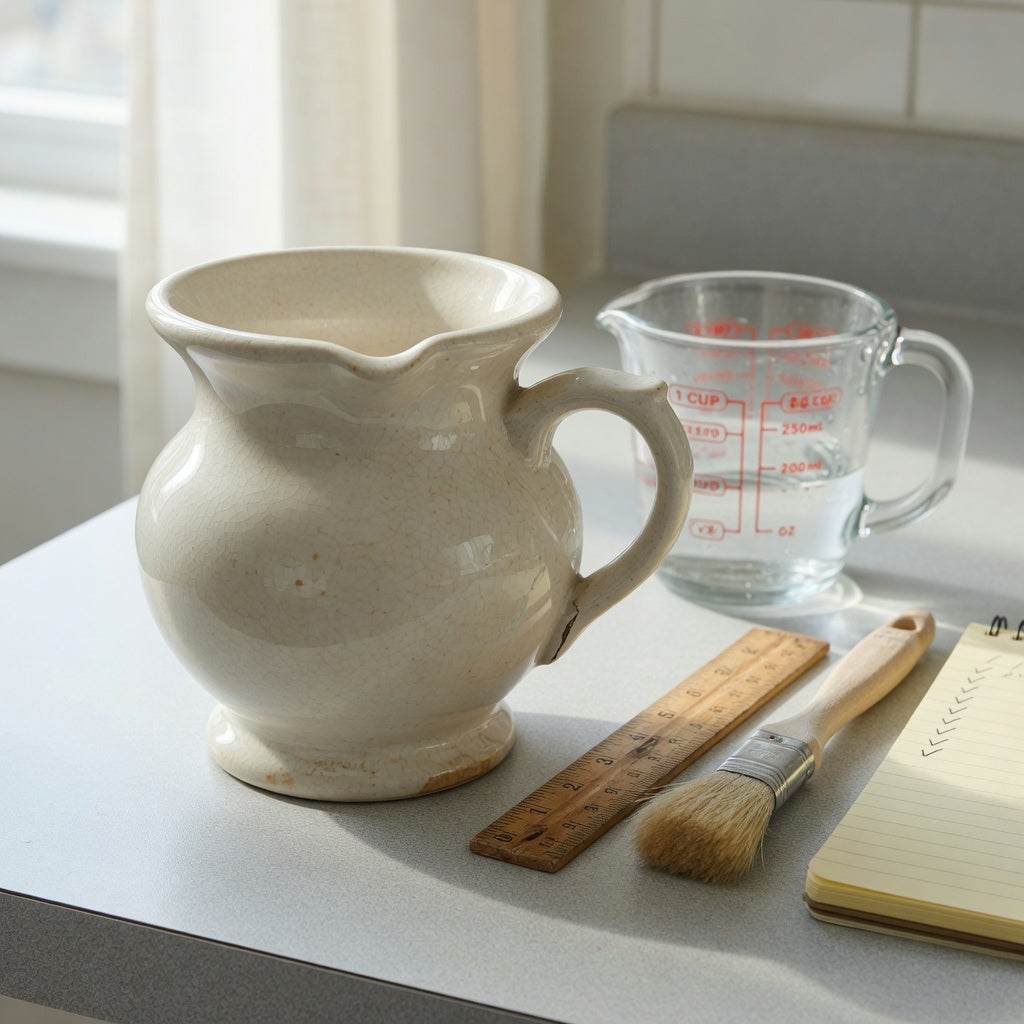
Spittoon Coffee Tea Mug Buying Checklist: 9 Buyer Checks
Reading time: about 10 minutes
A spittoon-shaped mug can look generous in a product photo and still disappoint on the first morning. The rim may feel awkward, the handle may leave too little knuckle room, or the rounded body may occupy more cupboard space than expected. Our spittoon coffee tea mug buying checklist puts those practical details ahead of the novelty factor.
In our store, we assess this category in the order a shopper will experience it: intended use, drinking comfort, capacity, counter stability, care, and only then appearance. You can apply the same process to the current Spittoon coffee tea mug listing. Treat that page as the source for its current specifications. Do not transfer a capacity, material, food-contact claim, or care instruction from a similar-looking mug sold elsewhere.
Drinking mug, novelty gift, or coffee-cupping spit cup?
The word spittoon describes two products with different jobs. A novelty drinking mug borrows the recognizable cuspidor silhouette for coffee or tea. A professional coffee-cupping spit cup receives liquid that tasters discard during sensory evaluation. It is equipment, not a mug selected for comfortable sipping at a desk.
Make that distinction before comparing colors or decorative details. It changes every buying criterion that follows.
| Reader situation | Priorities | Best next step |
|---|---|---|
| Daily coffee or tea | Food-contact statement, usable capacity, smooth rim, handle clearance, stable base, and manageable care | Evaluate the current Spittoon mug product page against the checklist below |
| Novelty or vintage-style gift | Recipient taste, exact dimensions, care requirements, packaging condition, and return terms | Compare the shape with other unique coffee mugs before choosing |
| Professional coffee tasting | Capacity for discarded samples, easy emptying, sanitation, and tasting-table workflow | Choose a dedicated cupping spit cup rather than a novelty drinking mug |
If the recipient wants a sealed commuter cup, stackable drinkware, or specialist cupping equipment, this silhouette is the wrong starting point. Its appeal is a distinctive mug experience at a kitchen table, office desk, or home coffee station.
Spittoon coffee tea mug buying checklist: nine listing checks
We use this order because an attractive photo can hide the details that decide whether a mug becomes part of a daily routine. Keep the product page open and verify each item rather than filling gaps with assumptions.
- Name the job. Decide between daily drinking, occasional use, gifting, display, or actual tasting and spitting. A drinking mug should not be evaluated as professional cupping equipment.
- Confirm the exact material. Look for the material stated on the live listing. Do not assume a mug is ceramic, stoneware, porcelain, or metal based only on its finish or silhouette.
- Find explicit food-contact wording. If you plan to drink from it, the page should address food-safe or food-contact use. A styled photo containing coffee is not a substitute for that statement.
- Record capacity as a number. Look for milliliters or fluid ounces. Words such as big and large do not tell you how much of your normal pour the mug holds.
- Compare all useful dimensions. Overall height, maximum body width, base diameter, rim width, and handle opening affect storage and comfort in different ways.
- Inspect the drinking edge. Use close-up images to look for a smooth, continuous rim without obvious chips, rough patches, glaze skips, or heavy buildup where your lip will rest.
- Check handle geometry. The opening should suit your preferred two- or three-finger grip without forcing your knuckles against the body or your index finger under the rim.
- Read care statements separately. Dishwasher-safe and microwave-safe are different claims. If either answer is missing, treat compatibility as unconfirmed.
- Review delivery and return terms. Novelty shapes can look larger or smaller in person, and ceramic-style drinkware should be inspected promptly for shipping damage.
A complete spittoon coffee tea mug buying checklist is mostly verification: exact numbers, direct care language, clear food-contact wording, and images that show the parts your hand and mouth will touch.
Rim, handle, and base: will the shape work at your desk?
The flared rim creates the visual identity, but it is also a working surface. Once a mug arrives, our practical inspection starts by running a clean fingertip around the drinking edge. We look for a rough spot, pinhole, chip, glaze bump, or uneven section that could make repeated sipping unpleasant.
Facial hair adds another variable. A wider flare may create more space around a mustache than a narrow straight-sided cup, but it is not automatically a mustache-protector mug. Only a purpose-built guard controls where the drink reaches the upper lip. If that is your main requirement, compare the actual rim design instead of relying on the spittoon name.
Handle photos are also easy to misread. A large-looking loop can still feel cramped if the rounded body curves into the finger space. When the mug arrives, test it empty first, then fill it with cool water to your usual level and carry it from the kitchen counter to the desk. That simple trial reveals wrist leverage, balance, knuckle contact, and sloshing without asking you to experiment with a hot drink.
Set the empty mug on a hard, level counter and press gently near several points on the rim. A stable foot should not rock. Also inspect the handle joints for a hairline crack and the foot ring for chips or distortion before using or gifting the mug.
Capacity and dimensions: is 350-400 ml right for your routine?
Shoppers often search for a 350-400 ml spittoon coffee mug because they want more than a small teacup pour. That range is buyer language, not a standard and not a confirmed specification for the linked product. Copy the exact capacity from the current listing you are considering.
The most reliable way to choose volume is to measure the drink you already make. Fill your favorite mug to its normal stopping point, pour that water into a measuring jug, and record the result. Compare that working pour with the listed capacity while allowing some empty space below the rim. A brim-full specification does not represent a comfortable walking or stirring level.
Capacity alone will not tell you where the mug fits. Check these measurements:
- Maximum body diameter for cupboard space and clearance beside a laptop.
- Base diameter for shelf placement, drying racks, and stability.
- Overall height for cabinet shelves and coffee-machine clearance.
- Rim width for sipping comfort and the amount of open drink surface.
- Handle opening for finger clearance rather than total mug width.
Do not assume the rounded shape will retain heat better or worse than a cylinder. Direct heat-retention comparisons for these novelty mugs are limited, and wall thickness, opening width, starting temperature, and fill volume all affect the result. For a drink that must stay hot through a long meeting, an insulated mug with a lid is a more suitable tool.
Material, glaze, and food-contact claims: what evidence is enough?
The material line should answer what the mug is made from, while the food-contact line should answer whether it is intended for beverages. Those are separate checks. Even the word ceramic does not establish a particular glaze formulation, firing process, appliance rating, or testing record.
For ceramicware cups and mugs, the FDA contaminant-level table lists an action level of 0.5 micrograms per milliliter for lead in leaching solution. That regulatory figure is not a certification badge and does not prove that an individual product has been tested. Research for this guide did not establish independent lead or cadmium test results for the linked mug, so we do not claim them.
If documentation matters to your purchase, ask the seller what supports the food-contact statement. Keep the question product-specific. A report for a different mug, factory, glaze color, or marketplace listing should not be treated as evidence for the item in your cart.
After delivery, inspect the interior and rim under good light. Chips, open cracks, pronounced crazing, or damage around the handle joint are reasons to stop and contact the seller. A decorative finish is not worth accepting damage on a surface used for drinking.
Dishwasher, microwave, and curved interiors: how much care is involved?
A useful care section gives separate answers for dishwasher use, microwave use, and hand washing. One does not imply another. If the current listing is silent, consider the appliance status unknown rather than testing it with a dishwasher cycle or microwave session.
Pay special attention to any metallic-looking decoration. Do not infer microwave compatibility from the base material or from photos; require an explicit statement for the exact product. The same restraint applies to dishwasher use, especially if preserving decorative details matters to you.
The interior contour affects hand washing. If the mug narrows beneath a flared rim or has a rounded inner shoulder, a flat sponge may miss part of the surface. A soft bottle brush can reach the curve more consistently. Rinse the inner shoulder, inspect for coffee oils or tea residue, and angle the mug on the drying rack so water can leave the interior and foot ring.
This extra care is a real trade-off. A shopper who wants the fastest possible wash-and-stack routine may be happier with a simpler profile from our collection of unique coffee mugs. Choose the spittoon silhouette because you value the form enough to follow its confirmed care instructions, not because you expect every novelty mug to behave like standard diner drinkware.
Who will enjoy this mug, and who should skip the shape?
This category fits a coffee or tea drinker who enjoys vintage references, keeps a mug on a desk or kitchen counter, and is willing to confirm practical details before buying. It can also make a memorable gift when the recipient already likes unusual drinkware. The shape should match the person, not just the occasion.
Choose another style for someone who needs a sealed travel vessel, a guaranteed car cup-holder fit, a tightly stacking set, or professional cupping equipment. A buyer who will only use dishwasher-safe drinkware should also wait for an explicit dishwasher statement on the exact listing. Unconfirmed care compatibility is not the same as a yes.
For a gift, inspect the mug before wrapping it. Check the rim, handle joints, base, finish, and overall dimensions, then confirm that the return window still covers the intended unboxing date. That five-minute review prevents the recipient from discovering a wobble, chip, or unexpected size at the gift table.
Frequently asked questions
What should be included in a spittoon coffee tea mug buying checklist?
Check intended use, exact material, food-contact wording, stated capacity, full dimensions, rim finish, handle clearance, base stability, care instructions, and return terms. Verify every item on the current listing rather than borrowing specifications from a similar mug.
Is a spittoon-shaped drinking mug the same as a coffee-cupping spit cup?
No. A novelty drinking mug is selected for sipping coffee or tea, while a cupping spit cup is equipment for receiving liquid discarded during sensory evaluation. Anyone running regular cupping sessions should buy a dedicated spit vessel.
Can a spittoon coffee mug go in the dishwasher or microwave?
Only follow the appliance statements published for the exact mug. Dishwasher-safe and microwave-safe are separate claims, and neither should be inferred from the material, shape, or product photos. If the listing does not answer, ask the seller or plan to hand-wash without microwave use.
How do I choose the right capacity for a vintage spittoon tea mug?
Measure your normal drink with a kitchen measuring jug, then compare that working volume with the listing's stated capacity. Leave room below the rim for carrying, stirring, milk, or tea additions. Treat 350-400 ml as a possible search range, not a universal size for this category.
What should I verify before ordering CoffeifyMug's Spittoon mug?
Open the current Spittoon coffee tea mug page and confirm material, food-contact wording, capacity, dimensions, and separate care instructions. If any of those details do not suit your routine, compare another profile in the unique coffee mugs collection before checking out.
More from our blog
Read more

Cortado Cup Size Ceramic: Compare 170, 200, and 270 ml
Compare verified 170, 200, and 270 ml capacities using practical headroom calculations. See which size suits a compact pour, extra milk, or a small-mug routine, plus the product details to verify o...
Read more
Mountain Sea Coffee Tea Mug Buying Checklist: 10 Checks
Compare the details that decide daily use: full-mug balance, handle attachment, rim and base, infuser openings, capacity, appliance guidance, and glaze claims. This checklist also identifies what m...
Read more
Leave a comment
This site is protected by hCaptcha and the hCaptcha Privacy Policy and Terms of Service apply.