
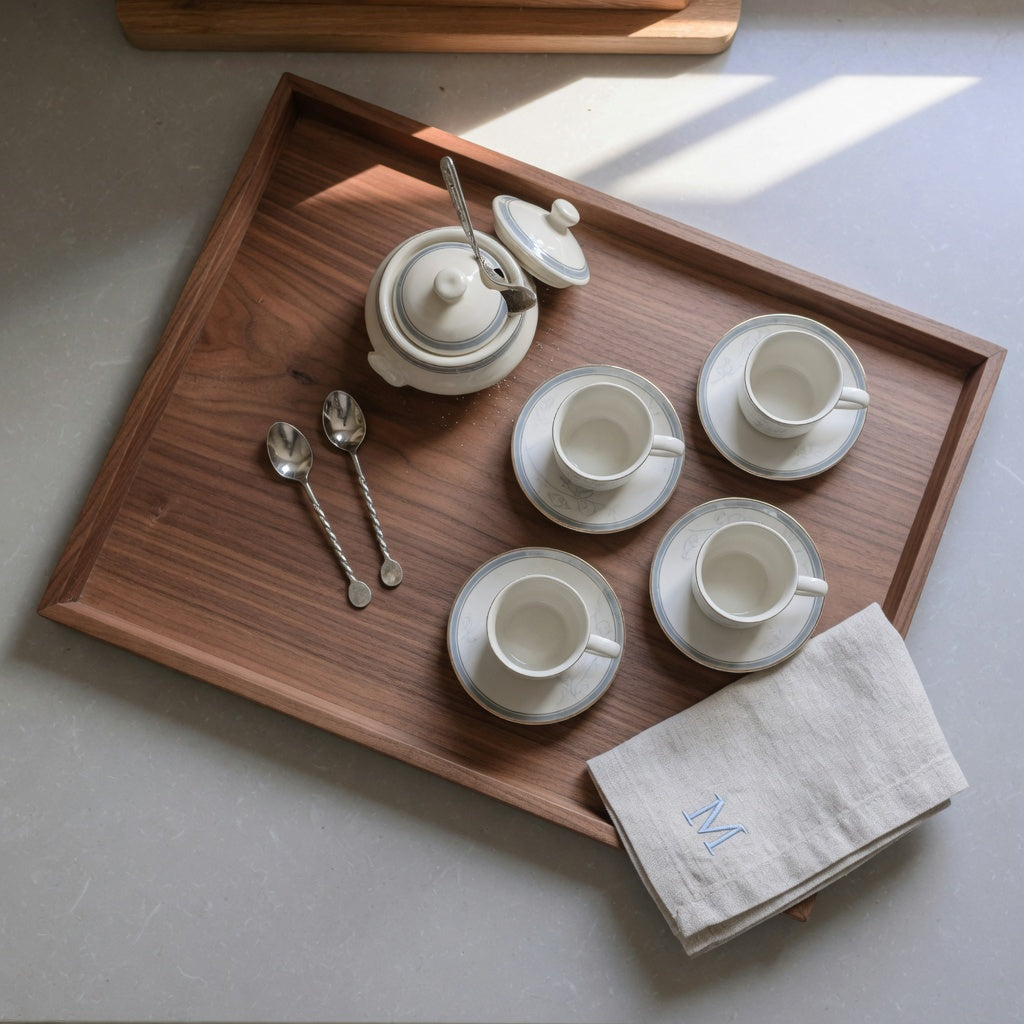
Small Coffee Cups for Guest Tray: Capacity, Material, and Fit Compared
Reading time: about 9 minutes
Most guest trays fail in one of two ways, and both failures show up after the box is already open. Four cups get crammed onto a board sized for two, and the handles knock together every time someone reaches. Or the small coffee cups for guest tray service turn out to be two-ounce demitasse shapes, and the guest who drinks real coffee quietly makes three trips back to the kitchen. We unpack both scenarios in our store almost weekly — returns teach you more than reviews do — and nearly every one traces back to a purchase made without comparing capacity, material, and tray fit.
What follows are the comparisons our team runs through in chat messages and order notes every day, written the way we would explain them across the counter.
Small coffee cups for guest tray service: which capacity do your guests actually need?
“Small” covers two very different cups, and mixing them up is the most common sizing mistake we see. Demitasse and espresso-style cups typically hold 2–3 ounces — enough for a short, intense pour. Small coffee and tea cups usually sit in the 4–6 ounce band, which covers one regular serving. Read the written capacity, never judge from the photo: product images flatten scale, and a 3 oz cup photographed next to nothing looks like a mug.
“Cute” is not a capacity. We ask for ounces in chat before recommending anything, because photos cannot be trusted for scale.
| Capacity band | Common names | Best suited for | The trade-off |
|---|---|---|---|
| 2–3 oz | Demitasse, espresso, Turkish-style | After-dinner coffee, strong brews, tasting flights | Ring handles pinch larger hands; heavy coffee guests refill constantly |
| 4–6 oz | Small coffee or tea cup | One regular serving of drip coffee or tea per guest | Eats more tray width, so fewer settings fit |
| 10–12 oz and up | Standard mug | Casual, self-serve counters | Rarely fits a styled tray once saucers and a pot join |
A demitasse set photographs beautifully. It is also the wrong choice if your guests are “two cups before conversation” people. Match the cup to the coffee you actually serve, not the one you wish you served, and every other tray decision gets easier.
Ceramic, porcelain, glass, or paper: which material matches your hosting habits?
Every material trades looks, weight, and upkeep against each other. Here is the honest version we give customers:
- Porcelain and thin china: a thin, rolled lip sips cleanly and feels refined — and it is the first place a chip shows when cups get stacked or knocked together in the sink.
- Stoneware and thicker ceramic: forgiving, weighty, warm to hold; the cost is bulk on a small tray and a heavier stack in the cupboard.
- Glass espresso cups: they show off layered drinks and rinse without staining, but they display hard-water film and every fingerprint, and they are the least forgiving of a tray dropped on tile.
- Stainless or enamelware: close to unbreakable for cabins and travel trays, but they never go in the microwave and coffee cools faster in them.
- Disposable paper cups: zero cleanup and genuinely useful for a large open house, but thin paper flexes under a hot pour, the setup reads as casual rather than hosted, and most lined versions cannot be recycled curbside.
Two details from handling these daily: a thick, rounded lip feels sturdier but changes how coffee hits the palate, and an unglazed foot ring — the raw ceramic circle on the underside — can leave fine scratches on lacquered or painted trays. If your tray has a finish you love, look for a fully glazed base or plan on a liner.
If a textured silhouette appeals to you, our pleated coffee and tea cup is the style guests tend to pick up and turn over in their hands — the pleats catch morning light in a way flat glazes do not. Confirm the exact capacity, material, and care instructions on the current listing before ordering; those specs live on the product page, and we would rather you verify than take our word for it.
Will four cups fit on a 16-inch tray? Footprint math for cups, saucers, and a pot
Plan footprint, not cup size. A small cup by itself is dainty; on its saucer it claims real estate. From setting these up in-store, a cup-and-saucer pair needs close to six inches of width once you count the saucer rim, and each pair wants at least an inch of breathing room so handles do not collide.
Rough planning math: a 16 x 10 inch tray comfortably carries four small cups with saucers plus a small pot or sugar bowl along one long edge. Drop the saucers and you fit more — but then guests have nowhere to set a cup down, which creates its own awkwardness. A stack of sturdy napkins or a few small plates can cover saucer duty when tray space is tight.
If the tray also has to hold a French press, a carafe, or a small kettle, subtract a full cup position. Trays that try to do everything end up with cups hanging over the edge, and hanging cups are how guests learn not to trust your tray.
Coffee bar, guest room, or bathroom vanity: which job is the tray actually doing?
Search results mix three trays that share nothing but a shape. Separate them by intent before you buy:
- Coffee bar tray: lives next to the brewer. Cups, spoons, and sugar within one grab, and it gets washed daily — so pick a material you will happily clean every single day.
- Guest room tray: kettle-side hospitality for overnight visitors — cups, bottled water, maybe a wrapped snack. It works weekends and rests otherwise, and it doubles as the most giftable tray in the house; much of our coffee mugs for gifts collection gets styled exactly this way.
- Bathroom rinse-cup tray: a different intent entirely. Those small cups are for rinsing and water, never coffee, and hygiene outranks looks — an easy-to-scrub design beats a pretty creviced one every time.
Buying rinse cups for a coffee tray, or the reverse, is the mismatched-expectation purchase we refund most often. Decide the job first; the cup follows.
Ring handles, C-handles, and the details guests notice first
Handle geometry decides whether guests can actually use the cup. A small ring handle — standard on true demitasse shapes — pinches the fingers of anyone with larger hands. An open loop or a generous C-handle stays comfortable across hand sizes, and the wider your guest list, the more that matters.
Then the small stuff, in the order guests tend to notice it:
- Saucers catch drips and give each cup a home between sips.
- Spoons sized to the cup — a full teaspoon standing in a 3 oz cup looks like an accident.
- A liner — cork or rubber drawer liner cut to the tray's interior — stops sliding on smooth surfaces and protects finished wood from foot rings.
- A folded napkin to cover the gap when you skip saucers.
One care note we repeat constantly: any deep-ridged or pleated surface holds coffee film in the creases if the cup sits. A prompt rinse keeps textured cups looking new; if your dishwasher habits lean “eventually,” check the care instructions on the listing before buying rather than hoping.
Gifting small coffee cups: five things to confirm before the box gets wrapped
Housewarming and host-gift occasions drive a large share of small-cup orders, and gifts fail differently: the box gets opened, and the “set” turns out to be a single cup. Before buying for someone else, confirm on the listing:
- Single cup or set — and whether saucers are included.
- Capacity in ounces, so the gift matches how the recipient actually drinks.
- Care instructions: dishwasher and microwave guidance comes from the maker, not guesswork.
- Whether the piece ships in giftable packaging or needs wrapping on your end.
- The recipient's handle situation — small ring handles and larger hands do not mix.
Texture versus solid color is a personality read. A pleated silhouette suits someone who likes quiet detail; the emerald colorway of our emerald coffee and tea mug suits a kitchen that already has a color story going. Check each listing for capacity and care, as always. Choosing for someone else and want to compare styles side by side? The gift collection is the fastest place to do it.
The seven checks we run before any guest tray order ships
- Capacity in ounces, from the written specs — not the photos.
- Count: single cup or set, and are saucers included?
- Footprint: cup plus saucer against the tray's usable interior.
- Handle type your actual guests can grip comfortably.
- Care: dishwasher, microwave, and whether the foot ring is glazed.
- Tray surface: finished wood wants a liner or a fully glazed base.
- Extras: spoons, sugar, napkins — whatever is left of the tray after the cups.
Run that list against any candidate, including ours. Then build the tray in the right order: pick the cup first and let the tray follow — the wrong order is how crowding happens. If you would rather see finished styles side by side before deciding, start with our coffee mugs for gifts collection and compare the way you would in person.
Frequently asked questions
What size works best for small coffee cups for guest tray setups?
Most fall into two bands: 2–3 oz demitasse-style cups for espresso and strong after-dinner brews, and 4–6 oz cups for regular coffee or tea. Choose the first for short, intense servings and the second when guests will nurse a full cup. Always check the written capacity on the listing, because photos distort scale.
Do guest coffee trays really need saucers?
Saucers catch drips and give each cup a landing spot, which guests appreciate more than hosts expect. The cost is space — roughly an extra inch or more per setting on the tray. If space is tight, a stack of sturdy napkins or small plates covers the same job.
Can I use disposable cups on a guest coffee tray?
Yes, and for a large open house it is a reasonable trade: no washing and no chips. The downsides are real, though — thin paper flexes under a hot pour, the setup reads as casual rather than hosted, and lined cups usually are not curbside recyclable. For small sit-down gatherings, reusable wins on presentation.
How do I stop small cups sliding around on a smooth tray?
Cut a sheet of cork or rubber drawer liner to the tray's interior and set the cups on top. It stops sliding, muffles clinks, and protects finished wood from unglazed foot rings. It also lets you space cups slightly tighter without the handles colliding.
Are small ceramic guest cups dishwasher safe?
It depends entirely on the maker's care instructions, which is why we will not generalize — decoration, glaze, and construction all affect the answer. Check the care section of the listing before buying. If a listing does not state dishwasher safety, assume hand-washing is the safe path.
More from our blog
Read more
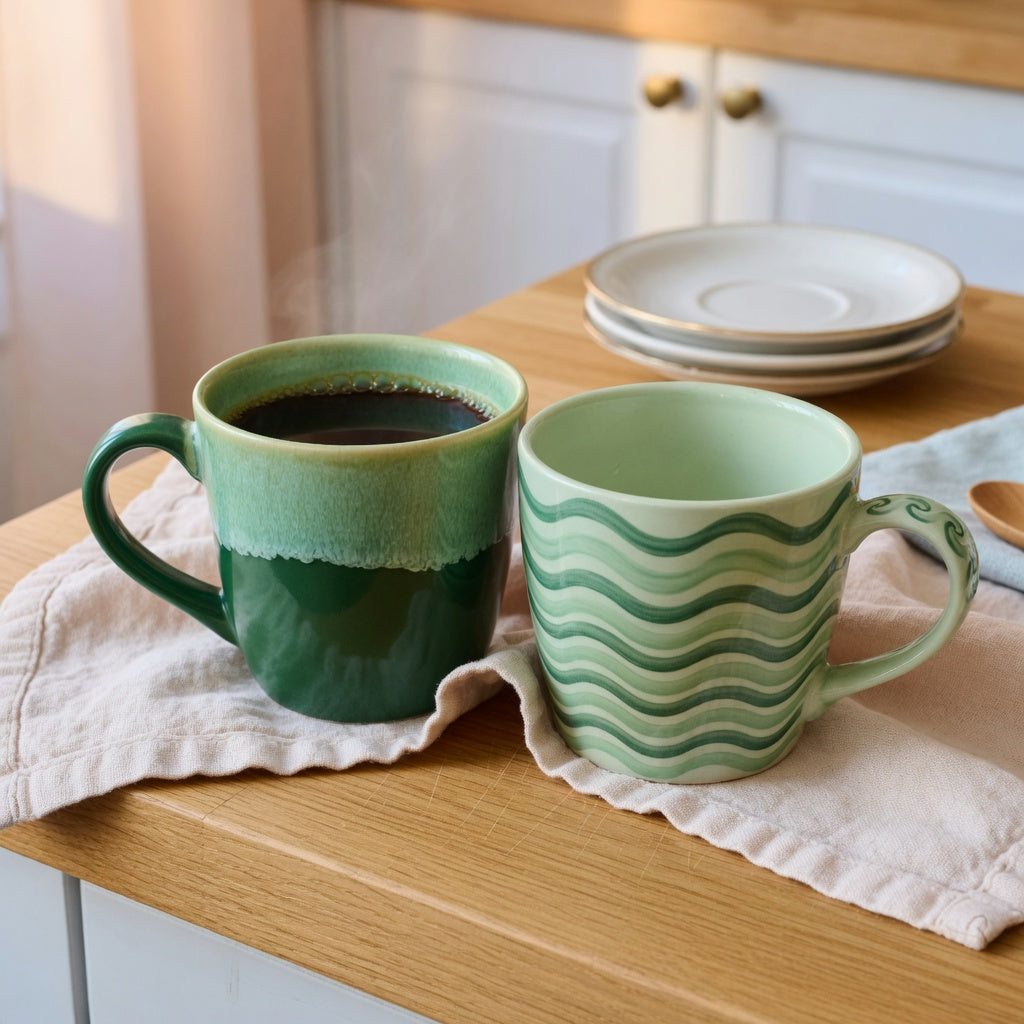
Green Two Tone Ceramic Coffee Mug: What to Compare Before Buying
Two green mugs can look identical online and behave completely differently at your sink. We compare gradient and wave finishes, capacity and tall-format trade-offs, handle comfort, dishwasher and t...
Read more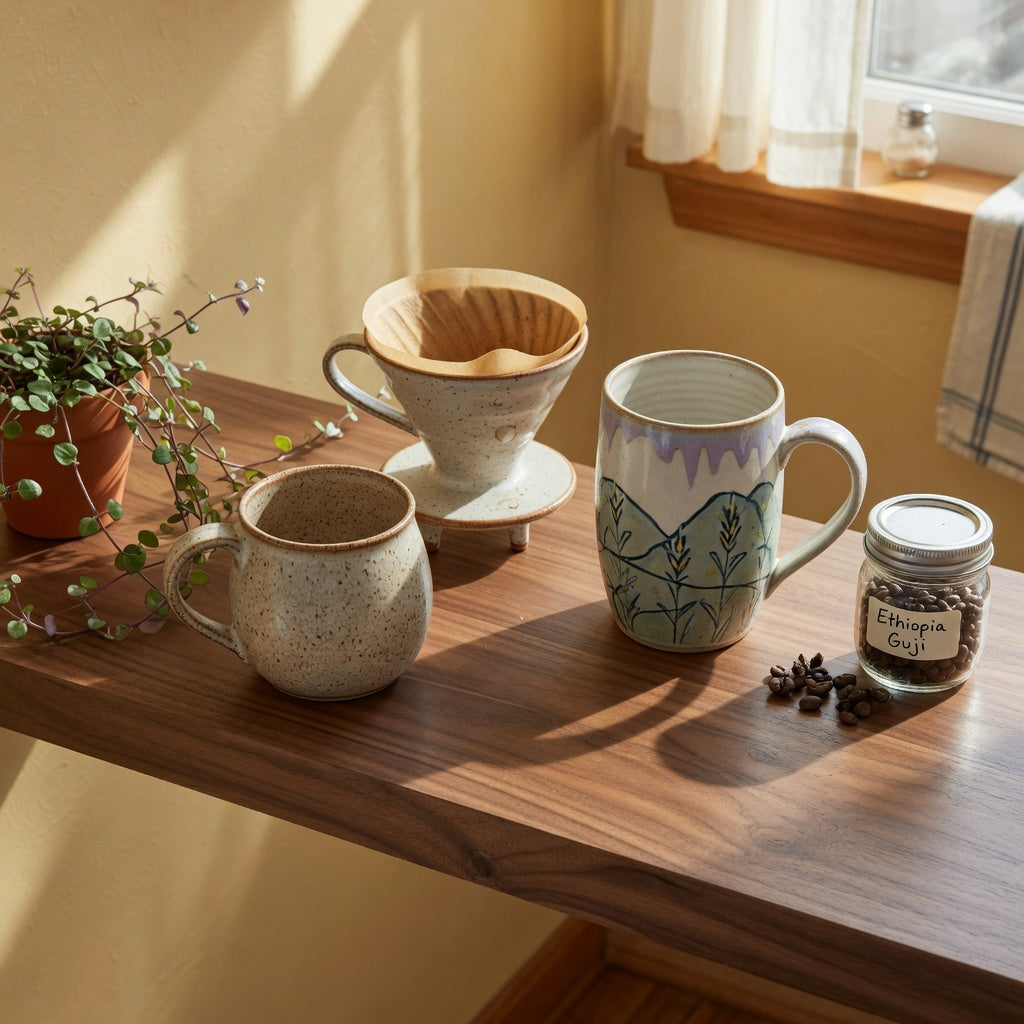
Ceramic Mug Pair Styling Ideas: What Buyers Should Compare
We pack and style ceramic mugs every working day. This guide covers the ceramic mug pair styling ideas that hold up in real kitchens — coffee bar, shelving, desk, guest tray — plus the size, glaze,...
Read more
Leave a comment
This site is protected by hCaptcha and the hCaptcha Privacy Policy and Terms of Service apply.