
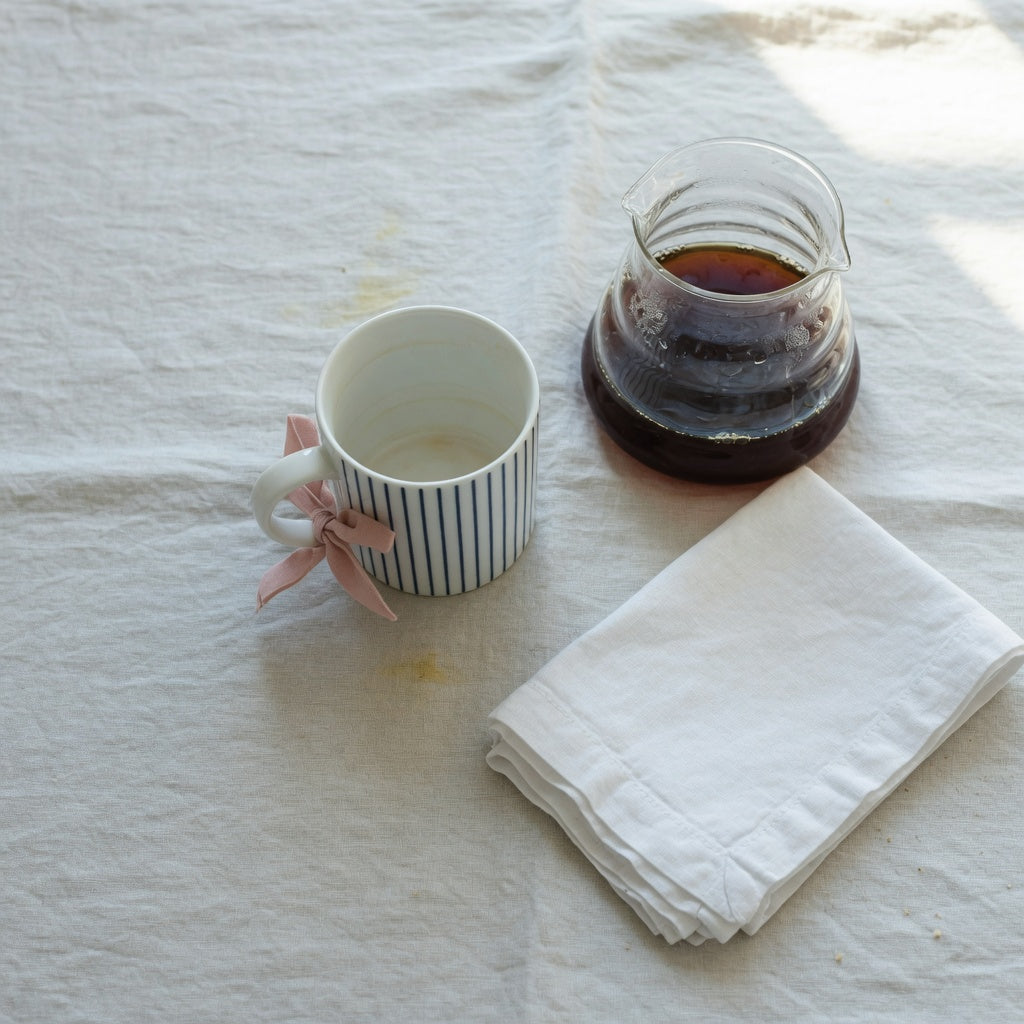
Preppy Ceramic Coffee Mug: What Buyers Should Compare
Reading time: about 15 minutes
A shopper emailed a screenshot of a pink bow mug and asked if it could replace the plain ceramic she already uses at her desk. The screenshot was a brunch gift. The question was about Tuesday. That gap shows up in our inbox more often than any debate about what preppy means. A preppy ceramic coffee mug is chosen for the artwork. It still has to hold hot coffee, share a sink, and feel right in the hand that carries it from the pot.
Online listings use the phrase for printed or personalized ceramic drinkware. The motifs overlap on purpose. Coquette searches pull bows and soft pinks. Grandmillennial searches pull chinoiserie, toile, trellis, and traditional florals. Prep-school searches pull stripes, argyle, and plaid. Nautical versions add turtles or lobsters, often beside initials. They can share a gift guide and fail in different kitchens.
People who write to our store rarely want a style lecture. They ask whether the ounce number still works once milk goes in, whether the care icon belongs to that exact design, and whether a metallic-looking rim is allowed in an office microwave. If the artwork is optional and you want a ceramic you will reach for on a weekday, compare our round coffee and tea mug with the landscape tall coffee and tea mug, then browse the unique coffee mugs in the catalog. Read stated volume, care, interior color, and finish on the live page. We will not turn a shape name into an ounce count.
Bows, plaid, and toile are not the same gift
Preppy, coquette, and grandmillennial get stacked in titles because shoppers type all three. The motif still changes who the mug suits. It does not tell you how the color was put on the clay.
- Bows and ribbons. Often pink, navy, or powder blue. These read as a coquette-preppy gift for her, including teen and brunch presents. A single bow on one face looks sparse once the mug is turned toward a wall. A wrap, or a second motif on the back, is the difference between a view and a blank white side.
- Stripes, plaid, and argyle. Closer to prep-school cloth. They usually sit more quietly than a bow and can live on a shared office shelf without looking like a shower favor.
- Turtles, lobsters, and other nautical marks. Often paired with initials. Reasonable as a house gift. Easy to regret if the person does not want a novelty animal on a Tuesday cup.
- Chinoiserie and toile. Scenic pattern, frequently labeled grandmillennial as well as preppy. Busy artwork can hide a small print flaw until you feel it. A white interior still shows tea stain, which tells you how the glaze is wearing, not that the mug failed.
- Initials and names. One letter is safer than three if you are unsure of the order. A traditional monogram puts the surname initial in the center, larger than the other two. Get that wrong and the mug is still personalized. It is personalized incorrectly.
Artwork is not the body of the mug. Listings rarely say whether you are looking at a transfer on a coated white mug, a print sealed under clear glaze, an underglaze fired into the surface, or paint applied by hand. That missing line changes fade, dishwasher, and microwave expectations more than the difference between a bow and a lobster.
Skip a printed preppy mug when someone asked for a plain daily driver, a lidded commuter cup, or anything that has to ride in a bag. Patterned ceramic chips at the rim the same way any ceramic does. The pattern will not insulate the coffee, and it will not stop a chip from catching a lip.
Is an 11 oz or 15 oz preppy ceramic coffee mug enough once milk goes in?
Shoppers in this category keep comparing listed capacities around 11 oz and 15 oz, with some larger statement cups mixed in. Those figures are whatever the seller printed for that variant. Judge them against the pour you make at home, not against a photo that makes every mug look deep.
U.S. FDA guidance describes cups and mugs as small ceramic hollowware commonly used for coffee or tea above room temperature. They normally, but not exclusively, hold about 8 fl oz (240 mL) and are made with a handle. That is a category description used for food-contact oversight. It is not a suggestion that 8 ounces is the right breakfast pour. An 11 oz listing is about 325 mL. A 15 oz listing is about 444 mL. Both sit above that 8 oz reference. Both can still feel tight once milk or a heavy splash of cream goes in.
- Black coffee or a short tea. An 11 oz cup often fits one modest pour and leaves less drink cooling in a wide, half-empty bowl. It also takes less room in a crowded cabinet.
- Milk-heavy coffee or a big home brew. A 15 oz cup leaves room for cream without an immediate refill. Full, it is heavier, and a thick wall makes it heavier still. A narrow handle that looked right beside a bow can pinch fingers at that weight.
- A number with no shape. The same stated ounces drink differently in a wide bowl and behind a taller wall. If you are comparing ceramics we sell, rather than assuming a preppy print, open the round page for a classic counter profile and the landscape tall page when you want a taller-named silhouette. Confirm the volume written on each listing. Neither name means 11 oz or 15 oz.
This style is a poor iced-coffee mug. The cup is rigid, a heap of ice dilutes what you wanted to taste, and most of these shapes have no lid. Ceramic also loses heat through the rim and the wall. A pretty outside is not a sleeve. If the coffee has to last through a long meeting on a cold desk, wall thickness and a comfortable lip matter more than another ribbon.
Rim, handle opening, and how fast the coffee cools
Novelty pages spend their space on the bow. The sip happens at the lip, and the weight hangs from the handle. In our experience those two details decide whether a gift mug becomes a Tuesday mug or a shelf mug.
Listings rarely state wall thickness, so use the side photo and your sense of a full ceramic. Thicker walls slow heat loss a little and add weight. Thin walls feel delicate and let coffee cool faster. A wide rim sheds heat and sloshes on the walk from the pot to the table. A taller wall keeps a smaller drink surface, which helps a bit, and it asks more of the handle.
Check the opening against the fingers that will use it. Two fingers and a thumb need a clear gap. A full cup in the 15 oz class with a narrow decorative handle is a common regret: it photographs as dainty and drinks as awkward. Balance matters too. If the handle sits high and the bowl is wide, the mug tips as the level drops. You notice that on the third sip, not in the thumbnail.
On the rim, look for a smooth, even lip in the zoomed photos. A sharp or gritty edge drips and feels harsh. A very thick rolled lip can be kinder on the mouth and still awkward to drink from. Chips at the lip are not cosmetic on a daily cup. They catch the mouth and hold coffee oils. If you cannot hold the piece, do not guess from a flat photo that crops the rim out of frame.
The round and landscape listings are the right next step when you want to judge shape instead of a printed motif. They are not a bow, a lobster, or a monogram unless the current photo shows that artwork. Use the unique coffee mugs collection if neither silhouette fits and you still want a ceramic with a distinctive profile. On every page, treat capacity, handle clearance, and care as unconfirmed until that listing states them.
Printed, sealed, or hand-painted: the care line has to match
Dishwasher and microwave answers belong on the listing for the exact variant, not in a review of a different colorway three scrolls down.
Printed mugs in this niche are often marketed as dishwasher safe and microwave safe. Hand-painted preppy pieces are often labeled hand-wash only and kept out of the microwave. Similar bows, different objects. If the page never says whether the design is a sealed print, an underglaze, or paint sitting on the surface, you do not know which rules apply. Wash it gently until the care line is specific to that item.
Gold, silver, or other metallic-looking accents at the rim, on the handle, or inside a monogram are the detail we tell gift buyers to find before they promise a reheat at the office. Metal and a microwave are a bad pair. Trim that only looks metallic can still be off limits if the maker says the piece is not microwave safe. Do not run that test in a shared kitchen.
- Read the care line for that item, including any note that a personalized version differs from the blank sample photo.
- Skip the dishwasher if the page says hand wash, or if the decoration is raised paint rather than a sealed print. Heated drying and strong detergent are what fade a surface design and dull a metallic line.
- Keep metallic-looking accents out of the microwave when the listing flags them, or when the listing says nothing.
- Do not soak a mug with a chipped rim. Chips, and crazing in the glaze, hold coffee oils and are harder to get clean.
- A pinhole or a rough, sandy patch inside is not a charming mark on a daily drinker. Those spots trap residue. We would rather see a smooth, continuous glaze across the interior and over the lip.
Use the same checks if you are buying from our catalog for an everyday wash instead of a one-time monogram. The icon has to belong to the item in the cart. A homepage sentence that ceramics in general are dishwasher safe is not a care label.
Lead, cadmium, and the surface your lip touches
Pretty glaze becomes a food-contact surface the moment it meets coffee or a mouth. FDA compliance policy for pottery sets a lead action level of 0.5 micrograms per milliliter of leaching solution for cups and mugs, applied when any one of six tested units exceeds that level. The cadmium action level for ceramic small hollowware is also 0.5 micrograms per milliliter, again based on any one of six units.
FDA has warned that some ceramic ware can release substantial lead from surfaces that touch food, that foods can draw that lead out, and that keeping such ware in regular use can harm health, including through chronic lead poisoning. On cadmium, the agency has noted that metal drawn out of ceramic ware could cause chronic cadmium poisoning if people keep using that ware with food. Those are category limits and hazard statements. They are not a lab report on the bow mug in a cart, and they do not rank one preppy print above another.
Lead-free, cadmium-free, and BPA-free badges are seller claims unless the listing links a test for that ware. BPA is a plastics question more than a fired-clay question, so a BPA-free badge on ceramic does not answer lead or cadmium. Look for wording that covers the interior and the rim, not only the exterior decoration. You drink from the lip. A design on the outside still leaves you depending on the glaze inside.
We do not treat a marketplace badge as proof, and a line on our own pages is not a stand-in for the current listing. If a page is vague, ask which surface was evaluated. Pinholes, glaze that pulled away from the clay, or a rough interior are practical reasons to pass before any lab number, because they are hard to clean. That is not a surface we want under daily coffee or tea.
Monograms and names, and the gifts that should stay blank
Personalization is why a lot of these mugs get bought. A name across pink stripes, or initials over a turtle, feels specific in a way a blank diner mug does not. It is also permanent. Custom drinkware is often outside ordinary returns, and a wash cycle will not repair a swapped letter.
- Confirm one initial versus a three-letter monogram, and which letter is supposed to be largest.
- Spell the name the way the person writes it, not a nickname you hope they will adopt.
- Check placement. A monogram that crashes into a lobster, or hides under the handle, will annoy them every morning.
- Ask whether the custom version keeps the same dishwasher and microwave claims as the sample. Sometimes the blank is marked safe and the decorated piece is hand wash.
- Read the stated production window on that seller. Custom drinkware is a weak day-before gift if the ship date lands after the brunch. We will not invent a turnaround time for a workshop we do not run.
A pink bow, a plaid, or a chinoiserie mug is a sound gift when the recipient already likes that look. It is a weak gift when you are guessing, when they live on a lidded commuter cup, or when they asked for something plain. A teen present has the same test. If they asked for the bow, the bow is the gift. If you are hoping the style will land, a non-custom ceramic they can use without protecting the print is the safer handoff.
If they would rather have a shape than a printed motif, go back to the round and landscape pages. Do not describe either one as a preppy print unless the photo shows it. Tea drinkers notice a rough lip on the first sip, so a cup used for both coffee and tea needs a smooth rim more than it needs a monogram.
Listing checks before the mug goes in the cart
Run this on any preppy ceramic coffee mug, then use the same habits on a CoffeifyMug page. We would rather leave a tab open than trust a title.
| Check | What you want to see | Why it changes the buy |
|---|---|---|
| Stated ounces | 11 oz, 15 oz, or another number on that variant | Photos hide whether milk fits |
| Care for this exact item | Dishwasher and microwave icons, or a hand-wash warning | Hand-painted and printed mugs are not the same object |
| Metallic-looking accent | A clear yes or no on microwave use | Gold and silver trim stay out of the microwave when the maker says so, and silence is not a yes |
| Interior and rim | Color, smooth glaze, no pinholes in the zoomed photos | You drink from the inside, not from the bow |
| Print layout | One side, both sides, or a wrap | A one-sided bow disappears when the mug faces the wall |
| Handle opening | Room for the fingers that will lift a full cup | A dainty handle looks right with a ribbon and fails when the cup is heavy |
| Food-contact wording | A claim about the surface you drink from, ideally with a test reference | Lead-free, with no surface named and no report, is still a slogan |
| Personalization rules | Letter order, character limit, and whether a custom piece can be returned | A wrong monogram is the whole gift |
Pass on a listing that will not state capacity, will not say how to wash the piece, or shows a rough interior once you zoom. Choose a different style if you need a lid, a commute, gold trim plus a microwave, or a cup several people will share without babying the print.
Frequently asked questions
Is a preppy ceramic coffee mug dishwasher safe and microwave safe?
Only if that exact listing says so for the variant in the cart. Printed mugs are often sold as both dishwasher and microwave safe, while hand-painted pieces are often hand-wash only and kept out of the microwave. A review of a different colorway does not answer it. If the page is silent, do not assume the bow survives a heated dry cycle.
Does a lead-free badge mean the mug is fine for hot coffee every day?
Treat lead-free as a seller claim unless the page links testing for that ware. FDA's lead action level for cups and mugs is 0.5 micrograms per milliliter of leaching solution, applied if any one of six units exceeds it. The cadmium action level for ceramic small hollowware uses the same figure and the same six-unit rule. Ask whether the statement covers the interior and the rim. A BPA-free badge does not answer a lead or cadmium question on ceramic.
Should I buy the 11 oz or the 15 oz size?
Choose about 11 oz for a short black coffee or tea and a smaller cabinet footprint. Choose about 15 oz if you add milk or you dislike an immediate refill. Both are larger than the roughly 8 fl oz (240 mL) size FDA cites as a normal, not exclusive, description of beverage hollowware. Confirm the number on the listing in front of you, including any CoffeifyMug page. A round or tall product name is not an ounce measurement.
Will gold or silver trim make the mug unsafe in the microwave?
Do not microwave a mug when the listing shows metallic gold or silver trim, or when it says the piece is not microwave safe. Metal and microwave heating do not belong together, and a gift mug is a poor thing to experiment with. If the page never mentions microwave use, leave the mug on the counter. If you reheat coffee at your desk every afternoon, pick a listing that clearly allows it for that design.
Can I personalize a preppy mug with initials or a name?
Many sellers offer a name or a monogram on bow, stripe, turtle, and lobster designs. Confirm whether you are ordering one initial or three, and which letter should sit in the center and larger. Check that the personalized version keeps the same care rules as the photo, and whether a custom piece can be returned. If the recipient did not ask for a monogram, a non-custom ceramic they will use daily is the safer gift.
Open two listings side by side before you buy. On a printed preppy mug, confirm ounces, care icons, trim, interior glaze, which sides carry the print, and monogram order. If you want a ceramic coffee or tea mug from our shelves instead of a novelty print, set the classic round coffee and tea mug next to the taller landscape coffee and tea mug in the unique coffee mugs collection. For a plain weekday cup, the same buyer checks show up in our morning coffee ceramic mug comparison. Keep the page whose stated size and care match the kitchen you are actually buying for.
More from our blog
Read more
Retro Ceramic Coffee Cup Gift: Fit, Safety, and Daily Use
Shoppers comparing a retro ceramic coffee cup gift are often looking at four different objects. We sort printed mugs, diner stoneware, handmade pottery, and vintage by capacity, handle, food-use la...
Read more
Everyday Ceramic Mug 350 ml: Fill, Handle, and Care
Shoppers comparing an everyday ceramic mug 350 ml usually want a desk coffee or latte near 12 fl oz, not a travel tumbler. We cover usable fill, handle, full weight, warmth, and care so you can che...
Read more
Leave a comment
This site is protected by hCaptcha and the hCaptcha Privacy Policy and Terms of Service apply.