



Pottery Tea Cups Storage Fit Guide: Retro, Pleated, Ball Handle
Reading time: about 11 minutes
A cabinet door that will not quite close is rarely a capacity problem. It is usually a handle problem. We have watched shoppers choose a tea cup by its millilitre count, get it home, and then find the handle strikes the shelf above or catches the door frame every time the cabinet opens. So this pottery tea cups storage fit guide skips the tasting notes and works through the unglamorous part: which shape takes which kind of shelf, and what you still need to confirm on the live listing before you commit.
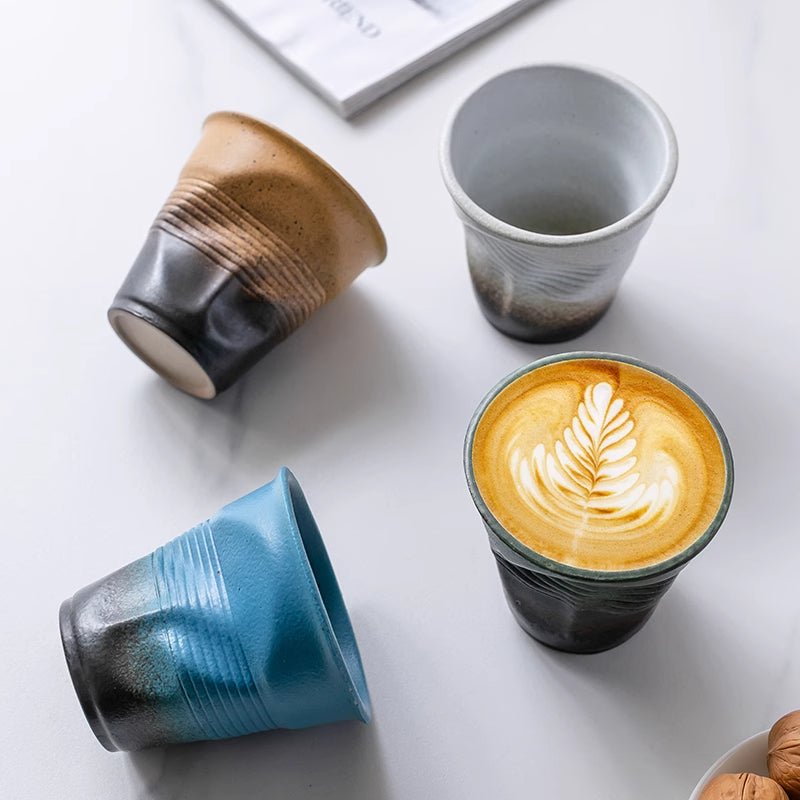
Our current line-up gives us three genuinely different forms to compare: the Retro Coffee & Tea Cup at 170 ml, the Pleated Coffee & Tea Cup at 200 ml, and the Ball Handled Coffee & Tea Mug at 250 ml. All three are ceramic. Those are the facts we can state plainly. Diameter, height, handle projection and weight are not part of our verified notes, so treat them as things to confirm on the product page rather than numbers to build a shelf insert around.
Pottery tea cups storage fit guide: what actually eats shelf space?
Three things decide whether a cup sits happily on a shelf, and capacity is not one of them.
- Footprint. The width of the body, plus whatever the handle adds on the side it happens to face.
- Height, plus lift. The cup itself, and the gap your fingers need above it to get it out without tipping the row.
- Contact points. Where a cup touches a neighbour or a wall: handle tips, wide rims, textured walls.
Two cups can hold the same volume of tea and treat a shelf completely differently. A deep, narrow cup and a shallow, wide one may both measure 200 ml, and neither number tells you which one slides into a narrow gap between a kettle and the cabinet wall.
The practical habit is to stop planning from capacity and start planning from the two dimensions a listing usually shows: body width and which side the handle sits on. If those are not shown, ask us. A short reply before dispatch is cheaper than a return and a reorganisation.
Retro 170 ml: is a small cup always the easiest to store?
The Retro Coffee & Tea Cup is the smallest capacity here at 170 ml. That number points to short tea sessions, tasting pours, and shelves where you want a row of cups instead of one mug that dominates the space. In a shallow cabinet, compact cups generally leave more room to lift one out without dragging the row, which is the difference between a calm morning and a small game of pick-up sticks.
What we will not tell you is that 170 ml equals the smallest footprint. Capacity is volume. A small cup with a generous handle can need more side clearance than a narrow mug, and the only reliable answer is the handle projection on the current listing. Before you buy a tiered riser or a stacking insert, measure a cup you already own that fits the space, then compare it against the numbers on the page.
Where the Retro is the wrong choice: a long morning tea, a milky drink, or a desk cup you refill twice before lunch. At 170 ml it is a small cup by design, and no amount of clever shelf planning changes that. If you want one generous cup, step up to the 250 ml Ball Handle, or scan the unique coffee mugs collection for a larger body. Storage-wise, this shape rewards neat rows and punishes a drawer shared with serving spoons.
Pleated 200 ml: does a pleated wall change stacking and cleaning?
The Pleated Coffee & Tea Cup sits in the middle at 200 ml and is the most obviously textured of the three, with a pleated exterior. That texture is the reason to buy it and also the reason it needs a slightly different storage plan:
- Ridges collect dust and dried tea drips far faster than a smooth wall. On an open shelf, expect to wipe it down more often than a plain cup.
- Fluted walls make nesting less predictable. If you stack, the foot of the upper cup has to sit flat on the rim below rather than perch on a ridge — and a cup that rocks is grinding glaze off two pieces at once.
- Texture shows handling marks. On a display shelf that is part of the charm; in a busy cupboard it is one more thing to clean.
We would put this cup on a visible shelf, a tea station, or a dresser top where the pleating is the point. We would not choose it for deep, dark cupboard stacking where cups come out blind and go back by feel.
Ball Handle 250 ml: how much clearance does a projecting handle need?
The Ball Handled Coffee & Tea Mug is the largest capacity in the group at 250 ml, and the ball handle is the feature that most changes a shelf plan. A rounded loop that stands away from the body needs side clearance, and depending on how the cup is turned, rear clearance too. Pack it shoulder to shoulder with other mugs and the handle becomes the contact point. Contact points are where chips and glaze scratches begin.
Our recommendation for this shape is simple: give it the end of a row, or a shelf with air on both sides, and turn the handle toward open space rather than toward a neighbour. Then close the cabinet door slowly the first time. A handle can clear the shelf above and still catch the door, and that is the failure people discover after the cup is already full of hot tea.
The trade-off is honest. At 250 ml this is the most useful size here for a larger tea or a long desk session, and it is also the least nestable shape in the group. If your cabinet is already at capacity, a smaller cup or a tighter handle will usually solve the problem faster than reorganising the whole shelf.
How do you measure a shelf before buying pottery tea cups?
- Shelf depth. Measure front to back and subtract a little for the door or frame. Compare that with body width plus handle projection on the side the handle will face.
- Clear height. Measure from the shelf to the shelf above, then subtract the height of your fingers. A cup that fits exactly is a cup you will knock over.
- Door swing. Open the door fully with the cups in place before you commit. Handles catch doors more often than bodies do.
- Row rhythm. Count how many cups you actually use in a week. Empty shelf space is cheaper than chipped rims.
- Stack policy. Stack only cups with flat, matched rims and stable feet. Never bridge a textured rim with a heavier mug.
If you are mixing shapes rather than buying one, browse the unique coffee mugs collection and compare the visible forms side by side before you give up a shelf to them. For a broader method that covers other ceramic bodies, our ceramic tea mug storage fit guide walks through the same measuring routine; if clay-bodied mugs are what you are shelving, the clay pottery coffee mugs storage fit guide is the closer read.
Which of the three shapes fits your cabinet and tea routine?
| Cup | Listed capacity | Visible form and storage note | Reader situation it suits |
|---|---|---|---|
| Retro Coffee & Tea Cup | 170 ml | Small cup body; confirm handle projection on the listing | Short tea sessions, tight rows, shallow shelves once measured |
| Pleated Coffee & Tea Cup | 200 ml | Pleated exterior; more dust-catching surface, less predictable stacking | Open display shelf or tea station where texture earns its place |
| Ball Handled Coffee & Tea Mug | 250 ml | Ball handle projects; needs side clearance and a door-swing check | Larger tea, desk use, a shelf with breathing room |
No dimensions in this table are invented. The capacities are listed facts and the storage notes come from the visible form described on each listing. Confirm exact measurements on the product pages before you buy an organiser or a new cabinet insert.
What should you confirm on the cup that touches tea and lips?
Storage fit gets the cup onto the shelf. Food contact decides whether it stays in daily rotation, and both answers come from the exact listing rather than from the word "pottery".
Ceramic is a material family, not a safety certificate. FDA guidance on traditional pottery explains the mechanism: lead can be present in glazes and decorations, and when a piece is fired at the proper temperature for the proper time, essentially all of that lead is bound into the glaze — under-fired or damaged glaze is where the risk sits. The FDA also flags the categories it treats with more caution: handmade ware with a crude appearance or irregular shape, antiques, damaged or excessively worn pieces, flea-market finds from an unidentifiable maker, and bright orange, red or yellow decoration. Washing, boiling or scrubbing will not remove lead from a piece. For cups and mugs specifically, the CPG Sec. 545.450 lead guideline is 0.5 micrograms per mL of leaching solution in any one of six units, and the cadmium guideline for small hollowware under 1.1 litre is 0.5 micrograms per mL.
What that means at checkout: our verified notes for these three cups cover capacity, ceramic body and visible form. They do not include a lead-free certification or an appliance rating, so we will not claim one. If food-contact documentation matters to you — and for a cup you use daily, it reasonably might — ask us before you buy and we will tell you what we have and do not have.
Three checks that cost nothing:
- Look at the surfaces that touch tea and lips. You want an even glaze, no bare clay on the drinking rim, no pinholes through to the body, no chips.
- Know the difference between crazing and a crack. Fine crackle in the glaze is a look; a line you can feel with a fingernail, or one that runs through the wall, retires the cup from drinking duty.
- Never microwave metallic or overglaze decoration, and do not assume dishwasher or microwave safety carries across pottery tea cups generally. It is decided product by product.
How do you store pottery tea cups so they stay chip-free?
- Store cups upright. Cups leaned at an angle put pressure on the rim, and rims are the thinnest part of most tea cups.
- Keep handles from touching. A strip of felt or a folded napkin between two handles costs less than replacing a chipped mug.
- Do not stack a heavier 250 ml mug on top of a smaller 170 ml cup. Match wide feet to wide rims, and stop stacking at two.
- Wipe textured exteriors before they go back on the shelf. Dried tea in ridges holds dust and moisture against the glaze.
- Leave a finger-width gap between handles where the shelf allows it, and keep the cups you use daily at the front.
In our experience the most common storage mistake is not a shortage of cabinet space. It is cups packed so tightly that every morning becomes a careful extraction. Display pieces can live higher up, but only if you can reach them without dragging the whole row forward.
Frequently asked questions
How do I use a pottery tea cups storage fit guide before I buy?
Measure shelf depth, clear height and door swing first, then read the exact listing for body width and handle projection. Use the 170 ml, 200 ml and 250 ml capacities here to pick a serving size, and the measurements to pick a shelf. Capacity tells you how much tea you get; only the listed dimensions tell you whether the cup fits.
Does the 250 ml Ball Handle really need more shelf space than the 170 ml Retro?
Not automatically. Capacity is volume, while shelf space depends on body width, height and how far the handle stands out. A compact 250 ml mug can fit where a wider small cup will not. Check the handle projection on each listing instead of assuming the larger capacity has the larger footprint.
Can I stack the Pleated 200 ml cup on my other tea cups?
Try it before you trust it. Pleated walls are less predictable than smooth ones, so the foot of the upper cup has to sit flat on the rim below and must not rock. If it rocks, store it upright — grinding two glazed rims together is exactly how chips start.
Are these three pottery tea cups dishwasher and microwave safe?
Treat appliance care as product-specific. Our verified notes for these cups cover capacity, ceramic body and visible form, not appliance ratings, so check the care line on the exact product page or ask us before the first dishwasher cycle. Never microwave any cup with metallic or overglaze decoration.
Which cup should I measure my shelf for first?
If your shelf is shallow or you drink small servings, start with the Retro 170 ml. If you want a textured cup on an open shelf, start with the Pleated 200 ml. If you drink larger teas and can give a handle clear air, start with the Ball Handle 250 ml — then compare all three in the unique coffee mugs collection before you buy.
More from our blog
Ready to pick your mug? Two ways to save on today's order:
Ordering 1–3 mugs? Get an extra 10% off your 1st order with code 10_OFF Apply 10% Off & Shop Wooden-Handle Mugs →
Gifting 4+ mugs? Buy 3, Get the 4th Free applies automatically at checkout (no code needed; offers do not stack) · Free standard shipping (Nov pre-Christmas delivery: 15–20 calendar days US) · Free replacement if chipped in transit.
Popular mug buying guides: Wooden-Handle Tea Infuser Mugs Compared · Christmas & Secret Santa Mugs 2026 · Espresso & Cortado Cups Guide · Cup & Saucer Gift Sets · All 25 Mugs Spec Table · Mug Size Guide · Shipping & Promo FAQ
FIRST ORDER 10% OFF (CODE: 10_OFF) · OR BUY 3, GET THE 4TH FREE


Read more
Large Round Coffee Mugs Storage Fit Guide: Shape, Handle, Shelf Fit
This large round coffee mugs storage fit guide compares our 400 ml, 440 ml and 480 ml round shapes by listed capacity, handle projection, brewer clearance and the cabinet measurements that actually...
Read more
Latte Mug vs Coffee Mug Size: A Practical Comparison
A latte mug and a coffee mug are merchandising labels, not standards. Here's how listed ounces, rim width, and headspace change what actually fits — and how our 400, 440, and 480 ml mugs line up wi...
Read more
Leave a comment
This site is protected by hCaptcha and the hCaptcha Privacy Policy and Terms of Service apply.