



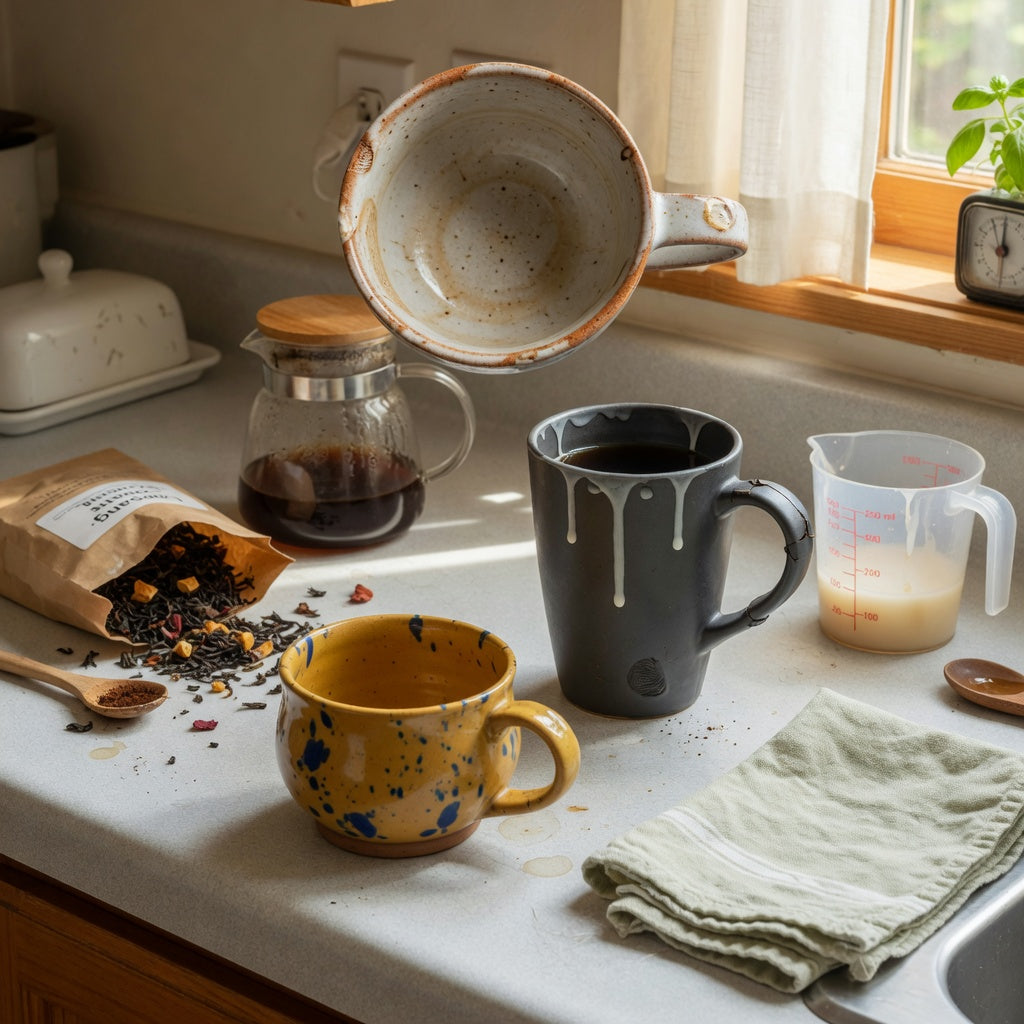
Pottery Tea Cups Weekend Coffee Practical Purchase Checklist
Reading time: about 12 minutes
A slow Saturday morning exposes a cup mismatch quickly: one person pours 170 ml and settles into a book, while another expects a larger coffee that leaves room for milk. Our pottery tea cups weekend coffee practical purchase checklist starts with that measurement, not with the glaze color. We handle this category closely enough to know that a beautiful cup can still be the wrong purchase if its capacity, rim, form, or care requirements do not fit the way you actually drink.
The CoffeifyMug range gives you three useful capacity points to compare: the Retro Coffee & Tea Cup at 170 ml, the Pleated Coffee & Tea Cup at 200 ml, and the Ball Handle Coffee & Tea Mug at 250 ml. All three are listed with a ceramic body. The remaining questions, such as food-contact suitability, appliance care, and the exact feel of the rim, should be checked on the current product listing before you order.
What does this pottery tea cups weekend coffee practical purchase checklist settle?
A weekend serving routine is slower, but it is not necessarily smaller. You may sip one coffee for an hour, serve tea from a pot, or carry a cup from the kitchen counter to the sofa. Before adding a piece to your cart, settle these six variables:
- Actual capacity: Measure the amount you normally pour rather than guessing from a product photo.
- Visible form: Decide if you prefer a small tea-cup shape, a more structured silhouette, or a handled mug form.
- Ceramic surface: Check where glaze is present, especially inside the cup and along the lip.
- Food-contact information: Look for a clear statement about intended use and ask what supports any food-safe or lead-free claim.
- Comfort: Consider rim thickness, hand position, handle clearance, and how confidently you can lift a filled cup.
- Care: Confirm dishwasher and microwave instructions for the exact product rather than assuming all pottery behaves alike.
We do not use heat-retention promises to rank these cups. There is no useful reason to assign a heat-performance claim without product-specific testing. Capacity, surface condition, visible form, and care instructions are more honest buying criteria.
Does your weekend pour fit 170 ml, 200 ml, or 250 ml?
Start with the cup already in your cupboard. Fill it with the amount of coffee or tea you normally drink, then use a measuring jug to find the volume. This takes less than a minute and prevents the common mistake of choosing a cup based on height or width alone.
| CoffeifyMug option | Listed capacity | Consider it if | Trade-off to check |
|---|---|---|---|
| Retro Coffee & Tea Cup | 170 ml | Your measured serving is close to 170 ml, or you prefer a shorter tea or coffee pour with a possible refill. | It may feel undersized if your normal desk or weekend mug holds substantially more. |
| Pleated Coffee & Tea Cup | 200 ml | You want a middle capacity for a measured tea or coffee serving without moving to the largest option. | It remains smaller than a familiar 240 ml cup reference, so measure before ordering. |
| Ball Handle Coffee & Tea Mug | 250 ml | Your measured serving is near 250 ml and the visible ball-handle form suits how you lift and carry a cup. | Confirm handle clearance, grip comfort, and the listing's care instructions before buying. |
For context, FDA guidance describes cups and mugs as small ceramic hollowware commonly used for beverages such as coffee or tea and says they normally, though not exclusively, hold about 240 ml. That is a reference point, not a promise that every cup near that volume will feel like a standard mug. The 170 ml and 200 ml choices may be better for a tea-pot routine or smaller pours; the 250 ml option is closer to a familiar mug-sized serving.
If you regularly pour 350 ml or more, do not force a smaller pottery tea cup to perform as your large everyday mug. Start with the unique coffee mugs collection and compare the listed capacities before deciding if this three-size group matches your routine.
What does the ceramic body tell you about a tea cup?
The word pottery describes a look and a broad product category, not one universal material performance. Retail listings may also use terms such as earthenware, stoneware, porcelain, or ceramic. Those labels can help identify the body, but they do not answer every practical question by themselves.
Ask the seller to clarify the clay body and firing information if the material is central to your choice. A ceramic body does not automatically confirm that a particular cup is dishwasher-safe, microwave-safe, resistant to thermal shock, or suitable for every type of food contact. Glaze fit, decoration, firing, and the finished surface still matter.
For our own product comparisons, we keep the claim narrow: the listed product facts here are the ceramic body, the stated capacity, and the visible form. We do not transfer a care claim from one CoffeifyMug cup to another. A product page that answers your appliance questions clearly is more useful than a broad category label.
Can you trust a food-safe or lead-free pottery tea cup label?
Food-contact safety deserves more than a reassuring phrase in a product description. Lead can be present in the glaze or decoration on some traditional pottery. The FDA explains that improper manufacturing or firing can allow lead to leach into food or drink, while properly fired pottery binds the lead into the glaze. That does not allow a shopper to assume that every handmade, antique, or brightly decorated cup is safe.
FDA guidance identifies extra caution around some handmade pieces with crude or irregular forms, antiques, damaged or heavily worn ware, flea-market or street-vendor purchases, pieces from an unidentifiable maker, and bright orange, red, or yellow decoration. Everyday commercial factory pottery is described as much less likely to have lead problems, but the sensible purchase habit is still to verify the intended use.
For cups and mugs, FDA guidance gives a lead guideline of 0.5 micrograms per milliliter of leaching solution in any one of six units when tested by specified methods. Cadmium has separate guidance for ceramic hollowware; for small hollowware under 1.1 liters, the cited guideline is also 0.5 micrograms per milliliter. These figures explain why a finished-piece leach test matters, but they are not evidence that a particular CoffeifyMug cup has been tested.
Before buying, ask:
- Is this exact cup intended for coffee and tea service rather than display?
- Which clay body, glaze, and firing process apply to the finished piece?
- Does a test report identify the same product, glaze, and production run?
- Does the listing explain what its food-safe or lead-free wording means?
FDA also says ceramicware with extractable lead should not be labeled "Lead Free." Washing, boiling, or scrubbing cannot remove lead from pottery that contains it, so cleaning is not a substitute for appropriate manufacture or evidence.
What should you inspect at the rim, glaze, and foot?
A product photo can show color and silhouette, but it cannot reliably show every surface defect. At a kitchen counter or during a gift unboxing, inspect the areas that meet your drink, your lips, and your hand.
- Interior glaze: Look for an even, intact surface inside the cup. If the listing does not explain whether the interior is glazed, ask before using the piece for daily drinks.
- Rim: Check for chips, sharp edges, rough decoration, or a metallic finish at the lip line. The rim is where comfort and food-contact questions overlap.
- Bare clay: If unglazed material appears where tea, coffee, or your lips will touch, treat that as an unresolved use question rather than assuming the rustic appearance is harmless.
- Pinholes and crawling: Small open glaze defects deserve a closer look, especially on the inside. Ask for a replacement or clarification if the defect is more than a superficial mark.
- Crazing: Fine lines in a glaze can be intentional, but a crack through the body, a line that catches sharply, a chip, or damage that develops over time should end the cup's drink service until the maker advises you.
- Foot ring: Check that the base sits steadily and that the foot does not have rough projections that could scratch a desk or countertop.
Decorative ceramicware can look exactly like a drink cup. FDA guidance treats ornamental ware that appears suitable for food as foodware unless it is permanently identified as not for food use, including the required warning language, or has a hole through the potential food-contact surface. A display piece should stay a display piece.
Will the form work on a sofa, kitchen counter, or office desk?
Capacity tells you how much the cup holds. Form tells you how confidently you will use it. This becomes clear during a slow weekend: a cup may sit beside a laptop, travel from the kitchen to a reading chair, or be lifted one-handed while the other hand holds a plate.
Use the visible form to ask practical questions rather than making assumptions from style names:
- Small cup form: More suitable for a measured serving if you enjoy refills and do not expect a large mug volume.
- Structured or pleated form: Check the listing photographs for how the sides meet the base and whether the silhouette leaves enough room for your usual grip.
- Ball-handle mug form: Confirm that your fingers fit through the handle and that the handle does not force your hand against the cup wall.
- Rim profile: A thin, rounded, or more pronounced rim changes the drinking feel. If rim comfort matters, start with one cup instead of ordering a complete set.
We recommend comparing a single cup against your current mug on the same desk or counter. That simple side-by-side check reveals more than a styled photograph: how much shelf space the cup uses, how it sits beside a saucer or plate, and if its capacity matches the amount you actually want in front of you.
What care questions should you answer before the first dishwasher cycle?
Dishwasher and microwave compatibility are maker-specific. The absence of a warning is not the same as a positive care instruction, and a statement about one ceramic cup should not be copied to another product.
- Check the current product listing for dishwasher instructions for that exact cup.
- Check the current product listing for microwave instructions for that exact cup.
- Keep metallic or overglaze decoration out of the microwave unless the maker provides an explicit, reliable instruction that says otherwise.
- Avoid abrupt temperature changes, such as pouring boiling liquid into a cup straight from a cold shelf or rinsing a very hot cup in cold water.
- Inspect the rim and interior after repeated dishwasher cycles, especially if the cup is stacked or knocked against heavier dishes.
- Hand wash when care information is missing and the cup matters more to you than appliance convenience.
This is also where the daily-use versus display decision becomes useful. A cup with a warning label, structural damage, an unresolved food-contact surface, or care instructions that do not suit your routine may still be attractive, but it should not be your everyday coffee cup.
Which CoffeifyMug cup fits your weekend coffee routine?
Use the situation-to-capacity match below, then verify the current listing before ordering:
- Your Saturday pour is short and measured: Review the Retro Coffee & Tea Cup at 170 ml. It is the logical starting point if your measured serving is near that volume and you want a smaller tea or coffee format. Confirm the surface and care details on the listing.
- You want a middle option for tea or coffee: Review the Pleated Coffee & Tea Cup at 200 ml. Choose it only after comparing that listed capacity with your normal pour; the pleated visible form should be judged alongside rim and grip comfort.
- You want the largest listed option and a handle form: Review the Ball Handle Coffee & Tea Mug at 250 ml. It is the largest capacity in this trio and may suit a longer coffee sit if your measured serving is close to 250 ml. Check handle clearance and appliance instructions before purchase.
- You are still unsure about size or shape: Compare all three through the CoffeifyMug unique coffee mugs collection, then measure your existing cup before choosing.
None of these choices should be treated as a replacement for a large 350 ml-plus mug if that is your everyday pour. The better purchase is the one that matches your serving habit, even if the smaller cup looks more appealing in a styled photo.
Frequently asked questions
Is a 170 ml pottery tea cup too small for weekend coffee?
It may be too small if your normal coffee serving is closer to a large mug, but it can fit a short pour, a tea serving, or a refill-based routine. Measure your existing cup first; that is the first step in our pottery tea cups weekend coffee practical purchase checklist.
How can I tell if a pottery tea cup is safe for coffee and tea?
Look for a clear statement that the exact piece is intended for food contact, then ask how the glaze, firing, and finished piece were assessed. Do not treat an attractive form, a generic "food safe" phrase, or a lead-free claim as a substitute for product-specific information.
Can I put a CoffeifyMug pottery tea cup in the dishwasher or microwave?
Verify the current listing for the exact CoffeifyMug cup before using either appliance. The product facts available here establish ceramic body, capacity, and visible form, but they do not confirm dishwasher or microwave compatibility. Keep metallic or overglaze decoration out of the microwave.
Is crazing on a pottery tea cup a crack?
Crazing refers to fine lines in the glaze and is not automatically the same as a crack through the ceramic body. If a line catches, widens, darkens, reaches the rim, or appears with a chip, stop using the cup for drinks and ask the maker to assess it.
Should I buy a pottery tea cup with an unglazed rim?
Only after confirming that the maker intends that surface for contact with drinks and lips and explains how to care for it. If the listing leaves the food-contact status unclear, choose a cup with a clearly described interior and rim instead of guessing.
What should you check before adding one to the cart?
- Measure the serving in your current cup.
- Compare it with the listed 170 ml, 200 ml, and 250 ml capacities.
- Review the interior, rim, visible form, and handle from the product photographs.
- Confirm food-contact information and ask what supports any lead-free or food-safe wording.
- Check dishwasher, microwave, and temperature-change guidance for the exact piece.
- Choose one cup first if the rim, handle, or capacity is unfamiliar.
Start with the unique coffee mugs collection and compare the three listed capacities side by side. If your pour is near 170 ml, open the Retro listing; if it is near 200 ml, open the Pleated listing; if it is near 250 ml and you want the ball-handle form, open the Ball Handle listing. Then return to this checklist before you buy.
More from our blog
Ready to pick your mug? Two ways to save on today's order:
Ordering 1–3 mugs? Get an extra 10% off your 1st order with code 10_OFF Apply 10% Off & Shop Wooden-Handle Mugs →
Gifting 4+ mugs? Buy 3, Get the 4th Free applies automatically at checkout (no code needed; offers do not stack) · Free standard shipping (Nov pre-Christmas delivery: 15–20 calendar days US) · Free replacement if chipped in transit.
Popular mug buying guides: Ceramic Mugs with Lids Compared · Wooden-Handle Tea Infuser Mugs Compared · Christmas & Secret Santa Mugs 2026 · Espresso & Cortado Cups Guide · Cup & Saucer Gift Sets · All 25 Mugs Spec Table · Mug Size Guide · Shipping & Promo FAQ
FIRST ORDER 10% OFF (CODE: 10_OFF) · OR BUY 3, GET THE 4TH FREE


Read more
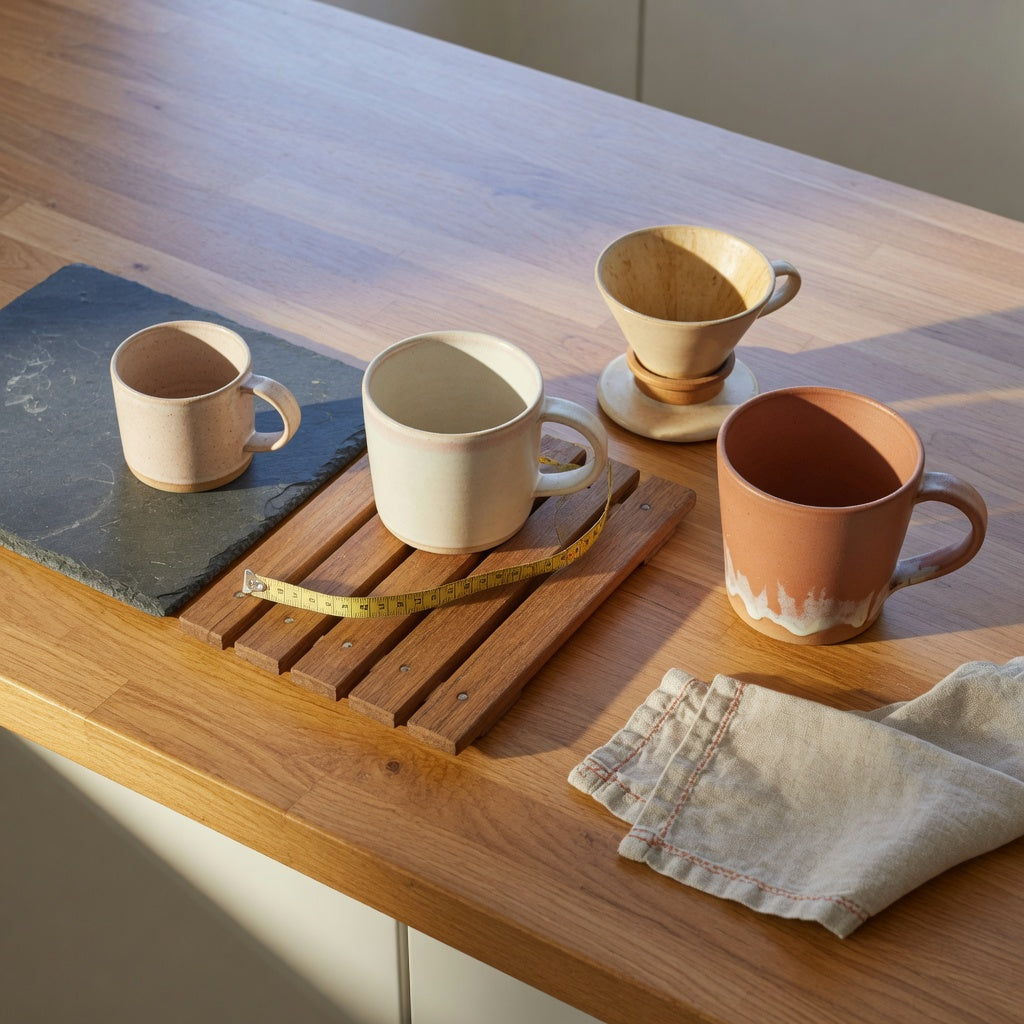
Wide Based Coffee Mugs Weekend Coffee Practical Purchase Checklist
A store-side checklist for buying wide based coffee mugs for slower weekend mornings: how to measure fit, compare our 250 ml, 400 ml, and 480 ml options, and spot care issues before you order.
Read more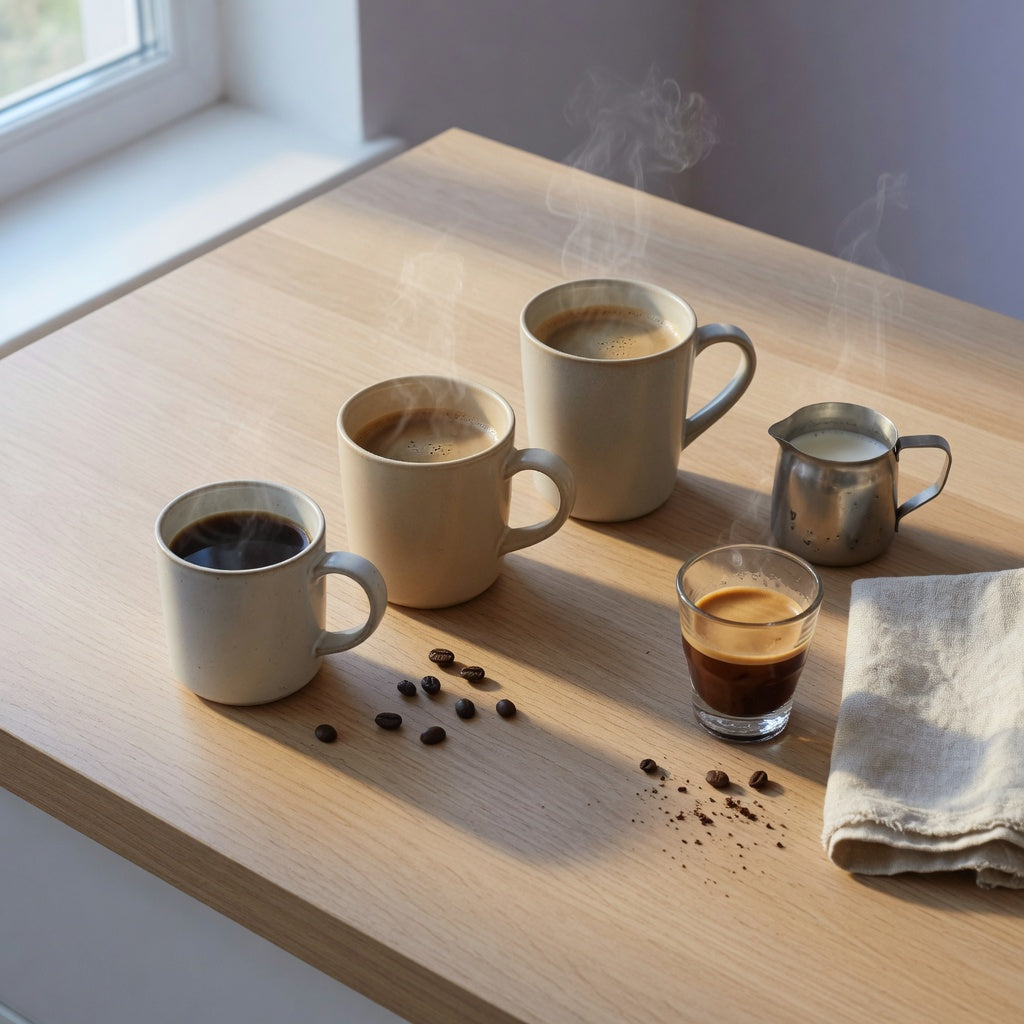
Latte Mugs Tall Weekend Coffee Product Shortlist Guide
A scenario-based shortlist of three tall latte mugs at 400, 440 and 480 ml, with plain capacity math, silhouette trade-offs, the measurements to take before you order, and the care questions worth ...
Read more
Leave a comment
This site is protected by hCaptcha and the hCaptcha Privacy Policy and Terms of Service apply.