



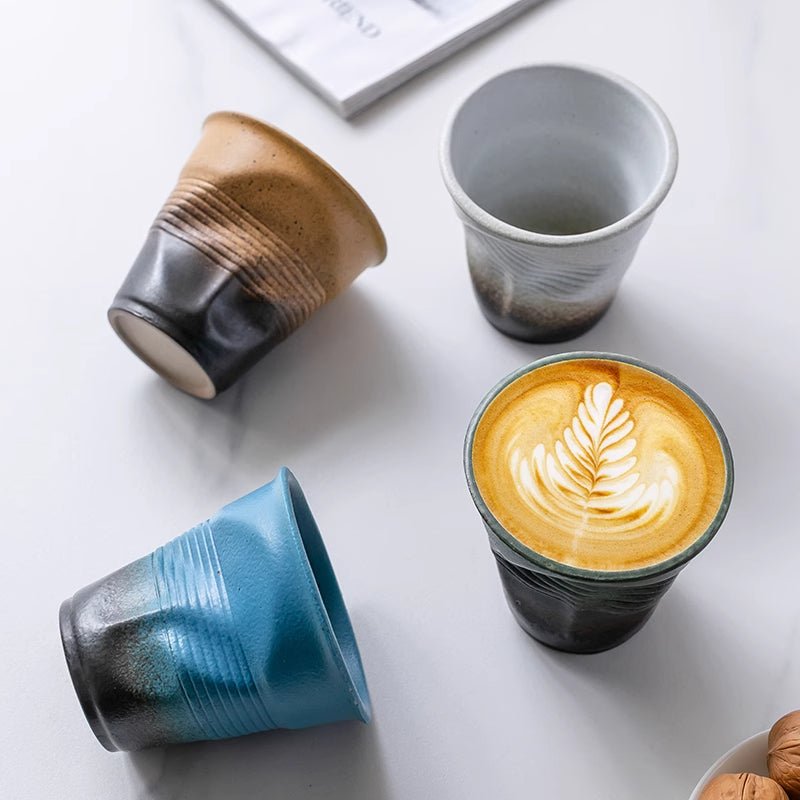
Pottery Tea Cups Home Coffee Station Practical Purchase Checklist
Reading time: about 10 minutes
Six weeks after a customer bought a glazed-looking cup at a weekend market, it had moved from the coffee station to the pen cup. The rim had chipped. The foot rocked on tile. And the capacity she thought she wanted left an inch of cold tea every morning. None of that was exotic; all of it was inspectable before checkout. In our store, we run the same pottery tea cups home coffee station practical purchase checklist on every new sample: glaze first, then capacity, then the small geometry that decides whether a cup earns counter space.
This is not a hunt for a flawless cup. It is a way to know which compromises you can live with at 7 a.m.
Start with the surface your lips touch, not the shelf styling
Glaze meets both the tea and your mouth, so it earns first inspection. Run a fingertip around the inside wall and along the rim. You want continuous glaze: no gritty ring, no bare clay on the drinking surface, no pinholes that catch a nail. A pit is a tiny reservoir; a bare spot on the lip is clay against your mouth every morning.
Lead can appear in glazes and decorative overglaze, and firing is what locks it into the glassy layer. FDA guidance on traditional pottery says properly made and fired ware binds essentially all the lead, while badly formulated or under-fired ware can leach into food and drink. The same guidance flags higher concern for glazed pieces with a crude appearance or irregular shape, antiques, damaged or heavily worn pieces, flea-market and street-vendor finds with no identifiable maker, and bright orange, red, or yellow decoration. Everyday factory ceramicware is described as much less likely to have lead problems.
Two numbers worth carrying into a listing: FDA sets a lead guideline of 0.5 micrograms per milliliter of leaching solution for cups and mugs across six tested units, and 0.5 µg/mL for cadmium in small hollowware under 1.1 liter. A real finished-piece test report is measured against lines like those. A CDC report on a New York City family is the practical version: elevated blood lead levels were tied to traditional glazed ceramic ware used for cooking, storing meals, and making coffee, and the family’s levels fell after they stopped using it.
Washing, boiling, or scrubbing will not remove lead from a glaze that contains it. The fix happens at the kiln, not at the sink.
Then check damage. Fine lines that web through the glaze are crazing. A single line you can feel with a fingernail, running from rim into body, is a crack. Crazing on a display piece is cosmetic; on a daily cup, ask the maker whether that glaze is known to craze and how they want you to treat it. A structural crack retires the cup from drinking duty. We do not recommend sealing and hoping.
Whatever you shortlist, compare rim profiles and interior glaze side by side in our unique coffee mugs collection before you go further.
What do “food safe,” “lead free,” and “not for food use” actually prove?
“Food safe” is a claim. A finished-piece test report is evidence. FDA guidance says ceramicware containing extractable lead should not carry a “Lead Free” label, and using the term on such ware may be considered misleading. That tells you how much weight to put on two words in a bullet list.
Warnings work the other direction. Ceramicware that looks like it could hold food is treated as foodware unless it is permanently marked as not for food use, or a hole is bored through the food-contact surface. If a cup arrives marked that way, it is a planter or a brush pot, not a tea cup with a stern personality.
- “Food safe” — ask which surfaces were tested and whether the report matches the finished piece, not just the glaze batch.
- “Lead free” — treat it as a label claim until the maker can explain the testing behind it.
- “Not for food use” — keep it out of the coffee station entirely; decorative use only.
- “Dishwasher safe” or “microwave safe” — confirm it for the exact cup, because care rules are maker-specific and often product-specific.
What a listing usually cannot tell you is whether the report matches the cup in the box. Glaze recipes behave differently at different firing points, and overglaze is a separate variable from base glaze. That is a conversation, not a scroll.
170 ml, 200 ml, or 250 ml: where does this pottery tea cups home coffee station practical purchase checklist begin?
Capacity is where most returns begin. A cup that holds more than you pour leaves an inch of cooling tea at the bottom. A cup that holds less turns one quiet morning into three refills. Our three ceramic cups sit at three deliberate points on that scale.
| Cup | Listed capacity | Body | Buyer situation to match |
|---|---|---|---|
| Retro coffee tea cup | 170 ml | Ceramic | Small, frequent pours; a tea round you finish while it is still hot. |
| Pleated coffee tea cup | 200 ml | Ceramic | The middle ground: one standard serving for most days. |
| Ball Handle coffee tea mug | 250 ml | Ceramic | The largest of the three; closest to a full mug serving. |
For scale, FDA describes a typical cup or mug as holding roughly 240 ml and being made with a handle. That is a general reference, not a specification for these cups. It does explain why 170 ml and 250 ml feel so different: one is a small tea pour; the other is closest here to a standard mug fill.
If you drink green tea in small rounds, 170 ml is generous. If your pot steeps enough for two refills, 200 ml is least fussy. If you want one big 6 a.m. coffee, none of these is that mug; choose a larger format instead of forcing a tea cup into a coffee mug job.
Two sizing notes never shown in photos: outer width against your cabinet shelf, and whether the mouth clears your kettle spout or brewer’s drip path. A wide, low cup is stable but splashy; a tall, narrow one is tidier but tippier on a crowded counter. The 250 ml Ball Handle is the one to check most carefully for handle clearance and rim shape on the current product page; the name points to a handle form, but the listing is where proportions get confirmed.
Will the cup still feel comfortable when it is full and hot?
Heat comfort is geometry, not toughness. Three variables decide it:
- Handle or no handle. A handle moves your fingers away from the wall. A cup without one asks you to hold at the rim with a pinch grip, not clutch the middle. Both work, but thin walls plus a full cup of just-boiled water is an uncomfortable object.
- Wall thickness. Thicker walls insulate but add weight. Thinner walls feel refined and pass heat quickly. Neither is a defect. Match it to how long you hold the cup versus how long it sits on the counter.
- Rim profile. A rounded, slightly thick rim feels soft against the lip. A thin, sharp rim feels precise and can feel harsh by the third sip. The lip is more sensitive than the hand, so test with your thumb, not just your palm.
Check the foot, too. A narrow foot ring under a wide body will rock on tile. A broad flat base sits still while you stir. That stability matters more on a coffee station than at a dining table, because the station is usually the most crowded square foot in the kitchen.
For the three cups linked here, we can confirm the listed capacities and ceramic body. We cannot confirm from the catalog facts alone how a given handle or rim will feel in your hand, or whether each cup is dishwasher or microwave safe. Those are exactly the details to verify on the current product page or by asking us before checkout.
Which care and product-page details should you confirm before checkout?
Use this as a pre-checkout audit, not a wish list. If a detail is missing, ask. A short answer from the seller is worth more than a long assumption from you.
- Capacity and fill line. Listed capacity is a start, not a promise about the comfortable fill. A 200 ml cup filled to the brim is not the same as a 200 ml cup with room to swirl.
- Interior glaze and rim. Is the drinking surface fully glazed? Any bare clay, pinholes, or decoration near the lip? Those are the surfaces that touch tea and skin.
- Care line. Look for explicit dishwasher, microwave, and thermal-shock guidance. If the page is silent, treat the cup as hand-wash and keep it out of the microwave until you confirm otherwise.
- Foot and stability. A flat foot ring sits better on stone counters than a narrow, rounded base. Check the outer width against your shelf and your kettle clearance.
- Maker and glaze testing. Who made it, what clay body, and is there a finished-piece test report? A batch test is useful context; a test on your specific cup is stronger.
In our store, we would rather answer a care question than have you guess. For the Retro coffee tea cup, the Pleated coffee tea cup, and the Ball Handle coffee tea mug, the verified catalog facts are the listed capacities and ceramic body. Anything beyond that — exact rim feel, handle clearance, appliance compatibility — should be confirmed on the current listing or with us directly.
Dishwasher and microwave guidance for pottery is scattered and maker-specific. We did not find one public rule that declares a given glazed cup appliance-safe. Thermal shock is the real risk: boiling water into a cold cup, or a hot cup into cold sink water, is the classic way to crack glaze or body. Warm the cup with a splash of hot tap water first. Keep metal decoration out of the microwave every time, and retire any cup with a rim chip or interior glaze chip from drinking duty.
Be honest about the first month. Cups that actually get used share three traits: they fit the shelf, they feel fine at full heat, and they do not require special handling before coffee. A decorative piece is a legitimate purchase; just do not buy a shelf cup expecting a daily driver. If a daily cup is the goal, settle capacity and heat comfort first, then let the glaze break the tie between your final two. Start with the unique coffee mugs collection, then open the product page for the capacity that matches your pour and confirm the care details before you buy.
Frequently asked questions
Is a pottery tea cup safe to drink from if the listing says “food safe”?
Usually yes, but the phrase alone is not proof. Ask whether the glaze and any decoration were tested on the finished piece, and inspect for bare clay, pinholes, and cracks when it arrives. A cup from an identifiable maker with an intact, fully fired glaze is a far better bet than a brightly decorated piece from a source you cannot name.
How do I tell crazing from a real crack?
Crazing is a web of fine lines that sits in the glaze only; the surface feels mostly smooth and the lines do not run from the rim into the body. A crack is a single line you can feel with a fingernail and usually passes through the wall. A maker can advise on a crazed cup; a cracked one should come out of rotation.
Do pottery tea cups change the taste of tea?
A fully glazed interior behaves like a glass surface and should not contribute flavor. Unglazed or partly unglazed interiors can hold oils and aromas from earlier brews, which some tea drinkers want and others do not. We have not found a food-science source that settles the flavor question, so treat it as preference rather than fact.
Can I put these ceramic tea cups in the dishwasher or microwave?
Only if the current product page or the maker says so for that exact cup. We cannot confirm appliance compatibility from capacity and body material alone, and metal decoration rules out the microwave outright. When in doubt, hand-wash in warm water and pre-warm before pouring.
What size pottery tea cup suits a home coffee station best?
The pottery tea cups home coffee station practical purchase checklist starts with capacity because that is what most people get wrong. For most drinkers, 200 ml is the least fussy size: one standard serving, still hot at the last sip. Choose 170 ml if you drink in small rounds and refill often, or 250 ml if you want the largest of the three and do not mind a slower cool-down.
Ready to pick your mug? Two ways to save on today's order:
Ordering 1–3 mugs? Get an extra 10% off your 1st order with code 10_OFF Apply 10% Off & Shop Wooden-Handle Mugs →
Gifting 4+ mugs? Buy 3, Get the 4th Free applies automatically at checkout (no code needed; offers do not stack) · Free standard shipping (Nov pre-Christmas delivery: 15–20 calendar days US) · Free replacement if chipped in transit.
Popular mug buying guides: Ceramic Tea Cups & Infuser Mugs · Ceramic Mugs with Lids Compared · Wooden-Handle Tea Infuser Mugs Compared · Christmas & Secret Santa Mugs 2026 · Espresso & Cortado Cups Guide · Cup & Saucer Gift Sets · All 25 Mugs Spec Table · Mug Size Guide · Shipping & Promo FAQ
FIRST ORDER 10% OFF (CODE: 10_OFF) · OR BUY 3, GET THE 4TH FREE


Read more
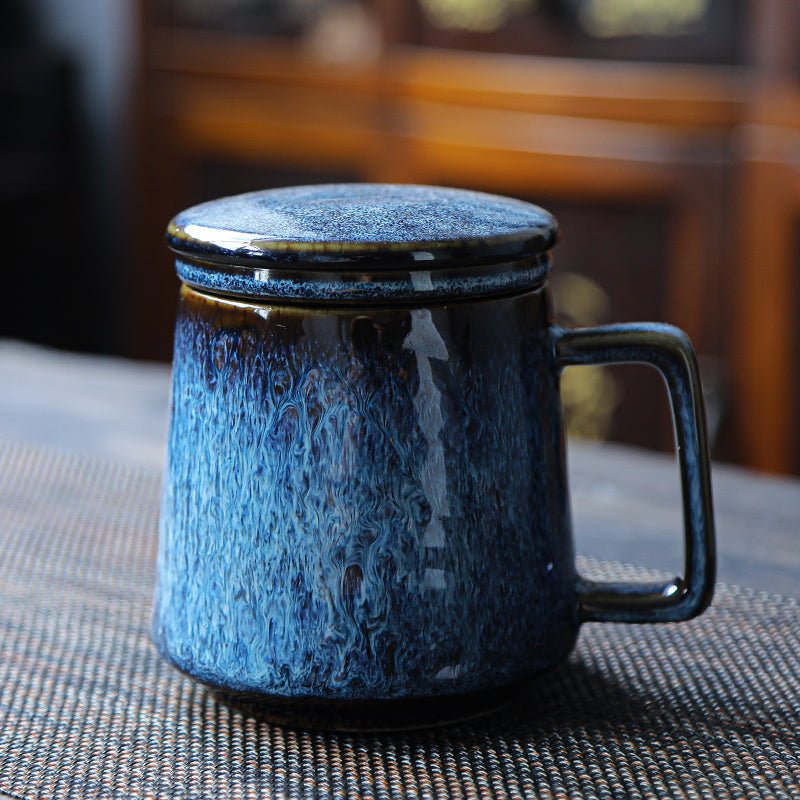
Large Round Coffee Mugs Home Coffee Station Practical Purchase Checklist
A practical large round coffee mugs home coffee station practical purchase checklist that starts with spout clearance, cabinet height, and real brew plus creamer volume. We map the listed 400 ml, 4...
Read more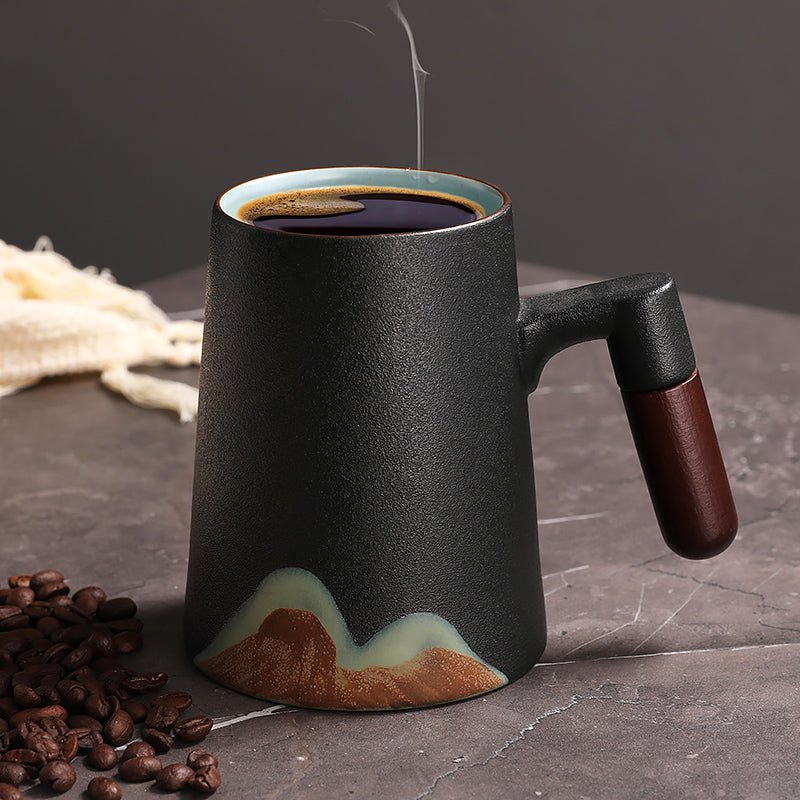
15 oz Ceramic Coffee Mugs: Practical Home Coffee Station Checklist
A counter-level guide to choosing 15 oz ceramic coffee mugs for a home coffee station: compare working fill, exact CoffeifyMug capacities, handle clearance, care claims, and food-contact language b...
Read more
Leave a comment
This site is protected by hCaptcha and the hCaptcha Privacy Policy and Terms of Service apply.