



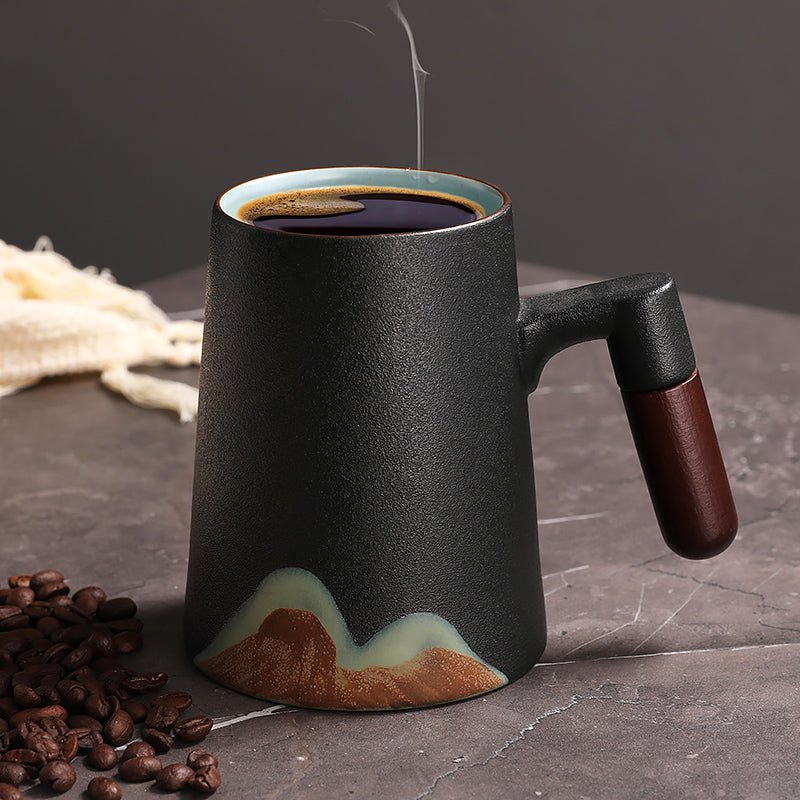
15 oz Ceramic Coffee Mugs: Practical Home Coffee Station Checklist
Reading time: about 11 minutes
The mug is full to the rim, the spoon is already in, and the creamer is still open. That is the moment a 15 oz label stops being a spec sheet and becomes a counter problem. This 15 oz ceramic coffee mugs home coffee station practical purchase checklist focuses on what changes your daily pour: working fill, listed capacity, handle clearance, weight when full, care language, and food-contact claims.
Fifteen US fluid ounces is about 444 ml. The conversion is simple. The buying decision is not. FDA's cup-and-mug illustration uses an 8 fl oz example, and no standard defines a required usable fill for a 15 oz mug. Treat the label as a starting point and your own station as the final test.
What does 15 fl oz mean before cream, foam, or ice goes in?
A 15 oz capacity usually describes the volume to the brim, not the amount you can carry without splashing. A mug can hold 444 ml when filled to the lip and still be a poor fit for a 444 ml drink once you add milk, foam, or a spoon.
There is no universal headspace rule for this mug size. The practical move is to separate the listing's capacity from your working pour:
- Black coffee or tea: you may use more of the nominal capacity, but carrying and stirring still need space below the rim.
- Coffee with cream or milk: the added liquid reduces the base coffee volume, so a brim-full number can overstate the practical serving.
- Foamed drinks: foam takes up space without behaving like still liquid. A mug that is technically 15 oz may feel cramped near the lip.
- Iced coffee: ice displaces liquid, so a 15 oz mug does not automatically deliver 15 oz of finished drink.
- Stirring and carrying: a spoon needs room to move, and a full mug is harder to lift from a counter or sink without a spill.
If a listing gives only one capacity number, ask whether it is brim-full or a measured fill. If the page does not say, leave more room in your plan. Do not let a capacity badge replace your own pour estimate.
Which listed capacity gets you closest to 15 oz in our current lineup?
Our current catalog facts give exact metric capacities for three CoffeifyMug options. Use these as capacity filters, not as a full specification sheet. The product page is where to confirm dimensions, empty weight, handle opening, material, care, and food-contact details.
| Option | Listed capacity | Reader situation | Still verify |
|---|---|---|---|
| Morning and Night | 440 ml (about 14.9 fl oz) | Closest current match if you want a labeled 15 oz target | Dimensions, empty weight, handle, care, food-use language |
| The Flow | 400 ml (about 13.5 fl oz) | Smaller listed capacity for a more compact station | Dimensions, empty weight, handle, care, food-use language |
| The Rock | 480 ml (about 16.2 fl oz) | More nominal volume than 15 oz | Dimensions, empty weight, handle, care, food-use language |
If you want the closest current match to a 15 oz mug, start with Morning and Night. If your real pour is smaller, The Flow at 400 ml may suit a tighter counter. If you regularly want more nominal volume, inspect The Rock at 480 ml and check whether its size still fits your cabinet and hand.
For shape comparisons beyond capacity, browse the unique coffee mugs collection. Then read our ceramic vs porcelain capacity guide if you are comparing how listed sizes translate into daily fit. Keep the sequence simple: capacity first, dimensions second, hand feel third.
Will a full 440 ml mug feel right in your hand and under your cabinet?
A 440 ml pour of coffee or tea adds roughly 440 g of liquid before you count the mug itself. That is the number many listings omit. Empty weight and full weight are different buying questions, and a mug that feels fine on a shelf can feel clumsy at the sink.
- Handle opening: check whether it fits three or four fingers the way you prefer. Fingers pressing against a hot body make a large mug awkward even when the handle looks generous online.
- Handle-to-body join: look for a smooth attachment area without a sharp ridge or uncomfortable seam.
- Balance: a full mug should not feel as if the drink is pulling the rim away from your hand. If empty weight is missing, treat balance as unresolved.
- Base and footprint: a wider base can feel stable on a counter, but it may crowd a grinder, kettle, or narrow shelf. Check base diameter and total width.
- Clearance: measure cabinet height, shelf depth, and the space under any brewing spout that matters in your setup. Do not assume a tall mug fits because the capacity is familiar.
In our store, we would rather a shopper measure the shelf and the brewing area than guess from a lifestyle photo. If you have smaller hands, reduced grip strength, or a narrow shelf, a 12 oz mug or a more open handle may be the better daily tool. A large capacity is not automatically a comfort upgrade.
For handle geometry specifically, our comparison of ceramic mugs for coffee and tea drinkers covers shape variables to inspect. Still confirm the exact linked product's handle dimensions on its current page; photos can hide a tight opening.
Which care claim survives a daily dishwasher cycle?
Ceramic is a material family, not a care instruction. A body may be ceramic while the glaze, printed decoration, metallic rim, or applied decal has different limits. We treat microwave and dishwasher language as two separate claims to verify on the exact product page.
- Does the listing explicitly say microwave safe, dishwasher safe, or both?
- Does it mention metallic trim, hand-applied decoration, decals, or prints that need hand washing?
- Does it give rack placement or temperature instructions?
- Do buyer photos or the description show rough rims, pinholes, chips, or fine glaze lines?
- Does it state intended food contact rather than only decorative use?
Coffee can leave residue, especially in light interiors, but stain resistance, crazing, and chip resistance do not have one universal consumer standard for this size. A glossy finish is not proof that a printed design will survive repeated dishwasher cycles. If the care section is vague, hand washing is the safer routine.
Thick walls may feel substantial, but we would not promise a fixed heat-retention time for a 15 oz ceramic mug. If you need coffee to stay hot in a bag or car, a sealed insulated tumbler is the right category. An open ceramic mug is for the counter, desk, or table.
For care and fit questions around smaller daily mugs, see our 12 oz ceramic coffee mugs fit and care guide. The same finish-specific logic applies when you scale up to 15 oz.
Do lead-free, cadmium-free, and microwave-safe mean the same thing?
No. A microwave-safe mark addresses intended microwave use. It does not establish lead or cadmium leaching performance. That distinction matters more for coffee and tea because both are acidic drinks.
The FDA guidance for cups and mugs lists a lead guideline of 0.5 micrograms per mL of leaching solution in any one of six units. The listed methods include ASTM C738 and AOAC methods 973.32 and 973.82. For cadmium, the FDA guidance for hollowware sets 0.5 micrograms per mL for small hollowware under 1.1 liters and 0.25 micrograms per mL for large hollowware at 1.1 liters or more.
Those figures are guidance values and test-method references. They are not proof that a particular retail mug has published finished-product results. If a listing says lead-free or cadmium-free, ask what supports the claim. If it only says microwave safe, leave the lead and cadmium question open.
The California Department of Public Health notes that lead cannot be seen in glaze or paint, that coffee and tea are acidic drinks that can leach lead from contaminated dishes faster than non-acidic drinks, and that heat or microwaving can speed leaching. It also warns that dishwashing a lead-containing dish can damage the glaze and make later leaching more likely. These are reasons to verify food-contact status, not reasons to judge safety by shine or color.
Decorative ceramics need a separate look. Under 21 CFR 109.16, ornamental ceramicware that appears suitable for food is treated as foodware unless it carries both a conspicuous required warning and a permanent version on the base, or has a hole through the potential food-contact surface. For a daily coffee station, choose a listing that clearly states intended food use.
Which drink and station setup should push you toward 12, 15, or 16 oz?
Start with the drink you make most often, then add the storage and handling realities. Capacity alone will not tell you whether a mug belongs on your counter.
- Drip coffee or tea: a 12 oz mug keeps a small station compact; a 15 oz mug gives more nominal room for a larger pour or additions. Compare your actual brew volume, not the word large.
- Milk drinks: 15 oz can work when you add milk or creamer, but only if you leave space for stirring. A brim-full label does not guarantee a comfortable latte-style serving.
- Iced coffee: ice displaces liquid. A wide rim may help stirring but can increase splash risk when the mug is crowded.
- Gifts: 15 oz can feel generous, but an 11 oz or 12 oz option may suit a recipient with smaller hands or limited cabinet space. Confirm habits when you can.
- Shared office shelf: prioritize height, width, and easy identification. If several mugs must fit on one shelf, capacity is a poor substitute for dimensions.
- Travel: an open ceramic mug is not a sealed travel cup. Buy it for the home or desk ritual it can actually support.
If you are choosing between 15 oz and 12 oz, the honest answer is that neither is universally better. A 15 oz mug is a poor fit for someone who wants a small, light cup or has a shallow shelf. A 12 oz mug is a poor fit for someone who routinely fills a large mug with coffee plus milk and does not want to refill.
What belongs on a 15 oz ceramic coffee mugs home coffee station practical purchase checklist?
Use this screen on the product page and at your counter before checkout:
- Confirm exact capacity. Note both ml and fl oz. Ask whether the number is brim-full, measured fill, or a rounded retail label.
- Measure the station. Check height, maximum width, base diameter, cabinet clearance, and space under any brewing spout that matters in your setup.
- Check handle clearance. Look for enough room for your preferred fingers and a smooth handle-to-body join. Do not infer comfort from a lifestyle photo.
- Ask for empty weight. A 440 ml pour adds roughly 440 g before the mug. If empty weight is missing, treat full-hand balance as unresolved.
- Separate material from finish. Verify the stated body material, glaze, decoration, and any trim that changes care.
- Read microwave and dishwasher claims separately. One claim does not answer the other.
- Look for food-use language. Decorative appearance is not enough for a daily coffee mug.
- Ask what supports lead-free or cadmium-free wording. A microwave icon does not prove leach testing.
- Match the ritual. Decide whether the mug is for black coffee, tea, milk drinks, foam, iced coffee, gifting, or a shared shelf.
Frequently asked questions
How much coffee actually fits in a 15 oz ceramic mug?
A 15 oz label usually describes brim capacity, not a spill-free serving. Leave room for cream, foam, ice, or stirring; no universal standard defines the required headspace. Use this 15 oz ceramic coffee mugs home coffee station practical purchase checklist to compare the label with your real pour, not as a promise of usable fill.
Is 440 ml the same as 15 oz?
Not exactly. 440 ml is about 14.9 US fl oz, so it is the closest current CoffeifyMug catalog capacity to a 15 oz target. The difference is small, but dimensions and handle shape still matter more than the rounding.
Is a 15 oz ceramic mug too heavy for small hands?
It can be, depending on empty weight, handle opening, and how the mug balances when full. Ask for empty weight and handle dimensions if the listing does not show them. A smaller capacity or a more open handle may be more comfortable than a heavy mug with a narrow grip.
Can I put a 15 oz ceramic mug in the microwave and dishwasher?
Only if the exact product page says so. Microwave and dishwasher suitability are separate claims, and metallic trim, decals, or hand-applied decoration may change the instructions. If care language is vague, hand washing is the safer choice.
Does microwave-safe mean lead-free?
No. Microwave-safe describes intended appliance use; lead and cadmium claims concern leaching and food-contact safety. Ask for explicit food-use language and any available testing or compliance information rather than treating one label as proof of the other.
Before you order, write down your target capacity, maximum station dimensions, preferred handle clearance, care requirements, and the safety language you expect to see. If 440 ml is the closest match, start with Morning and Night; compare The Flow and The Rock if you want a smaller or larger listed capacity, then continue with the unique coffee mugs collection to compare shapes for your actual home coffee station.
Ready to pick your mug? Two ways to save on today's order:
Ordering 1–3 mugs? Get an extra 10% off your 1st order with code 10_OFF Apply 10% Off & Shop Wooden-Handle Mugs →
Gifting 4+ mugs? Buy 3, Get the 4th Free applies automatically at checkout (no code needed; offers do not stack) · Free standard shipping (Nov pre-Christmas delivery: 15–20 calendar days US) · Free replacement if chipped in transit.
Popular mug buying guides: Ceramic Tea Cups & Infuser Mugs · Ceramic Mugs with Lids Compared · Wooden-Handle Tea Infuser Mugs Compared · Christmas & Secret Santa Mugs 2026 · Espresso & Cortado Cups Guide · Cup & Saucer Gift Sets · All 25 Mugs Spec Table · Mug Size Guide · Shipping & Promo FAQ
FIRST ORDER 10% OFF (CODE: 10_OFF) · OR BUY 3, GET THE 4TH FREE


Read more
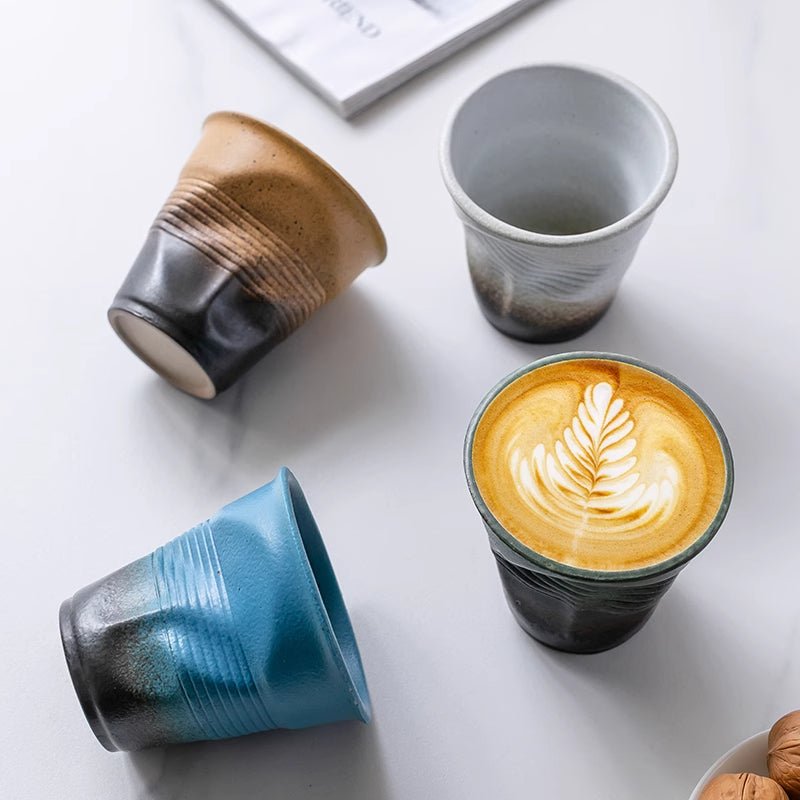
Pottery Tea Cups Home Coffee Station Practical Purchase Checklist
A glaze-first, capacity-second checklist for buying pottery tea cups for a home coffee station, including FDA lead and cadmium reference points, heat-comfort details, and the care questions to conf...
Read more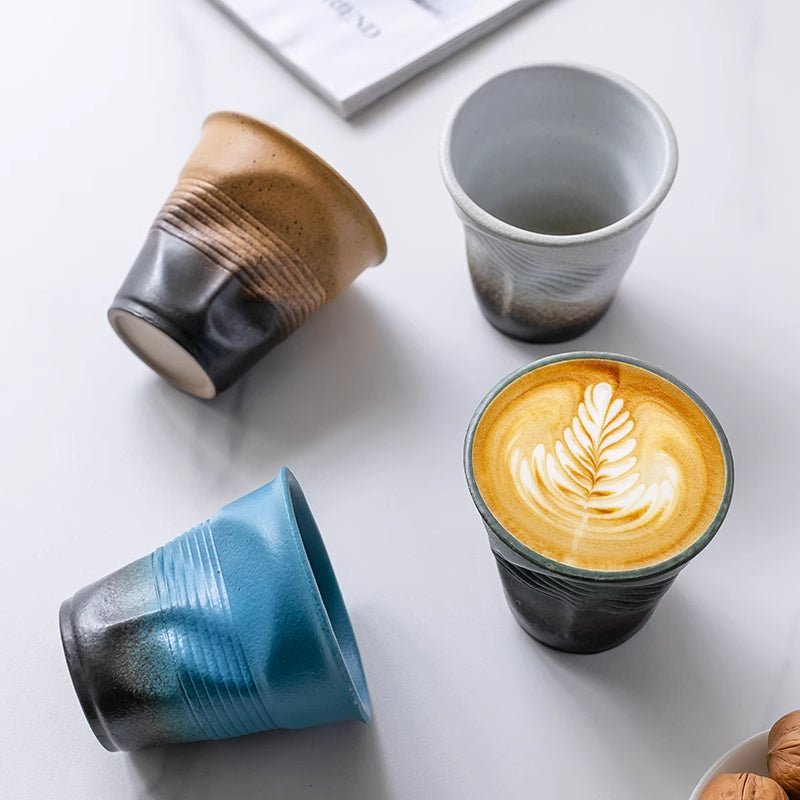
Coffee Mug Gifts Ideas Home Coffee Station Product Shortlist Guide
A practical shortlist for coffee mug gifts: the 200 ml Pleated cup, 400 ml Flow mug and 440 ml Morning and Night mug, matched to real drinking routines, with honest skip reasons and glaze checks.
Read more
Leave a comment
This site is protected by hCaptcha and the hCaptcha Privacy Policy and Terms of Service apply.