



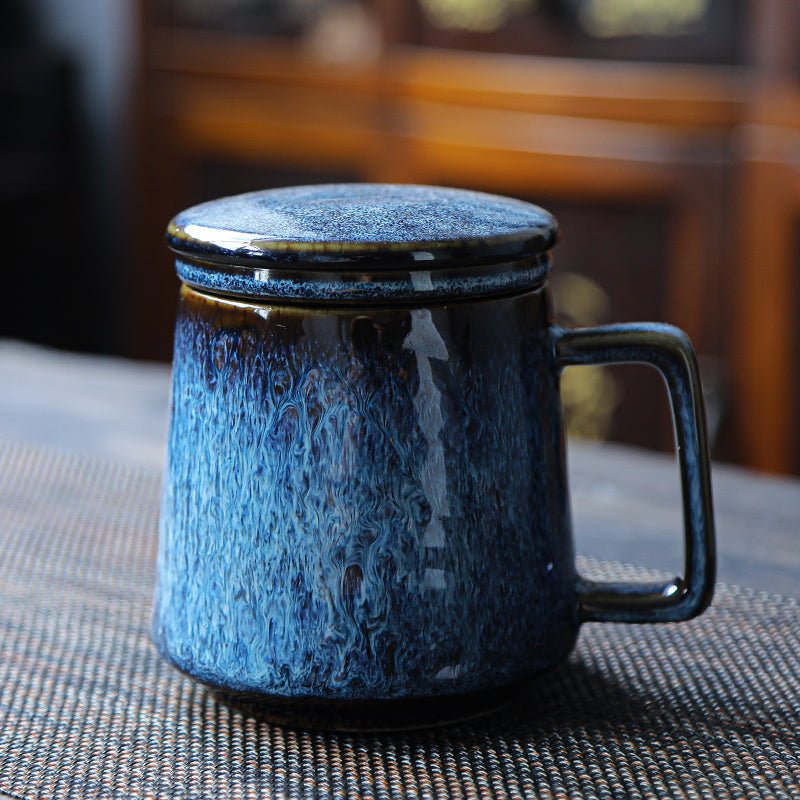
Large Round Coffee Mugs Home Coffee Station Practical Purchase Checklist
Reading time: about 10 minutes
A mug can pass the ounce test and still fail the counter test. At a home coffee station, we see the same three misses: the handle taps the cabinet shelf, the base covers the scale, or a 12-ounce brew plus cream lands at the rim. This large round coffee mugs home coffee station practical purchase checklist starts with the footprint around the mug, then moves to fill line, handle, weight, heat, and glaze care.
What does large round mean next to a standard mug?
FDA describes cups and mugs as small ceramic hollowware normally holding about 240 ml (8 fl oz) and made with a handle. That is the baseline. In buyer language, large round coffee mugs usually mean a wide, bowl-like or barrel-shaped body in the mid-teens to mid-20s of fluid ounces. Round describes the curved side wall; large describes volume, which is not standardized.
Our three listings are The Flow 400 ml, Morning and Night 440 ml, and The Rock 480 ml. Using 29.57353 ml per U.S. fluid ounce from NIST Handbook 44, those listed capacities convert to roughly 13.5, 14.9, and 16.2 fl oz. The silhouettes are rounded, so they read as round mugs on a counter. They sit at the smaller end of the large-mug conversation. If you want a 20- or 24-ounce jumbo, these are smaller than that; step up only if your brewer clearance and shelf can take the height and width.
Large round coffee mugs home coffee station practical purchase checklist: measure the station first
Measure four things before you compare capacity:
- Spout-to-base clearance. Put your current mug under the brewer and measure from the counter to the spout. Then measure the height of the new mug. A short, wide mug can hold more than a tall mug and still clear the spout.
- Cabinet shelf height. Measure from the counter to the lowest shelf. Add the mug height and the handle if it sits high. A rounded body can be wider at the middle than at the base, so measure the widest point, not just the foot.
- Counter footprint. Mark the mug base on the counter with painter's tape. A wide round mug can crowd a scale, grinder, or spoon rest even when it fits under the brewer.
- Desk or shelf edge. If the mug moves to a desk, check the base width against a coaster or mouse pad. A heavy mug that overhangs a small coaster is easier to knock.
Do not assume a single-serve brewer will clear a mug because the ounces sound right. Spout height, drip tray, and handle position all matter. Confirm exact dimensions on the current listing, and test with an empty mug before the first brew. Compare the full range in our unique coffee mugs collection once you have numbers in hand.
How much coffee is left after cream in a 400, 440, or 480 ml mug?
Brim-full capacity is not the same as a comfortable pour. A mug listed at 480 ml does not give you 480 ml of coffee plus milk. Leave 1-2 cm below the rim for carrying, aroma, and a spoon. Here is how the listed capacities map to practical station pours:
| Mug | Listed capacity | Approx. U.S. fl oz | Practical fit |
|---|---|---|---|
| The Flow | 400 ml | about 13.5 | 10-12 oz black coffee or 10 oz plus a small splash; least shelf footprint of the three |
| Morning and Night | 440 ml | about 14.9 | 12 oz plus 2-3 oz milk or tea; middle option |
| The Rock | 480 ml | about 16.2 | largest listed capacity of the three; black coffee or 12 oz plus 3 oz milk if clearance allows |
A simple check: write down your usual brew volume and creamer volume. If you brew 10 oz and add 2 oz milk, that is 12 fl oz, or about 355 ml. A 400 ml mug leaves roughly 45 ml of headroom; a 440 ml mug leaves about 85 ml; a 480 ml mug leaves about 125 ml. Those numbers come from the listed capacities and the NIST conversion, not from a measured fill line. The actual usable fill depends on the inner shape.
If you drink black coffee and stop at 10-12 oz, The Flow 400 ml is the least oversized. If you routinely add 2-3 oz of milk or switch to tea, Morning and Night 440 ml gives more fill headroom without jumping to the biggest listed body. If you want the largest listed capacity of the three and accept the extra weight and footprint, The Rock 480 ml is the clear choice.
Will the handle and filled weight work at a desk or sofa, not just a counter?
Handle fit is the check most shoppers skip. A handle can look generous in a photo and still pinch your knuckles when the mug is full. When we watch shoppers test a mug, they check the opening first and balance second. Confirm the handle opening and weight on the current product page before you commit.
- Four-finger clearance: You want room to slide your fingers in without scraping the back of your hand.
- Thumb rest: A flat spot or slight flare at the top helps control a heavy mug.
- Balance point: A handle placed high on a rounded body can make the mug tip forward when full.
- Filled weight: A 480 ml mug plus coffee is not a 480 ml load; the mug itself adds weight. If you have wrist or grip issues, choose the smaller listed capacity.
A large handle is not automatically better. It can make a mug feel bulky in a cabinet or awkward on a narrow desk. If you mainly drink at a desk, measure the space beside your keyboard before you fall for a wide body.
Does the wide round shape help with pour-over, AeroPress, or a mug warmer?
A wide mouth gives you aroma and room for a spoon, but it exposes more surface to air. That matters for heat, which we will get to. It also changes how accessories sit. If you use a pour-over dripper, measure the rim diameter and the dripper base. A rim that is too wide can let the dripper slide; a rim that is too narrow will not seat. For AeroPress, check the base diameter and stability before you press.
For a mug warmer, check whether the base is flat or footed. A ridge or foot can keep the mug from contacting the warmer plate. We do not claim universal brewer, dripper, or warmer compatibility for our mugs; the current listing and your own measurements are the deciding evidence. Test with water before coffee, especially with a bellied body that can send the last ounce toward the rim quickly.
Which material and care questions should you settle before checkout?
Material affects microwave use, exterior heat, chipping, and thermal shock. No material wins every category.
| Material | What to check | Trade-off |
|---|---|---|
| Stoneware | Microwave and dishwasher marks; rim chips; weight | Often substantial in hand, but can be heavy when full |
| Porcelain | Rim thickness; care marks; thermal shock | Can feel lighter and finer, but thin rims may chip |
| Glass | Thermal shock rating; visible fill line; hot exterior | Easy to see capacity, but heat passes through |
| Enamel | Metal core; microwave warning; chip exposure | Camp-mug look, but often not microwave safe |
For our three listings, confirm the material, glaze, microwave mark, and dishwasher mark on the current product page. Do not transfer care instructions from a similar mug. If the listing does not answer it, ask before you buy. Avoid putting a cold mug under boiling liquid and then into cold water; thermal shock can crack ceramic. Warm the mug first. For broader shape comparisons, see our guide to large unique coffee mugs for gifts.
Will a wide open mug keep coffee hot long enough?
A wide open mug loses heat from the surface. Thick walls add thermal mass, which can help at first, but they do not stop the open top from cooling. A large full mug can hold heat longer than a small one simply because it contains more liquid, yet the wide mouth still works against it.
Practical steps:
- Preheat with hot tap water for 30 seconds, then empty.
- Fill to your comfortable line, not the brim.
- Keep the mug on a warmer only if the base sits flat and the maker allows it.
- Use a lid or a smaller opening if you need heat retention for a long desk session.
If you need two-hour heat retention, a lidded travel mug is the better tool. Our open rounded mugs are for drinking at the station, not for commuting or all-day heat holding. That is the honest trade-off.
What should you verify about lead, cadmium, and lead-free labels?
Food-contact glaze safety is a real purchase variable. FDA sets an action level of 0.5 micrograms per milliliter for lead leaching from ceramic cups and mugs. For cadmium, the action level is 0.5 micrograms per milliliter for small hollowware and 0.25 for large hollowware; cups and mugs are treated as small hollowware. The lead guideline is applied to any one of six units tested.
A lead-free label is not proof by itself. FDA has reported imported traditional pottery labeled Lead Free that still contained extractable lead. Decorative ceramicware that appears suitable for food also requires a conspicuous not-for-food-use warning about lead, or a hole through the food-contact surface, under 21 CFR 109.16. If a mug is sold as decor, do not drink from it.
For our listings, we point shoppers to the current product page and the maker's documentation for food-contact and care details. We do not treat a pretty glaze as evidence of safety. Yellow, orange, red, and heavily decorated glazes deserve an extra question about cadmium and lead testing.
Which of our 400, 440, and 480 ml mugs fits your station?
Here is how the three listed capacities map to common station setups. These are capacity and silhouette recommendations, not claims about handle size, material, or appliance fit.
- You brew 10-12 oz and add a splash of milk. The Flow 400 ml is the least oversized. It takes less shelf height and leaves a smaller footprint than the larger two.
- You brew 12 oz and routinely add 2-3 oz of milk or switch to tea. Morning and Night 440 ml gives more fill headroom without jumping to the biggest listed body.
- You want the largest listed capacity in this group and mostly drink black coffee. The Rock 480 ml is the choice, provided your brewer clearance and cabinet shelf accept the extra size.
If none of these match, browse the unique coffee mugs collection and measure before you fall for a shape. A mug that looks right on a screen can still fail the spout test.
Frequently asked questions
Will a 480 ml round mug fit under a standard drip coffee maker?
Not guaranteed. Measure from the counter to the brewer spout and compare that with the mug height, including any high handle. A short wide mug can clear where a tall mug will not. Confirm exact dimensions on the current product listing before brewing.
Is 400 ml too small for a large coffee with milk?
At about 13.5 fl oz, a 400 ml mug is a moderate large mug, not a jumbo. If you drink 12 oz black coffee, it works with little headroom. If you add 2-3 oz of milk, move to 440 ml or 480 ml.
Can I microwave or dishwasher a large round ceramic mug?
Only if the maker marks it microwave and dishwasher safe. Metal trim, gold luster, and enamel over a metal core can be microwave no-gos. Check the current listing for care marks and do not assume from the color or shape.
Does a wide mouth make coffee cool faster?
Yes, generally. More exposed surface means more heat loss, even if the walls are thick. Preheat the mug, fill to a sensible line, and use a lid if you need to hold heat through a long meeting.
What is the first check in this large round coffee mugs home coffee station practical purchase checklist?
Start with spout-to-base clearance and cabinet height. Capacity is meaningless if the mug does not fit under the brewer or on the shelf. Then check fill line, handle opening, filled weight, material care, and food-contact glaze details.
Before you buy, put a tape measure next to the brewer and a mug you already like. Note the spout clearance, cabinet height, widest body point, and your real brew plus creamer volume. If the numbers point to a 400-480 ml rounded mug, start with The Flow, Morning and Night, or The Rock; if you need a different shape, compare the unique coffee mugs collection before you commit.
Ready to pick your mug? Two ways to save on today's order:
Ordering 1–3 mugs? Get an extra 10% off your 1st order with code 10_OFF Apply 10% Off & Shop Wooden-Handle Mugs →
Gifting 4+ mugs? Buy 3, Get the 4th Free applies automatically at checkout (no code needed; offers do not stack) · Free standard shipping (Nov pre-Christmas delivery: 15–20 calendar days US) · Free replacement if chipped in transit.
Popular mug buying guides: Ceramic Tea Cups & Infuser Mugs · Ceramic Mugs with Lids Compared · Wooden-Handle Tea Infuser Mugs Compared · Christmas & Secret Santa Mugs 2026 · Espresso & Cortado Cups Guide · Cup & Saucer Gift Sets · All 25 Mugs Spec Table · Mug Size Guide · Shipping & Promo FAQ
FIRST ORDER 10% OFF (CODE: 10_OFF) · OR BUY 3, GET THE 4TH FREE


Read more
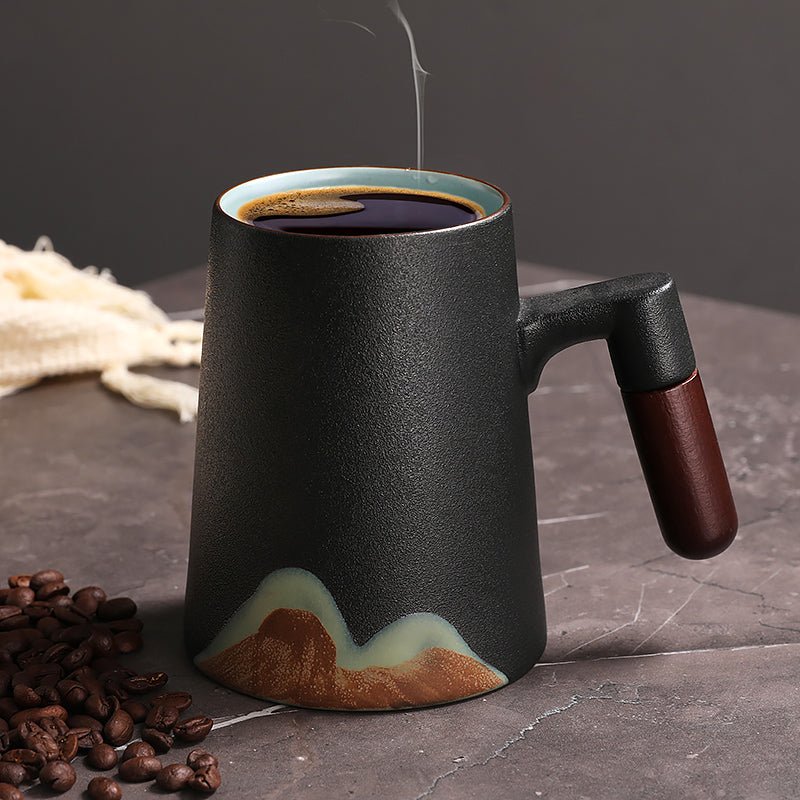
Latte Mugs Tall Home Coffee Station Practical Purchase Checklist
A measurement-first checklist for buying tall latte mugs: fill-line math, spout and cupboard clearance, the latte-art trade-off, and the care claims worth getting in writing before checkout.
Read more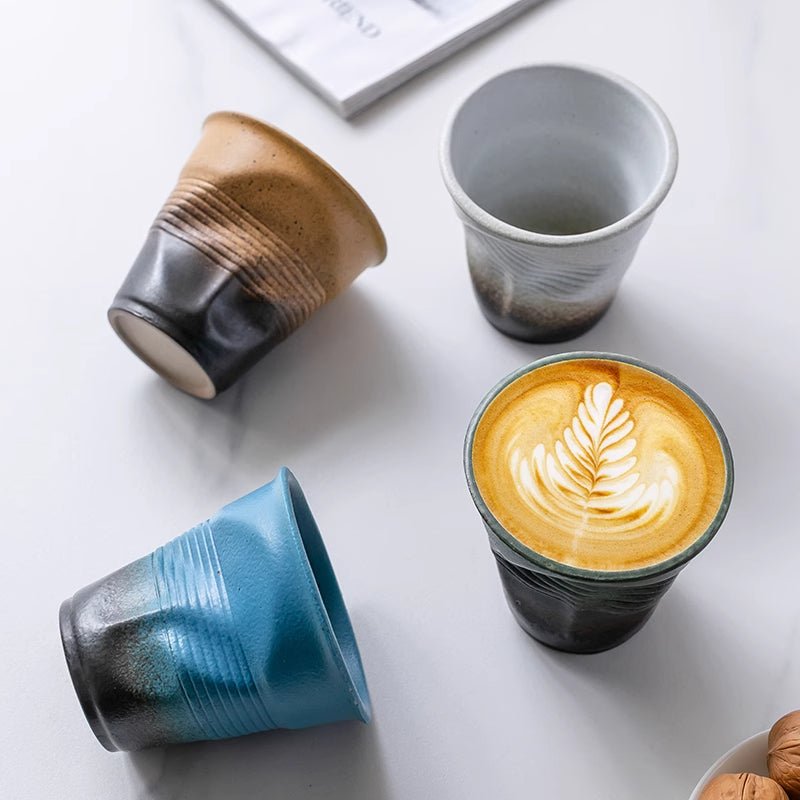
Pottery Tea Cups Home Coffee Station Practical Purchase Checklist
A glaze-first, capacity-second checklist for buying pottery tea cups for a home coffee station, including FDA lead and cadmium reference points, heat-comfort details, and the care questions to conf...
Read more
Leave a comment
This site is protected by hCaptcha and the hCaptcha Privacy Policy and Terms of Service apply.