
Pleated Ceramic Coffee Cup vs Tea Cup: Fit, Heat, Grip
Reading time: about 13 minutes
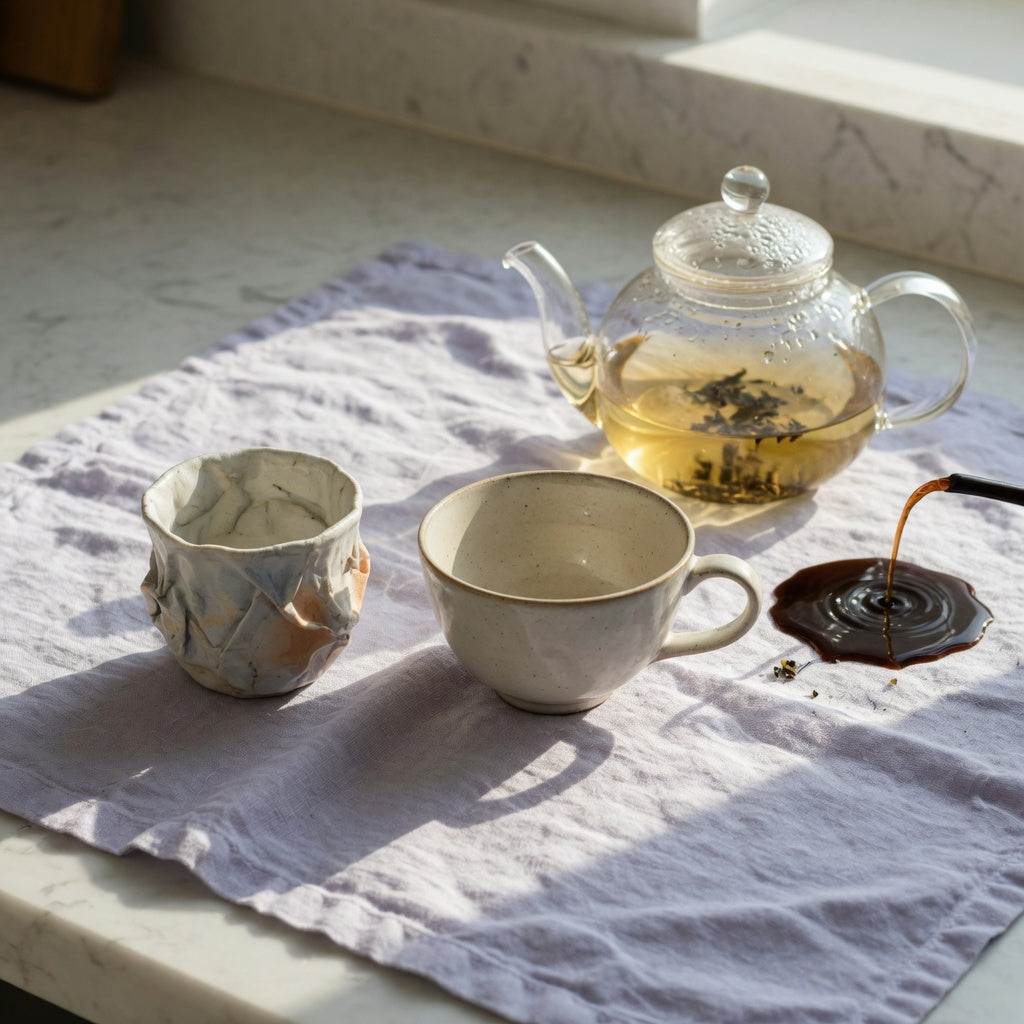
Last week on the packing table we set two cups down for a customer who had typed pleated ceramic coffee cup vs tea cup into search and still could not tell which one to order. One was a small handleless piece, pinched into deep folds, more crumpled than thrown. The other was a wider tea cup with a thinner wall, a modest handle, and only a soft ripple near the rim. Both were ceramic. Both could take coffee or tea. The difference that mattered was how much liquid each held, how quickly the open surface lost heat, and whether the outside was still too hot to pick up after the first sip.
Pleating is a surface and a forming method. It is not a clay body, and it does not tell you the capacity, the glaze, or whether the piece belongs in a microwave. In our store we treat the ridges as a style cue, then we make the vessel answer the practical questions.
What shoppers mean by a pleated or crumpled ceramic cup
Search pages throw several vessels into one look. On our bench the mix usually falls into three groups:
- Small crumpled porcelain cups, often handleless, shaped like a pinched espresso or short coffee cup. Shoppers call this a froisse or crumpled form. Many are meant for a short shot or a very small tea, not a mug of milk coffee.
- Handled pleated mugs with vertical or irregular folds pressed into a larger body. These get sold as coffee cups and then used for tea just as often.
- Hand-pinched irregular cups where the pleats are finger marks, not a repeated factory pattern. Capacity and wall thickness change from piece to piece.
If you shop only by the ridges, you will buy the wrong size. A pleated exterior can sit on a tiny espresso cup or on a mug you could take to a desk. Hand-pinched pieces are the ones customers describe after unboxing: the photo looked generous, the pour was an espresso or a small tea. That gap is a listing problem, not a property of ceramic.
Our pleated coffee tea cup is the ridged option we point people to when they want one ceramic piece for either drink. Before you order, open the current listing and confirm capacity, whether it has a handle, how the clay and glaze are described, and any microwave or dishwasher note. We will not fill those blanks from a photo, a similar name, or another brand's stamp. If you want other silhouettes in the same aisle, the unique coffee mugs collection is the faster way to set handled and decorative options next to one another.
Pleated ceramic coffee cup vs tea cup: capacity, rim, and wall
Buyers arguing about coffee cups and tea cups are usually arguing about geometry. In kitchen conversation, a coffee vessel is often taller, with a thicker wall, meant to keep a smaller surface of hot liquid from dumping heat into the room. A tea cup is often shorter and wider, sometimes on a saucer, so a very hot brew can drop toward a drinkable temperature and so the aroma has a broader opening.
That pattern is habit and brewing practice, not a law of clay. Cafes pour both drinks into whatever cup is clean. The habit still matters when the outside is pleated, because the fold does not cancel the shape underneath it.
Check four things on the listing, not the marketing name:
- Working capacity, not a brim-full guess. Leave room if you add milk, foam, or a steeping basket. A lifestyle photo can make a short cup look like a diner mug. If the page does not state milliliters or ounces, do not assume.
- Rim diameter. A wide rim cools faster and lets the drink smell stronger as you sip. A narrower opening holds heat and can feel more like a coffee mug even when the body is short.
- Wall and base thickness. Thick stoneware feels sturdy and slow to pass heat into your fingers, but it also steals warmth from the first sips until the clay warms through. Thin porcelain feels delicate and lets a hot tea settle sooner. Pleats hide how thick the wall really is. Look at the rim in profile, not only at the folds.
- Saucer and footprint. Tea service often assumes a saucer for the spoon and for a drip. A crumpled base may rock in a standard saucer well. Set the empty cup on a flat counter before you commit a pair to a tray.
None of those four is printed on the ridges. If a page you are reading, including ours, skips them, treat the missing line as a reason to pause.
Does the fold change heat, or do the opening and the clay?
We do not have a lab curve that says a pleated cup cools a set number of minutes faster than a smooth tea cup. Almost nobody publishes that test for this style. Retail lines that promise better heat retention, or a neutral flavor, from pleated stoneware without wall thickness, firing notes, or absorption data are advertising. Treat them that way.
What we can see at a counter, pouring from the same kettle into different vessels, is simpler:
- Open surface area moves temperature faster than a decorative ridge. A wide tea bowl loses heat at the top. A narrow coffee cup does not.
- Clay mass acts like a heat sink. A heavy base pulls warmth out of the first third of the drink, then gives some of it back. Preheating with a splash of hot water changes that first minute more than any pleat pattern we have handled.
- A lid, if the piece has one, beats surface styling. Most pleated cups do not come with lids. If you need a drink to stay hot through a meeting, this category is the wrong tool.
- The pleat itself adds a little exterior area and a place for fingers to lock, but it is not insulation. Folds are still ceramic. They conduct.
Coffee drinkers often want the cup to stay in a comfortable hot range while they sip slowly. Tea drinkers, especially with a brew that left the kettle near boiling, often want the first minute to calm down so they are not burning a tongue. A thick, narrow pleated mug fights that calm-down. A thin, wide tea cup hurries it. Match the goal, not the adjective on the thumbnail.
If you switch coffee and tea in the same cup, the interior glaze matters more than the fold. A continuous glassy glaze does not hold oils the way a dry foot or a crazed surface can. For ceramic tile, porcelain classification rests on water absorption under ASTM C373. The Porcelain Tile Certification Agency treats only tile at 0.5 percent absorption or less as porcelain, and ASTM describes that body as nearly impervious, so liquid is less likely to soak in, stain, or stay damp in the clay. That threshold is a tile rule, not a certificate on a drinking cup. It still explains why a fully vitrified, glazed interior moves from a dark roast to a pale tea with less ghost flavor. Stoneware can be excellent daily ware and often feels thicker in the hand. Read the body the listing actually names. The word ceramic alone does not mean porcelain.
Handles, hot walls, and a pleated lip you actually sip
Handleless cups are a regular complaint at our checkout. A small pleated espresso cup is pleasant to cradle for a short pour. Fill a larger handleless body with just-brewed coffee and the folds stop being charming. They are still hot ceramic, just with more places to burn a fingertip.
- Short coffee or a neat espresso. A handleless pleated cup can be the right object. You hold it briefly. The crumple gives fingers a purchase a smooth demitasse does not.
- A full mug, an Americano, or tea with milk. Get a real handle with a gap your fingers fit, not a decorative loop. A thin handle set high on a heavy pleated body can feel levered and tippy on a desk.
- Lip feel. Ridges that run to the rim change the sip. Some people like the slight texture. Others feel every seam. Photos hide this. If you already dislike a faceted glass, you may dislike a sharply pleated lip.
- Cleaning. Deep pinches trap lipstick, tea tannin, and coffee oil. A smooth tea cup wipes in one pass. A crumpled interior needs a brush, not a polite rinse. That is a fair reason to skip the style if you hate soaking dishes.
Pleated ceramic is a poor travel cup, a poor car cup, and a poor choice when you need one hand free on a commute. The base is often small under a top-heavy fold, and a lid worth trusting is rare. It is also a weak choice for iced drinks piled with ice: the folds cut usable volume, and the ceramic sweats onto a wood desk. If that is your actual routine, pick a handled everyday mug and leave the pleats for drinks you finish at the table.
Lead, metallic paint, and what a dishwasher does to ridges
Food-contact safety is the part product pages skip. Inexpensive handmade or irregular cups rarely show test results. We would rather you walk away from a pretty piece than guess.
Lead can sit in the glaze or the painted decoration of some traditional pottery. If that ware was not fired correctly, lead can move into food or drink. U.S. Food and Drug Administration guidance flags higher concern for handmade crude or irregular pieces, antiques, damaged or worn ware, flea-market or street-vendor pottery, and bright orange, red, or yellow decoration. Commercially made everyday pottery is much less likely to have a lead problem. Washing or boiling does not remove lead. A pinched pleat is not automatically unsafe, but handmade, no maker mark, and a vivid red flower is the profile we tell people to treat with caution. If the current listing does not support a food-safe glaze, do not use the cup for daily drinking.
Gift unboxings are where this gets skipped. A crumpled cup looks special in tissue paper. If it is handmade, unmarked, and painted with a bright red or orange motif, do not pour the celebratory tea until you know the glaze is meant for food. Pretty and food-safe are different questions.
Microwave risk is separate. A metallic coating can overheat or break if the mug is microwaved or filled with extremely hot liquid, which can mean burns or cuts from broken ware. In a March 21, 2024 announcement, the U.S. Consumer Product Safety Commission reported a recall of about 440,500 Starbucks-branded holiday gift-set mugs after 12 reported incidents and 10 injuries. That was one decorated line, not a verdict on every pleated cup. It is still the public case we use when a customer asks why a gold band matters. A base stamp that says microwave safe does not override a metal rim. If you see gold, silver luster, or a mirror glaze, keep the cup out of the microwave and do not shock it with a rolling boil.
Once a listing confirms ordinary glazed ceramic with no metal, this is the care we actually walk customers through:
- Look for crazing, a network of fine cracks in the glaze. Crazed ware stains and is harder to keep neutral when you alternate coffee and scented tea.
- Skip a high-heat dishwasher cycle if the maker says hand wash, or if the pleat edges look thin. Chips start at high points, and a ridge is a high point.
- Do not take a cold cup from the fridge and pour boiling water into it. Thermal shock cracks bases and handles where thickness jumps around a pinch.
- Preheat gently if you want the first sip hotter. A little hot water, swished and dumped, is enough. Warming an empty cup in the microwave is how people crack glaze.
- Store pleated cups singly, or with a paper towel in the fold. Stacking irregular rims chips them in a crowded cabinet.
Which weekday pour belongs in a pleated cup
Use the drink you pour on a weekday, not the trend in the photo.
| Drink | What usually fits | Skip the pleated cup when |
|---|---|---|
| Espresso or a short black coffee | Small crumpled or pleated cup, handle optional, heavy enough to feel steady | You want a large American mug or room for a lot of milk |
| Latte, cappuccino, or cafe au lait | Wider bowl, sturdy handle, capacity you verified in ounces or milliliters | The listing is a tiny pinched cup, or the rim is too narrow for foam |
| Black tea or a strong breakfast blend | Medium cup that can cool a very hot pour, plus a saucer if you brew with a spoon | The wall is so thick the tea stays scalding and the interior is hard to brush |
| Green, white, or other delicate tea | Thinner wall, wider opening, fully glazed interior so it does not hold previous coffee oil | You only have a heavy heat-holding coffee mug and the tea tastes muted |
A pleated cup is not a better coffee cup by default, and it is not a worse tea cup by default. It is shaped ceramic with a texture you either enjoy every morning or get tired of washing. If your routine is one large milky coffee at a desk, choose a handled mug and let the pleats go. Browse handled mugs for a desk pour instead. If your routine is a short coffee and an afternoon tea in the same small vessel, a food-safe pleated cup can earn the shelf. Start with our pleated coffee tea cup, then stay on the live page until capacity, handle, glaze, and care match that routine. If a line is missing, do not invent it from a similar photo.
A counter check before the ridges win the order
Run the pleated ceramic coffee cup vs tea cup decision with the listing open, not with the thumbnail. If a line is missing, ask or pick another cup.
- Capacity in ml or oz, and whether that number is brim-full or a practical fill.
- Handle or no handle, and whether your fingers clear the hot wall.
- Clay body named in words you can check, not just the word ceramic.
- A glaze you can treat as food-safe, with no unanswered worry about bright decoration on an unmarked handmade piece.
- Metallic decoration: if yes, no microwave, and caution with boiling liquid.
- Dishwasher and thermal-shock guidance from that maker, not from a similar cup on another site.
- Rim texture you can accept against your lip, and folds you are willing to scrub.
If the listing will not say capacity, handle, and care, the pleats are not enough reason to buy.
Bring the cup home only when those answers match the drink you actually pour. The ridges are the easy part. The fit is the part you live with.
Frequently asked questions
Is the difference in a pleated ceramic coffee cup vs tea cup mostly tradition?
Mostly geometry and habit, not a separate material. Coffee service has favored taller, thicker cups that hold heat. Tea service has favored smaller, wider cups that let a very hot brew cool and open up the aroma. A pleat can be formed on either shape. Judge capacity, rim width, and wall, then decide.
Can I microwave a pleated ceramic mug if the base says microwave safe?
Not if you can see a metallic rim, luster, or mirror coating. Those coatings can overheat or break in a microwave or when the cup is filled with extremely hot liquid. Follow that maker's instructions, keep metal-decorated cups out of the microwave, and do not treat one pleated listing's stamp as proof for a different cup.
Are irregular handmade pleated cups a lead risk?
They can be, if the glaze was not made and fired for food. FDA guidance treats handmade crude or irregular pottery, antiques, damaged ware, informal-market pottery, and some bright orange, red, or yellow decoration as higher concern. Commercial everyday ware is much less likely to leach lead, and washing does not remove it. Drink only from cups whose current listing supports a food-safe glaze.
Will the ridges stain or feel rough compared with a smooth tea cup?
They can. Deep folds hold tea tannin and coffee oils, and a sharp pleat at the lip is a different sip than a polished tea-cup rim. A continuous glossy interior is easier to live with than a dry or crazed surface. If you hate detail cleaning, choose a smooth cup instead.
Is a small pleated cup only good for espresso?
Often it only holds espresso or a small tea, especially a hand-pinched piece that photographs larger than it pours. Milk drinks and office-sized coffee need a verified larger capacity and, in our experience, a handle you can actually grip. Check the live listing rather than the lifestyle photo.
More from our blog
Read more

The Flow Coffee Tea Mug for Coffee Lovers Home Decor: Compare
Shoppers weighing the flow coffee tea mug for coffee lovers home decor need more than a styled shelf photo. We separate lookalike Flow products from our listing and show which size, handle, food-co...
Read more
Pleated Coffee Tea Cup for Coffee Lovers Home Decor Checks
A sculptural pleated cup can look mug-sized and still hold an espresso pour. We compare capacity, clay and glaze, food-use labeling, pleat care, and coffee-bar display before it leaves the shop.
Read more
Leave a comment
This site is protected by hCaptcha and the hCaptcha Privacy Policy and Terms of Service apply.