

Night Tea Mug Buying Checklist: Compare These First
Reading time: about 15 minutes
The mug that looks right beside the lamp is often wrong by the second chapter. On our packing counter we hear the same split: a last cup of chamomile or rooibos, fine at the kettle, then either too hot to sip or flat and cool once the book is half finished. A night tea mug buying checklist is how we sort that before a pretty glaze wins the order.
What is this mug doing between the kettle and the nightstand?
A night tea mug is a slow-sip vessel for the last stretch of the evening. It is not a leak-proof commute bottle, and it is not a sleep device. The drink may be part of how you wind down. The ceramic does not make anyone sleepy.
If the tin is black tea, green tea, or a blend that hides caffeine behind flowers on the label, that is a drink choice, not a mug feature. CDC sleep-hygiene guidance lists avoiding caffeine before bedtime among habits that can help sleep. NIOSH describes caffeine as having a half-life of about five to six hours, and notes it can remain in the body longer, so a late caffeinated cup can still affect later sleep. Read the ingredient list. Some infusions are naturally caffeine-free. Others are not, even when the tin says evening, calm, or night. Tea leaf, yerba mate, guayusa, and cocoa are the usual surprises.
The window people describe when they compare mugs with us is a short read or a quiet conversation, often somewhere between twenty and forty-five minutes. You want the first sip drinkable without a long wait, and the last sip still pleasant. You do not need a flask that is still scalding after midnight.
If one piece has to take coffee in the morning and tea at night, start with the listing, not the name. Our Morning & Night large ceramic coffee mug is cataloged as a large ceramic coffee mug. That title tells you the material family and that it is sized as large. It does not, by itself, tell you ounce capacity, whether a lid or basket ships in the box, or how the glaze is marked for the microwave or dishwasher. Those lines live on the current product page. Confirm them before you treat the mug as your bedside default.
Night tea mug buying checklist: eight checks we run before we pack one
Run these in order. A mug that fails an early check is a poor bedside buy even when the artwork is why you clicked.
- Use case. Kitchen to nightstand, finished in well under an hour, or a long insulated hold? Those are different products.
- Material and taste. Glazed ceramic, porcelain, or glass when you want the cup to taste like the leaf. Steel when you need toughness and longer heat, knowing some drinkers report metallic notes from bare metal.
- Heat strategy. Open cup, lid only, air-gap double wall, or vacuum. Match sipping pace, not a stays-hot-for-hours line.
- Capacity and headroom. A short cup versus a long herbal you do not want to refill. Leave room so a bag or basket does not shove liquid over the rim.
- Infuser or bag. Whole leaf needs room to expand. Fine herbals need tighter mesh. The wet basket needs a rest that is not still in the tea.
- Lid. Slows cooling and can hold a dripping infuser. A complex travel lid is more parts to hold last night's mint.
- Handle, weight, and base. Full, hot, and moved one-handed in a dim room. Wide foot, comfortable grip, lip that does not dribble.
- Care and food-contact labels. Dishwasher, microwave, metal trim, and whether the piece is sold for drinking or only for display.
Shoppers weighing a shorter evening cup against a longer herbal often look at the 12 oz and 16 oz sizes printed on ordinary shelf labels. Those figures are a comparison habit, not a measurement of any mug in our catalog. A shorter wind-down often fits the smaller of those two. A herbal you plan to finish without a refill leans larger, but only if the extra volume is liquid, not a basket eating the space. Large on a title is a hint, not an ounce count. If the listing prints a capacity, use that number. If it does not, do not guess from the photo.
Which wall leaves chamomile tasting like chamomile?
Flavor is why most evening drinkers we talk with end up back at ceramic. A clear glaze on porcelain or stoneware, or a plain glass cup, adds very little of its own. Stainless shrugs off the drop that would chip a ceramic rim, and it belongs in a tote. It is also a recurring note in tea-drinker conversations that a bare steel interior can taste metallic, especially under a light herbal. A ceramic-lined steel mug is the compromise some people want. Treat the lining as a sentence on the spec sheet, not a cream color in a photo. Ask what the food-contact surface actually is, and how the maker says to wash it.
Ceramic fails in ways we see after a few weeks of nightly use. A thin rim chips on the faucet. Crazing, the fine crackle in a glaze, can hold tea stain and is a poor surprise on ware you did not buy as a crackle piece. An unglazed foot can leave a ring on a pale nightstand after a wet evening. Heavy stoneware sits planted, which helps on a crowded table, and it also feels like a lot of mug when your arm is already under a blanket.
What this wall is not good for: a bag on the floor, a car cup holder on a rough road, or cradling the body of a single-wall cup full of just-boiled water. Single-wall ceramic gets hot in the palm. That is normal, not a defect. If you need to hold the wall, look at a double-wall shape or use the handle. Vacuum steel often cools the outside and then keeps the tea hotter than a bedtime sip wants.
We stock more than one silhouette for that reason. If the Morning & Night page is the right material family but the foot looks narrow or the handle looks tight once you read it, move to the unique coffee mugs and compare base width and grip clearance in the specs, not only the artwork.
Open ceramic, a lid, or vacuum steel: what is drinkable at minute twenty?
Commute guides chase maximum heat. A bedside wind-down often wants the opposite. If you cannot drink the tea yet, the insulation is too good for the job.
An open ceramic mug sheds heat quickly. On a cool nightstand that can be a virtue: water off a boil over a herbal becomes sippable sooner. The downside shows up later. By the end of a long chapter the cup can be dull and cool, and a second trip to the kettle is what you were trying to skip.
A simple lid on ceramic slows that loss without the lock-in of a vacuum wall. It also gives the wet infuser somewhere to sit. Condensation will drip back into the cup. A lid that does not seat is a saucer waiting to fall when you shift against a pillow.
An air-gap double wall, in ceramic or glass, is the middle path. The outside stays kinder to the hand. The inside cools slower than a thin single wall and faster than sealed vacuum steel. Do not assume the microwave is fine. Some double-wall pieces are sold as microwave-safe. Others are sealed in a way the maker tells you to keep out of the oven. The listing has to say so for that exact mug.
Vacuum stainless is the wrong default when your complaint is that you poured the tea and still cannot sip. It is a fair default when you brew once and nurse the same cup well past an hour, or when the mug has to survive a knock. Most of those bodies, and any metal rim, stay out of the microwave unless the maker says that piece is an exception. Reheating a forgotten cup is a ceramic habit, not a travel-flask habit.
In our experience we do not keep a universal cooling chart. Volume, start temperature, lid fit, and a cold room all move the curve. Test the candidate the way you will use it: your usual pour, the nightstand, a first sip around five minutes, another around twenty.
Will a bag or a basket ruin the last third of the cup?
Evening cups split cleanly. Bags need width so the bag can open, plus a place to park it when the steep is finished. Loose leaf needs a basket with volume, not a charm hanging on the handle.
Three fit details we check with leaves we actually brew at the counter:
- Basket volume. Fluffy herbals and rolled leaves need space. A tiny ball packed tight steeps unevenly and wastes leaf.
- Mesh. Whole-leaf tea forgives a coarser grid. Chamomile dust, rooibos fines, and spice powders walk through wide holes and settle as grit. A fine herbal wants tighter mesh, and you should still lift it out.
- Headroom. A basket that displaces a chunk of a large mug leaves a short drink and a splash when you tilt. The fill line should sit below the basket rim once the leaves are wet.
Oversteeping is a yes-or-no check. If the basket will stay in while you read, skip any tea that turns harsh past its steep. Pull the basket or the bag when the brew tastes right. A lid that holds the drip beats fishing a bag out with your fingers, and it beats a saucer you will not carry to bed.
Green tea in a thick, preheated mug is a separate trap. Delicate leaf plus water still at a rolling boil, held by a wall that stays hot, is how a cup goes grassy before you have settled in. For the herbals we brew at the counter, we start with freshly boiled water unless the pack calls for something cooler or a cold brew. We start near one bag, or a rounded teaspoon of leaf, for a modest cup, then scale for a bigger mug instead of doubling blindly. Take the basket out when the steep is done. That is shop habit, not a lab spec.
The Morning & Night mug is a large ceramic coffee mug in our catalog. Do not assume a strainer is in the box. If the current listing has no basket, use a bag or a separate infuser that actually fits the opening. Set that infuser on the rim before you buy and see whether the leaves have room to expand.
Handle, foot, and lid: what stays upright when the room is dark?
A nightstand holds a book, a lamp, maybe glasses. A tall mug with a narrow foot is an elbow away from a spill. On the packing table we set a full mug down and watch whether the foot rocks. We want a wide, flat base and a low feel when it is full. Tapered shapes often fail this even when a top-down photo looks steady.
Handle comfort is concrete. You need knuckle room so you are not pressing the hot wall. A thin handle on a heavy large mug digs into the finger. A grip that heats up, more common on some steel designs than on a ceramic loop, has to be tested with hot water, not cold water from the tap. The lip should meet your mouth without a trail down the glaze.
Lid behavior matters more than leak-proof slogans. If you slide the mug a few inches, does the lid stay on? Can you open it one-handed, without a twist you will not want at ten? Valves and rubber rings hold odor. Chamomile is mild. Mint, bergamot, and smoky teas are not. A bedside mug you can rinse and rack beats a five-part travel cap you pull apart every night.
This is the wrong buy if you need a sealed mug for a commute, or a room where the cup will get knocked hard. Hot liquid, a soft blanket, and a surprise elbow are a burn risk no glaze can cancel. A stable base and a seated lid lower the odds. They do not make a full mug of near-boiling tea safe at the edge of a bed.
Can you reheat it, wash the lid, and actually drink from the glaze?
Reheating is a real habit. The cup cools, you want it warm, and the microwave is steps away. That works only on ware the maker specifies as microwave-safe. FDA advice on melamine tableware is plain: do not heat food or drink in a microwave on melamine, and heat only in ceramic or other cookware specified as microwave-safe. We keep metal rims, gold or platinum bands, and steel travel bodies out of the microwave unless that exact product says otherwise. The word ceramic in a title is not a microwave rating. Check the icon. If the listing is silent, treat microwave use as unanswered.
Dishwasher safety is a different mark. On pieces marked dishwasher-safe, we still pull lids, baskets, and silicone rings so tea does not sit trapped overnight. That is how a mug avoids smelling like last Tuesday's peppermint. Glaze the maker says to hand-wash will dull or craze faster if you ignore the note. A stained lip and a sour lid gasket are the defect modes we see after a few weeks of nightly herbal use, not after a single wash.
Food-contact status is where decorative bedtime mugs fail quietly. An owl, a moon, or a sleepy bear does not mean the glaze is for drink. Under the FDA rule on ornamental ceramicware, a piece that looks fit for food is treated as foodware unless it carries the required conspicuous not-for-food-use warning, both a stick-on and a permanent statement on the base, or it has a hole through the potential food-contact surface. If the card says decorative only or not for food use, do not drink from it because the shape is a mug.
Lead is the other reason unmarked pottery does not get a pass in our shop talk. FDA has stated there is no known safe level of lead exposure, and lead used in pottery may leach into food. For ceramic cups and mugs, the compliance-policy action level is 0.5 micrograms per milliliter of leaching solution, applied to any one of six units tested by the cited method. A lead-free slogan is not proof. FDA has also said ceramicware that still releases lead under that method should not be labeled lead free, because the wording can be misleading. On traditional or heavily decorated pottery, we would rather see a seller offering the piece for drinking than a gift-shop sticker. Take that question to the listing and the care card. It is not a certification we are pinning on any single mug here.
| Wall and lid | Fits a bedside herbal when | A poor fit when |
|---|---|---|
| Open or lidded ceramic | You want a neutral cup that becomes sippable sooner, and a reheat path only if that listing says microwave-safe | You need drop-proof carry or heat that lasts for hours |
| Air-gap double wall | You want a cooler outside and a moderate hold | The maker bars the microwave, or the mouth is too narrow for your basket |
| Vacuum steel | You will nurse one fill for a long time and want a tough shell | You need to drink within minutes or reheat in a microwave |
| Decorative themed mug | You want the look and the piece is actually sold for food use | It says not for food use, or care and glaze details are missing |
Frequently asked questions
What should a night tea mug buying checklist include?
Start with the job: a slow bedside sip, not a commute flask. Then compare material and taste, how fast the tea cools, capacity with headroom for a bag or basket, infuser mesh and a place to rest it, lid security, handle and base stability, and the microwave, dishwasher, and food-use lines on the listing. The mug does not change caffeine. The tin does. If a spec is missing on the page, leave that box blank instead of assuming yes.
Do insulated mugs keep nighttime tea too hot to drink?
They can. Vacuum walls are built to hold heat for a long time, which fights a wind-down where you want a sippable cup within minutes. A lid on ceramic slows cooling without that lock-in. If your real habit is one long cup past an hour, insulation starts to make sense. Taste a test pour at about five minutes and again around twenty before you decide.
Should I buy a mug for tea bags or one with a loose-leaf infuser?
Buy for the leaf you actually use at night. Bags need width and a way to get the bag out when the steep is done. Loose leaf needs a basket big enough for the leaves to expand and mesh fine enough that herbal dust does not end up in the last sips. Leaving either in the mug while you read is how a pleasant cup turns harsh. Check the product page before assuming a strainer is included.
Can I microwave a cooled evening cup if the mug is ceramic?
Only when that exact mug is specified as microwave-safe. FDA guidance says not to heat food or drink on melamine, and to use ceramic or other cookware labeled for microwave heating. Metal trim and steel travel bodies stay out unless the maker says that piece is safe. A ceramic name is not the same as a microwave mark. If the listing does not say, do not guess.
Are decorative bedtime mugs safe to drink from?
Not automatically. If a piece looks like a mug but is sold as ornamental, FDA rules treat it as foodware unless it has the required not-for-food-use warning or a hole through the food-contact surface. Believe a not-for-food-use label. For pottery you do plan to drink from, do not treat a lead-free sticker as proof the glaze was cleared, especially on heavily decorated ware.
Tick the listing, then choose the bedside mug
Open the product page and run the eight checks against the words that are actually there: material, any stated capacity, whether a lid or infuser is included, microwave and dishwasher marks, and any food-use note. Silence on a check means the check is unanswered, not a yes. If a large ceramic mug for morning coffee and evening tea is the job, go back to the Morning & Night listing and verify those lines before you add it to the cart. If you need a wider foot, a different handle, or another glaze, stay inside the unique coffee mugs collection and compare those same checks side by side. If you need a sealed commute flask or heat that lasts for hours, skip both and shop a vacuum mug instead.
More from our blog
Read more

Mountain Sea mug wooden handle coffee tea gift: care and fit
Compare a Mountain Sea mug with a wooden handle as a coffee or tea gift by grip, hand-wash care, wall heat, and whether the recipient will actually use it. We separate scenic lookalikes from the ch...
Read more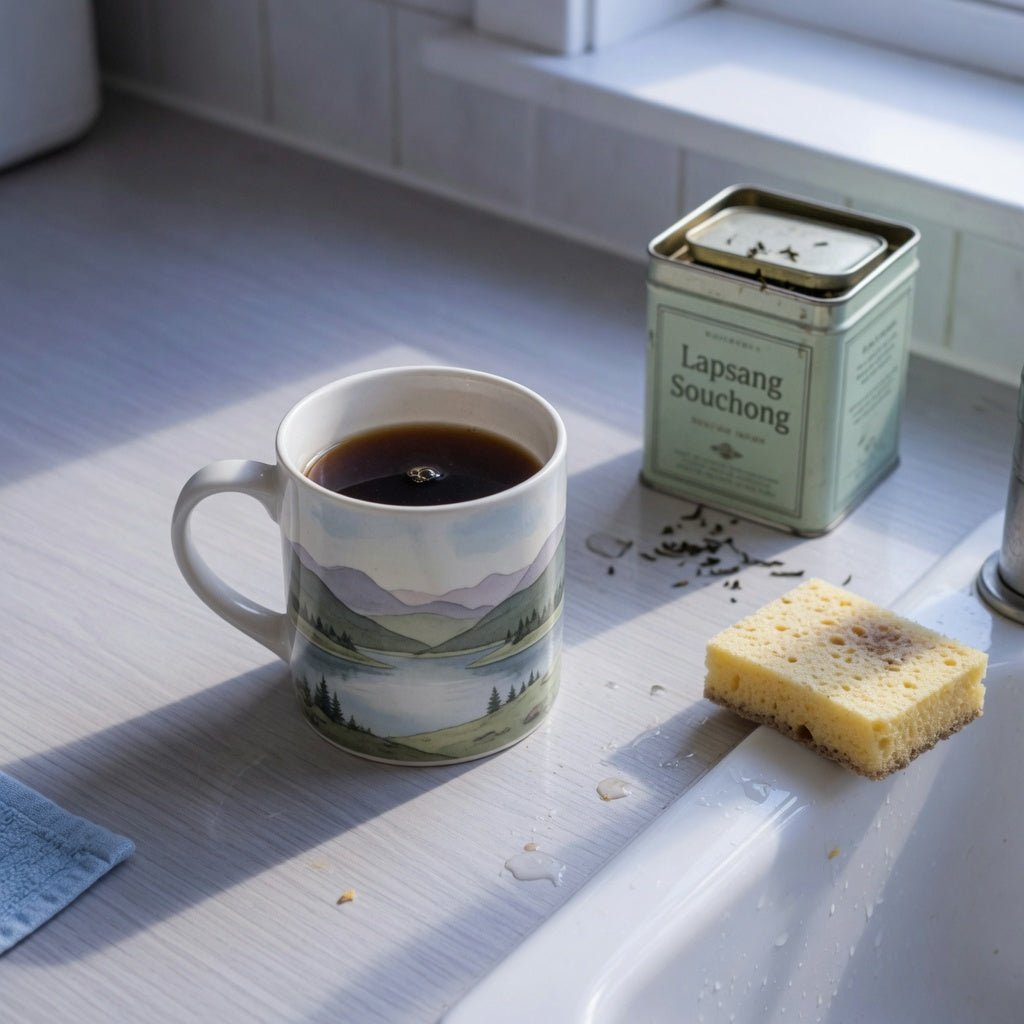
How to choose landscape mug ceramic coffee tea cup buying guide
A landscape mug has to work as a hot coffee or tea cup before the scene matters. We cover glaze contact, FDA lead and cadmium checks, appliance labels, handle clearance, and the listing lines to ve...
Read more
Leave a comment
This site is protected by hCaptcha and the hCaptcha Privacy Policy and Terms of Service apply.