
How to choose landscape mug ceramic coffee tea cup buying guide
Reading time: about 12 minutes
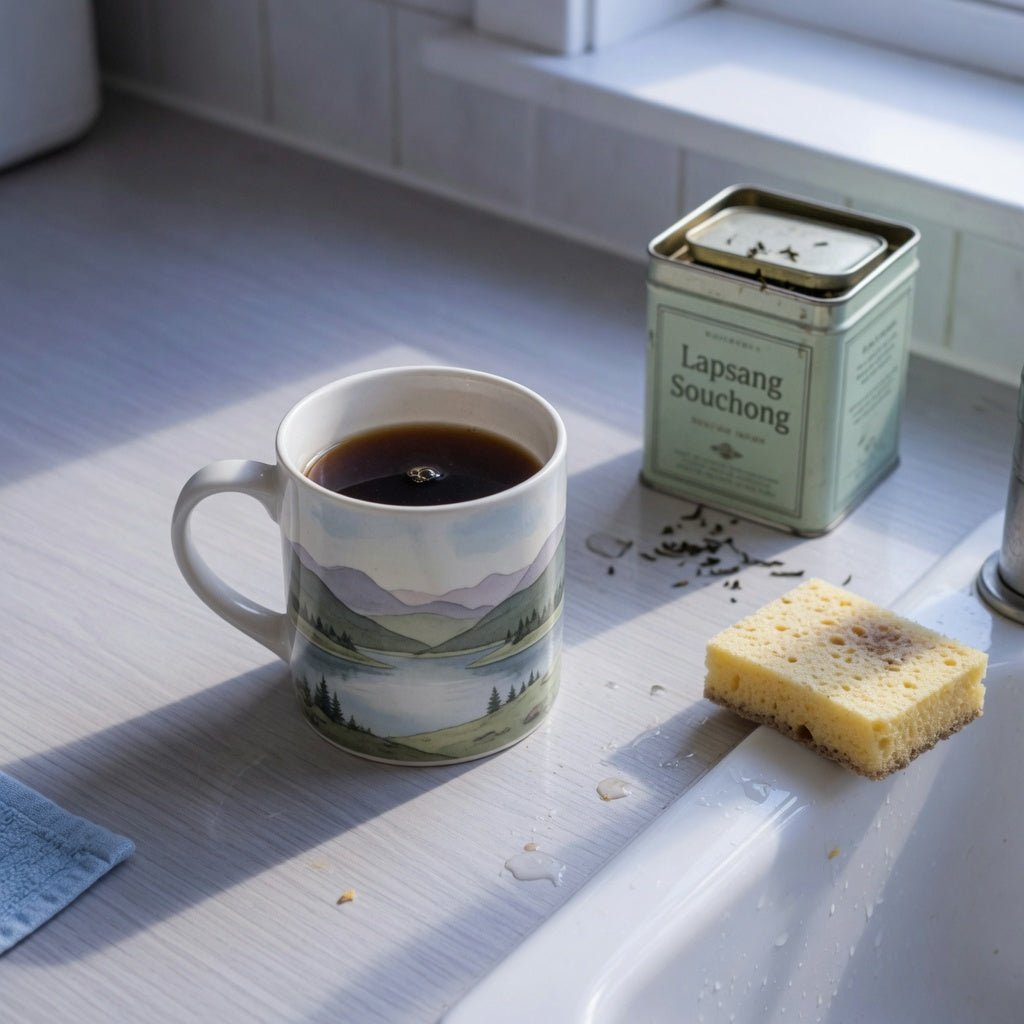
The scenic panel looks finished on the kitchen counter. Then someone fills the cup, the handle pinches two fingers, and a rough lip leaves a ring on the desk. In our store that is the moment the picture stops mattering. A landscape mug is an everyday coffee or tea cup that happens to carry a scene. If the Landscape Ceramic Coffee Mug is the one on your shortlist, open the current listing and read capacity, material, and any appliance lines before the artwork wins. This how to choose landscape mug ceramic coffee tea cup buying guide is the same pass our team runs when a scenic cup comes out of a carton.
An open ceramic rim is a poor commute cup. Unless the listing states that a lid is included, we do not assume one. Keep it on a kitchen counter or an office desk, and leave the car cupholder to a sealed travel bottle. If the handle on this scenic shape feels wrong for your grip, compare other profiles in our unique coffee mugs before you commit to a single picture.
Is the landscape sealed under glaze or painted on the lip?
The same mountain scene can be applied three ways, and those ways do not survive a sink the same.
- Underglaze color sits on the clay under a clear glaze. Detergent has to wear through that glassy layer before it reaches the picture.
- Inglaze color is fused into the glaze in the firing. It is better sheltered than surface paint, but the inner wall still has to feel smooth against the lip.
- Overglaze decals and raised enamel sit on the finished glaze. They are closest to coffee and lips, and they are what a dishwasher scuffs first.
If the product page does not name the method, do not guess from the photo. Treat dishwasher life as unknown. Raised color on the inner lip is a reason to pass. So is a base stamp that the piece is decoration only, including wording such as "Not for Food Use—May Poison Food." Those cups do not belong in a drink rotation. Rinsing, boiling, or soaking will not turn a non-food glaze into a food glaze. FDA consumer guidance says home processes do not remove lead from pottery.
We also separate ordinary commercial ware from the higher-risk pile: handmade crude or irregular pottery, antiques, damaged or worn pieces, flea-market finds with no maker, and cups painted in bright orange, red, or yellow. That FDA guidance says commercially made everyday pottery is much less likely to have lead problems. A scenic gift from an unknown kiln is not the same object as a catalog mug from a traceable seller.
Body type shows up once any glaze flaw appears. Porcelain usually feels tighter and smoother at the lip. High-fired stoneware is often a bit heavier and holds heat in the wall, which is pleasant until the handle is too small to keep fingers off that wall. Lower-fired earthenware can look identical in a photo and stain faster after the glaze crazes, because the clay beneath takes on liquid more readily. The listing should name the material. If it only says "ceramic," you do not yet know which body you are buying. Do not assign porcelain or stoneware to this landscape mug unless the current page says so.
What a 0.5 µg/mL lead screen means for hot coffee and tea
Cups and mugs get their own FDA screen because hot coffee or tea sits against the glaze for the whole serving. Compliance Policy Guide Sec. 545.450 sets a lead action level of 0.5 micrograms per milliliter of leaching solution for cups and mugs. The level is exceeded if any one of six tested units goes over that amount. The guide names ASTM C738, specified AOAC methods, and specified FDA laboratory methods.
In that guide, a cup or mug is small ceramic hollowware commonly used for coffee or tea above room temperature. It normally, though not always, holds about 240 mL (8 fl oz) and has a handle. That 8 fl oz figure describes the regulatory category. It is not a recommended serving, and it is not a reason to reject a larger everyday mug.
Cadmium is a separate check. FDA notes that acid foods can pull cadmium from some ceramicware, and that continued food use could cause chronic cadmium poisoning. For small hollowware under 1.1 liters — the range that covers the coffee and tea cups people actually set on a desk — the action level is 0.5 micrograms of cadmium per milliliter if any one of six units exceeds it, using ASTM C738 or the other listed methods.
A "lead-free" line is meaningful only when extractable-lead testing supports it. FDA tells industry not to label ceramicware "Lead Free" if the method in that cup-and-mug policy still finds extractable lead. Used that way, the phrase can be false or misleading. A badge with no test behind it does not change the glaze.
A peer-reviewed pilot of ceramic mugs in ordinary office use found that lead can move into coffee and tea. Coffee in that pilot measured from 0.2 to 8.6 micrograms per liter, and tea from below 0.2 to 1.6. For one of five mugs, the estimated daily dose exceeded California's 0.5 microgram-per-day Maximum Allowable Dose Level. Five mugs are not a verdict on every scenic cup. They are a reason to care who fired the glaze and whether the piece is sold for food.
FDA links lead exposure in children with learning disabilities, developmental delays, and lower IQ scores. Effects depend on the amount, how long exposure lasts, and age. We would not put a questionable decorative cup into a child's cocoa routine. If a home lead swab detects leachable lead, FDA strongly advises against using that piece for food or drink. A swab is a screen, not a six-unit lab leach test. A clean swipe is not a certificate.
Microwave labels, metal luster, and the dishwasher that dulls a scene
"Microwave-safe" is a manufacturer statement, not an FDA certificate. USDA says only cookware made for microwave use belongs in a microwave, and that ceramic containers should be labeled for microwave oven use. If the landscape mug listing is silent, leave the cup on the counter. Gold, luster, and metallic-looking color stay out of the microwave in our packing notes unless the maker clearly allows that decoration.
Dishwashers are where landscape artwork fades without a dramatic crack. Detergent, a heated dry cycle, and cups knocking together will dull an overglaze scene, bubble a poorly fitted glaze, or chip a rim long before the clay fails. When the listing does not promise dishwasher safety for that decoration, use a soft sponge and skip the heated dry. We tell gift buyers the same thing: the scene stays closer to the product photo when it is not rattling against bowls every night. Our gift-care notes for a landscape ceramic coffee mug stay with that hand-wash habit after the box is opened.
Thermal shock is the other quiet failure. A mug from a cold windowsill, filled straight from a boiling kettle, or a hot mug set on a wet stone counter, can split a sound body. Splash a little hot water in first if the cup has been sitting in a chilly office. A microwave claim does not double as a dishwasher claim, and neither claim transfers from a similar scenic cup to this listing.
Capacity, rim thickness, and knuckle gap for coffee versus tea
People ask us for "a normal mug," then describe three different drinks. For black coffee or plain tea, a cup around 10–12 oz usually matches what someone finishes before it cools. Milk drinks need more room. Bigger is not automatically better. A wide opening sheds heat, so a large black coffee often goes lukewarm while you are still at the screen. FDA's roughly 8 fl oz description is not the size to shop. Match the cup to the drink you repeat, then read ounces or milliliters on the current page. In our experience, styled photos make tall scenic walls look smaller than they drink. We will not guess capacity for this mug from a photo.
On a Monday desk, the failure we see is rarely a faded mountain. It is a full mug whose handle opening is a finger short, so the knuckle rides the hot wall through the meeting. Look for two or three fingers of room and a gap so knuckles do not press that wall. A handle that looks generous empty can feel tight when the cup is heavy and tilted. A tall scenic wall can also feel top-heavy. The complaints we hear after unboxing are usually this fit, not the printed hills.
Rim shape is comfort, not a health claim. Many tea drinkers want a thinner, smooth lip. Many coffee drinkers accept a slightly thicker rounded rim. Neither drink forgives a rough, wavy, or sharp lip, because that is where drips start. In person, run a finger around the edge. Online, study the lip in close photos and keep a return path if it feels wrong.
| Drink habit | What we check | Where a scenic mug disappoints |
|---|---|---|
| Black coffee or straight tea | About 10–12 oz, a stable foot, a moderate opening | An oversized cup that cools the drink, or a foot that rocks |
| Latte or other milk drink | More volume and a handle that still clears knuckles when full | A tall narrow cup that looks scenic and crowds the pour |
| Repeated tea steeps | A smooth rim and a light interior you can see staining on | A dark interior that hides tea film, or a lip that drips |
| Desk sipping at home | An open ceramic rim you can hand-wash between calls | Treating it like a sealed travel mug |
Chips, crazing, pinholes, and the base mark that ends drink use
Before the first coffee, look past the landscape. A sound exterior can hide a food-contact problem on the inside.
- Interior and lip. Chips, cracks, or glaze worn through to clay matter. FDA flags damaged or heavily worn pottery as a higher lead concern. Once the inside glaze is breached, retire the cup from drinks.
- Crazing. A fine crackle stains and holds residue. On a food surface we treat that as a stop, not a "see how it goes" phase, because the glaze is no longer a continuous skin.
- Pinholes. Tiny pits inside are hard to clean. On a daily cup they are a defect, not handmade charm.
- Foot. An unglazed foot ring is common, but a rough foot scratches a desk and can hide a crack running up the wall. Set the empty mug on a flat counter and see if it rocks.
- Handle join. A hairline where the handle meets the wall takes the weight of a full cup and chips first if mugs are stacked.
Do not stack scenic cups rim to rim if you care about the lip. The rim and the handle joint hit first. Give this mug its own shelf spot. A crazed or chipped interior is a reason to stop drinking from it even when the mountain scene on the outside still looks intact.
Desk gifts and home sipping: checkout lines in a how to choose landscape mug ceramic coffee tea cup buying guide
Here is the short pass we want finished before you buy a landscape coffee or tea cup. It is also a statement of limits. This style of mug is not a leakproof commuter bottle. It is not a display-only object if you intend to drink from it — unless the base says it is not for food, in which case the shelf is the only honest job. A household that dishwashers every cup is a poor match for an unverified scenic decoration.
If the base says it is not for food, the landscape stays on the shelf. A pretty glaze is not a serving suggestion.
- Confirm it is sold for food use, with no decoration-only warning.
- Read capacity in ounces or milliliters. Do not infer it from the photo or from FDA's 8 fl oz category note.
- Read microwave and dishwasher lines as claims about this decoration. Silence means hand-wash, and no microwave.
- Look for metal, gold, or luster. If you see it and the listing does not clear microwaving, do not microwave it.
- Judge handle clearance for a full cup, not an empty one, including knuckle gap from the hot wall.
- Prefer a smooth rounded rim and a foot that sits flat.
- Plan on home or desk use, not a cupholder.
- If the interior glaze later chips or crazes, stop using it for drinks.
Open the landscape coffee tea mug listing and match those lines to what is printed there today. An older photo is not a spec sheet. If you are buying for someone whose household runs every cup through the dishwasher, put the care limit in the gift note so the scene is not dulled in the first week.
Frequently asked questions
Where should a how to choose landscape mug ceramic coffee tea cup buying guide start if the page is mostly a photo?
Treat the photo as the scene, not the spec. On the current listing, find capacity, material, food-use wording, and any microwave or dishwasher line. If those lines are missing, the cup is unverified for that use. Ask the seller, or pick a listing that states them. Do not assign ounces, glaze type, or appliance safety from the picture.
Does a Prop 65 lead and cadmium warning mean I should not drink from the mug?
A warning sticker is not the same measurement as FDA's 0.5 micrograms per milliliter leach action level, and it is not a six-unit lab report on the cup in your hand. California's 0.5 microgram-per-day Maximum Allowable Dose Level is a different yardstick, which is why some dishware can carry a warning without a published FDA failure. Do not ignore it. Skip any piece marked not for food use, be more cautious for children, and treat handmade, brightly pigmented, or unknown-maker pottery with that warning as display unless you have real test results.
Is a decorative landscape ceramic mug safe to drink from, or only for the shelf?
Commercial everyday pottery that is sold for food use and fired properly is the lower-risk group FDA describes. A cup marked for decoration only is a shelf piece. So is damaged ware, antique ware, or a brightly colored piece from an unknown maker. If you cannot tell whether the landscape is a food-contact glaze, do not assume the pretty exterior makes the interior safe.
Will the dishwasher fade the landscape on a ceramic coffee or tea cup?
It can, especially on overglaze decals and raised color. Detergent and heated drying dull artwork and can bubble a weak glaze, while stacking chips the rim. If the listing does not say this decoration is dishwasher-safe, hand-wash it. A microwave claim does not double as a dishwasher claim.
How much handle room keeps knuckles off a hot ceramic wall?
Look for space for two or three fingers plus a gap so knuckles do not press the wall when the mug is full and tilted. Empty-hand photos hide that problem. A tall landscape cup can also feel top-heavy, so check balance as well as the opening. If your grip does not fit, choose another profile instead of forcing this one.
Verify the listing, then decide if this scenic cup is your desk mug or the wrong tool. When the handle, capacity, or care rules do not match the drink you actually make, compare another shape among our unique coffee mug collection before you check out.
More from our blog
Read more

Night Tea Mug Buying Checklist: Compare These First
A practical night tea mug buying checklist for slow bedside sipping: how we compare ceramic, glass, and steel, heat you can drink within minutes, infuser and lid fit, nightstand stability, and the ...
Read more
Coffee and Tea Mountain Mug for Home Decor: What to Check
A coffee and tea mountain mug for home decor has to work as a cup and as cabin-shelf art. We cover capacity, food-use base marks, print versus glaze, wood-handle limits, and a checklist for the liv...
Read more
Leave a comment
This site is protected by hCaptcha and the hCaptcha Privacy Policy and Terms of Service apply.