
Mountain Sea Ceramic Tea Mug: 7 Things to Compare Before You Buy
Reading time: about 9 minutes
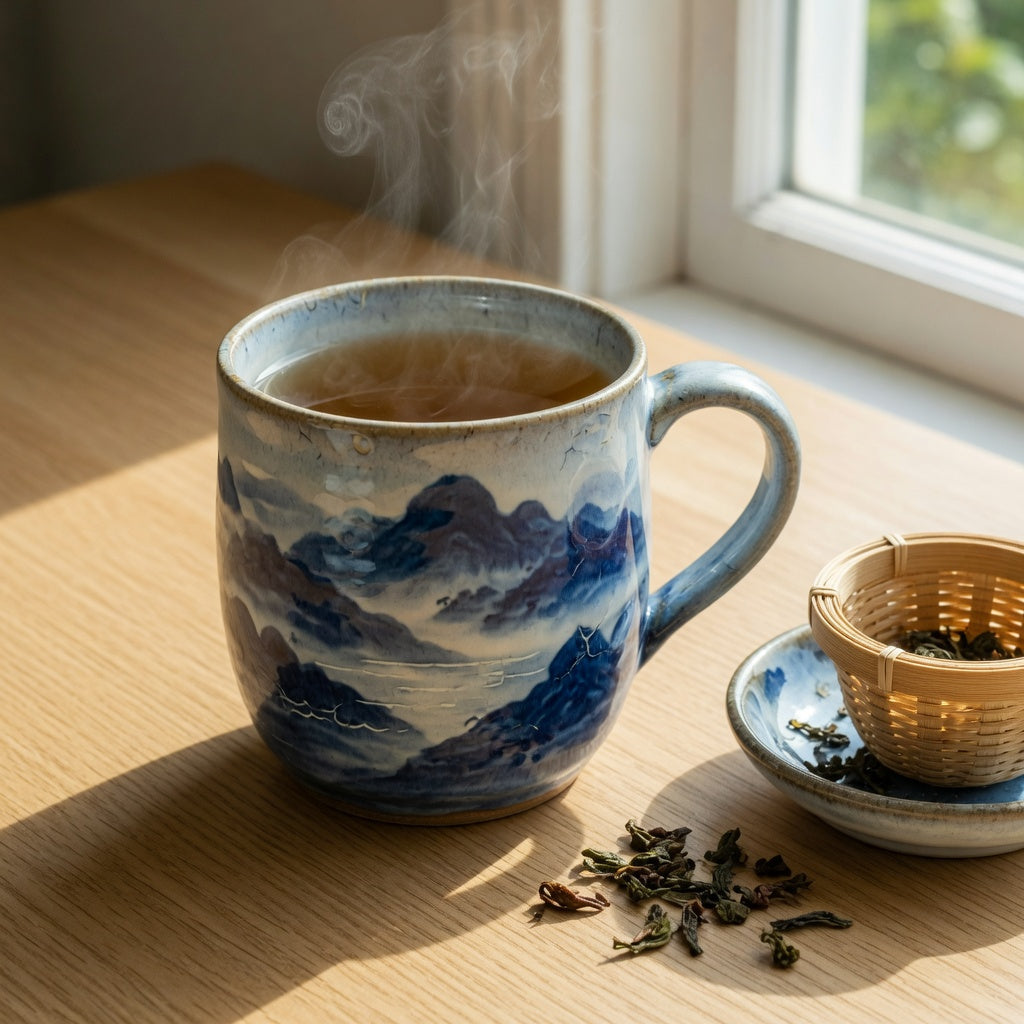
Last month a customer emailed us two photos: the mug on her kitchen counter and the listing shot of the same model. Same mountain-and-sea scene, same handle. But the blue pooled darker near her rim, and the wave line sat lower on the body. Her question — “did I get a defective piece?” — is the one we field most often about a mountain sea ceramic tea mug. It wasn’t a defect. It was a reactive glaze doing what reactive glazes do inside a kiln.
That single misunderstanding causes more returns in landscape teaware than chips or cracks ever will. So before you order, these are the seven checkpoints our team works through: where the design comes from, which specs to verify on the listing, how to read glaze-safety claims, why your piece won’t match the photo, how this style stacks up against printed and glass mugs, what care an art glaze demands, and when it makes the right gift.
Where the mountain-and-sea design comes from — and why it wraps the mug
The motif isn’t random decoration. Shanshui — literally “mountain-water” — is the landscape tradition of classical Chinese painting: peaks above mist, water moving below. East Asian tea culture borrowed from these images centuries ago, and modern potters translate the scene into clay and glaze instead of ink. On a well-made piece the landscape continues around the vessel, so the view shifts as you drink — the opposite of a flat print stuck to one side.
Our Mountain & Sea Ceramic Coffee Mug takes its name straight from that scene — mountains above, water below. As with any listing, confirm the details that matter to you on the live page rather than assuming them from photos: whether the design is layered glaze fired into the clay or applied on top, plus capacity, finish, and care symbols. That one distinction — fired-in versus surface-applied — drives almost every other decision below.
Which specs should you verify on the listing before ordering?
We’ll be blunt: we won’t quote capacity or dimensions here. Listings get revised, production batches change, and a spec copied from an old photo is exactly how “smaller than expected” reviews happen. Want to see how different shapes and finishes sit next to each other? Our unique coffee mugs collection lays out every style we carry side by side. Then run this table against the live listing — and insist on both measurement units.
| Spec | Why it matters | What a good listing shows |
|---|---|---|
| Capacity (oz and ml) | US buyers think in ounces; a figure in only one unit invites guessing | Both units, stated plainly |
| Rim diameter and lip thickness | Wide rims cool tea faster and let you smell the brew; thin lips drink smoother | Exact measurements, not “standard size” |
| Weight | Stoneware feels substantial — a full large mug weighs more than it looks on camera | Empty weight, ideally |
| Clay body | Stoneware and porcelain differ in heft and how they hold heat | A named material, not just “ceramic” |
| Glaze finish | Glossy reads brighter; matte and reactive finishes vary more piece to piece | Finish type plus a variation note |
| Care symbols | Dishwasher and microwave claims live or die here | Icons or a written care line |
| Accessories | Some landscape mugs ship bare; others pair with a lid or infuser for loose leaf | Included items listed explicitly |
Size context helps when you compare. Around 8 oz suits a short, hot tea session; 12 oz matches a standard kitchen brew; 16 oz fits a long loose-leaf steep or an oversized latte. Tea-specific mugs with built-in infusers tend to cluster in the middle sizes. If you want these checks as a printable sequence, our 10-point buying checklist for the Mountain Sea Coffee Tea Mug lays them out step by step, and our broader ceramic tea mug buying-guide checklist covers mugs of every style.
Is the glaze food-safe? The two labels worth understanding
Glaze safety sits behind most of the emails we receive, and it deserves a straight answer rather than reassurance. Two reference points matter:
- FDA limits: the FDA sets limits for lead and cadmium in glazed food-contact ceramics. Reputable makers formulate and fire their glazes to stay within them, and any seller should be able to confirm this in one sentence.
- California Prop 65: some imported ceramics carry a Proposition 65 warning. A warning isn’t automatically disqualifying — the thresholds behind that label are strict — but it is a prompt to ask the seller what testing backs the piece.
For handmade work specifically, ask three questions: Is the interior fully glazed? Is the food-contact glaze the same formulation as the decorative exterior? Can the maker point to test results for the glaze? A seller who answers all three without hedging is telling you something useful. A seller who goes quiet is, too.
Why your mug won’t match the product photo (and when that’s a real problem)
Reactive glazes are mixed from minerals that shift as they melt. In the kiln they pool in recesses, break color over edges, and settle differently on every piece. We’ve unpacked enough cartons of hand-glazed mugs to know the hero photo is always the best angle of the best piece in the batch — that’s photography, not deception. The customer from our opening story received a normal unit; hers simply fired in a different spot on the kiln shelf than the photo mug did.
“The glaze looks different from the pictures — is mine the same product?” — a question our team answers at least weekly.
Two habits prevent most of these surprises: read recent reviews that include customer photos, and ask the seller for a picture of current stock before ordering. Expect the scene’s placement, the blue’s depth, and the drip lines to move from unit to unit — and treat small variation as evidence of the handmade process.
The honest trade-off: if you need identical multiples — a matched set of four for a table, or a row of mugs for an office pantry — hand-glazed landscape mugs are the wrong tool. Uniform printed mugs exist for exactly that job, cost less per piece, and won’t spark an “is mine different?” group chat. Choose on your real habits, not the prettiest photo.
Mountain sea ceramic tea mug vs. printed mug vs. double-wall glass
At this point most buyers have three tabs open. Here’s how the categories genuinely differ:
| Hand-glazed landscape mug | Printed “mountain photo” mug | Double-wall glass tea mug | |
|---|---|---|---|
| How the design is applied | Mineral glaze fired into the clay | Ink or decal on the surface | No design — the tea itself is the show |
| Piece-to-piece variation | Expected; each unit is one of a kind | Near-zero between units | Low |
| Feel and heat | Heavier; stoneware bodies typically hold warmth longer | Familiar standard ceramic feel | Lightweight; the outer wall stays more comfortable to hold |
| Care demands | Gentler — hand-washing preserves art glazes | Usually the most dishwasher-tolerant | Fragile; wash away from other dishes |
Map your situation to the right choice. You want one characterful daily mug and don’t mind variation: the hand-glazed piece earns its spot, starting with the Mountain & Sea Ceramic Coffee Mug. You’re weighing shapes, sizes, and finishes across styles: browse the unique coffee mugs collection and compare listings directly. You need a cheap, replaceable beater mug, matched multiples, or a household that refuses to hand-wash anything: a printed mug will serve you better, and there’s no shame in that.
Dishwasher, microwave, thermal shock: care basics for an art glaze
Always take care instructions from the listing first — glaze formulations differ. Beyond that, the rules for art-glazed ceramics are simple:
- Hand-wash when you can. Repeated dishwasher cycles slowly dull reactive and matte finishes. The occasional machine wash is usually survivable, but the shine lasts longest under a soft cloth and mild soap.
- Skip the microwave if the glaze has metallic luster. Metal-based decoration can arc in a microwave. Plain glazed ceramic is normally fine — verify on the listing rather than testing it.
- Respect thermal shock. Don’t move a mug from a cold car straight under boiling water. Sudden swings crack ceramics, and repeated ones can fine-crackle the glaze surface — a fault line collectors call crazing.
- Lift tannin stains with baking soda paste, never scrub pads. Abrasive scouring scratches art glaze and permanently dulls the exact spot where tea stains settle.
None of these steps takes more than a minute. They’re the difference between a mug that still photographs well years later and one that looks tired within months.
Does a mountain sea ceramic tea mug work as a gift?
In our store, gifting drives a large share of landscape-mug orders, and the unboxing moment explains why. One note from our packing table: rim chips are the most common transit damage we see in ceramics, so a seller’s wrapping matters more for a gift than for your own order. Ask how the piece ships before checkout, and whether a gift note is an option.
It lands well for tea drinkers, desk-mug people, housewarming hosts, and anyone drawn to landscape art. Pair it with a small loose-leaf sampler and a basket infuser and you’re giving a complete brewing ritual, not an empty vessel. It’s the wrong gift for two people: the friend building a matched kitchen set (see the variation section above) and the person whose entire drink life is iced coffee in a lidded tumbler. For occasion-by-occasion matches, our Mountain Sea mug gift ideas guide breaks down seven situations worth checking before you buy.
Frequently asked questions
How much tea does a mountain sea ceramic tea mug hold?
Capacity varies by design, so read the figure from the live listing in both ounces and milliliters. Mugs in this landscape style are rarely as small as gongfu tasting cups and are usually comparable to standard kitchen mugs. Match the number to your habit: smaller sizes suit short hot sessions, mid sizes handle a normal brew, and large sizes fit a long loose-leaf steep.
Will the glaze look exactly like the product photos?
Almost certainly not identical if the piece is hand-glazed. Expect differences in color pooling, drip lines, and where the mountain-and-sea scene sits on the body. Ask the seller for photos of current stock and read customer photos in reviews — treat small variation as proof of the handmade process, not a defect.
Can I put it in the dishwasher and the microwave?
Depends on the glaze, so check the care symbols on the listing. As a general rule for art glazes, hand-washing preserves the surface longer, and any metallic luster decoration should stay out of the microwave. If a listing is silent on either point, ask the seller before buying instead of finding out the hard way.
Is a handmade glazed mug safe for hot drinks?
Verify that the glaze is formulated for food contact and fired within FDA lead and cadmium limits — a straightforward seller can confirm this in one sentence. A California Prop 65 warning isn’t a verdict by itself; ask what testing backs the piece. Full interior glaze coverage plus clear answers from the seller are the best signs you’ll get.
Does the mug come with a lid or a tea infuser?
It varies by design, and “mug only” is the most common setup. Some landscape mugs pair with a wooden or ceramic lid, and a few accommodate a basket infuser for loose leaf. Confirm included accessories on the listing before checkout, because lids and infusers are frequently sold separately.
Next step: open the Mountain & Sea Ceramic Coffee Mug listing and run the spec table above against it — capacity in both units, clay body, glaze finish, care symbols, included accessories. Then set it beside one or two alternatives in our unique coffee mugs collection. Ten minutes of checking beats a return box every time.
Read more
Black Tea Cup vs Mug Size: mL, Oz, and Which to Buy
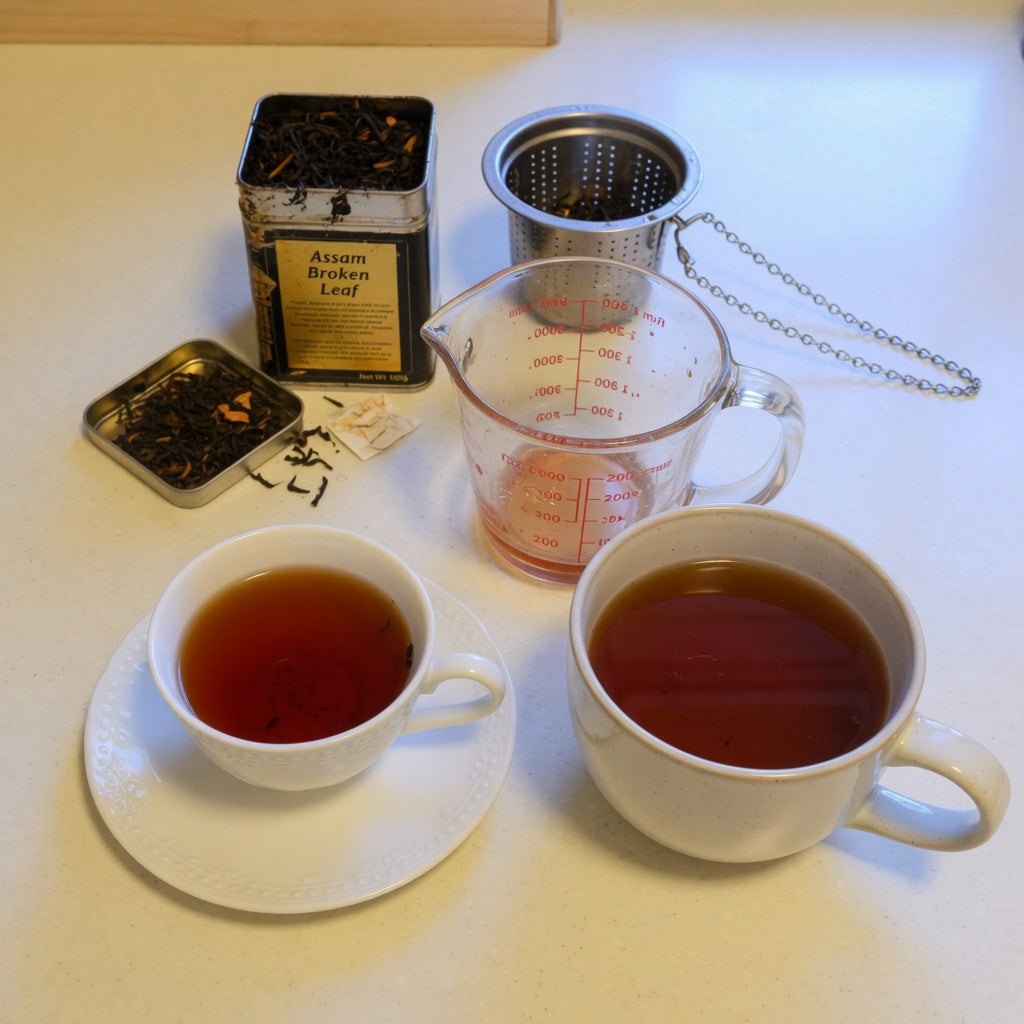
A classic black tea cup holds 150–180 ml while standard mugs run 300–450 ml — nearly double. We compare real capacities in mL and oz, explain why teacups are smaller, and map where a 390–400 ml mug...
Read more
Mug Shelf for Home Office: 7 Things to Compare Before Buying
Seven comparisons — mount style, shelf depth, load rating, placement, material, renters, and styling — before buying a mug shelf for home office, plus the trade-offs sellers rarely mention and hone...
Read more
Leave a comment
This site is protected by hCaptcha and the hCaptcha Privacy Policy and Terms of Service apply.