
Minimalist Ceramic Tea Mug: 6 Things to Compare Before Buying
Reading time: about 8 minutes
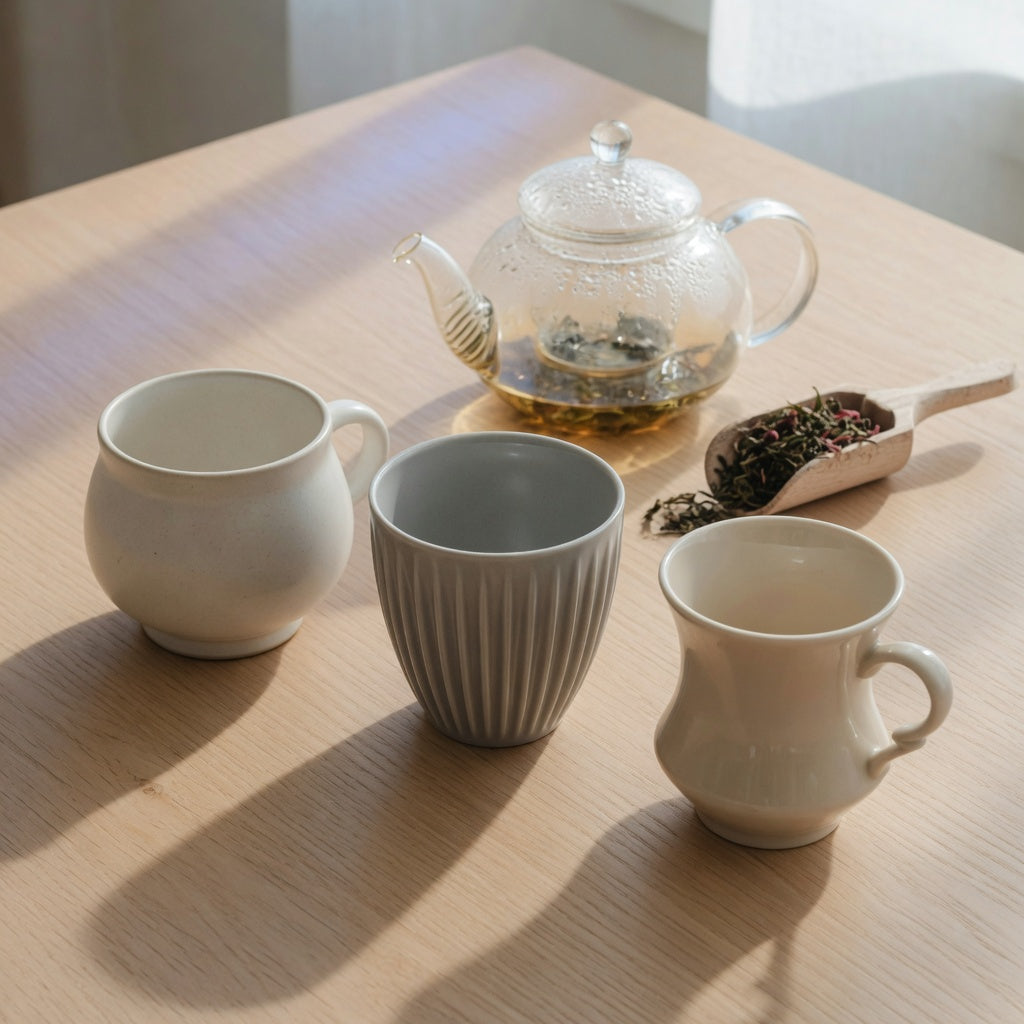
The email we still think about arrived with a photo attached: a soft grey minimalist ceramic tea mug on a sunny windowsill, sitting beside a glass teapot. Gorgeous. And, as the customer discovered at 7 a.m. the next morning, barely big enough for half of her usual 14-ounce steep. Nothing was wrong with the mug. It had simply been matched to the wrong drinker.
That mismatch is the trap with this style. You can judge the look of a minimalist ceramic tea mug from a photo in two seconds: clean lines, quiet glaze, no fussy pattern. What the photo hides is everything that decides whether it becomes your daily cup. Capacity. Wall thickness. Grip. How the finish behaves after a month of real washing. We pack and ship these mugs every week, and the questions that arrive after delivery are almost never about looks. They're about details nobody compared before checkout. Here are the six comparisons we'd run instead.
What "minimalist" actually describes, and what it leaves out
In our store, minimalist names a design approach, not a spec sheet: simple silhouettes, restrained color, little or no surface decoration. On its own, the word tells you nothing about how many ounces a cup holds, how thick the wall is, or how it handles a fresh boil. Treat it as the look, then run the functional comparison separately.
One honesty note first. Minimalist lines in this category usually skip the extras. If you steep loose leaf directly in the cup, a lid holds heat while the tea brews and an infuser catches the leaves, and plenty of minimalist forms offer neither, because a plain drinking vessel is the whole point of the design. That's a fine thing to buy, as long as you buy it on purpose and plan to steep by other means: a pot, a basket infuser lifted out, or bag tea.
Three shapes we ship most, and the drinkers who pick them
Three silhouettes on our shelves cover most buyers shopping this style. Match the shape to the person first; the numbers come next.
- You want the calmest possible silhouette. A rounded form reads quietest on open shelving and settles into almost any kitchen. Our Round Coffee Tea Mug is the one we point gift-buyers toward when they don't know the recipient's taste well.
- You like a hint of detail without pattern. The Pleated Coffee Tea Cup carries vertical pleats that catch light across the wall and give you texture you can feel as you drink. It suits people who find perfectly plain cups a little sterile.
- Your kitchen leans warm and vintage rather than gallery-white. The Retro Coffee Tea Cup brings a throwback profile while keeping the restrained palette, which is why it so often leaves with buyers redoing older homes.
What we won't do is quote capacities, finishes, or handle construction from memory. Those details live on each product page, and they can shift between the batches we stock, so read the current listing before you order. If none of the three feels right, the full unique coffee mugs collection is a better starting point than any single page.
What size minimalist ceramic tea mug do you actually drink from?
Capacity is the most common mismatch we hear about after delivery, and it takes one minute to avoid. Fill the mug you use most with water, pour it into a measuring cup, and write the number down. Shop that number, not the photo.
| Your tea habit | Typical pour | Capacity range to shop |
|---|---|---|
| One quick steep of green or black tea | 6–8 oz (180–240 ml) | Small cups, often the most striking minimalist forms |
| Tea with milk, chai, or a proper breakfast mug | 10–12 oz (300–350 ml) | Mid-size formats around 350 ml |
| Whole-pot sipping and long desk sessions | 14–16 oz (400–475 ml) | Large formats. Scan minimalist lines carefully, because they skew smaller |
Torn between mid sizes? Our 350 ml ceramic tea mug comparison walks through the roughly 12-ounce range in detail, including how handle and glaze choices play at that volume.
Handle or handleless: where will you actually drink?
Handleless cups look the most minimalist and carry a long tradition in tea drinking, but heat is the trade-off. With no handle, the wall itself is your grip. Thin walls pass heat to your fingers quickly. Thicker walls hold the tea's temperature and warm your palms gradually, which is lovely in January and less lovely when you're impatient for the first sip.
Two-handed cradling is the normal way to drink from one, so picture the setting honestly. Slow weekend mornings at the kitchen table, a cup held on the couch: handleless shines. Typing at a desk, handing a hot mug to a guest who isn't expecting a warm wall, one-handed sipping over a keyboard: a handle is simply more forgiving. If you want the security of a grip with a softer look, we cover what to check on ball-handled ceramic tea mugs in a separate guide.
Matte or gloss glaze: which finish fits your sink?
This is the detail that shows up around week two, once the mug has been through a dozen washes. Gloss glazes hide hard-water rings and the faint tannin film tea leaves behind, which makes them lower-maintenance if your tap water runs mineral-heavy or the dishwasher runs often. Matte glazes feel wonderful in the hand and photograph beautifully, but they show limescale and detergent film sooner. A baking-soda paste and a soft cloth lift most of it, though a glossy finish would simply have hidden it.
Two more things ride along with that choice. Wall thickness shapes the experience: heavier walls hold temperature longer and feel substantial, while thinner walls sip pleasantly at the lip but reach hand-hot temperatures faster on handleless forms. And ridged surfaces, like pleats, give tannin film extra area to cling to, so an occasional baking-soda pass along the ridges keeps them honest. Whatever you pick, respect thermal shock. A mug that rode home in a cold car shouldn't meet boiling water straight from the doorstep; let it rest on the counter a minute. You may also see the term "crazing," a fine web of lines that can develop in some glazes over time. If that matters to you, ask before buying, and check the care notes on the listing, because answers vary by glaze and we don't write one blanket rule for the whole store.
When a minimalist mug is the wrong choice
We would rather lose a sale than process a disappointed return, so here is where this style genuinely falls short.
- Clumsy cabinets. Thin, sculptural pieces and hard knocks don't mix. If mugs die regularly in your kitchen, buy thicker-walled and handled.
- Big 16-ounce pours. Many minimalist forms run small, and chronically under-filling a large-looking cup defeats the aesthetic anyway.
- Steeping loose leaf in the cup. If you want a lid to hold heat while tea brews or a built-in infuser, most minimalist forms offer neither. A lidded steeping mug is the better tool.
- Commutes and travel. These are home-and-desk objects, full stop.
The buyers happiest with a minimalist ceramic tea mug tend to drink moderate pours, enjoy holding a warm cup with both hands, and don't mind giving a matte glaze the occasional baking-soda refresh. If that doesn't sound like you, a sturdier everyday mug is the smarter purchase. Buy once, correctly.
Frequently asked questions
What size minimalist ceramic tea mug should I buy?
Start from what you pour, not what photographs well. A single steep suits 6–8 oz (180–240 ml), milk teas and generous breakfast mugs land around 10–12 oz (300–350 ml), and whole-pot drinkers should look at 14–16 oz. Measure the mug you already reach for most; that number is your answer.
Are handleless ceramic tea cups practical for hot tea?
Yes, with two caveats. The wall becomes your grip, so thicker walls warm your hands gradually instead of shocking them, and two-handed cradling is the norm. If you sip for an hour at a desk or hand mugs to guests, a handled cup is the more forgiving choice.
Can a minimalist ceramic tea mug go in the dishwasher and microwave?
It depends on the glaze and construction, which is why care notes live on each product listing rather than in a store-wide rule. Two habits help almost everywhere: never meet boiling water with a mug fresh from a cold car or the refrigerator, and expect matte finishes to show detergent film sooner than gloss.
Can I steep loose leaf in a minimalist tea cup?
Usually not in the cup itself, because most minimalist forms skip lids and built-in infusers by design. Steep in a pot or a basket infuser, pour, and let the cup do what it does best: hold a clean, quiet pour.
Which shape works best as a gift?
The rounded mug is the safest pick when you don't know the recipient's taste. The pleated cup suits people who enjoy tactile detail, and the retro profile fits vintage-leaning kitchens. Check the listing's capacity first and match it to how the recipient actually drinks tea, not to the product photo.
The 60-second checklist we run before checkout
- Measure your most-used mug's real capacity and shop that number in ounces.
- Choose handle or handleless based on where you drink: desks and guests lean handle, couches and kitchen tables lean handleless.
- Match the glaze finish to your water and washing routine. Hard water or frequent dishwasher cycles favor gloss.
- Confirm the extras you actually need, such as a lid or infuser for loose leaf, instead of assuming they're included.
- Read the listing's capacity, material, and care notes before paying, not after the box arrives.
- Shortlist two shapes and compare them side by side instead of deciding from one photo.
Ready to browse? Start in our unique coffee mugs collection, shortlist two, and hold both against this list. For the deeper version, the 10-point ceramic mug buying checklist covers rim, base, and after-delivery checks we didn't have room for here.
Read more
Unique Coffee and Tea Mug Gifts: 6 Things Buyers Forget to Compare
Most unique coffee and tea mug gifts fail on fit, not looks. We sell mugs for a living — here are the six comparisons that decide whether a gift gets used daily or joins the cabinet: capacity, drin...
Read more
Ceramic Cider Cups: Capacity, Handles, and Glaze Compared
Capacity, handle shape, and glaze care decide whether a ceramic cider cup earns daily use or cabinet time. We compare our 400 ml and 480 ml mugs, do the pour math, and flag the trade-offs most list...
Read more
Leave a comment
This site is protected by hCaptcha and the hCaptcha Privacy Policy and Terms of Service apply.