
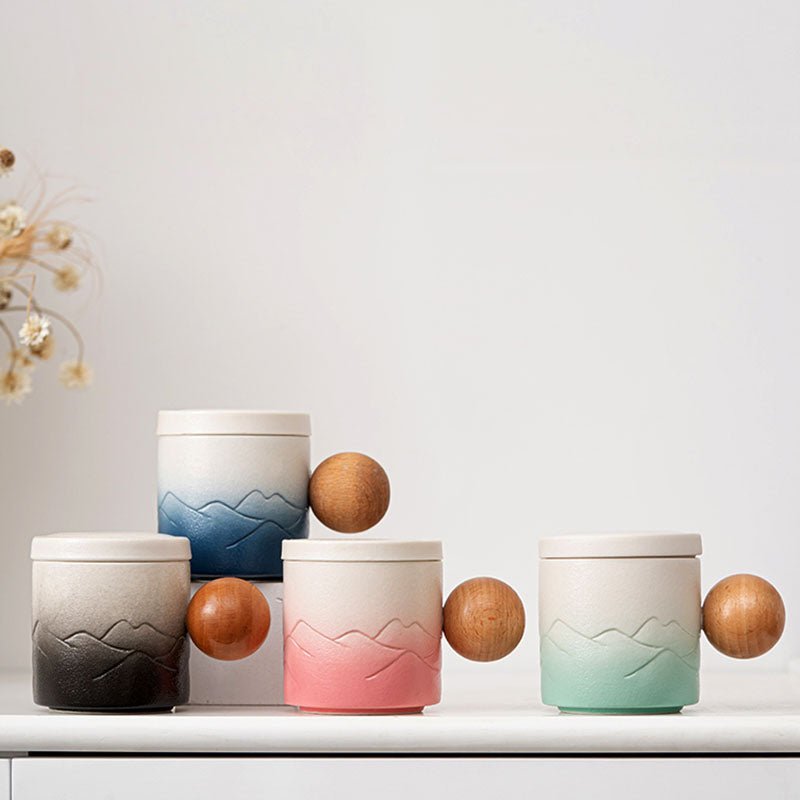
Macchiato cup compact kitchen product shortlist guide: 3 sizes compared
Reading time: about 9 minutes
A cup can hold your drink and still be a poor fit for your kitchen. On a narrow counter, its handle may occupy the strip needed for a spoon or milk pitcher. Inside a crowded cabinet, the cup may fit on the shelf but leave too little room to lift it out. This macchiato cup compact kitchen product shortlist guide separates those storage questions from drink capacity, so you can rule out the wrong options before ordering.
In our store, we treat capacity, outside dimensions, and visible form as separate comparison points. This shortlist uses the verified facts we can stand behind: all three options are ceramic, the Retro holds 170 ml, the Pleated holds 200 ml, and the Ball Handle holds 250 ml. You can view the broader range in our unique coffee mugs collection, but the three options below create a focused starting point for compact spaces.
Macchiato cup compact kitchen product shortlist guide: which capacity fits?
Start with the drink you actually make. An espresso macchiato is generally espresso marked with a small amount of milk or foam, but recipes vary between cafes, machines, and households. A cup that works for a small espresso-led pour may feel restrictive if you add more milk or regularly use the same vessel for tea.
- Record the approximate volume of your normal espresso, milk, and other liquid additions.
- Allow unused capacity for foam, stirring, and carrying the cup without spilling.
- Remove any option whose full capacity is too close to your usual pour.
- Measure the counter, shelf, and cabinet space separately. Capacity does not establish the cup's outside dimensions.
The capacity steps are meaningful. Moving from 170 ml to 200 ml adds 30 ml of potential headroom. Moving from 200 ml to 250 ml adds another 50 ml. The full difference between the Retro and Ball Handle is 80 ml, which can matter if your home recipe varies from one day to the next.
| Option | Verified details | Choose for | Skip if |
|---|---|---|---|
| Retro Coffee Tea Cup | 170 ml, ceramic, retro form | A consistently small pour and the lowest capacity on this shortlist | Your drink regularly approaches 170 ml or needs generous foam headroom |
| Pleated Coffee Tea Cup | 200 ml, ceramic, pleated exterior | A middle capacity with 30 ml more room than the Retro | You prefer the lowest capacity or the simplest visible exterior |
| Ball Handled Coffee Tea Mug | 250 ml, ceramic, ball-shaped handle | Larger milk pours or one cup used for several drink styles | Your priority is minimum capacity or your shelf has tight handle-side clearance |
This is a capacity ranking, not a claim that the 170 ml cup has the smallest outside footprint. Decorative form and handle shape also affect storage, so confirm the current product dimensions against your own measurements.
Retro 170 ml: the lowest-capacity choice for espresso-led pours
The 170 ml Retro Coffee Tea Cup belongs first on the shortlist when your normal drink is small and repeatable. Its main advantage is straightforward: it is the lowest-capacity option here, so you are not dedicating cup volume to headroom you rarely use.
- Choose it if: your measured pour remains comfortably below 170 ml and you want a ceramic cup centered on shorter coffee servings.
- Skip it if: you frequently add extra milk, switch to a larger recipe, or fill a 170 ml vessel close to the rim.
The Retro is not the right choice for someone seeking a small latte-sized drink in the same cup. It may also be too restrictive for a shared kitchen where two people prepare substantially different recipes. Check the outside measurements rather than assuming the lowest capacity automatically means the least cabinet space.
Pleated 200 ml: the middle option for changing milk and foam levels
The 200 ml Pleated Coffee Tea Cup is the practical middle candidate. It offers 30 ml more capacity than the Retro without moving to the 250 ml end of this shortlist. That extra room is useful when your espresso portion is consistent but your milk or foam level changes.
- Choose it if: 170 ml feels too close to your usual total pour, but 250 ml is more capacity than you need.
- Skip it if: your drink already fits the Retro with comfortable headroom or you prefer a cup with fewer exterior contours.
The pleated exterior is a visible design feature, not a reason to assume better grip, insulation, or durability. It also creates more contours to wipe during handwashing than a plain-looking surface. In a kitchen with a small sink and limited drying space, that minor care difference may be worth considering.
Ball Handle 250 ml: extra drink room with a prominent handle form
The 250 ml Ball Handled Coffee Tea Mug gives you the most capacity in this group: 50 ml more than the Pleated and 80 ml more than the Retro. It makes sense for a larger milk addition, a variable home recipe, or a cup that will also serve drinks beyond a short macchiato.
- Choose it if: drink flexibility matters more than keeping capacity to a minimum.
- Skip it if: you prepare consistently short drinks or store cups closely beside one another with little room for a distinctive handle form.
The ball-shaped handle is visually prominent, so include it when checking lateral shelf space and the path through a cabinet door. We do not assume that its 250 ml capacity proves a particular width or height. Buyers working with strict cabinet limits should compare the current product measurements directly with their available space.
Counter, shelf, and cabinet checks before checkout
A compact kitchen rarely has just one constraint. We recommend measuring the cup's full route through the room, not only the empty patch where it will sit.
- Counter zone: measure the usable area after accounting for the espresso machine, drip tray, power cord, milk pitcher, and any container that remains on the counter.
- Cabinet opening: check the opening created by the shelf, door frame, and hinges. A cup may fit inside yet be awkward to move through the opening.
- Lift clearance: leave enough room above the cup for your hand to grasp and lift it. Shelf height alone does not describe that movement.
- Handle-side space: account for neighboring cups and the direction each handle faces. This is especially relevant to the visible ball-handle form.
- Drying area: confirm that the cup can sit securely on your rack or towel without blocking the space needed for plates and cookware.
Our practical rule is simple: if the fit depends on a tight measurement, do not estimate from capacity or product photography.
Compare your measurements with the current details on each linked product page. If a dimension needed for your cabinet or shelf is not shown, contact our store before treating that option as a confirmed fit. Also avoid planning to stack any of these cups unless the current listing specifically identifies the form as stackable.
Ceramic care when sink and drying space are limited
All three shortlisted cups are ceramic. During unboxing, inspect a ceramic cup under good light, paying particular attention to the rim, base, and handle area. A chip, hairline crack, or damaged handle connection is a reason to stop using the item and contact the seller rather than testing it with a hot drink.
- Follow any item-specific care directions shown on the product page or packaging.
- Do not assume dishwasher or microwave compatibility if it is not explicitly stated.
- For routine handwashing, use a soft sponge and non-abrasive dish cleaner.
- Wipe around the Pleated cup's visible contours and around the Ball Handle's shaped handle rather than relying on a quick interior rinse.
- Let the cup dry fully before returning it to a crowded cabinet, and avoid placing heavier dishes against the rim or handle.
As a general ceramic-care precaution, avoid abrupt temperature changes unless the product's care guidance says it is designed for them. These steps do not make one option better than another, but they help expose the real difference between a cup that suits your routine and one that creates extra work in a small washing area.
Frequently asked questions
Is a 170 ml cup big enough for an espresso macchiato?
It can be, because many espresso macchiato recipes use a relatively small amount of milk or foam. There is no universal serving volume, so compare your own total pour with the Retro's 170 ml capacity. If your drink comes close to that limit, the 200 ml Pleated gives you more practical headroom.
Should I buy a 200 ml or 250 ml cup for a small kitchen?
Choose 200 ml if it covers your normal drink while keeping capacity lower. Choose 250 ml if you need another 50 ml for larger or more variable pours. Neither capacity confirms cabinet fit, so outside dimensions and handle clearance still need a separate check.
Does the 250 ml Ball Handle cup require more shelf width?
The visible ball-shaped handle must be included in your shelf measurement, but capacity alone cannot confirm the cup's total width. Check the current product dimensions and measure the space between neighboring items, the cabinet frame, and the closed door.
Can these ceramic cups go in a dishwasher or microwave?
This guide does not claim dishwasher or microwave compatibility because those details are not part of the verified facts used for the comparison. Follow the care directions on the current product listing or packaging. If compatibility is not stated, do not assume it.
Which cup belongs first on a compact-kitchen shortlist?
A macchiato cup compact kitchen product shortlist guide should begin with the lowest capacity that still leaves comfortable room above your normal drink. That may be the 170 ml Retro for a consistently short pour, the 200 ml Pleated for moderate variation, or the 250 ml Ball Handle when drink flexibility is the priority.
The five-minute shortlist before checkout
- Record your usual total drink volume.
- Remove any cup that would be filled close to its stated capacity.
- Measure the working counter zone, cabinet opening, shelf, lift path, and handle-side clearance.
- Compare those measurements with the current details on each product page.
- Keep one reason to choose and one reason to skip every remaining option.
Open the CoffeifyMug unique coffee mugs collection and compare the Retro 170 ml, Pleated 200 ml, and Ball Handle 250 ml side by side. Eliminate by drink capacity first, verify physical fit second, and pause to ask us about any missing measurement before placing the order.
More from our blog
Read more
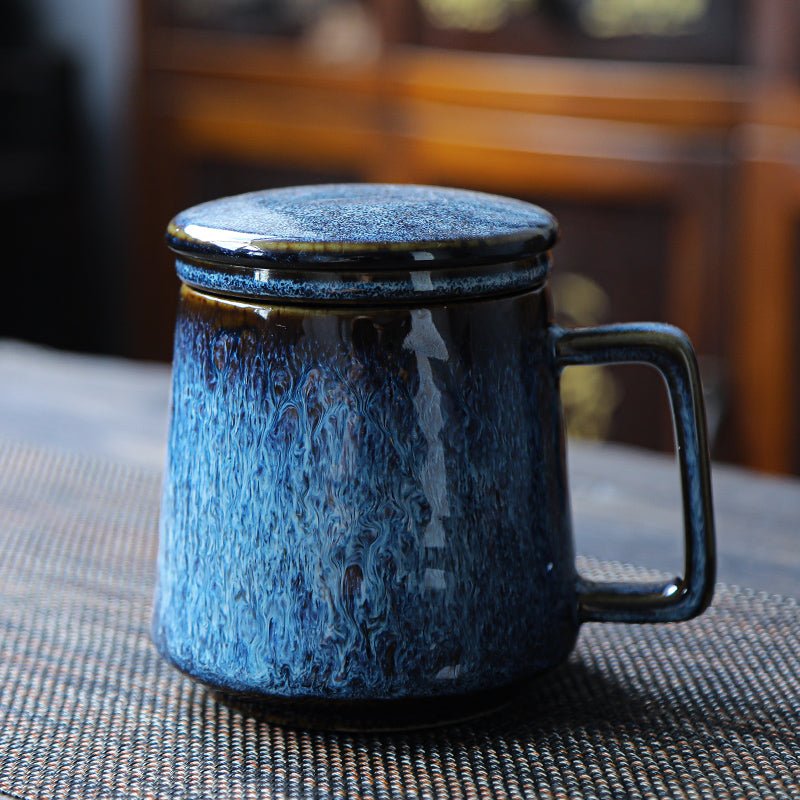
Cafe Au Lait Mug Home Office Practical Purchase Checklist: 3 Sizes
Use your usual drink volume, hand grip, desk clearance, and verified care details to compare The Flow 400 ml, Morning and Night 440 ml, and The Rock 480 ml. The checklist also identifies which deta...
Read more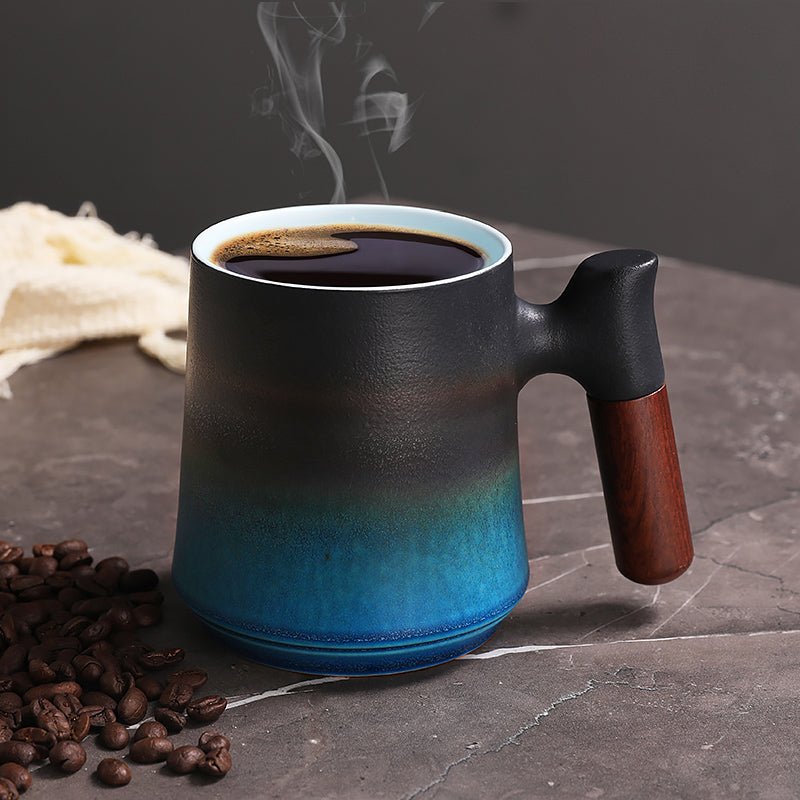
Cute Ceramic Coffee Mugs Home Office Practical Purchase Checklist
Use desk dimensions, handle fit, capacity, glaze condition, and care requirements to compare cute ceramic mugs. See where CoffeifyMug's handbag, pleated, and gradient styles fit, plus the trade-off...
Read more
Leave a comment
This site is protected by hCaptcha and the hCaptcha Privacy Policy and Terms of Service apply.