
Macchiato Cup Buying Priorities: Capacity, Shape, and Space
Reading time: about 10 minutes
A cup can look compact in a product photo and still be the wrong fit once it sits beside an espresso machine, milk pitcher, spoon, and phone. We see the same problem at office desks: the drink fits, but the handle occupies the narrow strip beside the keyboard. That is why we frame macchiato cup buying priorities around three practical checks: your actual pour, the cup's visible form, and the space available where you will use it.
In our store, we handle and compare compact ceramic cups with routines in mind, not capacity numbers alone. The current options covered here have verified listed capacities of 170 ml, 200 ml, and 250 ml. Listed capacity is not the same as a comfortable fill line, and it does not tell you the exterior width or height. Those distinctions matter when an espresso-led drink needs foam headroom, a cup has to clear a machine spout, or a handle must stay away from a laptop.
Your macchiato cup buying priorities: which variable should lead?
Start with the variable that could make the cup unusable. For most shoppers, that is capacity. Shape and styling matter, but neither can rescue a cup that leaves too little space above the drink or feels unnecessarily large for a short pour.
- Record your usual drink volume. Include the espresso and the milk or foam you normally add rather than relying on a universal recipe.
- Allow practical headroom. The drink should sit below the rim with enough freeboard for foam, a spoon, and the movement caused by lifting the cup.
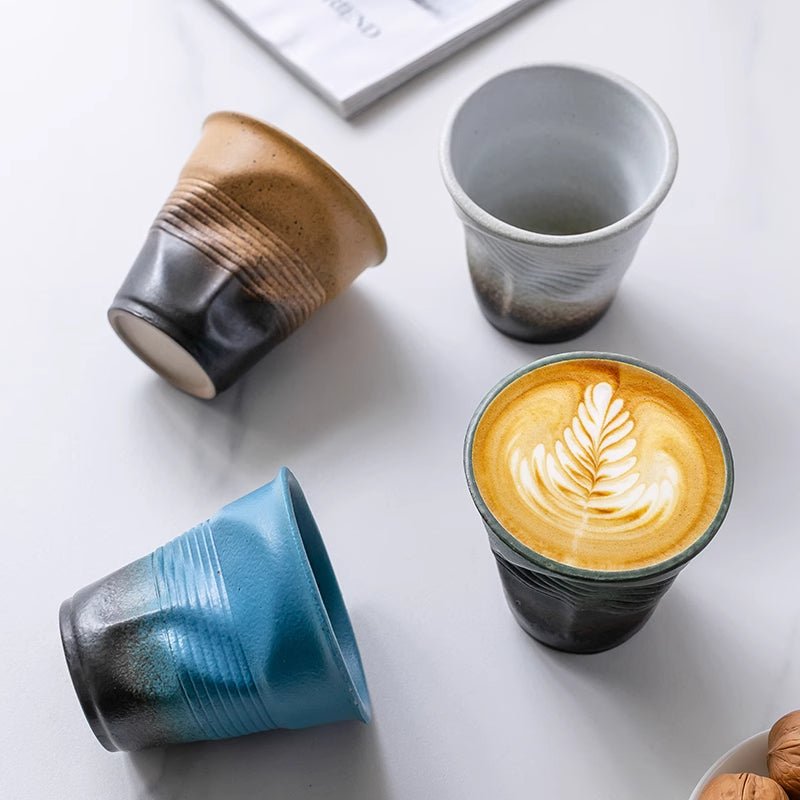
- Choose the visible form. Compare the Retro profile, Pleated exterior, and Ball Handle based on how you prefer to hold and present a cup.
- Check exterior space. Use listed dimensions when available, paying particular attention to maximum width including the handle.
- Consider secondary drinks. Decide if the cup is only for a short macchiato or must also accommodate a somewhat larger coffee or tea.
This order prevents a common buying mistake: choosing the most distinctive shape first and trying to make the routine fit afterward. In our experience, shoppers are happier when the volume decision is settled before they compare decorative details.
How much headroom should sit above the espresso and foam?
A macchiato is generally an espresso-led drink marked with a modest amount of milk or foam, but recipes vary between cafes, machines, and homes. Some people add only a spoonful of foam. Others pour a little more milk. We treat those proportions as context, not a fixed standard that every shopper must follow.
The useful term here is freeboard: the empty space between the top of the drink and the rim. Foam occupies volume even when the underlying liquid amount is small. A cup filled close to its listed capacity may technically hold the drink while still being awkward to carry or sip from.
Test your routine before ordering:
- Prepare the drink you make most often in a cup you already own.
- Note the highest point reached by the liquid and foam, not just the espresso volume shown by the machine.
- Watch what happens when you add a spoon or lift the cup from counter height.
- Choose a listed capacity that leaves visible space above that normal pour.
The 170 ml option provides the least listed headroom of the three and best suits a deliberately short routine. Moving to 200 ml adds a modest capacity buffer. The 250 ml option offers the greatest margin, although a very small pour will naturally occupy less of the vessel. Bigger is not automatically better; the aim is enough space without making the drink feel lost.
170 ml, 200 ml, or 250 ml: matching capacity to the routine
| Current option | Verified catalog facts | Reader situation | Main trade-off |
|---|---|---|---|
| Retro Coffee Tea Cup | 170 ml, ceramic, visible retro-style tapered form | You make a consistently short espresso-and-foam drink and want the smallest listed capacity in this comparison. | It provides the least capacity headroom, so a heavier milk or foam addition may make the cup feel restrictive. |
| Pleated Coffee Tea Cup | 200 ml, ceramic, visible pleated exterior | Your pours vary slightly, or you want a middle capacity without moving directly to 250 ml. | The textured exterior needs attention when wiping away drips that reach the pleated channels. |
| Ball Handled Coffee Tea Mug | 250 ml, ceramic, visible rounded ball handle | You want the most headroom of these three or one cup for a macchiato and another small coffee or tea routine. | A short macchiato occupies less of the larger vessel, and the projecting handle shape must suit your available space. |
These are fit recommendations, not a quality ranking. The 170 ml Retro is the focused choice for a shopper who already knows the pour will stay short. The 200 ml Pleated cup is the practical middle for modest variation between mornings. The 250 ml Ball Handle gives the most flexibility, but it is not a substitute for a large latte mug or an iced-drink glass.
If capacity remains uncertain, compare the three product forms within our collection of unique coffee mugs. Keep your measured drink volume beside you while browsing so the styling does not distract from the number that determines everyday usability.
How do the Retro, Pleated, and Ball Handle forms affect fit?
Visible shape changes the handling experience, but photographs cannot confirm every ergonomic detail. Hand size, finger position, and preferred grip vary. We use form as a shortlist tool and avoid presenting one handle style as universally more comfortable.
- Retro form: The tapered, familiar silhouette suits shoppers who want a conventional cup appearance at the smallest listed capacity. Confirm current exterior dimensions if machine clearance or cabinet depth is tight.
- Pleated form: Vertical pleats add texture and a more defined visual surface. They also create exterior channels that deserve a quick wipe after a spill rather than allowing milk or coffee residue to dry in place.
- Ball Handle form: The rounded handle creates a different grip from a standard loop. Some shoppers prefer holding a shaped handle, while others need a larger finger opening. The visible form alone cannot settle that preference.
Shape also matters for gifting. A distinctive handle or pleated surface makes an immediate impression during unboxing, but the recipient still has to use the cup after the packaging is gone. If you know the recipient makes short, controlled pours, capacity can lead. If you only know that they enjoy several small drinks, the 200 ml or 250 ml options provide more flexibility.
Will the cup fit your espresso station, desk, and cabinet?
Milliliters measure internal capacity, not physical footprint. A lower-capacity cup can be broad, while a larger-capacity cup can gain volume through height. Do not assume the 170 ml option is automatically the narrowest or that the 250 ml option is automatically the tallest. Compare current product dimensions whenever they are listed.
Measure the places that can cause trouble:
- Espresso machine: Check available height beneath the group head or spout and the usable width of the drip tray.
- Preparation area: Leave room for the cup, milk pitcher, spoon, and any scale used during the pour.
- Office desk: Measure maximum width including the handle, especially beside a keyboard, trackpad, monitor stand, or charging cable.
- Cabinet shelf: Check height and base width. Do not assume a decorative form is stackable unless the product information says so.
- Coaster or saucer: Confirm that the cup base and handle can sit without the handle tipping or crowding nearby objects.
A simple paper template helps. Mark the listed maximum width and depth on a sheet, cut or fold it to size, and place it beside your machine or laptop. This catches space conflicts that a product photo cannot show. If exact exterior measurements are unavailable, capacity alone is not enough evidence to promise desk or cabinet fit.
What does ceramic change about handling and care?
All three options in this comparison are ceramic. That material suits table and desk use, but it remains breakable. In our handling checks, the points worth inspecting are the rim, the base, and the junction where the handle meets the cup body. A rim chip affects drinking comfort, while a visible hairline crack near a handle attachment is a reason to stop using the cup.
- Inspect after unboxing. Look at the rim and handle joint under clear light before the first drink, particularly if the cup is a gift that has traveled through shipping.
- Rinse residue promptly. Coffee and milk are easier to remove before they dry. Use a soft, non-abrasive sponge, and wipe along the Pleated cup's exterior channels if a spill reaches them.
- Follow the current care listing. Ceramic material by itself does not establish microwave or dishwasher suitability. Confirm those instructions on the product page rather than assuming.
- Prevent contact during dishwasher cycles. If the listed care guidance permits dishwasher use, position the cup so its rim and handle cannot knock against heavier cookware.
- Avoid unstable stacking. Decorative profiles are not automatically designed to nest. Store them separately unless the cups sit securely without rim-to-base pressure.
These steps are ordinary ceramic care, not a claim that one of the three designs is more durable than another. Visible form and listed material give you useful selection information, but they do not replace the care directions attached to the current product listing.
Which routines need a different cup style?
A compact ceramic macchiato cup is not the right tool for every coffee habit. Choose another format if your main routine involves:
- A large latte or cappuccino that needs more than 250 ml of total drink space
- Iced coffee that requires substantial room for ice as well as liquid
- A commute that calls for a sealed lid, insulation, or verified cup-holder compatibility
- Commercial stacking where standardized dimensions are essential
- A specific accessibility requirement for handle opening, weight, or grip geometry that has not been confirmed
Trying to make a compact cup cover those jobs usually creates an avoidable compromise. A purpose-built travel cup suits commuting better, a larger mug suits milk-forward drinks, and a tall glass gives ice the space it needs.
A five-minute shortlist before you order
- Write down the espresso, milk, and foam amount you normally use.
- Decide how much visible headroom feels comfortable for carrying and sipping.
- Choose 170 ml for the tightest routine, 200 ml for a middle margin, or 250 ml for the greatest flexibility in this comparison.
- Select the visible form: Retro taper, Pleated exterior, or rounded Ball Handle.
- Compare listed exterior dimensions with your machine, desk, coaster, and shelf.
- Confirm current care instructions and rule out travel, iced, or large-volume use.
That sequence keeps the decision grounded in your routine. It also explains why our macchiato cup buying priorities begin with capacity but do not end there: the right volume still needs a shape you want to handle and a footprint your space can accept.
Frequently asked questions
Which macchiato cup buying priorities matter most for a short espresso?
Start with listed capacity and practical foam headroom, then check handle form and exterior dimensions. A consistent short pour points toward 170 ml, while variable milk or foam amounts may make 200 ml or 250 ml more practical.
Is a 170 ml cup large enough for a macchiato?
It can be, especially for an espresso-led drink with a modest amount of milk or foam. Recipes vary, so compare 170 ml with your own pour rather than treating one drink proportion as universal. Move to 200 ml if your normal preparation approaches the rim.
Is a 250 ml cup too large for a macchiato?
Not necessarily, but it provides more empty space around a short drink. The 250 ml Ball Handle is better suited to someone who values extra headroom or wants the cup to serve another small coffee or tea routine. A shopper who wants the most compact presentation may prefer 170 ml or 200 ml.
Can I judge office desk fit from cup capacity?
No. Capacity does not reveal maximum exterior width, handle projection, base diameter, or height. Compare listed dimensions with the clear space beside your keyboard and include the handle in the measurement.
Are these ceramic cups dishwasher and microwave safe?
Ceramic material alone does not confirm either use. Check the current care instructions on the specific product page before placing a cup in a dishwasher or microwave. If dishwasher use is permitted, keep the rim and handle from contacting heavier items during the cycle.
Your next step: Write down your normal pour volume, preferred handle form, and available landing space. Then open the unique coffee mugs collection and compare the 170 ml Retro, 200 ml Pleated, and 250 ml Ball Handle against those three facts before ordering.
More from our blog
Read more
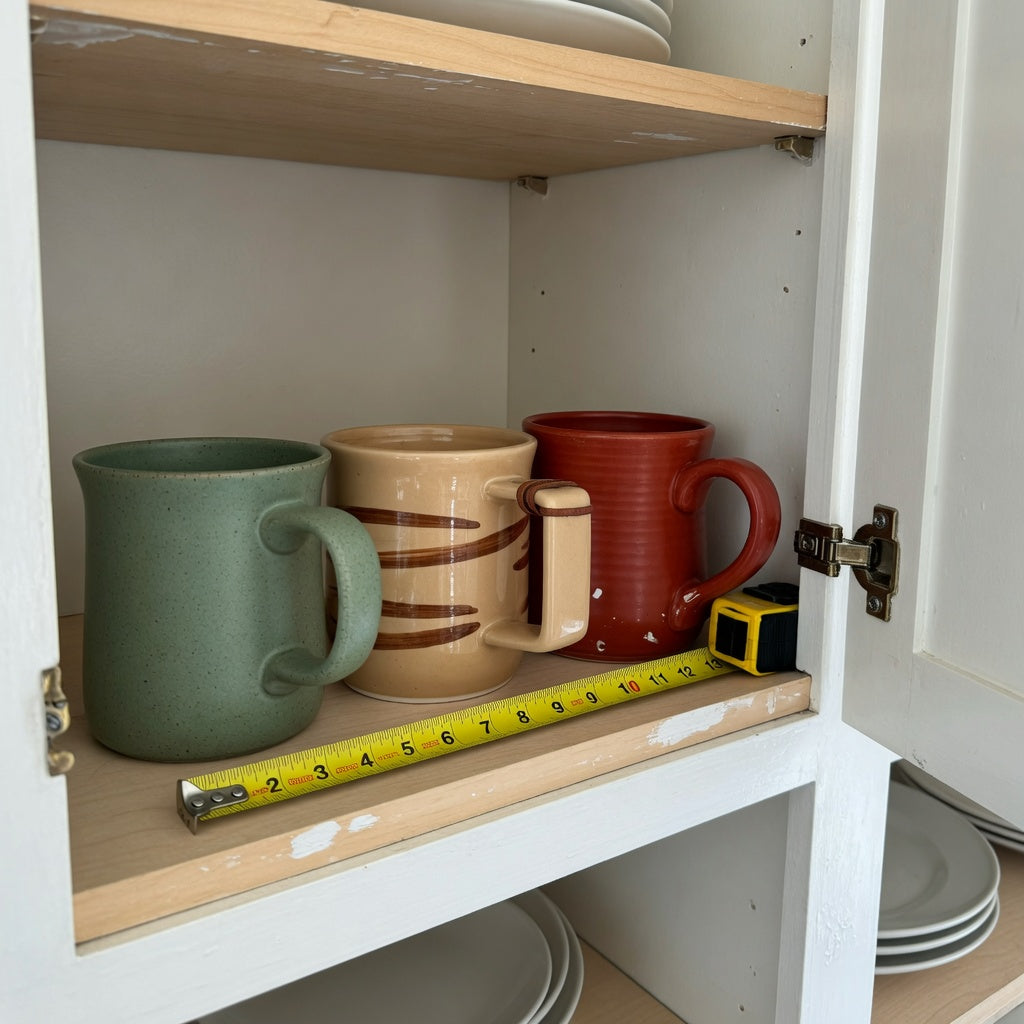
Hot Cocoa Mug Storage Fit Guide: 400 ml vs. 480 ml Shapes
This hot cocoa mug storage fit guide compares confirmed 480 ml and 400 ml capacities, then shows how to check handle projection, shelf depth, door clearance, and lift-out room.
Read more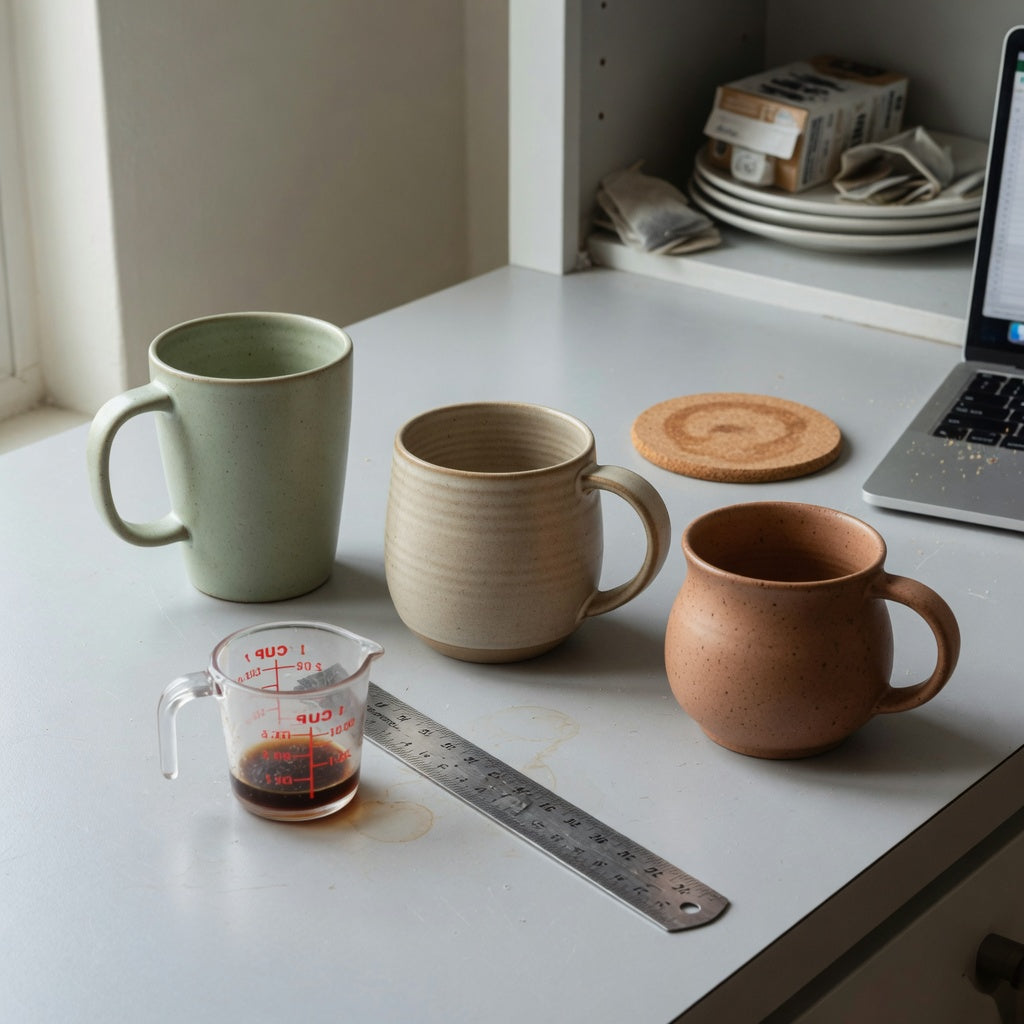
Thick Ceramic Coffee Mugs Buying Priorities: Capacity, Shape, Space
Compare thick ceramic mugs by the amount you actually pour, the shape you can handle comfortably, and the space available on your desk or shelf. We map those priorities to The Rock, The Flow, and S...
Read more
Leave a comment
This site is protected by hCaptcha and the hCaptcha Privacy Policy and Terms of Service apply.