
Thick Ceramic Coffee Mugs Buying Priorities: Capacity, Shape, Space
Reading time: about 9 minutes
A mug can look perfectly proportioned online and still fail at 8:15 a.m. The handle overlaps the laptop, the body catches under the coffee machine, or the capacity encourages a larger pour than you finish while it is hot. The most useful thick ceramic coffee mugs buying priorities are therefore practical: match the drink volume, visible shape, and total space requirement to the routine you already have.
As a store that handles and packs this product category, we can assess contours, rims, handles, and ceramic weight in hand. We cannot see the clearance inside your cabinet or how much coffee you pour each morning. This guide keeps those two kinds of evidence separate. General guidance covers measuring and routine fit; product-specific comments are limited to details shown or listed on the linked CoffeifyMug pages.
Which decision belongs first: capacity, hand feel, or space?
Start with the variable that can make the mug unusable, not the feature that looks most interesting in a photo. A gift for an open display shelf may put shape first. A mug used beside a keyboard usually puts footprint first. Someone who makes one measured pour before a long meeting should settle capacity before comparing designs.
- Capacity: Record the amount you normally pour, including milk, foam, or room for a tea infuser.
- Shape: Decide how many fingers you place through the handle, whether you like a thick or fine-feeling rim, and how often you carry the mug.
- Space: Measure cabinet height, total shelf depth, coffee machine clearance, and the desk area available beside your working hand.
Ranking these factors prevents one attractive feature from hiding a poor fit. Thick ceramic can feel satisfyingly substantial, but that same material choice can mean more weight and bulk than a thin-walled cup.
Your thick ceramic coffee mugs buying priorities: capacity and headspace
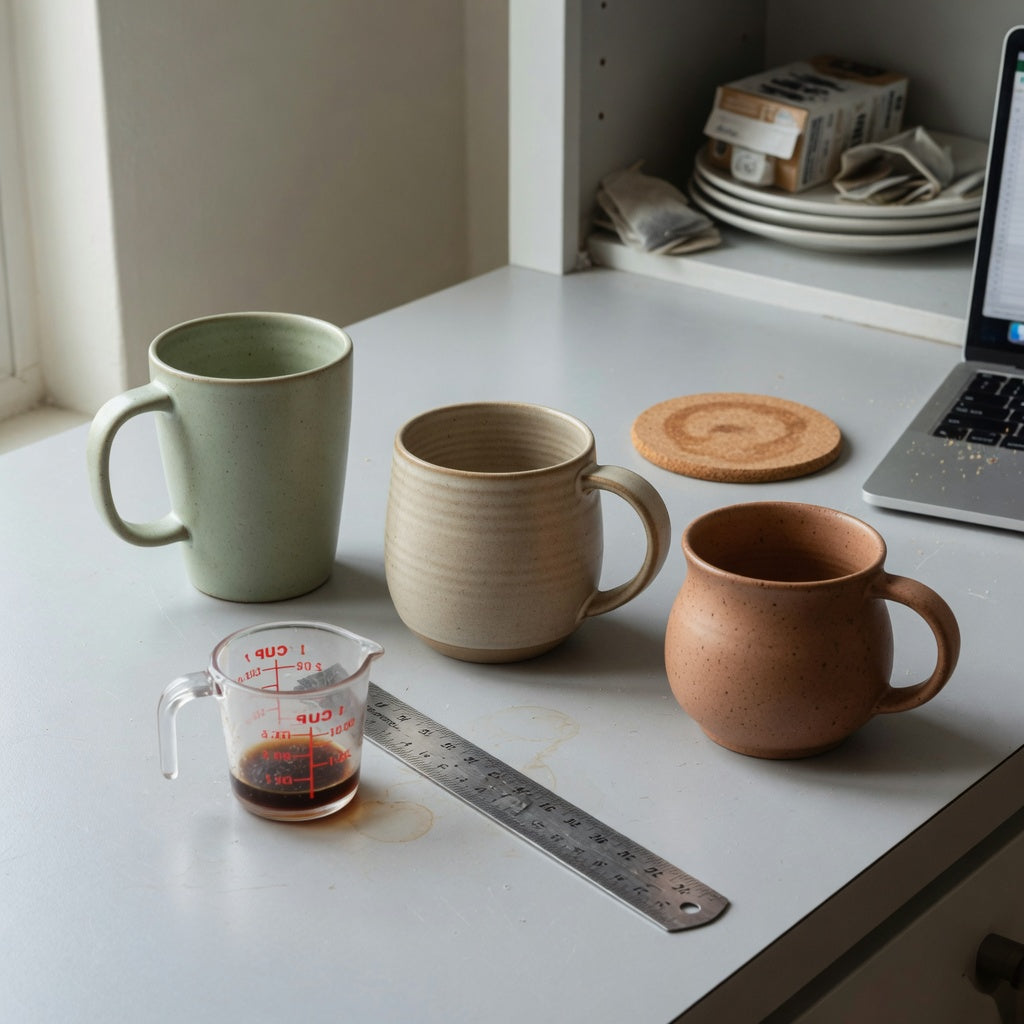
Measure your normal drink on an ordinary workday. Pour it into a marked measuring cup or jug, then include the milk or creamer you usually add. If you carry the mug from the kitchen, leaving roughly 1/2 inch, or about 12 mm, below the rim provides more practical spill margin than filling to the stated maximum.
A listed capacity describes internal volume. It does not establish the mug's external height, widest diameter, handle projection, or empty weight. Two mugs with the same capacity can occupy different cabinet space because wall thickness, body flare, and handle shape change the outer dimensions. This distinction matters with thick ceramic, where the outside can be more substantial than the capacity number suggests.
Extra capacity is useful for a long tea steep, milk-based coffee, or iced coffee that needs room for cubes. It is a poor trade if you normally leave the final portion cold or find a full mug tiring to hold. Thick ceramic has more thermal mass than a thin vessel of similar material, but it is not vacuum insulation, and room temperature, starting temperature, and fill level still affect cooling.
How do the rim, body profile, and handle change daily use?
Shape is not only decorative. During product handling, we pay attention to the points that meet the hand and the surfaces around the mug. Product photos can show the overall silhouette, but measured clearance is more reliable whenever fit is tight.
- Rim: A substantial rim can suit shoppers who like a solid sip feel. Someone accustomed to fine porcelain may find it bulky.
- Handle opening: Check how many fingers you normally use and whether the opening appears compatible with that grip. Total width must include the handle, not just the ceramic body.
- Widest body point: A flared or sculpted mug may need more shelf and desk space than its base suggests.
- Overall stance: A broad, lower-looking profile may feel more planted but consume more surface area. A taller profile can conserve width while requiring more vertical clearance.
Wet hands add another test. A mug carried from a sink or coffee station should not require a grip you find awkward. For a gift, shape can reasonably outrank maximum efficiency, but the recipient still needs a comfortable handle and somewhere to store the piece.
Will the mug fit your coffee station, desk, and cabinet?
Measure the actual destination with a rigid ruler or tape. For a cabinet, record shelf height and depth, then account for the handle if mugs sit side by side. For direct brewing, measure from the drip tray to the lowest fixed part of the machine. A mug that fits the shelf can still be too tall to sit beneath the coffee outlet.
- Use the widest outer measurement, including any flare or handle projection.
- Check cabinet doors and shelf lips, which can reduce usable clearance.
- Mark the proposed footprint on a desk with paper or removable tape before ordering.
- Plan individual shelf space unless the product page explicitly shows or states that the mug stacks.
Desk fit is more than finding an empty square. Right-handed shoppers often need the handle clear of the mouse, while left-handed shoppers may place the mug nearer a notebook or phone. If a critical dimension is not listed on a product page, do not treat nearby photo props as a scale reference. Ask before buying rather than guessing.
Which CoffeifyMug shape fits each routine?
Our current comparison set has three clearly different visual directions. The recommendations below use the visible product shape as a starting point, not as proof of measured stability, weight, or compactness. Open the relevant page to confirm listed capacity, dimensions when provided, material details, and care instructions.
| Reader situation | Why the visible shape fits | Product next step | Verify before checkout |
|---|---|---|---|
| You want a substantial, grounded-looking mug that will mainly stay on an open kitchen counter. | The Rock presents the solid visual profile that most closely matches that preference. | Review The Rock Coffee Tea Mug. | Listed capacity, base width, total width with handle, and care notes. |
| You move between the kitchen and desk and prefer a smoother, less blocky outline. | The Flow's visible contour matches that shape priority without making an unsupported claim about grip or weight. | Compare The Flow Coffee Tea Mug. | Handle opening, widest body point, height, and listed capacity. |
| You are buying a gift or display piece for an open shelf and want a more distinctive silhouette. | The Spittoon has the broad, recognizable visual character that suits a statement-piece priority. | See the Spittoon Coffee Tea Mug. | Maximum width, shelf clearance, recipient preferences, and care instructions. |
| You have not settled on a shape and want to compare the broader range first. | Viewing several silhouettes together makes your own capacity and space limits easier to apply. | Browse our unique coffee mugs collection. | Compare each page against the same measurements rather than changing criteria between products. |
None of these choices should be treated as a travel mug unless its product page explicitly lists the features you need. If your routine requires a sealed lid, bag carry, or reliable vehicle cup-holder fit, a purpose-built travel vessel is the better category.
What should you confirm before the first dishwasher cycle?
Thick does not mean unbreakable. Ceramic can chip at the rim, handle, or base when it strikes another hard item. During a gift unboxing or first inspection, place the mug on a flat counter and check the rim, handle junction, body, and foot ring for visible transit damage before use.
- Follow the exact dishwasher and microwave guidance on the product page; do not assume compatibility from material alone.
- If dishwasher use is approved, load the mug so its rim and handle cannot knock against cookware during the cycle.
- Avoid abrupt temperature changes, such as moving very cold ceramic directly into intense heat, because thermal shock can stress the material.
- Do not force sculpted mugs into an unstable stack. Rim-to-base contact is a common place for chips to begin.
Decorative finishes can also have care requirements that differ from plain ceramic. Product-specific instructions take precedence over general advice, especially for microwave use and repeated machine washing.
Which routines suit thick ceramic, and which need another material?
Thick ceramic suits stationary coffee or tea routines where a substantial hand feel and slower temperature change are useful. A room-temperature mug can absorb some heat from a fresh pour, so a gentle warm-water preheat may help if the product's care instructions allow it. This is still a mug, not a multi-hour insulated container.
For iced coffee, include the volume displaced by ice and leave carrying headspace. For commuting, hiking, or drinking in a moving car, a lidded stainless travel mug is generally more practical. Thin porcelain can also be the better choice for shoppers who prioritize low weight, fine rims, compact storage, or faster cooling over the heft of thick ceramic.
A five-minute checkout check for capacity, shape, and space
- Measure the drink you actually make, not the largest serving you might prepare occasionally.
- Add room for milk, foam, a tea infuser, or ice, plus about 1/2 inch of carrying headspace.
- Measure cabinet height, shelf depth, coffee machine clearance, and usable desk area.
- Compare the product's widest point and total handle projection whenever those dimensions are listed.
- Read the care instructions and decide whether they suit your normal washing routine.
- Choose the mug that resolves your highest-ranked need, then accept its stated trade-offs in weight, footprint, or visual complexity.
Applying the same thick ceramic coffee mugs buying priorities to every product keeps the comparison fair. Changing your criteria because one photograph is appealing is how a display favorite becomes an inconvenient daily mug.
Frequently asked questions
What comes first in thick ceramic coffee mugs buying priorities?
Start with the constraint that could stop you from using the mug: actual pour volume, physical clearance, or comfortable handling. For a small desk, space usually comes first; for one measured morning drink, capacity may lead. Rank shape first only if gifting or display is the primary purpose.
Do two ceramic mugs with the same listed capacity take up the same space?
No. Capacity measures the interior, while wall thickness, body flare, height, base width, and handle projection determine the exterior. Compare listed dimensions individually and use the widest point rather than assuming equal capacity means equal footprint.
Which CoffeifyMug option should I consider for a small office desk?
No shape can be declared the smallest from a styled photo alone. Start with The Flow Coffee Tea Mug if its smoother visible outline suits your routine, then compare any listed overall measurements with your available desk area. If clearance is strict and a needed measurement is not shown, confirm it before ordering.
Can thick ceramic coffee mugs go in a dishwasher or microwave?
Compatibility depends on the individual mug, glaze, and decorative finish, so follow the linked product page's care instructions. If dishwasher use is approved, leave clearance around the rim and handle to reduce hard contact. Never infer microwave suitability from thickness alone.
Is a thick ceramic coffee mug a practical gift?
It can be, especially for someone who enjoys distinctive drinkware and has open shelf or counter space. The Spittoon offers a visibly unusual silhouette, while The Rock and The Flow present different everyday shape directions. Check the recipient's usual drink size, storage space, and preference for substantial mug weight before choosing.
Open the CoffeifyMug unique coffee mugs collection with your measurements beside you. Compare listed capacity first, widest outer dimension second, and care instructions third. If a detail critical to your routine is not shown, pause and confirm it rather than selecting from appearance alone.
More from our blog
Read more
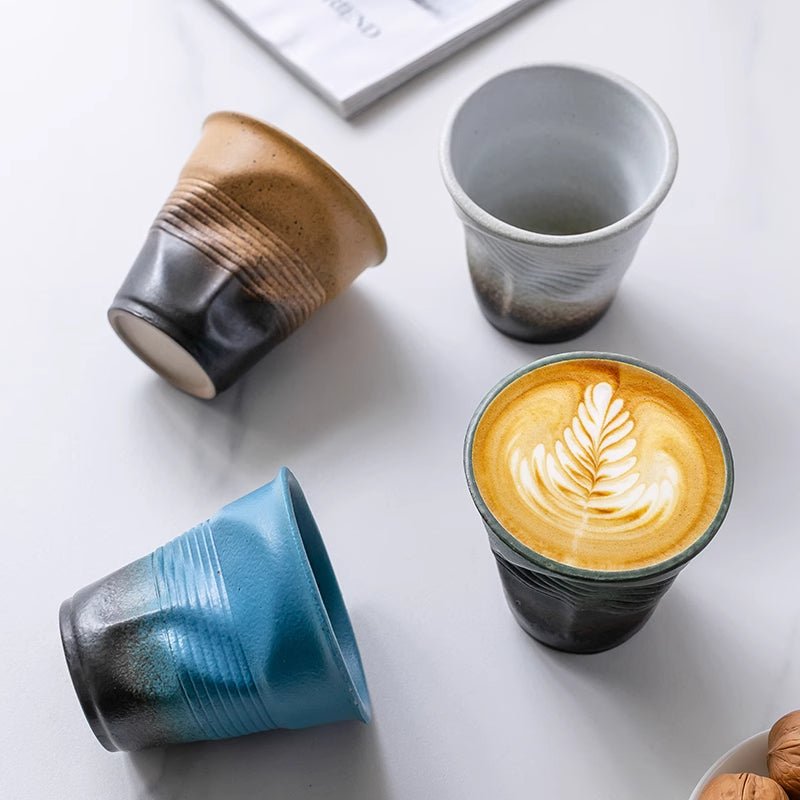
Macchiato Cup Buying Priorities: Capacity, Shape, and Space
Compare the listed 170 ml, 200 ml, and 250 ml ceramic options by headroom, visible form, desk or counter fit, and care. Each recommendation connects a real routine to the Retro, Pleated, or Ball Ha...
Read more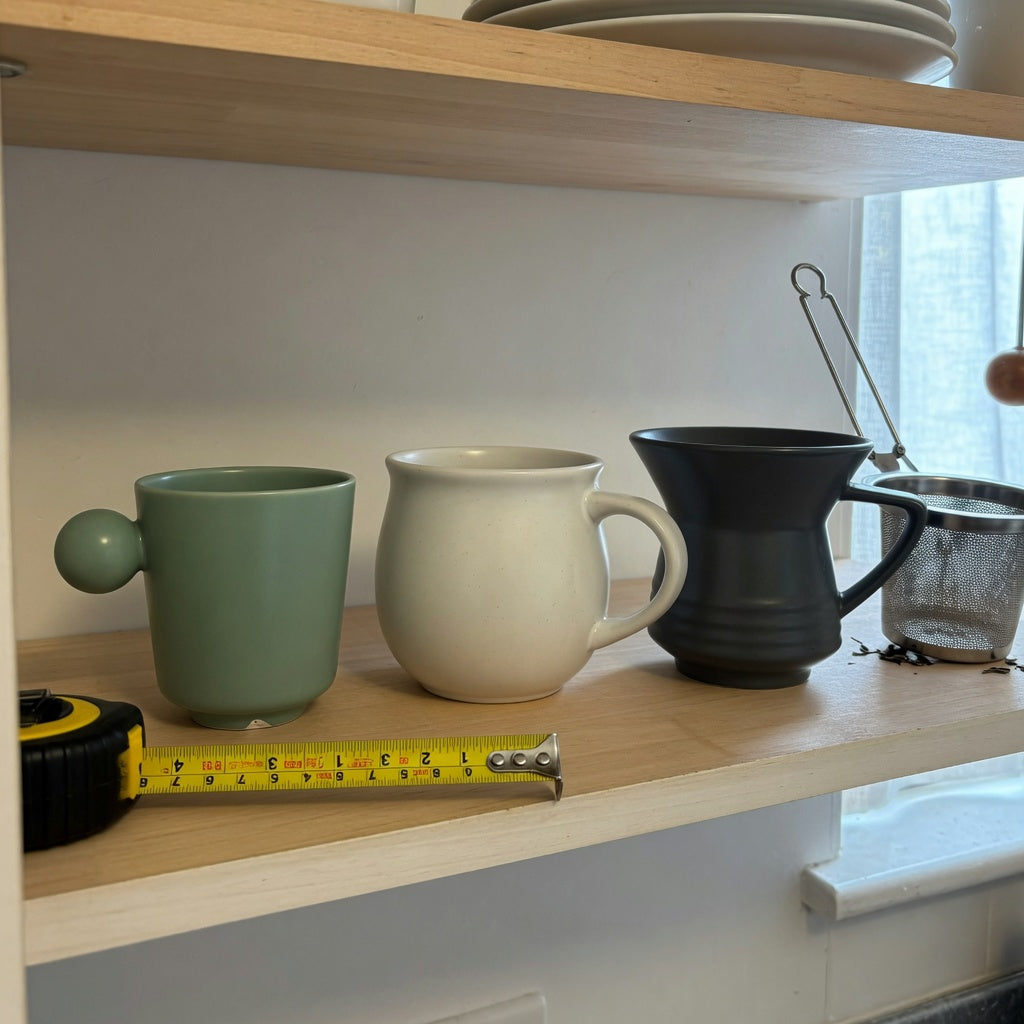
Loose Leaf Tea Mug Storage Fit Guide: Compare 3 Shapes
Compare the verified 250 ml, 390 ml, and 400 ml capacities, the Ball Handle mug's listed 11.2 cm diameter, and the storage trade-offs created by each visible shape. Includes a practical cabinet-mea...
Read more
Leave a comment
This site is protected by hCaptcha and the hCaptcha Privacy Policy and Terms of Service apply.