



Latte Mugs Tall Morning Routine Practical Purchase Checklist
Reading time: about 11 minutes
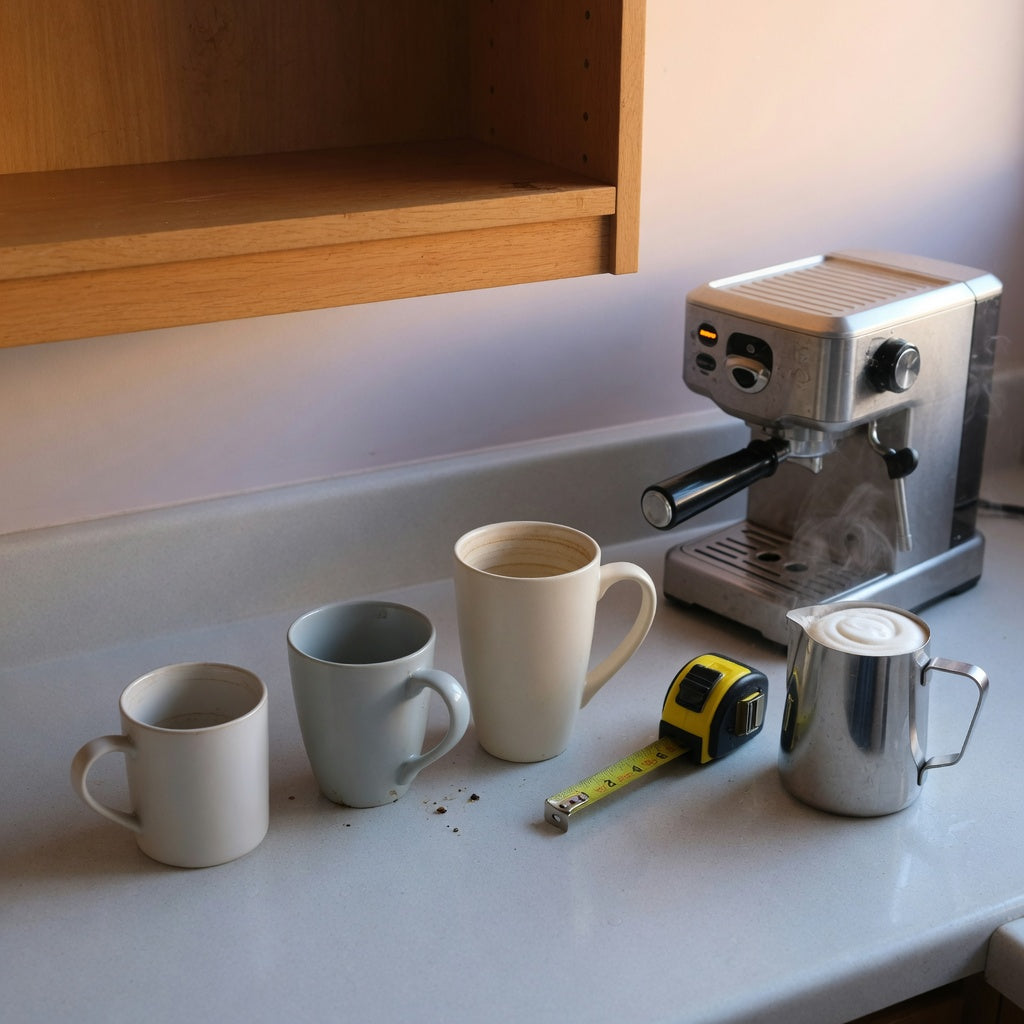
6:42 a.m. The portafilter is locked, the milk is spinning, and the mug you grabbed is already too full. Foam crests the rim, the pitcher tilts back mid-pour, and the first sip of the day happens over the sink instead of at your desk. In our experience, that scene is rarely about the espresso machine. It is about a vessel that never had room for the drink you actually build.
So here is the latte mugs tall morning routine practical purchase checklist we wish more buyers ran before checkout — built around the three things that decide whether a mug works at 7 a.m.: how long your morning can wait, how much milk you usually steam, and whether you are willing to walk back to the kitchen for a refill. We sell these mugs and we handle the returns, and almost every one traces back to a gap on the list below.
Which of the three tall latte mug types are you actually buying?
Shoppers use one phrase for three different objects, and that mismatch is where most disappointing purchases start. Sort yourself into one of these before you look at ounce numbers:
- A tall everyday coffee mug. Higher walls, a narrower footprint, a handle sized for a full hand. This is the shape most people mean when they search for tall latte mugs — the one that fits a desk, a nightstand, or a car cup holder without wobbling.
- A wide cafe latte cup. Short, wide-mouthed, often with a flared rim. Baristas reach for these because the rim is where latte art happens. It is not a tall mug, even when the listing says latte.
- A conical gift or photo mug. The retail tall latte mug that tapers from a wide top to a narrow base, often listed in the mid-teens of fluid ounces. Dramatic on a shelf, good at showing layers, but the narrow foot changes how stable it feels on a crowded counter.
One piece of calibration, because it trips people up: there is no regulated latte-mug size. FDA ceramic guidance describes a typical cup or mug as holding about 240 mL (roughly 8 fl oz) with a handle, and separates a mug's cylindrical sides from a cup's curved base. That is a regulatory description of a hollowware category, not a rule about how big a latte should be. Home drinks routinely run larger than the category definition, which is exactly why so many 8-ounce mugs overflow.
For the arithmetic, NIST's approximate conversion is 1 U.S. fluid ounce = 29.57 mL. That makes 8 fl oz about 237 mL, 12 fl oz about 355 mL, and 16 fl oz about 473 mL.
How much headroom does a 400, 440, or 480 ml mug actually give you?
Listed capacity is a brim-full number. What you drink is the fill line, and the difference between the two is your headroom. Steamed milk occupies more space than the cold milk you measured into the pitcher, so that gap has to absorb the expansion plus whatever foam sits on top. A mug can be genuinely large and still be too full at your usual pour.
Practical translation for a typical morning build — a double shot plus 8 to 10 ounces of milk:
| Listed capacity | Approximate fl oz | What it comfortably handles |
|---|---|---|
| 400 mL | about 13.5 | A compact 8-oz latte with foam, poured to a sane fill line. Tight if you routinely steam 10 oz of milk. |
| 440 mL | about 14.9 | A 10-oz milk drink with a real foam cap and visible headroom for carrying. |
| 480 mL | about 16.2 | A large single pour, a milk-heavy build, or a drink meant to last a two-hour block of meetings. |
Two rules of thumb worth keeping:
- Stop at least 1.5 cm (about half an inch) below the rim before you start pouring. That is the margin that lets you carry a mug across a room without a wave over the lip.
- Size for refill tolerance, not thirst. If a second kitchen trip costs five minutes you do not have, the 480 mL is the efficient choice. If you prefer a fresh, hot 8-ounce drink twice, a 400 mL mug keeps the second pour tasting like the first.
What we cannot tell you from a listing: whether a given mug's fill line is actually usable, because most product pages give one capacity number and skip the rest. Ask the seller. A brand that cannot answer that question is telling you something useful.
Will the mug clear the spout, the shelf, and the cup holder?
Height, not volume, is where tall mugs fail. Take three measurements at home before you order, in whatever units your tape uses:
- Drip tray to portafilter spout. This is the space a mug slides under on a semi-automatic machine. Measure it with the tray in place, then subtract a centimetre for maneuvering room.
- Automatic spout travel. On a bean-to-cup machine, check how far the dispenser rises. Many adjust, but the adjustment range is what matters, not the tallest setting on a spec sheet.
- Shelf gap and door swing. Measure the clear space between shelves where the mug will live, and remember that a tall mug stored near the front can block a cabinet door from closing.
Check the base too. A conical mug with a narrow foot needs a wider landing zone than its top suggests, and car cup holders are sized for a base, not a rim. If the listing omits height, rim diameter, and base diameter, treat those as open questions and contact us — those three numbers decide machine clearance, sipping comfort, and whether the mug rattles on the drive to work.
Where a tall mug wins and where a wide cafe cup is the better tool
Shape changes the drink, and it is worth being honest about the trade-off instead of pretending one silhouette does everything well.
- Latte art. Wide rims win. A short, flared cup lets you bring the pitcher spout close to the surface and lay foam down in controlled strokes. In a tall, narrow vessel the spout stays higher above the liquid, milk plunges deeper before it rises, and crisp rosettas get noticeably harder. Hearts and simple layered pours still work; competition-grade contrast does not come easily.
- Heat retention. A tall mug exposes less surface area to the air than a wide bowl of the same volume, so the liquid core cools more slowly. If you sip over 40 minutes at a desk, that matters more than art.
- Layers and iced drinks. Tall walls show off a macchiato or an iced latte in a way a shallow cup cannot. This is the case where the tall silhouette earns its place.
- Aroma. A wide rim funnels scent toward your nose; a tall mug sends it straight up. Neither is wrong — it is a preference, and most people only discover theirs after a week with each.
If art is the point of your morning, a wide cup is the honest recommendation, and we would rather say that than sell you the wrong shape. If the point is a hot drink that survives the walk to your desk, tall wins.
Handle grip, base stability, and the care claims worth verifying
A full 480 mL mug carries roughly half a kilogram of liquid before you count the ceramic itself. That weight hangs off a handle, so handle geometry matters more on tall mugs than on short ones: look for a loop that takes two or three fingers and leaves clearance for your knuckles. A one-finger handle on a heavy vessel shifts the load to your wrist, and you will feel it by the second refill.
Base stability is the other physical check. Wide, flat feet resist a hip bump against the counter; narrow conical feet do not. If the mug lives next to a laptop, favour the broader base.
On care, keep the claims specific to the piece rather than the category:
- Microwave. USDA advises using only cookware manufactured for microwave use, notes that microwave-safe glass and ceramic are usually labeled as such, and lists china with metallic paint or trim as unsafe. If a piece is unlabeled, USDA describes a one-minute test: heat the utensil beside a cup of water, and if the utensil itself becomes hot, it is not microwave safe.
- Dishwasher. Only trust this when the maker states it for that exact item. Decorated surfaces and metallic trim are the usual failure points.
- Lead and glaze. FDA sets an action level of 0.5 micrograms per millilitre of leaching solution for cups and mugs, tested across six units. The agency flags handmade or crude pottery, antiques, damaged or worn pieces, unknown makers, and bright orange, red, or yellow decoration as higher risk, while describing everyday commercial factory pottery as much less likely to have lead problems. Washing or boiling does not remove lead from a piece that leaches it.
For our own three mugs, check the current product listing for the care statements that apply to that specific item. We would rather point you to the page than have you assume a feature carries across the whole range.
Matching our 400, 440, and 480 ml silhouettes to a real morning
Our tall range steps up in three listed capacities. Here is the situation each one suits:
- You build one compact latte and drink it fast. The Flow Coffee & Tea Mug lists 400 mL (about 13.5 fl oz). It is the smallest step in the range and the sensible pick if your usual build is a double shot plus 8 ounces of milk, or if counter and cabinet space is already tight.
- You steam around 10 ounces and want margin. Morning and Night Coffee & Tea Mug lists 440 mL (about 14.9 fl oz). The extra 40 mL is the difference between a full mug and a full mug you can carry, and it suits anyone who alternates coffee and tea in the same vessel.
- You want one pour to last until the next meeting. The Rock Coffee & Tea Mug lists 480 mL (about 16.2 fl oz). Choose it for refill tolerance rather than latte art — the volume is there, but a wide cup still pours better patterns.
Compare heights and rim widths on each individual listing before deciding, since those numbers decide machine clearance and sipping comfort. To see the full spread of shapes, glazes, and handle styles in one place, browse the unique coffee mugs collection. For the measurement side of the same question, our breakdown of what to compare on a 350 ml tall mug walks through the height-versus-volume trade-off at a smaller size, and how many ounces a mug really holds explains why advertised capacity and poured capacity diverge.
Run this latte mugs tall morning routine practical purchase checklist before checkout
Eight checks, in order. If a mug fails one, it fails the morning.
- Drink volume: cold milk ounces plus espresso volume plus foam expansion, written down once.
- Headroom: at least 1.5 cm below the rim at your usual pour.
- Spout clearance: the measured tray-to-spout gap on your machine.
- Shelf and door clearance: the real, usable gap where the mug will be stored.
- Base diameter: checked against your cup holder and desk footprint.
- Handle span: two to three fingers, with knuckle clearance.
- Care labels: microwave and dishwasher statements for that exact item.
- Missing numbers: if height, rim, or base is not listed, ask before ordering.
Most buyers only need the first three answered to choose confidently. The rest are the ones that generate returns.
Frequently asked questions
Will a 480 ml mug fit under my espresso machine?
That depends on the mug's height and your machine's spout clearance, not on the volume. Measure the gap between the drip tray and the portafilter spout with the tray in place, then compare it to the height listed on the product page. If the height is not published, ask us for it before you order.
Is a 16 oz tall mug too big for a latte?
Not if you are sizing for refill tolerance. A double shot with 8 to 10 ounces of steamed milk still leaves real headroom in a 480 mL mug. Where a large mug works against you is strength and heat: more surface area and more milk dilute the coffee-to-milk balance and cool the drink faster if you sip slowly.
Can you pour latte art in a tall latte mug?
Yes for hearts, simple layered pours, and macchiato-style stacks. Complex contrast patterns are harder because the pitcher spout stays farther from the liquid surface, so the milk dives below the crema instead of floating cleanly. If art is your priority, a short wide cup will serve you better.
Is the ounce number on a listing the amount I can actually drink?
Usually it is a brim-full measurement, not a comfortable fill line. Our latte mugs tall morning routine practical purchase checklist treats the difference as a decision point: ask the seller where the practical fill sits, and plan on leaving about 1.5 cm below the rim for foam and expansion.
How do I tell whether a tall ceramic mug is microwave safe?
Look for an explicit microwave-safe marking on the base or the listing, and confirm there is no metallic paint, luster, or gold trim. If a piece is unlabeled, USDA describes heating it for one minute beside a cup of water: if the mug becomes hot while the water stays cool, keep it out of the microwave.
More from our blog
Ready to pick your mug? Two ways to save on today's order:
Ordering 1–3 mugs? Get an extra 10% off your 1st order with code 10_OFF Apply 10% Off & Shop Wooden-Handle Mugs →
Gifting 4+ mugs? Buy 3, Get the 4th Free applies automatically at checkout (no code needed; offers do not stack) · Free standard shipping (Nov pre-Christmas delivery: 15–20 calendar days US) · Free replacement if chipped in transit.
Popular mug buying guides: Ceramic Mugs with Lids Compared · Wooden-Handle Tea Infuser Mugs Compared · Christmas & Secret Santa Mugs 2026 · Espresso & Cortado Cups Guide · Cup & Saucer Gift Sets · All 25 Mugs Spec Table · Mug Size Guide · Shipping & Promo FAQ
FIRST ORDER 10% OFF (CODE: 10_OFF) · OR BUY 3, GET THE 4TH FREE


Read more
Pottery Tea Cups Daily Use Guide: 170, 200 or 250 ml?
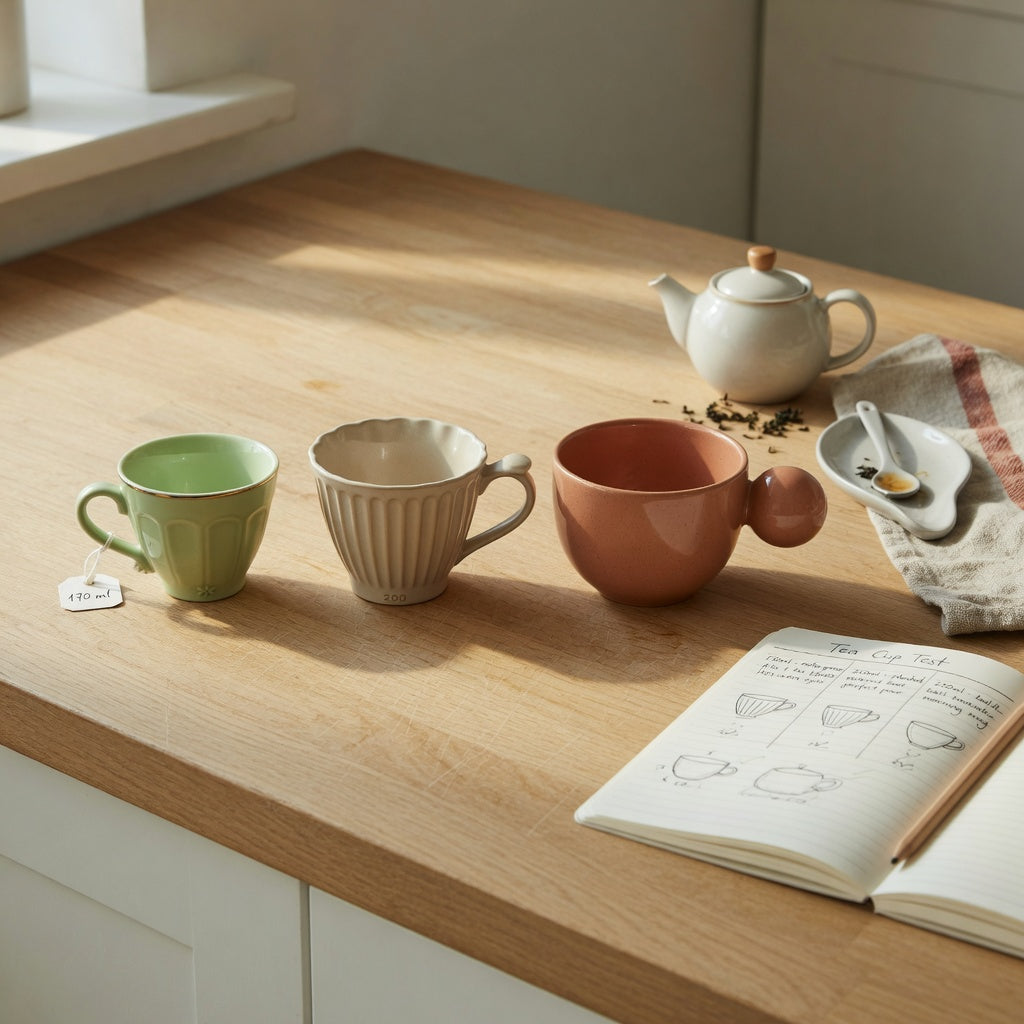
A practical pottery tea cups daily use guide for real routines: how 170 ml, 200 ml, and 250 ml ceramic cups behave at a desk, in a kitchen, and as a gift, plus the glaze, rim, and care questions to...
Read more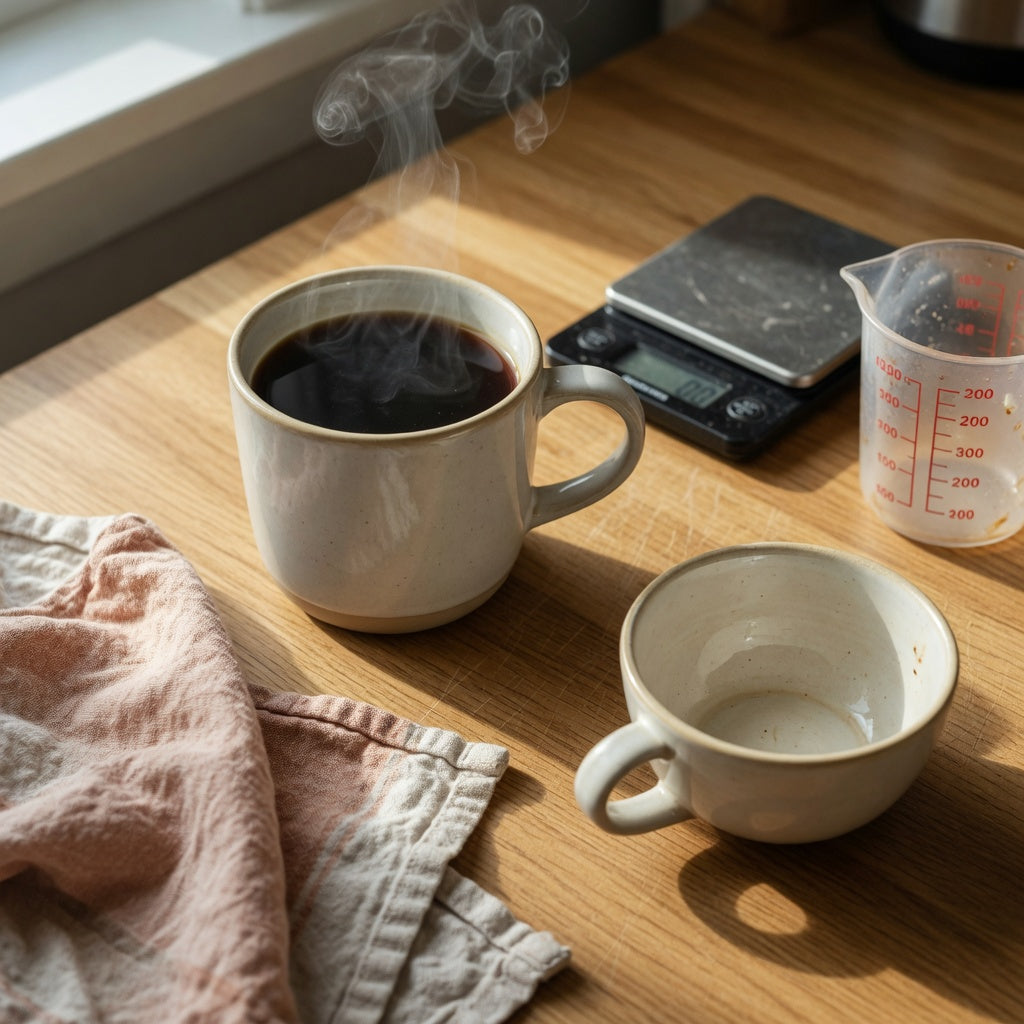
15 Oz Ceramic Coffee Mugs Daily Use Guide: What Actually Fits
A 15 oz mug never pours 15 oz of coffee once you leave headroom for cream or foam. This daily use guide covers real capacities, usable pour by drink, handle fit, full-mug weight, and the glaze chec...
Read more
Leave a comment
This site is protected by hCaptcha and the hCaptcha Privacy Policy and Terms of Service apply.