




How to Choose Ceramic Mug for Daily Coffee Routine: 5 Counter Checks
Reading time: about 12 minutes
Six weeks in, the rim chips. Or the handle joint loosens. Or the glaze goes cloudy and holds yesterday's coffee smell no matter how long you scrub it.
We sell ceramic mugs, and we handle the returns that come back through our store, so we see the failure pattern up close. Most daily mugs don't die because they were cheap. They die because they were picked for how they looked on a screen instead of how the buyer actually drinks — the size of the pour, which hand lifts the mug, and whether it goes straight into a dishwasher at 7 a.m. or gets rinsed by hand at the sink.
Here is the short version of how to choose ceramic mug for daily coffee routine: confirm the glaze statement, measure your real pour, then match the shape to your drinking speed. The rest of this piece is the long version — the failure points worth inspecting before you spend anything, plus the shapes we steer people toward in our own catalog.
What actually retires a daily mug first?
Know what you're shopping against. Four things end a mug's working life early, and every one of them is either visible in the listing photos or askable before you order:
- Rim chips. The rim is the thinnest, most exposed part of the wall, and it usually chips in the sink — against the faucet, against another mug — not while you're drinking. A slightly thicker, fully glazed rim survives clumsier handling.
- Crazing. That web of fine lines that spreads across the glaze after a few months. Thermal shock drives it: hot coffee in, cold water rinse. A crazed glaze isn't automatically unsafe, but the cracks trap coffee oils and take on stain.
- Handle joint failure. Where the handle meets the body is the weakest point on any mug, and a thin joint carrying a full, heavy vessel is the classic break. Look for a handle blended into the wall with a visible fillet of clay rather than a thin pressed seam.
- Staining and ghosting. Matte glazes and unglazed foot rings hold tannins. Drink dark roasts daily and want a mug that still looks clean at 11 a.m.? A glossier glaze is the lower-maintenance pick.
Run those four checks and you'll notice what we notice on our own shelves: the pieces that hold up for years share two traits — a fully glazed rim and a handle with real mass where it meets the body. The decoration is the last thing that matters, even though it's the first thing anyone clicks on. It's also why the unique coffee mugs collection we keep in stock skews toward servable shapes rather than shelf-only novelty.
Glaze safety: what should a lead-free ceramic coffee mug listing actually say?
Glaze is where a mug stops being a look and becomes a food-contact surface. Three things are worth confirming before you order:
- An explicit statement. Look for food-safe, lead-free, or cadmium-free language on the listing itself. "Premium ceramic" and "high-quality glaze" describe nothing about what sits under the surface. If a listing is silent on food contact, ask the seller before you buy — a store that can describe its glaze chemistry is a better bet than one that can't.
- Where the decoration sits. Underglaze decoration is sealed beneath a layer of clear glaze; decals and metallic luster sit on top. That top layer matters most with gold rims and metallic trim, which generally aren't microwave-safe because thin metal can arc.
- Whether variation is intentional. Reactive and speckled glazes break differently on every piece. Expect color shift and speckling between two mugs of the same model — glaze behavior, not a defect, but it does mean the mug you receive won't be a pixel-match to the product photo.
We keep capacity, material, and care details on each product page rather than restating them here, where they would quietly go stale. Treat the listing as the source of truth and this article as the list of questions to ask it. That habit is what separates a useful ceramic coffee mug buying guide from a page of pretty photographs.
Does a tall mug keep coffee hotter than a wide one?
Yes, at the same volume — and it's geometry, not marketing. Heat leaves through the exposed surface of the liquid, so a tall, narrow mug exposes less surface per ounce than a wide, shallow one. That's the core of heat retention in ceramic coffee mugs: the clay wall matters, but the opening matters more.
It cuts both ways. A wide mouth releases more aroma and brings the first sip down to a drinkable temperature sooner, which is why milk-drink drinkers tend to favor rounder cups and slow black-coffee drinkers tend to favor tall ones. Four shape details decide whether you'll still like the mug in month six:
- Rim thickness. A thin rim puts coffee against your lip sooner and reads as hotter; a thicker rim insulates and feels softer against the mouth, though it can make a small pour feel like less liquid.
- Handle opening. Measure it against your own hand. A handle that only fits two fingers forces a pinch grip, and a pinch grip on a full mug is why people quietly stop using a mug they liked in the store.
- Footprint and height. Tall mugs may not clear an upper cabinet shelf or fit under a low single-serve spout. Check both before you give up the counter space.
- Weight when full. Heavy stoneware plus 12 oz of coffee is a lot to hold one-handed for twenty minutes. If you drink standing up, lighter wins.
For the slow-sipper end of that range, the Landscape Tall Coffee & Tea Mug is the piece we point people toward first — the tall silhouette named on the listing is the shape match for a mug you nurse. We deliberately don't quote its capacity or care instructions in a blog post, because a stale number is worse than no number: confirm capacity, material, handle style, and dishwasher guidance on the current product page before you commit.
If the rounder café profile is what you actually reach for, the Round Coffee & Tea Mug covers the other side of the counter, and the same rule applies: read the listing for exact capacity and care. Shape tells you how a mug will feel in your hand. The listing tells you how it will behave in your dishwasher.
What ceramic mug size fits one cup?
Almost every mug is measured to the rim. What you can actually pour is less, because you need a finger's width of headspace to carry a full mug from the kitchen to the desk without incident. If your usual pour is 10 oz, a mug rated at 12 oz is right at the edge — and a 10 oz mug simply won't do it.
Measure once. Fill your current mug from a measuring cup, note where it lands, and shop against that number instead of guessing:
- 6–8 oz: cortado, cappuccino, espresso with milk, or a small drip. Also the range where a round cup looks and feels proportionate.
- 10–12 oz: the standard drip or pod-machine cup for most people, and the range most ceramic mugs are built around.
- 14–16 oz: a long black coffee, an office mug you don't want to refill before lunch, or iced coffee with room for ice. Ice displaces volume, so a 16 oz mug with ice holds noticeably less than 16 oz of liquid.
Match the drink, then the shape, then the details only the listing can answer:
| What you drink | Shape that behaves best | What to verify on the listing |
|---|---|---|
| Long black coffee nursed at a desk | Tall, narrower-mouthed cylinder | Capacity, overall height, and whether it clears your cabinet shelf |
| Latte, cappuccino, flat white | Round, wider-mouthed café cup | Capacity and an explicit food-safe or lead-free glaze statement |
| Iced coffee with ice | Wide, generous mug with headroom | Capacity with ice in mind, plus microwave and freezer guidance |
| All-day top-ups at an office desk | 14–16 oz with a secure handle | Weight when full and whether it's stated dishwasher-safe |
One trade-off that rarely gets mentioned: bigger mugs cool faster in the final third. A 16 oz mug nursed over forty minutes ends colder than an 8 oz mug finished in fifteen. If you're a slow drinker, a smaller mug plus one refill isn't a downgrade — it's warmer coffee.
Ceramic vs porcelain for coffee: does the material change the routine?
Less than the shape does, but not nothing. Porcelain is typically fired hotter and denser, so a porcelain cup of the same wall thickness tends to be lighter and rings a little brighter when you tap it. Stoneware is fired lower, stays thicker and heavier, and holds heat in its mass. Both are ceramic — porcelain is a subset of the family — so neither is automatically the safer or better choice.
What actually changes for your routine:
- Weight in the hand. Porcelain wins if you carry a mug around the house or drink standing at the counter.
- Heat held in the wall. Thicker stoneware warms up more slowly but gives some of that heat back as you drink. It also stays hot to the touch longer, which matters with a wide-rimmed cup.
- Chip risk. Thin porcelain rims chip more readily than thick stoneware rims when they meet a faucet. If your sink is a hard surface and your mugs get stacked, thicker wins.
There's no certification shortcut here either: "porcelain" on a listing describes body composition, not food safety. The glaze statement is still the line to read.
Size, glaze, and handle fit: how to choose ceramic mug for daily coffee routine
Now put it together. One honest limitation first: ceramic is the wrong material if you need a mug that seals and travels in a bag, or one that keeps coffee hot for four hours. A vacuum-sealed travel mug wins those jobs outright, and no glaze story changes that. Ceramic earns its place on the counter, in the hand, and in the daily ritual — which is why the five checks below are about the counter rather than the commute.
- Measure your real pour with water and a measuring cup, then add roughly an ounce of headspace to the number.
- Read the glaze statement on the listing — food-safe or lead-free language, plus where the decoration sits relative to the glaze layer.
- Test the handle against your own hand, not the product photo. Four fingers in, or a comfortable two-finger grip, with no pinch at the knuckle.
- Match the shape to your drinking speed: tall for a mug you nurse, wide and round for a drink you finish in ten minutes.
- Confirm the care instructions before checkout — dishwasher, microwave, and whether the foot ring is glazed or raw clay.
Where that leaves most shoppers:
- You drink one long black coffee over an hour at a desk. A tall silhouette earns its counter space. Start with our tall coffee and tea mug, then confirm the numbers on its listing.
- You make lattes or cappuccino and want a café-style cup. Go round — our round coffee and tea mug is the shape match, and the wider mouth drops the first sip to a drinkable temperature faster.
- You're buying for the look as much as the routine. Browse the collection with the five checks in hand and use them as a filter rather than a wishlist.
How do you clean a ceramic coffee mug without dulling the glaze?
Most mugs look fine after a year. The difference shows up in year three, and it comes down to three habits:
- Dishwasher chemistry. Modern dishwasher detergent is alkaline and abrasive over hundreds of cycles. If a listing says dishwasher-safe, that generally means the mug survives the cycle — not that the glaze will look new after three years of it. Hand-washing decorated pieces keeps the pattern crisp.
- Thermal shock. Avoid moving a mug from a cold cabinet into a boiling rinse, or from a hot wash onto a cold rack. Preheating with hot tap water first is gentler on the glaze and also keeps your coffee hotter longer.
- Microwave rules. Only microwave a mug if the listing says it's microwave-safe. Metallic luster and gold rims are the usual offenders, and freezing a ceramic mug to make iced coffee is a reliable way to crack it.
Two habits worth adopting that cost nothing: stack mugs with a cloth or paper towel between rims instead of rim-on-rim, and lift tannin stains from a matte glaze with a baking soda paste rather than an abrasive pad. Both add years.
If a mug only survives when you treat it like porcelain, it isn't a daily mug. It's a display piece — and it should be shelved like one.
Frequently asked questions
How do I choose ceramic mug for daily coffee routine if I only brew one cup a day?
Measure that one cup first, then buy a mug with roughly an ounce of headroom above it. A single-cup drinker is usually better served by a 10–12 oz mug than a 16 oz one, because the larger mug leaves the last third of the coffee cooling while you work. If your one cup really is a 16 oz pour, buy for the pour, not for the habit.
Is a lead-free glaze something I can verify on the product page?
Only if the listing says so explicitly for that specific product. Look for food-safe, lead-free, or cadmium-free language attached to the item itself, not a store-wide slogan on the homepage. If it isn't there, message the seller before ordering — a vague answer tells you as much as no answer.
Why does coffee go cold so fast in a wide mug?
A wide mouth exposes more liquid surface, and surface is where heat escapes. A round, shallow cup loses heat faster than a tall mug holding the same volume. Preheating with hot tap water for thirty seconds before you pour buys back a meaningful amount of that warmth.
Can I put a ceramic mug in the dishwasher?
Only if that product's listing says it's dishwasher-safe — don't assume it from the material alone. Even when it is, repeated hot cycles with alkaline detergent will dull a glaze and fade a printed pattern over several years. Hand-washing decorated mugs is the simplest way to keep them looking new.
How do I pick a comfortable ceramic mug handle without holding it first?
Compare the handle opening in the photos to a mug you already own and like, and check whether the handle is blended into the wall or pressed on as a thin seam. Feedback that mentions the handle is worth reading closely. If the listing shows no clear view of the handle joint, ask for one before you buy.
If you already know your pour and your drinking speed, skip the browsing and go straight to the unique coffee mugs collection — filter by shape first (tall for the desk, round for milk drinks), then open each listing and confirm capacity, glaze statement, and care instructions before checkout. Five checks, one mug, far fewer chipped rims in the sink.
More from our blog
Ready to pick your mug? Two ways to save on today's order:
Ordering 1–3 mugs? Get an extra 10% off your 1st order with code 10_OFF Apply 10% Off & Shop Wooden-Handle Mugs →
Gifting 4+ mugs? Buy 3, Get the 4th Free applies automatically at checkout (no code needed; offers do not stack) · Free standard shipping (Nov pre-Christmas delivery: 15–20 calendar days US) · Free replacement if chipped in transit.
Popular mug buying guides: Ceramic Tea Cups & Infuser Mugs · Ceramic Mugs with Lids Compared · Wooden-Handle Tea Infuser Mugs Compared · Christmas & Secret Santa Mugs 2026 · Espresso & Cortado Cups Guide · Cup & Saucer Gift Sets · All 25 Mugs Spec Table · Mug Size Guide · Shipping & Promo FAQ
FIRST ORDER 10% OFF (CODE: 10_OFF) · OR BUY 3, GET THE 4TH FREE


Read more
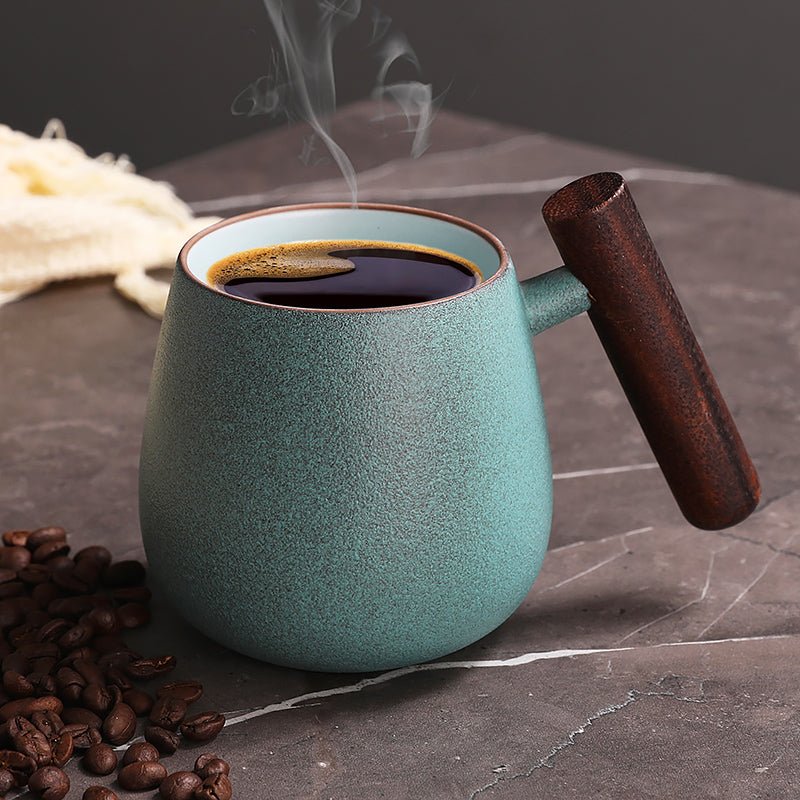
Reading Nook Ideas With Coffee Tray and Ceramic Mug: What to Compare
A tray-and-mug pairing is what turns a corner chair into a nook you actually use. Here are the measurements, handle-clearance checks and ceramic care details worth comparing before you buy.
Read more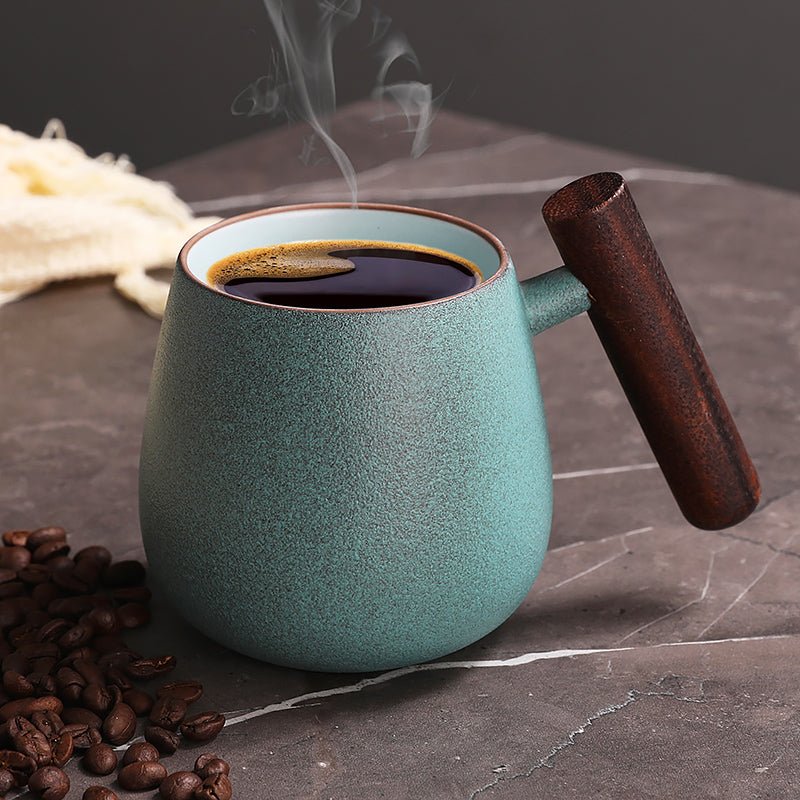
How to Choose Ceramic Mug for Home Reading Nook and Coffee: 5 Checks
Rim width, handle clearance, body weight, capacity and what an unglazed foot ring does to a wooden side table — the five physical checks that separate a nook mug from a kitchen mug, plus the four d...
Read more
Leave a comment
This site is protected by hCaptcha and the hCaptcha Privacy Policy and Terms of Service apply.