
Hot Toddy Mug Size Decision Guide: 400 ml or 480 ml?
Reading time: about 9 minutes
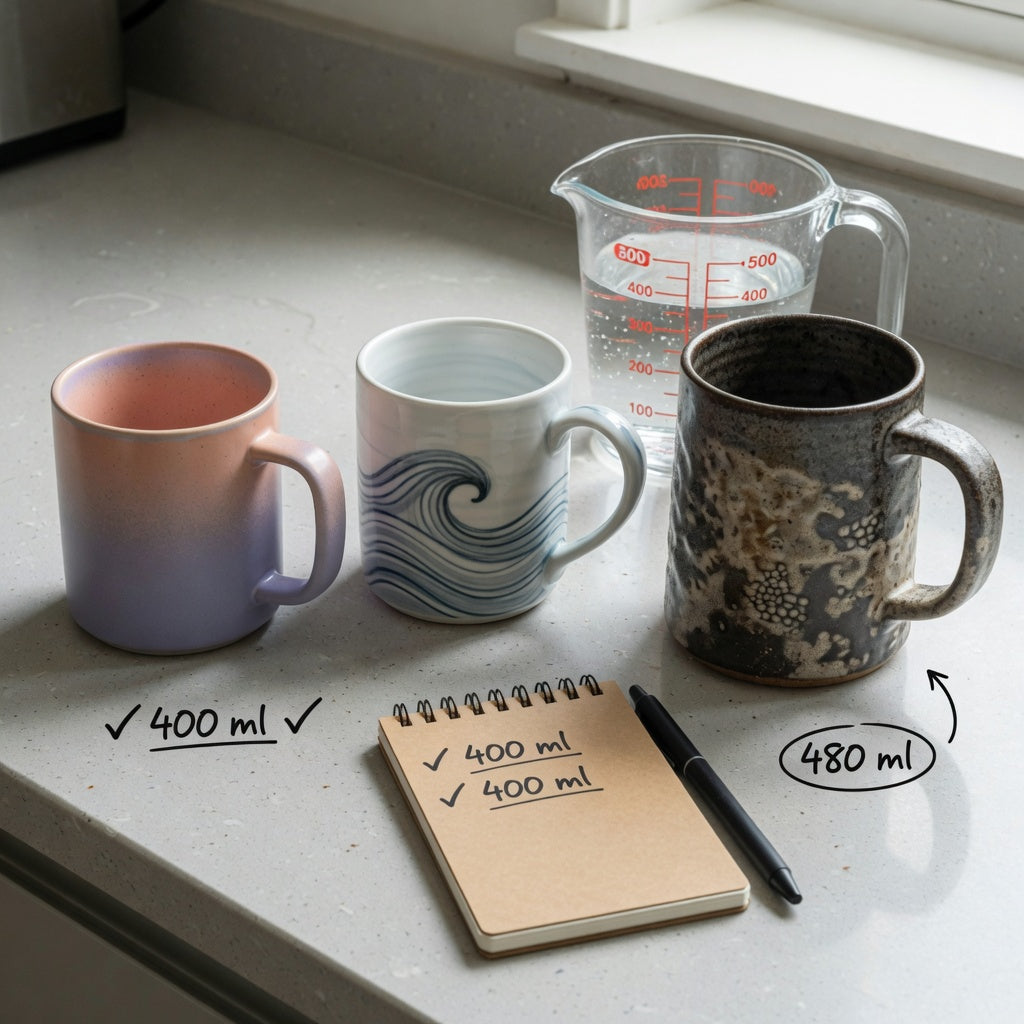
A 400 ml mug can look roomy while empty, then feel crowded once your usual finished drink is inside and you still need space to stir, lift, and walk it to the table. This hot toddy mug size decision guide compares the verified capacities in our current range: The Gradient at 400 ml, The Flow at 400 ml, and The Rock at 480 ml.
Because we sell and handle everyday ceramic drinkware, we treat listed capacity as a starting point rather than a target fill line. A comfortable mug needs some headspace below the rim, and the right amount depends on how you prepare and carry your drink. We do not assume a standard hot toddy recipe or serving size. The useful comparison is your measured pour, the handle grip you prefer, and the extra filled weight you are comfortable lifting.
| Current option | Listed capacity | Best starting point for | Main trade-off to check |
|---|---|---|---|
| The Gradient coffee and tea mug | 400 ml | A finished drink that fits with comfortable carrying room | Compare its handle and body profile with The Flow |
| The Flow coffee and tea mug | 400 ml | The same capacity range with a different visual and grip choice | Capacity alone does not distinguish it from The Gradient |
| The Rock coffee and tea mug | 480 ml | More drink volume or additional room below the rim | More liquid means more weight when filled |
Hot toddy mug size decision guide: is 400 ml enough?
The 400 ml options make sense when your complete drink fits without bringing the liquid uncomfortably close to the rim. Complete means everything you normally put in the mug, not just the first pour. If you stir in additional components afterward, account for that volume before deciding.
Choose a 400 ml option if these situations sound familiar:
- Your usual finished drink already fits comfortably in a similar-capacity mug.
- You value a lighter filled mug for repeated lifting at a desk, bedside table, or reading chair.
- You use the same ceramic mug for moderate portions of coffee or tea throughout the week.
- You would rather refill occasionally than hold the extra liquid weight of a 480 ml mug.
The Gradient and The Flow have the same listed capacity, so there is no size advantage between them. A shopper deciding between those two should inspect the product photos for handle opening, body profile, and overall style. In our experience, that comparison is more useful than trying to create a capacity difference where none exists.
Do not assume that 400 ml means you should pour exactly 400 ml. Filling any open ceramic mug to the rim leaves little room for stirring or movement. If your measured drink nearly reaches the listed capacity, the 480 ml option is the more practical place to start.
When does The Rock earn its extra 80 ml?
The Rock holds 480 ml, which is 80 ml more than either current 400 ml option. That difference is useful when a 400 ml mug leaves inadequate headspace or sends you back for a refill sooner than you prefer. It does not establish an extra serving size, a drink standard, or better temperature performance.
The larger option fits a shopper who prepares a higher-volume drink, adds components after the initial pour, or specifically wants more clearance below the rim. It can also make sense as a gift for someone who has directly asked for a larger mug. In each case, the reason to choose The Rock 480 ml mug is usable capacity, not an assumption that larger is automatically better.
The trade-off appears as soon as the mug is full. An additional 80 ml of liquid adds weight, and that matters for smaller hands, reduced grip strength, or frequent lifting. Capacity also does not reveal exact exterior height, width, or dishwasher-rack fit, so check the current product details rather than estimating external dimensions from volume alone.
The Rock is not the strongest choice for someone who makes modest pours and dislikes a partly empty-looking mug. It is also unnecessary if a 400 ml mug already provides the headspace you need.
How should handle shape change the capacity choice?
Capacity tells you how much the mug can contain. Handle shape affects how manageable that amount feels. Two mugs with the same volume can feel different because finger clearance, knuckle position, handle thickness, and the distance between your hand and the ceramic body all influence the grip.
Use these checks while comparing the product photos or a similar mug you already own:
- Notice how many fingers you naturally place through the handle. Do not force a multi-finger grip if you normally hold a mug with one or two fingers.
- Check whether your knuckles press against the mug body. Contact can become uncomfortable once the ceramic and drink are hot.
- Fill a comparable mug with cool water to your normal level and lift it several times. This gives you a safer preview of filled weight and wrist leverage.
- Pay attention to how you steady the mug. Some people support the base with the other hand, while others rely entirely on the handle.
This is particularly relevant for The Gradient and The Flow because their verified capacities are identical. Your decision between them should come from the handle and body profile you prefer. For The Rock, repeat the grip check with the extra liquid weight in mind. A handle that looks substantial in a photo still needs to suit your hand.
Which capacity works at a desk, in a kitchen, or as a gift?
At an office desk, a 400 ml mug is a sensible fit for someone who makes moderate drinks and wants less weight near a keyboard or paperwork. A 480 ml mug can still be the better desk choice if the kitchen is far away and the user values fewer refills, but it needs a stable, uncluttered place to sit. Capacity alone does not tell you the mug's footprint, so confirm the current dimensions if desk space is tight.
In a kitchen, consider what else the mug will hold. The Gradient or Flow can be the more versatile choice for someone who also uses the same piece for everyday coffee or tea. The Rock is better matched to a household that regularly wants more volume or more room for stirring. None of these ceramic options should be selected as a substitute for a sealed travel mug or an impact-resistant outdoor cup.
For gifts, avoid treating the largest capacity as the most generous choice. A recipient who prefers lighter mugs or smaller drinks may use a 400 ml piece more often. Someone who has complained about refilling or crowding the rim has given you a concrete reason to choose 480 ml. If style is more important than a specific capacity, the unique coffee mugs collection is the practical next place to compare current designs.
How does ceramic care affect the size you buy?
Everyday ceramic drinkware is breakable, regardless of capacity. Before first use, inspect the rim, handle joins, and ceramic body for a chip or hairline crack that may have occurred in transit. A damaged mug should not be used for a hot drink.
Care instructions can vary by product, so do not assume microwave or dishwasher compatibility from the word ceramic alone. Follow the current directions on the product page or packaging. If dishwasher use is permitted, position the mug so its rim and handle cannot knock against plates or neighboring mugs during the cycle. Those exposed areas are common contact points for chips.
Avoid abrupt temperature changes unless the product's care directions specifically allow them. Moving cold ceramic directly to a very hot fill can subject it to thermal shock. After a sticky drink, rinsing the mug before residue dries also makes the handle area and inner surface easier to clean without aggressive scrubbing.
Size enters the care decision through handling. If a full 480 ml mug is difficult to control, the extra capacity is not helping. The easier-to-handle 400 ml option may reduce knocks against the sink, counter edge, or dishwasher rack during daily use.
A two-minute capacity check before you order
You do not need a standard recipe or a professional test. A measuring jug and your current mug provide enough information for a grounded decision.
- Fill your current mug with cool water to the level you normally use for a completed drink.
- Pour that water into a measuring jug and record the volume in milliliters.
- Decide how much additional room you want for stirring and carrying. Do not plan to use every milliliter printed in the listing.
- If the measured amount fits within 400 ml with comfortable headspace, compare The Gradient and The Flow by handle and style.
- If the amount crowds 400 ml or you deliberately want more room, compare your grip comfort against The Rock's 480 ml capacity.
- Confirm the current care information and any listed exterior dimensions before ordering.
The point of this hot toddy mug size decision guide is to match the mug to a repeatable habit. Measure what you actually pour, account for headspace, and consider the weight at that fill level. That gives you a more dependable answer than judging an empty mug in a product image.
Frequently asked questions
How do I use this hot toddy mug size decision guide without knowing my drink volume?
Fill your current mug with cool water to your usual finished-drink line, then transfer it to a measuring jug. If that amount leaves comfortable room within 400 ml, start with The Gradient or The Flow. If it approaches 400 ml before allowing for stirring and carrying space, The Rock's 480 ml capacity is the more practical option.
Is a 400 ml mug too small for a hot toddy?
Not necessarily. There is no drink standard being assumed here, and a 400 ml mug is sufficient when your own finished pour fits with the headspace you prefer. Measure your usual amount instead of choosing from the capacity number alone.
Is the 80 ml difference between 400 ml and 480 ml noticeable?
It is noticeable if your drink crowds a 400 ml mug or if you regularly want more room below the rim. The additional liquid also increases filled weight. It should not be interpreted as proof of better heat retention or as a defined extra serving.
Should I choose The Gradient or The Flow if both hold 400 ml?
Compare their handle and body profiles because capacity will not separate them. Look at finger clearance, your preferred grip, and which design suits the other drinks you use the mug for. Neither has a verified volume advantage over the other.
Is The Rock better for someone who wants a large everyday mug?
The Rock is the direct current option for a shopper who wants 480 ml rather than 400 ml. It makes sense when the recipient values more volume and is comfortable with the additional filled weight. For a lighter grip, modest drinks, or limited surface space, one of the 400 ml options may be more useful.
Before buying, check five things: measured pour, desired headspace, comfortable filled weight, preferred handle grip, and current care directions. Then compare The Gradient, The Flow, The Rock, and the wider collection based on the mug you will use at your actual desk or kitchen counter, not the one that merely looks largest while empty.
More from our blog
Read more
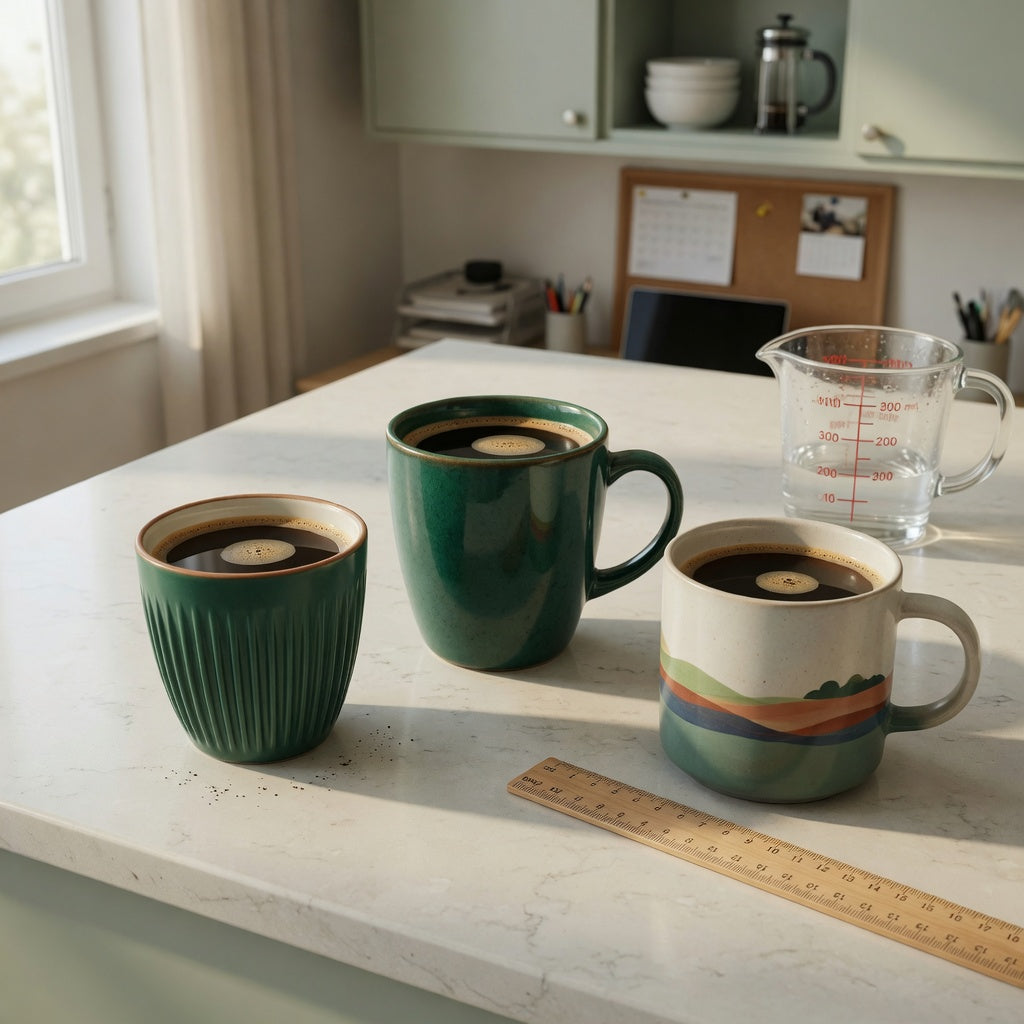
Americano Coffee Cup Buying Priorities: Capacity, Shape, Space
Measure the drink you actually pour, decide how much headroom you need, and check the cup's exterior against your desk or cabinet. We map CoffeifyMug's 200 ml, 270 ml, and 350 ml listings to those ...
Read more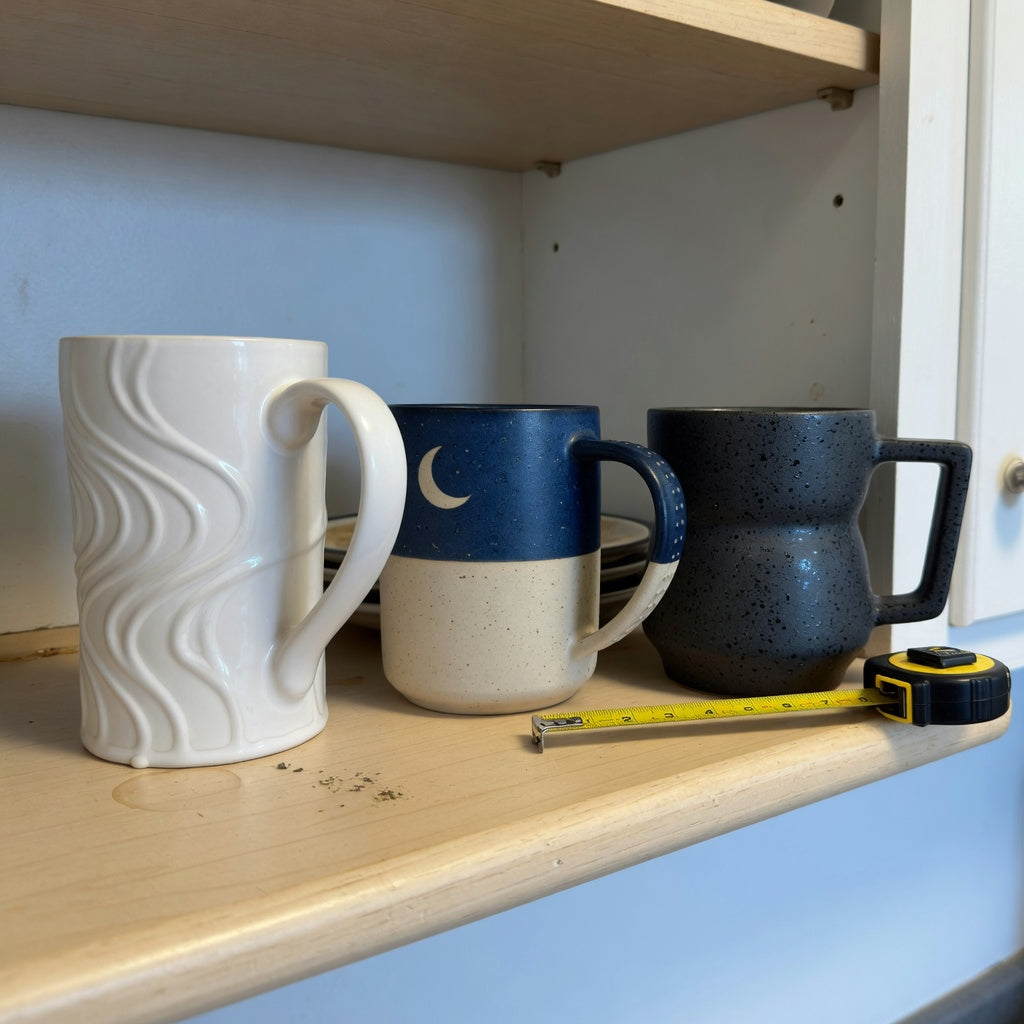
Mocha Mug Storage Fit Guide: 400-480 ml Shapes and Shelf Fit
Compare The Flow 400 ml, Morning and Night 440 ml, and The Rock 480 ml without guessing at unlisted dimensions. Learn how to check shelf depth, door clearance, handle projection, stacking, and dish...
Read more
Leave a comment
This site is protected by hCaptcha and the hCaptcha Privacy Policy and Terms of Service apply.