

Guest Tray Ceramic Cup: What to Compare Before You Buy
Reading time: about 11 minutes
An overnight guest tray fails in one specific way. The kettle fits, the napkins look right, and then the cup is too wide for the board, too shallow for a real coffee pour, or it lifts off the wood the next morning and leaves a damp ring underneath. That ring is the complaint we hear most often in CoffeifyMug store messages, and it is almost never about color or style. It is about fit, glaze, and the underside of the cup — details most listings never show.
A guest tray ceramic cup is really three purchases stacked into one: a food-contact vessel, a piece that has to sit level on a tray beside a hot kettle, and a wash-up decision your morning self inherits. When a new cup arrives here, we set it on a standard serving board next to a kettle, fill it, carry the tray across the room, and see what shifts. That five-minute test has retired more pretty cups than any spec sheet. The checks below are the same ones, written out so you can run them on any listing before you buy.
What a guest tray ceramic cup has to survive overnight
A welcome tray is a small stage with a short performance window. Guests arrive tired, pour, sit down, sleep. The cup has to handle four jobs in that window, and the jobs fight each other:
- A pour worth finishing. An espresso thimble disappoints a coffee drinker; a 20-ounce desk mug crowds everything else off the board.
- Stability in a moving tray. Kettle, spoons, sugar, maybe a snack plate — and the tray still gets carried into the room.
- A look that belongs. A leftover office mug reads as an afterthought even when it drinks fine.
- Fast cleanup. No stained glaze, no dulled rim, no mark left on the tray by morning.
Those jobs conflict by design. Bigger cups steal tray space. Smaller cups look elegant next to a teapot and then send someone hunting for a second pour. The silhouettes that photograph best usually carry the most surface detail, which is exactly where washing slows down. Pick your trade-off first; the shape follows from it.
If the tray itself is the styling statement — texture, shadow, a cup that reads as hosted from across the room — that is the case for our pleated coffee tea cup. Pleats are the point, and pleats are also what to scrutinize, because folds can trap residue. Open the current listing and confirm capacity, care icons, and food-contact wording there instead of assuming them from a photo.
If the tray is already loaded with a kettle and snacks, a simpler profile is easier to place, carry, and rinse. That is when we steer people toward the round coffee tea mug. Same rule: verify size, microwave, and dishwasher details on that listing itself. We do not carry specs across from one product to another, and neither should you.
Buying as a gift? Learn the recipient's tray size and cleaning habits first, then browse our coffee mugs for gifts collection. Gift shoppers optimize for pretty. Recipients notice whether the cup fits the tray they already own.
Ceramic or porcelain: which body belongs on a guest tray?
Buyers say ceramic and mean several different bodies. For tray service, two matter: thicker stoneware-style ceramic and thinner porcelain. Neither wins on its own. They fail differently, and the failure shows up on the tray, not in the cupboard.
| Body | What guests notice | Tray trade-off | Typical weak point |
|---|---|---|---|
| Thicker ceramic / stoneware | Warm weight in the hand, casual feel | Eats tray space; can look bulky beside a slim kettle | A foot ring that dries slowly and marks unfinished wood |
| Porcelain | Thin rim, lighter lift, classic tea-service look | Easier to arrange with a teapot and snack plates | Rims chip when cups knock together on a crowded board |
Morning-coffee hosts in our store tend to pick the heavier body, because a thick-walled cup holds heat longer on an open tray with no warmer plate underneath. Formal tea hosts lean porcelain, which looks lighter next to a teapot and saucer. Hotel buyers ask a harder question: what does this cup look like after hundreds of room resets? Thin rims chip when cups stack or knock a metal kettle, and a chipped rim photographs worse than a plain cup ever could.
Be honest about where a guest tray ceramic cup is the wrong tool. Unbreakable service for kids' sleepovers, a covered patio, or a high-turnover rental floor calls for hospitality-grade tumblers or specified hotel porcelain with replacement stock — not a decorative home set. A ceramic cup on a wood tray is built for presentation and measured use. It is not armor.
Is the glaze food-safe? Reading lead, cadmium, and décor labels
Anything that holds coffee for a guest is foodware first and décor second. The FDA monitors glazed ceramicware, including cups and mugs intended for food use, for leaching of toxic elements such as lead and cadmium. For cups and mugs specifically, the agency's compliance guide CPG 545.450 sets an action level of 0.5 µg/ml of leaching solution for lead. That is a regulatory line, not a marketing badge a listing can print at will.
Decorative pieces create the second trap. Under 21 CFR 109.16, ornamental ceramicware that looks suitable for food must carry specific labeling if it is not intended for food contact. A gold-rim cup sold as a display object is not the same product as a mug meant to be filled, no matter how alike they look on a shelf.
Confirm four things on the current product page, not from lifestyle photos:
- Is the piece described for food use, or only as décor?
- Does the seller state food-contact status clearly, and for which market?
- Is there metallic decoration on the rim, handle, or interior?
- Are there real care icons for microwave and dishwasher, or just a styled shot?
Imported ceramics sometimes carry lead-free language with no testing detail behind it. We do not treat a phrase on a marketplace card as proof. If the cup will serve pregnant guests, children, or daily hotel traffic, ask for a written food-contact statement. If the listing will not say it, do not guess.
Microwave and dishwasher limits: gold rims, luster glazes, textured walls
Guest trays get used, then cleaned in a hurry, and that is where decorative finishes meet their limits. Metallic trim is the classic conflict: it reads as hotel elegance in photos, it has no business in a microwave, and repeated dishwasher cycles can dull or lift the finish. Hand-washing solves it — if the household will actually hand-wash.
Glaze texture matters even without gold. A glossy interior rinses clean of tea tannins and coffee oils; matte or micro-pitted glaze holds them, and tannin rings set fast. A pleated or folded exterior can trap residue in the creases. None of this disqualifies a textured cup. It just means the buyer should know an extra thirty seconds exists before the piece enters daily rotation.
- Rinse soon after tea or coffee — films set hardest in matte glaze.
- Keep citrus cleaners and abrasive powders away from metallic rims and luster finishes.
- Never microwave a cup with metallic decoration, even if the body is ceramic.
- Dry the foot ring fully before the cup returns to wood, lacquer, or paint.
- If the listing allows the dishwasher, space pieces so rims cannot knock in a crowded rack.
A guest tray ceramic cup that needs hand-washing is still a good purchase — for a different buyer. Households that run the dishwasher after every guest should prioritize fully glazed, dishwasher-safe pieces with no metal trim. Buyers who want gift-counter presentation can accept hand-wash care, as long as they learn that before the first overnight stay, not after.
Tray fit, cup capacity, and the wet ring under the foot
Fit is the comparison most listings skip, so run it at home. Measure the tray you already own, then divide it into zones: kettle or carafe, two cups, spoons and sugar, maybe a small plate. A wide-bellied mug that drinks beautifully at the table can push the kettle half off a compact welcome tray. A dainty cup that looks proportional in a photo can leave your coffee-drinking guest holding it in both hands, hoping for more.
The wet ring is the other quiet failure. A ceramic cup marks wood or laminate when the foot is unglazed, only partly vitrified, or still damp from washing. Water soaks into that porous clay ring, then bleeds out onto the surface underneath. A dense, fully glazed foot dries faster and marks less. This is not a glaze defect — it is a design choice, visible the first minute you flip the cup over.
So look at the underside photo, or ask. An unglazed foot is normal on handmade work and perfectly fine on a saucer. It is a poor match for a finished tray you do not want stained. A linen napkin or small coaster under the cup protects the tray either way and costs nothing.
We cover room-specific setups in three companion guides: a walkthrough of a ceramic cup coffee tray guest room, a size-and-care comparison for a pleated ceramic cup coffee tray, and fit notes for a fixed guest shelf coffee tea cup nook, which behaves differently from anything you carry by hand.
Home entertaining, hotel turnover, and gifting are three different purchases
Home hosts and hotel buyers type the same search and need different products. At home, this category is presentation for a handful of people: weekend visitors, holiday tea, a housewarming gift that gets used instead of stored. You can accept a delicate rim, a decorative glaze, even hand-washing. You cannot accept a cup that stains the tray on night one.
Hotel and short-stay rooms add turnover: daily resets, stacking, kettles, housekeeping carts. Hospitality porcelain is specified and stocked for that grind. A home entertaining set is not automatically hotel inventory, so property buyers should ask about stacking height, chip resistance, and replacement availability before ordering anything gift-styled.
Bathroom amenity trays and guest napkin trays sit in the same search results but belong to a different category — folded linens, soaps, visual order. Unless a listing states food-contact status, treat those surfaces as décor, not as somewhere to pour. Coffee belongs on the refreshment tray.
Gifting lives in the middle. A coordinated cup and tray reads as thoughtful until the recipient owns a tiny tray, a dishwasher-only kitchen, or a firm policy against hand-washing gold rims. Match the gift to how they host, not to how it photographs.
Frequently asked questions
Is a guest tray ceramic cup good for serving tea and coffee to overnight guests?
Yes, if it holds a pour your guest will actually finish and still leaves tray room for a kettle, spoons, and a small snack. The style exists for presentation plus drinking, not as a 20-ounce desk mug. Confirm capacity and footprint on the current listing, then rehearse the tray at home before you commit to a matching pair.
Are ceramic guest cups microwave safe and dishwasher safe?
Only when the listing says so for that exact piece. Metallic rims and luster glazes are commonly not microwave friendly and can dull in the dishwasher. Plain, fully glazed interiors rinse clean fastest after tea and coffee. Missing care icons mean unknown — treat them as no until the seller confirms.
Why does my ceramic cup leave a wet ring underneath on the tray?
Usually an unglazed or still-damp foot ring. Water soaks into that porous clay ring and bleeds onto wood, laminate, or painted surfaces. Dry the foot completely, set the cup on a napkin or coaster, or choose a cup with a dense, fully glazed foot if the tray finish matters to you.
Is porcelain or ceramic better for a hotel-style guest room tray?
Porcelain reads closer to classic hotel tea service and weighs less on a crowded tray; heavier ceramic suits morning coffee because thick walls hold heat longer. Daily hotel use also demands chip resistance and easy replacements, which a decorative home set does not promise. Buy for turnover if turnover is the job.
Does a ceramic cup and tray set work as a housewarming gift?
It does when you know the recipient's tray size and cleaning habits. Skip metallic rims for dishwasher-only kitchens, and check food-contact wording on each listing rather than assuming a set is ready to pour. For a shortlist, start in our gift mugs collection and pair the cup to a tray they already own.
Check these points before a guest tray ceramic cup goes in your cart
- Measure tray zones for kettle, two cups, and extras. Wide mugs lose this fight.
- Confirm food-contact language. Décor that looks like a cup is not drinkware.
- Flip the cup over. Unglazed feet mark finished wood after rinsing.
- Read microwave and dishwasher notes, especially around gold or metallic rims.
- Match body to job: thicker ceramic for morning-coffee heat, porcelain for lighter tea service.
- Decide the real use — home entertaining, a gift, or hotel turnover. Three different products.
- Open the current listing for the exact cup and verify specs there. Never borrow them from a similar photo.
If texture is the point, open the pleated coffee tea cup listing and run these checks on it. If the tray is already busy, do the same with the round coffee tea mug. And if this is a gift for someone who hosts, the coffee mugs for gifts collection is your faster starting line. Run the tray test before the guest arrives — the cup that survives it is the right cup.
Read more
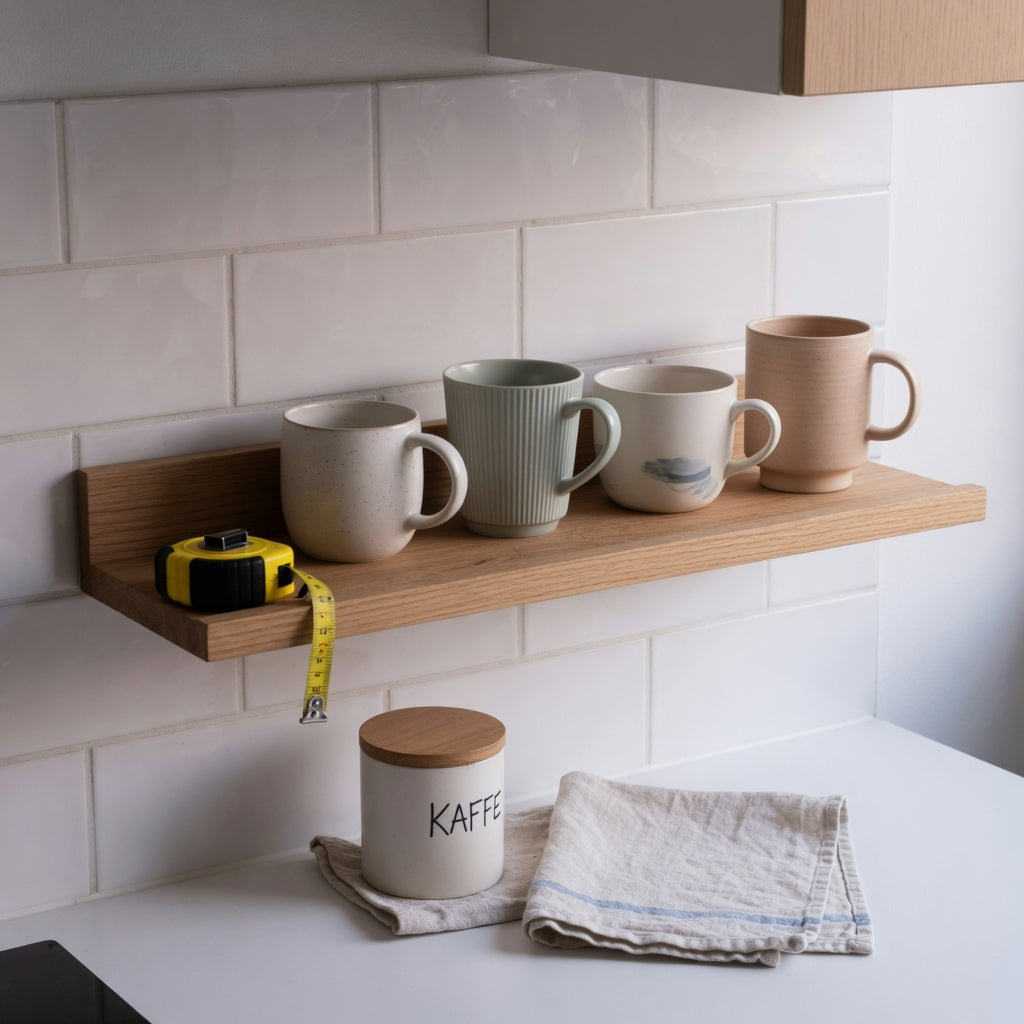
Minimal Coffee Shelf Mugs: Depth, Spacing, and Load Compared
Cabinet stacks bury the mugs you actually drink from. We compare shelf formats, usable depth, hook spacing, and load limits for minimal coffee shelf mugs, and flag which silhouettes belong on a led...
Read more
First Apartment Coffee Mug Gift: 7 Things Buyers Should Compare
A first apartment coffee mug gift works when it survives daily use: the right capacity, a handle that grips wet hands, decoration that outlasts the dishwasher, and packaging that ships well. Here's...
Read more
Leave a comment
This site is protected by hCaptcha and the hCaptcha Privacy Policy and Terms of Service apply.