
Green Tea Mug Size Decision Guide: 170, 200, or 270 ml
Reading time: about 9 minutes
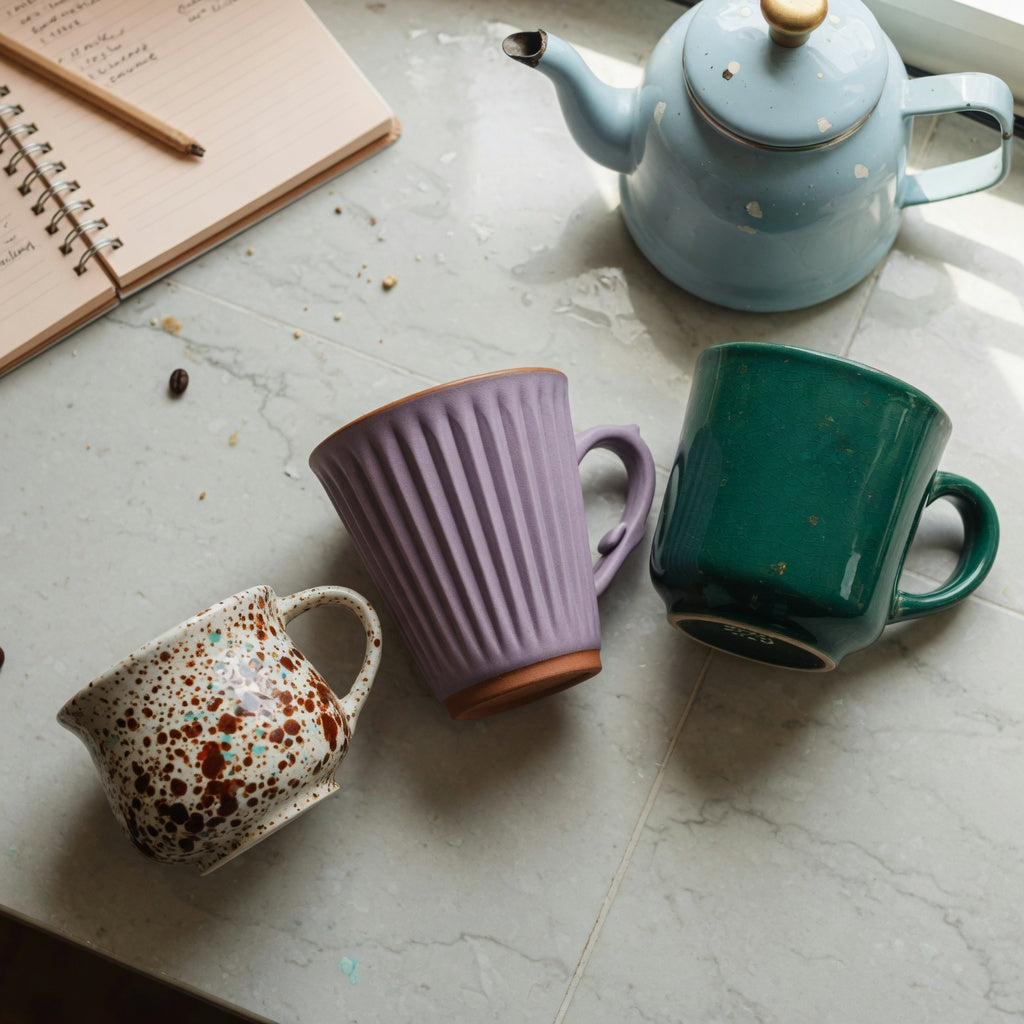
A mug can look like the right size in a product photo and still interrupt the routine it was meant to support. At an office desk, the mismatch can mean another walk to the kettle sooner than expected. On a kitchen counter, it can mean pouring more green tea than you planned before moving to the next task. This green tea mug size decision guide compares the three current CoffeifyMug capacities we can verify: Retro at 170 ml, Pleated at 200 ml, and Emerald at 270 ml.
We sell and handle this category, and the most useful size conversations in our store start with refill preference rather than an assumed serving standard. There is no universally correct green tea mug capacity. We also do not use mug size to imply brewing performance, heat retention, origin, authenticity, material, or care compatibility. The decision here rests on listed capacity, visible shape, and how often you are comfortable refilling.
Your green tea mug size decision guide by refill pattern
Start with the amount you willingly pour at one time. Then consider how disruptive another refill feels. A person who enjoys several smaller pours has a different requirement from someone who wants to sit through a reading session or work block without returning to the kitchen.
The gaps between these mugs are specific. The Pleated holds 30 ml more than the Retro. The Emerald holds 70 ml more than the Pleated and 100 ml more than the Retro. Those differences do not establish a standard serving size, but they make the trade-offs easier to see.
| Current option | Listed capacity | Capacity difference | Practical refill fit | Main limitation |
|---|---|---|---|---|
| Retro | 170 ml | Smallest current option | Smaller pours with more willingness to refill | Requires the most refilling of the three for the same total amount |
| Pleated | 200 ml | 30 ml above Retro | A modest step up without choosing the largest option | Only a small capacity increase over Retro |
| Emerald | 270 ml | 70 ml above Pleated; 100 ml above Retro | Larger pours with the potential for fewer refills | May hold more than a small-pour drinker wants at once |
For the same total amount of tea, a larger mug can reduce the number of fills. The exact number still depends on how much you pour each time. Capacity gives you room; it does not require you to use every milliliter.
When does the 170 ml Retro make practical sense?
The Retro 170 ml coffee and tea cup is the smallest of these three current options. It fits a shopper who deliberately prefers a smaller pour and does not view returning to the kettle as an inconvenience. That can make sense during a short morning pause, between tasks in a home office, or whenever you prefer to finish one amount before deciding if you want another.
The size difference is meaningful without being complicated: Retro holds 30 ml less than Pleated and 100 ml less than Emerald. If your current mug regularly encourages you to pour more than you intend to drink, 170 ml is the clearest move toward a smaller listed capacity.
Retro is not the practical choice for someone whose main goal is minimizing refill trips. It is also risky to assume that the smallest capacity automatically has the smallest width, shortest height, or least handle clearance. Capacity and exterior dimensions are separate specifications. Use the product images to assess its visible shape, and choose it because the 170 ml volume matches your routine rather than because of an unverified footprint assumption.
Is the 200 ml Pleated a true middle option?
The Pleated 200 ml coffee and tea cup is the middle listed capacity in this three-product comparison, but it is not the mathematical midpoint between 170 ml and 270 ml. That midpoint would be 220 ml. Pleated sits much closer to Retro, adding 30 ml while remaining 70 ml below Emerald.
That makes Pleated useful for a specific buyer: someone who finds 170 ml slightly restrictive but does not want the full 100 ml jump from Retro to Emerald. It can suit a desk routine with a moderate pour, a kitchen break that sometimes runs longer than planned, or a shopper who likes the visibly pleated form and also wants more capacity than the smallest cup.
The limitation is equally specific. Moving from 170 ml to 200 ml is a relatively modest change. If repeated kettle trips are already the main frustration, an additional 30 ml may not resolve it. In that situation, compare the 270 ml option before choosing Pleated merely because it occupies the middle position in the range.
When is the 270 ml Emerald worth the larger capacity?
The Emerald 270 ml coffee and tea mug is the largest current option in this comparison. It suits the shopper who wants room for a larger pour and places a higher value on reducing interruptions. For the same total amount consumed, that extra capacity can mean fewer fills than the 170 ml or 200 ml choices.
The 100 ml difference between Emerald and Retro is the largest step available here. It can be practical during a longer desk session, while reading away from the kitchen, or in a shared office where access to the kettle is less convenient. The recommendation is based on volume and refill preference only. We do not claim that 270 ml brews green tea differently or keeps it hot longer.
Emerald is not a strong fit for someone who consistently prefers small, measured pours or likes to change drinks between refills. A larger listed capacity can remain partly unused, and choosing it solely because it is the biggest option misses the point. Select Emerald when you expect to use the extra room, not as an automatic upgrade.
How should visible shape affect a desk or kitchen choice?
Capacity tells you how much a mug is listed to hold. It does not, by itself, tell you the exterior width, overall height, base diameter, handle clearance, or storage fit. Those distinctions matter on a crowded desk, beside a keyboard, under a cabinet, or on a shelf shared with other cups.
We advise shoppers to review visible shape separately from volume. The Pleated has an immediately recognizable pleated exterior, while Retro and Emerald present their own visible silhouettes in the product photography. Shape can help you judge which design belongs in your kitchen or gift selection, but an image without a reliable scale should not be treated as an exact dimension.
Open the current unique coffee mugs collection and compare the product images on the same screen. Look at the outline, handle relationship, and overall proportions. Then return to capacity. A mug that visually suits a desk still needs to match the owner's refill habits.
Material and care are separate checks as well. This size comparison does not assign a material or promise dishwasher, microwave, stain, or scratch performance. Verify any care requirement on the current product listing before relying on a particular cleaning routine.
How can you test 170, 200, and 270 ml before ordering?
A marked measuring jug provides a more useful test than guessing from a product photo. We use this exercise to separate volume preference from design preference:
- Measure 170 ml of water and pour it into the mug you currently use. If that mug cannot hold the amount safely, keep the water in the marked vessel and judge the quantity there.
- Repeat with 200 ml. Pay attention to the additional 30 ml rather than assuming the middle option will feel substantially larger.
- Repeat with 270 ml. Compare the 70 ml increase from Pleated and the full 100 ml increase from Retro.
- During a normal tea break, note whether you would willingly refill the smaller amount or would rather begin with the larger one.
- Once the capacity preference is clear, compare the visible shapes on the individual product pages and in the collection.
This test does not recreate the target mug's exterior dimensions or handling. It answers one narrower question well: how much liquid you prefer to pour at one time. That is the most defensible starting point for a size decision.
Which size is easier to choose as a gift?
Gift buyers often know the recipient's routine better than their preferred milliliters. Use those observations rather than treating one capacity as a universal gift size.
- If the recipient makes repeated smaller pours and enjoys returning to the kitchen, the 170 ml Retro follows that behavior.
- If the recipient wants a modest amount more than a small cup but does not favor the largest option, the 200 ml Pleated is the relevant comparison.
- If the recipient dislikes interrupting work or reading to refill, the 270 ml Emerald offers the most capacity of the three.
- If you have no evidence about refill preference, compare the visible shapes in the mug collection and avoid presenting any size as an authentic or traditional green tea standard.
For gift unboxings, shape makes the first visual impression, but capacity determines the repeated daily experience. The better gift is the one whose volume reflects how the recipient already drinks, even if that means choosing the smallest current option.
Frequently asked questions
How do I use the green tea mug size decision guide if I refill often?
Decide whether frequent refilling is an enjoyable part of your routine or an interruption. Choose Retro 170 ml for deliberately smaller, repeated pours, Pleated 200 ml for a modest increase, or Emerald 270 ml when you want the most room between potential refills.
Is 200 ml halfway between 170 ml and 270 ml?
No. The mathematical midpoint is 220 ml. Pleated at 200 ml is the middle current option, but it is only 30 ml above Retro and remains 70 ml below Emerald.
Does the 270 ml Emerald keep green tea hot longer?
We do not make that claim. Listed capacity alone does not establish heat retention or brewing performance, so choose Emerald for its larger volume and refill fit rather than an assumed temperature benefit.
Does mug size tell me whether a cup is dishwasher safe?
No. Capacity does not establish material or care compatibility, and this guide does not provide an unlisted dishwasher or microwave guarantee. Check the current product page for any care information available before purchase.
Where can I compare all three current green tea mug sizes?
Start with our unique coffee mugs collection, then open the Retro, Pleated, and Emerald listings for a closer look at each visible shape. Choose your refill pattern first, compare shape second, and verify any non-size requirement on the current product page before checkout.
More from our blog
Read more
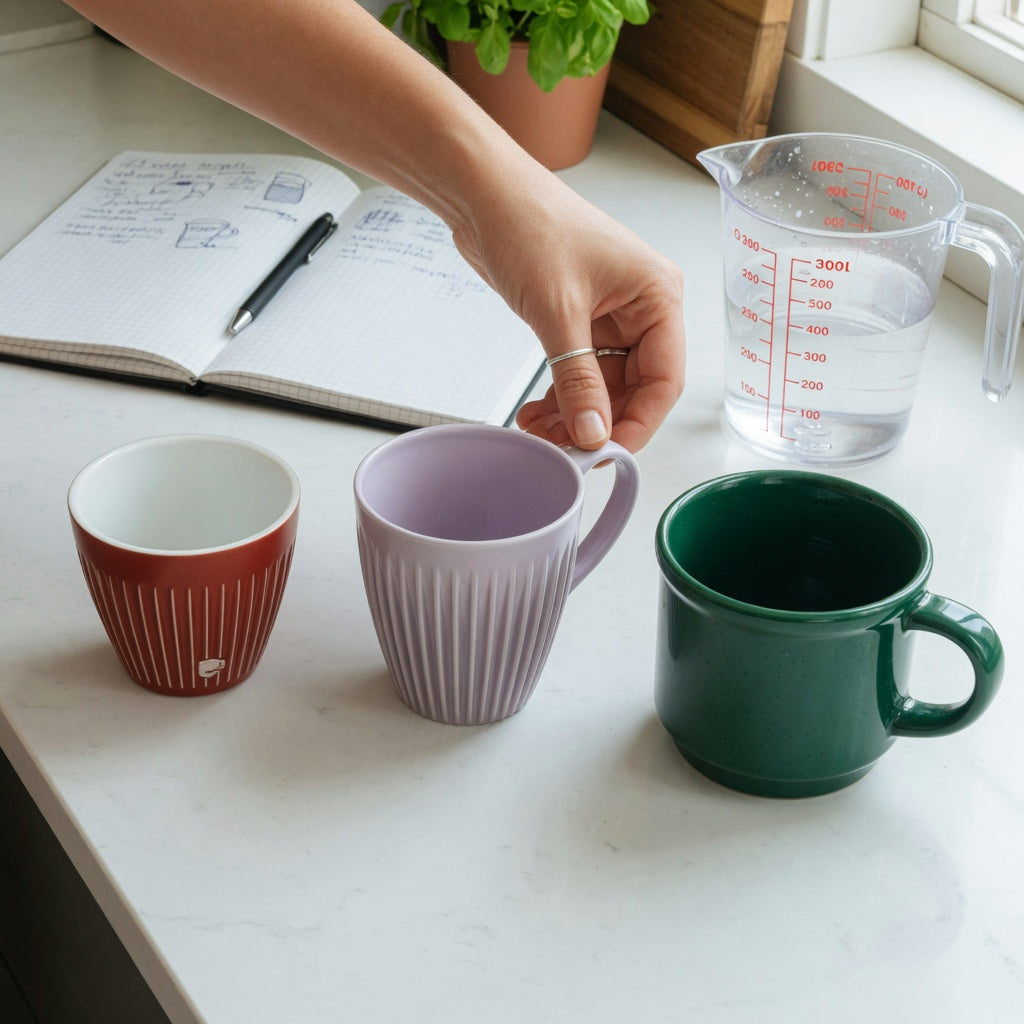
Decaf Coffee Cup Size Decision Guide: 170, 200, or 270 ml?
Compare the Retro 170 ml, Pleated 200 ml, and Emerald 270 ml using your measured serving, preferred rim clearance, handle grip, desk setup, and care needs. This guide explains the practical trade-o...
Read more
Cacao Cup Size Decision Guide: 250 ml, 390 ml, or 400 ml?
Compare CoffeifyMug's 250 ml Ball Handle, 390 ml Round, and 400 ml Spittoon by measured pour, headspace, visible opening, desk fit, gifting, and care. See why the 10 ml gap between the larger optio...
Read more
Leave a comment
This site is protected by hCaptcha and the hCaptcha Privacy Policy and Terms of Service apply.