
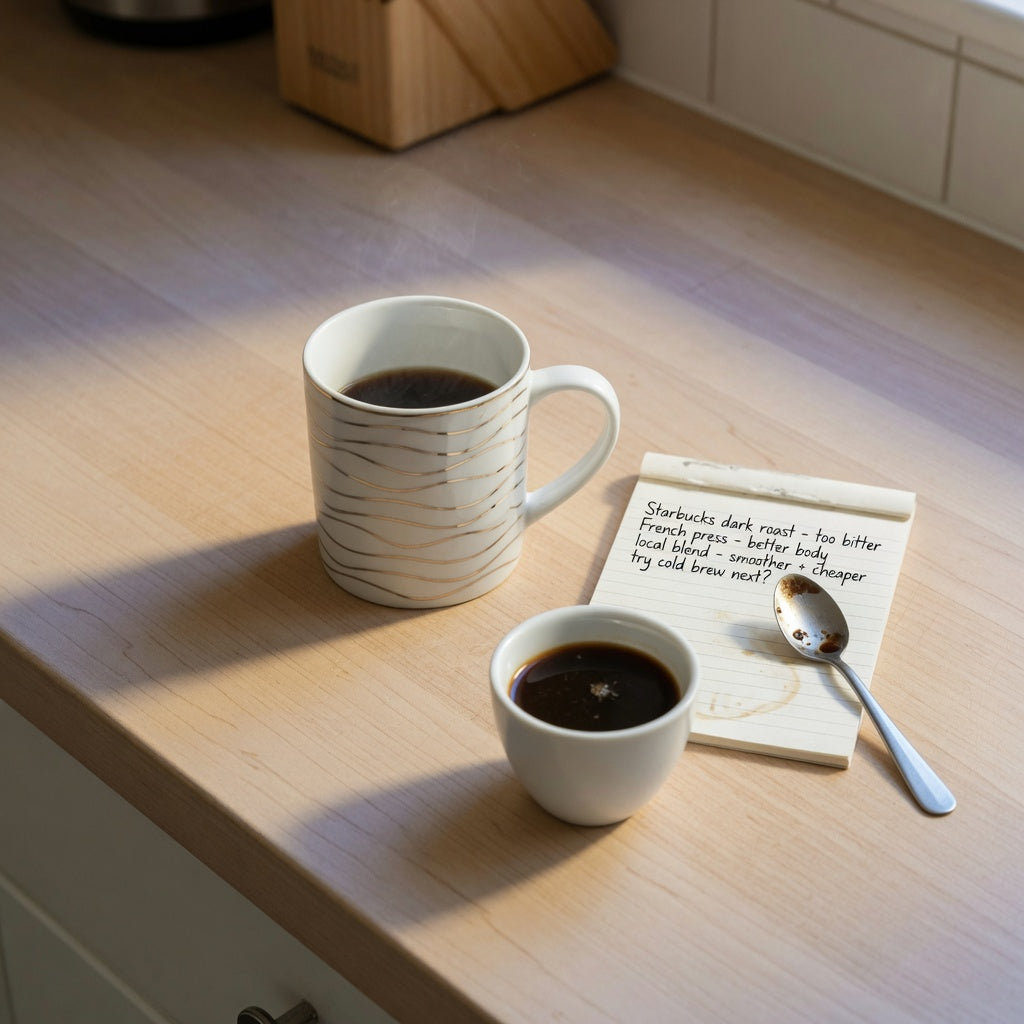
Golden Waves Kio Coffee Tea Mug Buying Checklist
Reading time: about 13 minutes
Last Tuesday a customer held a phone over the packing bench and asked whether a white cup with a thin gold curve was the golden waves one. The photo showed a different object: small tea cups from another maker, nested in a cardboard tray. In our store that search usually lands on the Golden Waves Kio coffee tea mug, catalogued as the Decorative Golden Waves Coffee Mug. Other sellers put gold-wave, gold-band, and ocean-wave styling on opal glass, porcelain, printed ceramic, and molded glass. Care labels do not travel with the picture. This golden waves kio coffee tea mug buying checklist is the sequence we use before we tell anyone the piece fits coffee, a short tea, a microwave reheat, or a gift box.
We do not treat a similar name, a marketplace thumbnail, or a shiny line as proof of body material, capacity, or appliance safety. If the current listing does not say it, the answer stays unknown.
Which golden-wave cup is actually in the photo?
The same search mixes at least four constructions that only share a look. Copying a care rule from the wrong row is the mistake that shows up later, usually after a dishwasher cycle or a microwave beep.
- Opal glass or opalware with a gold-toned wave, often sold as tea and coffee mugs and sometimes as a set. A maker may print microwave or dishwasher wording for that set alone. It does not apply to the next cup that looks similar.
- Porcelain or bone china with metallic gold, silver, or platinum on the rim, handle, or a wave band. USDA food-safety guidance lists china with metallic paint or trim among containers that are not safe in a microwave, and it says to use only cookware manufactured for microwave use.
- Printed ceramic, where the gold is ink or a decal rather than metal leaf. Print can still scratch or fade at the high points of the design. A gold color in a photo does not prove metal, and it does not prove the line is only ink.
- Glass with a molded or painted wave. Heat shock is the failure mode if boiling water hits a cold, thin wall, even when no metal is present.
In our experience both stories can be true at the same time. A dishwasher-labeled opalware set and a gold-rim cup that sparked are different objects. Neither story settles the mug sitting in the cart.
If you want the wave look but the body is wrong for how you drink, start with our unique coffee mugs and compare the listing text, not the thumbnails. A taller shape is a separate page. Read the taller white golden-waves mug checklist beside this one, and do not assume it shares material or care wording with the Kio listing. Confirm each page on its own.
Golden waves kio coffee tea mug buying checklist for the listing itself
Open the product page the way we open a carton on the bench: words first, photo second. These are the fields we want in writing before the mug is a yes.
- Exact title and seller. Match Golden Waves Kio, or the Decorative Golden Waves Coffee Mug, to our listing. Kio is the product name in our catalog. It is not proof of a separate factory you can infer from the word alone.
- Material named in text. Ceramic, porcelain, bone china, opalware, borosilicate, soda-lime glass, or another body. If the page only says mug, the material is still unknown.
- What the gold actually is. Metallic trim, gold luster, gold leaf, or a printed gold color. The listing should say so. A bright curve in a photograph is not a material call.
- Stated capacity. Look for milliliters or ounces, and notice whether that figure is filled to the rim or a comfortable pour. A straight tea does not need the same interior as coffee with milk plus a little headspace, so the drink does not slosh between the kitchen counter and a desk.
- Microwave and dishwasher sentences. A bare icon is weaker than a sentence that names the decoration. If those sentences are missing, do not fill them in from a review of a different mug.
- Food-use status. Sold as drinkware, or marked decorative only. Any not-for-food warning ends the purchase for coffee or tea.
- Set size, handle, and origin. One mug or a set. Handle material if it differs from the body. Country of origin only if the page states it. None of these should be guessed from the thumbnail.
Capacity, gold type, and appliance text change the buy more than the wave artwork does. That order is the golden waves kio coffee tea mug buying checklist we keep next to customer questions. The artwork is what gets clicked. The care line is what gets lived with on a Tuesday morning.
| Buyer variable | What changes if you get it wrong | What to verify on the listing |
|---|---|---|
| Material | Heat shock, weight, chip pattern, and staining differ by body | A named material, not just golden waves |
| Gold construction | Metallic trim can rule out the microwave and shorten dishwasher life | Metal, luster, leaf, or print, written in words |
| Capacity | A tea cup feels small for a latte; a large mug cools a short pour | Milliliters or ounces, and whether that is rim-full |
| Care label | The wrong cycle can dull metal, or is simply unsafe | Microwave and dishwasher sentences for this SKU |
| Food-contact status | A display piece may be unmarked for drinks | Drinkware wording versus a not-for-food warning |
Does metallic gold on a wave rule out the microwave?
Not by color alone. The question is whether the gold is metal in the glaze, paint, or trim. USDA lists china with metallic paint or trim among containers that do not belong in a microwave. Glass and ceramic that are suitable are usually labeled for microwave oven use. A gold-colored wave that is only non-metallic ink can be a different case, but only the maker's label for that exact mug can say so. We will not call it from a product photo on our side of the counter.
For an unlabeled utensil, USDA describes a practical check: microwave one cup of water beside the utensil on high for one minute. If the utensil feels warm or hot, it is not microwave safe, because metal in the material or glaze is taking energy. Use that result only as a microwave screen. It is not a lead test, a cadmium test, or proof that gold decoration will survive a year of washing. If you already know the mug has metal trim, skip the experiment and keep it out of the microwave.
Accidental microwaving is a note we hear after the fact, usually once the mug is already at an office desk. Sparking, a damaged rim, or a burnt smell means stop using that piece until you know what failed. A mug that looks unchanged is not automatically cleared for the next cup. Drink safety still depends on an intact food-contact surface. If the listing for our mug does not state microwave compatibility, treat reheating in the microwave as unconfirmed and warm the drink another way.
Dishwashers are the other half of the same decision. Metallic gold often dulls, spots, or wears when detergent and heat hit it cycle after cycle. Some non-metal prints are built to survive the rack. Those are different products. Read the care line on this listing. If it says hand wash, that is the rule, even when the pattern looks identical to a dishwasher-safe set already in the cupboard.
Lead, cadmium, and a cup that is actually for drinks
Food-contact questions belong on any checklist for a decorated cup, including a gold-wave design. FDA's action level for lead leaching from ceramic cups and mugs is 0.5 µg/ml of leaching solution, under Compliance Policy Guide 545.450. For cadmium, the action level for ceramic small hollowware is 0.5 µg/mL of leaching solution for any one of six units tested, under Compliance Policy Guide 545.400. Those figures are regulatory action levels. They are not a lab report for this mug, and they are not a promise that every imported decorative cup has been tested to them.
FDA has explained that lead may be present in the glazes or decorations on some traditional pottery and, if the piece is not made properly, can move into food and drink. Washing, boiling, or other home processes do not remove that lead. Extra caution is advised for handmade crude or irregular pottery, antiques, damaged or worn pieces, flea-market finds, unknown makers, and ware brightly decorated in orange, red, or yellow. Commercially made everyday pottery is described as much less likely to have lead problems. A display-only piece may be marked Not for Food Use—May Poison Food. Do not put coffee or tea in anything carrying that warning. FDA has also reported that some traditional pottery labeled lead free still showed extractable lead, so a two-word sticker is not the whole story.
What we can stand behind is narrower. Buy from the current product page, read whether it is offered as drinkware, and skip anything sold as display only. We are not publishing independent leach numbers for this design in a blog checklist. If the listing is silent on food-contact use, ask before you pour.
If the page says the mug is decorative only, or you cannot tell whether it is meant to hold a drink, it is the wrong buy for coffee or tea, no matter how well the waves photograph.
Tea, a milky coffee, or a desk mug: what capacity has to match
Shoppers argue about ounces before they picture the drink. A straight tea pour does not need the same interior as a coffee with milk. The right check is the stated capacity on the Golden Waves Kio page, then an honest look at how full you like the cup. Listings often skip the gap between rim capacity and a comfortable fill, handle clearance for a larger hand, stack height, and whether a tall body fits a low shelf or a crowded dishwasher rack. If those numbers are absent, they are absent. Do not borrow milliliters from another gold-waves set.
Desk use is a different job from a kitchen shelf. An office mug gets moved while full, sometimes reheated, and often left with tea that can stain a light interior. If you are choosing for a workstation, use our office comparison for the Golden Waves Kio mug and weigh handle comfort, whether microwave use is actually labeled, and how exposed the decoration is to a daily rinse. This style is a poor fit for a car cup holder unless the listing gives a base size you can match, and it is a poor fit for a commute bag. If you need a lid, confirm the listing includes one. We would not assume a lid is in the box. Open decorative drinkware is not a sealed travel bottle.
Weight shows up once the mug is full and you carry it across a counter. A thick wall feels steady and chips differently than thin porcelain. Without a published weight, comments that call a mug heavy, tippy, or small in the hand are anecdotes, not measurements. Use them as prompts to reread the spec lines.
Chips, tea stains, and gold that dulls after a few washes
The failures customers describe after a few weeks are ordinary and specific. Tea and coffee can stain a light interior if the mug sits unwashed overnight. A metallic or luster line can look patchy after harsh detergent even when a printed wave underneath is intact. Rims chip when cups are stacked lip to lip. Handles crack at the join if a full mug is lifted by a thin loop. None of those outcomes is guaranteed for this design, and none is ruled out by a styled photo. On our side of the counter, the notes that come back are rarely about the drawing. They are about a dull rim, a stained well, or a microwave the listing never promised.
Care that protects most decorated drinkware, once the listing allows the mug to hold drinks:
- Confirm microwave and dishwasher status on this SKU before the first cycle.
- If metal trim is present, keep it out of the microwave, even for half a cup.
- Hand wash gold decoration when the maker says to. Mild soap, a soft sponge, and no abrasive pad along the wave line.
- Avoid stacking decorated rims. A chip at the lip is a cut risk and a place where glaze can fail.
- Empty tea or coffee the same day if the interior is light. Stain comments are common across drinkware. We are not claiming a formal stain trial for this exact mug.
- Do not pour boiling water into a cold glass body unless the listing names heat-resistant glass and a temperature range.
Gifting is where the checklist gets skipped. A gold-wave mug looks finished in a box and then disappoints if the recipient microwaves metal trim or expected a large latte cup. Walk through the Golden Waves Kio gift notes if the mug is leaving your kitchen, and put the care limits in the card. A gift that cannot go in their microwave is still a fair gift when you say so. It is a bad surprise at the unboxing when you do not.
This style is not the right gift for someone who wants an indestructible camp cup, a mug they can bake in, or a piece with a documented leach certificate if the listing does not provide one. It is also the wrong buy if you need matching dinnerware. Pattern names that sound alike across brands will not hold up as a set on the table.
Six lines to answer before the mug goes in the cart
We would not ship a recommendation on the artwork alone. Before you order the Golden Waves Kio coffee tea mug, answer these in order.
- Is the page our Decorative Golden Waves or Golden Waves Kio listing, not a look-alike opalware set or a gold-band china pattern?
- Does the text name the body material and say whether the gold is metal or print?
- Is there a capacity that matches tea, black coffee, or a larger milk drink, with room to carry it?
- Are microwave and dishwasher instructions written for this decoration?
- Is it sold as drinkware, with no not-for-food warning?
- Do the handle, height, and open top fit the desk, the rack, or the person receiving it, and have you ruled out a lidded travel cup if that is the real job?
If any line is blank, stop and read the current Golden Waves Kio listing again, or choose another form from the unique mug collection. A finished checklist beats a fast add-to-cart on a mug that only looks familiar.
Frequently asked questions
What should a golden waves kio coffee tea mug buying checklist include before I order?
Match the exact listing, then confirm body material, whether the gold is metallic trim or only a printed color, stated capacity, microwave and dishwasher wording, and that the mug is sold for drinks rather than display only. Do not copy those answers from a different gold-waves brand. If a field is missing on the page, treat it as unknown.
Can I microwave a mug just because the gold wave looks like paint?
No. Gold color does not tell you whether metal is in the trim or glaze. USDA guidance treats china with metallic paint or trim as unsuitable for microwave ovens, and it expects microwave-safe glass or ceramic to be labeled. If our listing does not state microwave use for this mug, do not assume it. The one-minute water check is only a screen for unlabeled utensils, and it does not test for lead.
Will the gold design fade if I run the mug through the dishwasher?
It depends on how that gold was applied, and this article cannot assign a yes or no to the Kio mug without the care sentence on the current listing. Metallic decoration on porcelain often needs hand washing so it does not dull. Other constructions are labeled for the dishwasher by their own makers. Follow the instruction printed for the mug you are buying, and do not mix those rules.
How do I judge capacity for tea versus a milky coffee?
Use the milliliters or ounces printed on the Golden Waves Kio listing, then decide whether that volume matches a small tea, a black coffee, or a drink with milk. Rim-full capacity is larger than what you can carry without spilling. If the listing does not state a volume, we will not substitute a number from another wave mug.
Is a gold-wave mug automatically safe to drink from, and is it lead free?
Only a mug sold for food and drink, from a seller you can identify on the listing, belongs in that role. FDA action levels for lead in ceramic cups and mugs, and for cadmium in ceramic small hollowware, are regulatory thresholds, not a test result for this design. Home washing does not remove lead from pottery that leaches. Skip antiques, damaged pieces, unknown handmade ware, and anything marked not for food use. A lead-free phrase on traditional pottery has not always matched extractable-lead testing, so read the full listing rather than a slogan.
Read more
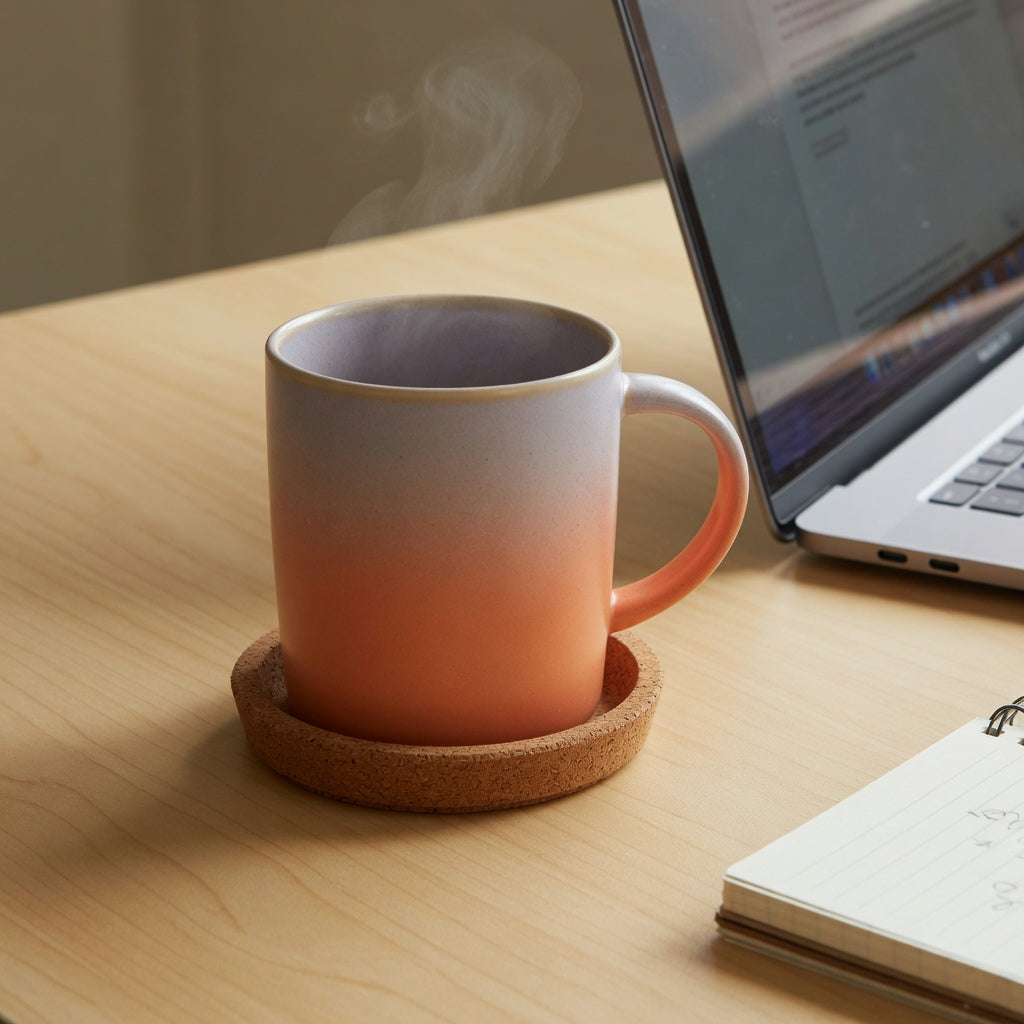
Office Desk Gradient Ceramic Mug: What Buyers Should Compare
Shoppers mix up an office desk gradient ceramic mug with promo ombre cups, kiln fades, and lidded tea mugs. We compare care marks, lead and cadmium questions, capacity, and desk fit before you buy.
Read more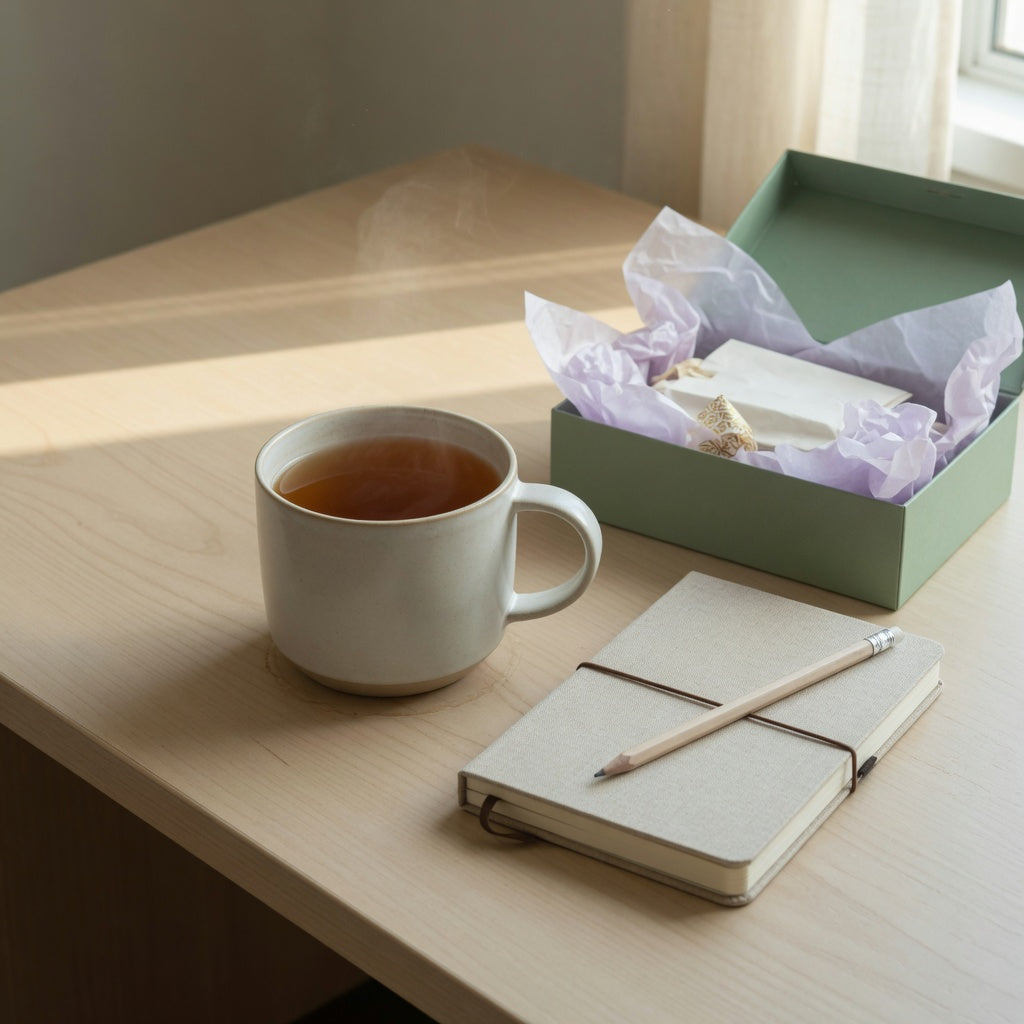
The Rock Office Tea Cup Gift: What Buyers Should Compare
Shoppers typing the rock office tea cup gift often meet three unrelated cups. We compare 480 ml ceramic desk use, licensing language, print care, and food-contact checks before you wrap one.
Read more
Leave a comment
This site is protected by hCaptcha and the hCaptcha Privacy Policy and Terms of Service apply.