
Eggnog Mug Buying Priorities: Capacity, Shape, and Space
Reading time: about 9 minutes
A mug can look compact in a tightly cropped product photo and still be the wrong size for a shallow cupboard or a small evening pour. We see the mismatch most clearly after shoppers compare the vessel with the shelf, tray, and amount they actually serve. For eggnog mug buying priorities, the useful order is simple: decide your pour volume, study the visible shape, and then check the space the mug must occupy.
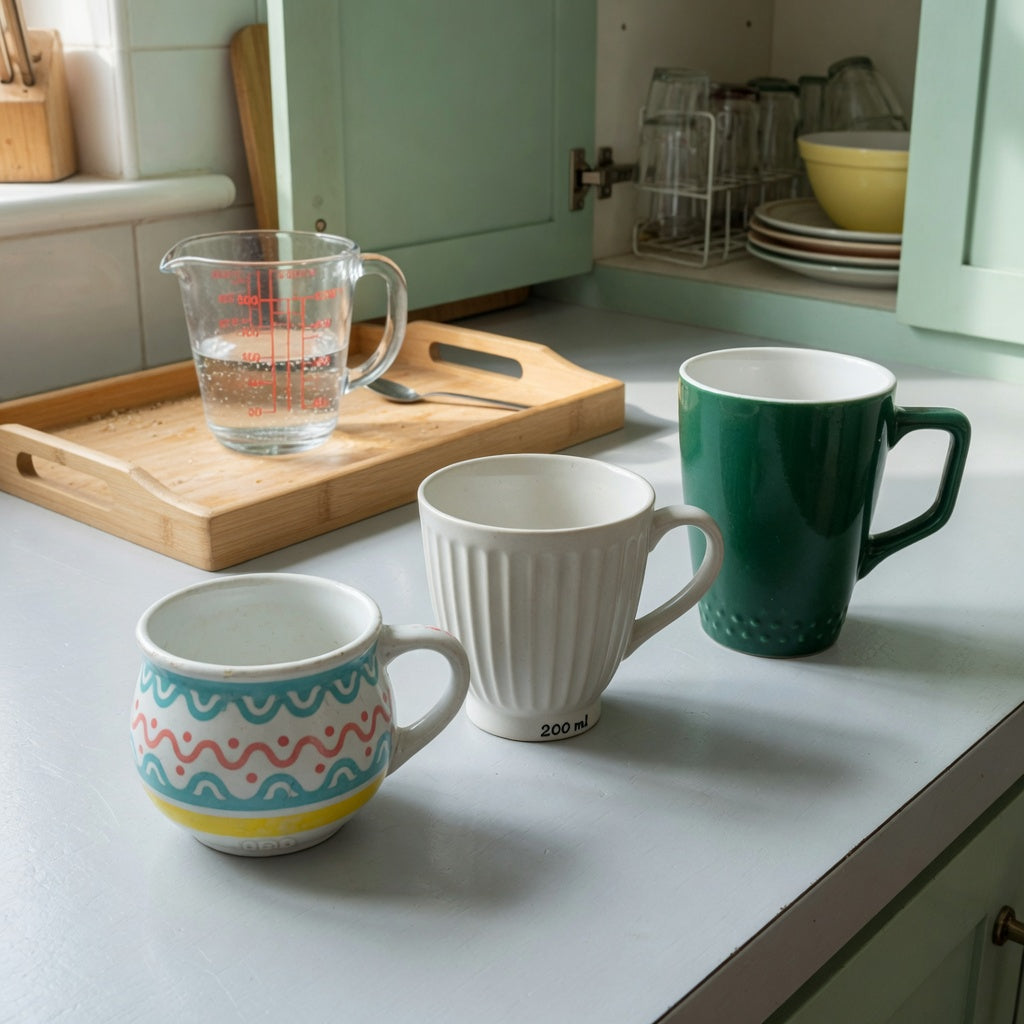
This comparison stays within the current facts we can verify: the Retro is listed at 170 ml, the Pleated at 200 ml, and the Emerald at 270 ml. We also compare their visible profiles. Capacity does not substitute for unlisted exterior dimensions, and a photograph does not establish care compatibility, included accessories, or special temperature performance.
Eggnog mug buying priorities: which decision comes first?
Start with the part of your routine that is hardest to change. A cupboard shelf has a fixed height. A serving tray has a fixed area. Your usual pour is probably more consistent than you think. Color and decoration matter, but they should not override a capacity or storage mismatch.
- Rank your normal liquid volume first. Measure the amount you serve rather than estimating from the appearance of your current cup.
- Decide how much headspace you prefer. A mug filled close to the rim is harder to carry from the kitchen to a desk or dining table.
- Match the visible profile to the setting. A rounded cup, pleated exterior, and more upright mug each create a different visual and handling experience.
- Verify the physical space. Check shelf height, available width, and tray placement using listed dimensions whenever they are available on the live product page.
In our store, we find that this order prevents the most common buying mistake: selecting the roomiest option automatically. The largest capacity is useful only if you need that volume or headspace. Otherwise, it can add unused space to a cupboard and make a small serving look lost inside the mug.
What do 170 ml, 200 ml, and 270 ml mean for a real pour?
A listed capacity is a comparison number, not an instruction to fill the vessel to the rim. Practical carrying volume will be lower because some open space helps limit sloshing and leaves room for a topping. The amount of usable headspace depends on the shape, so we do not assign an invented fill line to any of these mugs.
Use this quick check before choosing:
- Pour your normal eggnog serving into the mug or glass you already use.
- Transfer that liquid into a marked kitchen measuring jug.
- Record the volume without rounding it up to the nearest mug size.
- If your measured pour is close to a mug's full listed capacity, move up one size to preserve headspace.
If you prefer a deliberately small serving, the Retro coffee tea cup is the 170 ml option. It is the smallest listed capacity in this comparison and has a visible rounded profile. The limitation is straightforward: a measured pour near 170 ml would leave little theoretical capacity to spare, so the Retro is not the sensible choice for someone who routinely wants a larger serving.
The Pleated coffee tea cup increases listed capacity to 200 ml. That is 30 ml more than the Retro, making it the middle choice for a shopper who wants more margin without stepping directly to 270 ml. Its pleated exterior also gives it a more textured appearance than a smooth-sided cup.
The Emerald coffee tea mug is listed at 270 ml. It offers 70 ml more than the Pleated and 100 ml more than the Retro. Choose it when your measured serving is larger or when generous headspace matters more than owning the smallest possible vessel. It is still the roomiest option only within this three-product comparison, not a substitute for an oversized cafe mug.
Which visible shape suits a counter, desk, or guest tray?
Shape photographs are useful for comparing silhouettes, but they are not scale drawings. We use them to judge profile and surface detail, then use listed measurements, where available, for fit. That distinction matters if your mug must sit under a low shelf or share a tray with several other pieces.
- Rounded Retro profile: This shape suits the shopper who wants a compact serving to look intentional rather than undersized. A rounded outline can feel visually broader, so verify maximum exterior width if horizontal space is tight.
- Pleated exterior: The visible vertical texture makes the Pleated a logical fit for someone who prefers surface detail over a plain wall. Textured channels can require more attention if a thick drink dries on the exterior, so prompt rinsing is a practical habit.
- More upright Emerald profile: Pair this shape with the largest listed capacity in the group. It makes sense for a larger pour at a dining table or office desk, but buyers with limited vertical clearance should confirm the current height before ordering.
Do not assume that a taller-looking mug has a smaller base, that a low cup will stack, or that two vessels with similar capacities occupy the same shelf area. Exterior proportions determine those details. If tray density is your main priority, exact base and maximum-width measurements are more useful than capacity alone.
How much cupboard and tray space should you reserve?
A storage check takes less than two minutes and is more reliable than comparing a product image with objects in the background. We would rather leave a dimension unclaimed than turn a styled photograph into a ruler.
- For a cupboard: Measure from the shelf surface to the shelf above it. Leave enough clearance to lift the mug rather than sliding it out at an angle.
- For a narrow shelf: Measure the maximum width of the mug you currently store comfortably, including any handle or projecting profile.
- For a serving tray: Mark the available area with paper and place the number of mugs you expect to serve at once. Include room for fingers to lift each vessel without knocking the next one.
- For an office desk: Check the clear area beside your keyboard, notebook, or monitor stand. Capacity does not reveal whether the exterior footprint will fit that space.
The 170 ml Retro is the first option to investigate when minimizing serving volume is the priority. The 200 ml Pleated occupies the middle capacity position. The 270 ml Emerald deserves the closest vertical and horizontal fit check because it holds the most, although its exact exterior footprint should be confirmed from current listing details rather than inferred from volume.
Which current mug fits your routine without overbuying?
Each recommendation should connect to a specific routine, not simply to a preference for small, medium, or large.
| Reader situation | Current match | Why it fits | Trade-off to check |
|---|---|---|---|
| You serve a small, measured portion and want the lowest listed capacity | Retro 170 ml cup | It is 30 ml below the Pleated and 100 ml below the Emerald | Little capacity margin if your usual pour approaches 170 ml |
| You want a middle capacity with visible exterior texture | Pleated 200 ml cup | It balances a modest capacity increase with a distinctive pleated profile | Exterior channels may need prompt cleaning after drips |
| You make a larger serving or prefer more headspace | Emerald 270 ml mug | It provides the largest listed capacity of the three | Verify exterior dimensions if cupboard space is limited |
| You are unsure which silhouette fits your year-round routine | Unique coffee mugs collection | You can compare these profiles with other current mug shapes | Check each individual listing rather than transferring specifications between styles |
For a gift recipient who takes small drinks, the Retro creates a more deliberate match than choosing the largest mug by default. For someone who alternates between eggnog and moderate tea or coffee servings, the Pleated provides a middle point. The Emerald is the clearer candidate for a person who consistently uses more volume. None is universally best; the measured routine decides.
What should you verify before use and during cleanup?
Capacity and shape help narrow the purchase, but live listing details should settle material and care questions. The verified facts used for this article do not establish dishwasher suitability, microwave compatibility, or special heat retention. If any of those features is mandatory, confirm the exact wording on the current product page before buying.
After delivery and before first use, our practical drinkware check is short:
- Inspect the rim and exterior under bright light for chips or hairline cracks.
- Set the empty mug on a flat, dry counter and check whether the base rocks.
- Review the product's current washing instructions instead of assuming every mug uses the same care method.
- Rinse residue promptly, paying particular attention to visible grooves or pleats where drips can settle.
Styled product photography may contain food, drink, garnish, or other props. Treat those elements as scene setting and rely on the product listing for what the purchase includes. The same rule applies to quantity: confirm the listing rather than assuming that several pictured pieces form a bundle.
When is a different mug style the better purchase?
These compact capacities are not a good match if your measured serving exceeds 270 ml, if you require a sealed travel format, or if an exact dishwasher, microwave, or temperature-performance claim is essential but absent from the listing. A different style also makes more sense when your main year-round drink needs substantially more volume than your seasonal eggnog serving.
In that case, compare the broader unique coffee mug range and prioritize the feature you will use most often. Buying a seasonal mug that cannot handle the rest of your routine usually creates more cupboard pressure than value.
Frequently asked questions
Which eggnog mug buying priorities matter most in a small kitchen?
Measure your normal pour first, then check exterior width and shelf height. The Retro has the smallest verified capacity at 170 ml, but capacity alone does not prove that it has the smallest exterior footprint, so confirm dimensions on the current listing when space is critical.
Is a 170 ml mug large enough for eggnog?
It can be if your measured serving sits comfortably below 170 ml. If the liquid amount is close to the mug's full listed capacity, choose the 200 ml Pleated or 270 ml Emerald so you have more headspace instead of filling close to the rim.
Should I buy the 200 ml Pleated or the 270 ml Emerald?
Choose the Pleated for a middle-capacity serving and a visibly textured exterior. Choose the Emerald when you need 70 ml more listed capacity or prefer more room above the same pour, then verify that its exterior dimensions fit your shelf or desk.
Can I assume these mugs are dishwasher and microwave safe?
No. This comparison does not establish those care claims. Read the current instructions on the individual product page and use the stated method, especially if dishwasher or microwave compatibility affects your purchase.
Which eggnog mug is the safest gift when I do not know the serving size?
The Pleated 200 ml cup is the middle capacity among these three, so it avoids both extremes. That does not make it a universal fit: if the recipient regularly uses larger drinks, compare the 270 ml Emerald or another shape in the collection before ordering.
Your next step: measure one normal pour, record your available shelf height and width, and choose between 170 ml, 200 ml, and 270 ml using those numbers. Then open the unique coffee mugs collection and confirm the live dimensions, care details, and visible profile of the option that matches your routine.
More from our blog
Read more
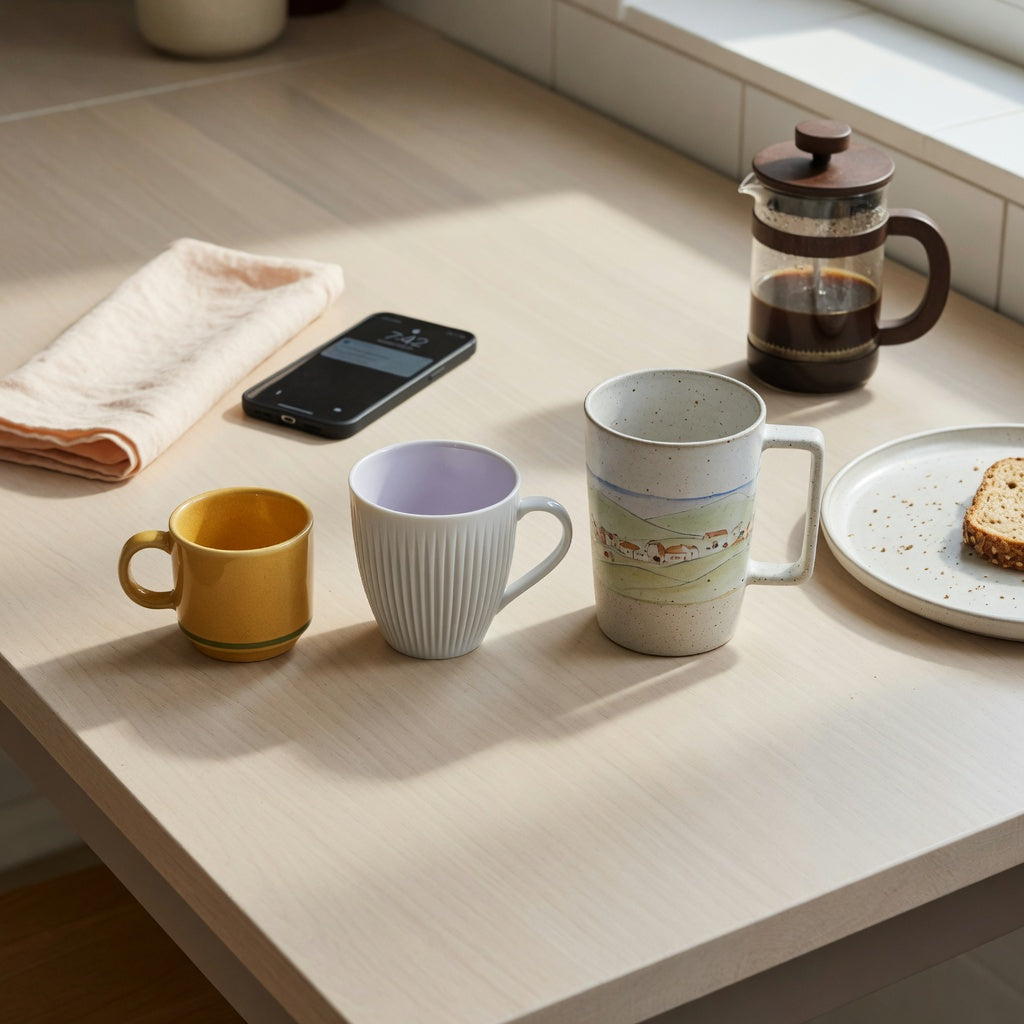
Breakfast Coffee Cup Size Decision Guide: 170, 200, or 350 ml?
Compare the Retro 170 ml, Pleated 200 ml, and Landscape Tall 350 ml by actual pour size, table footprint, and refill preference. Includes clear trade-offs for shared tables, desks, gifts, and quiet...
Read more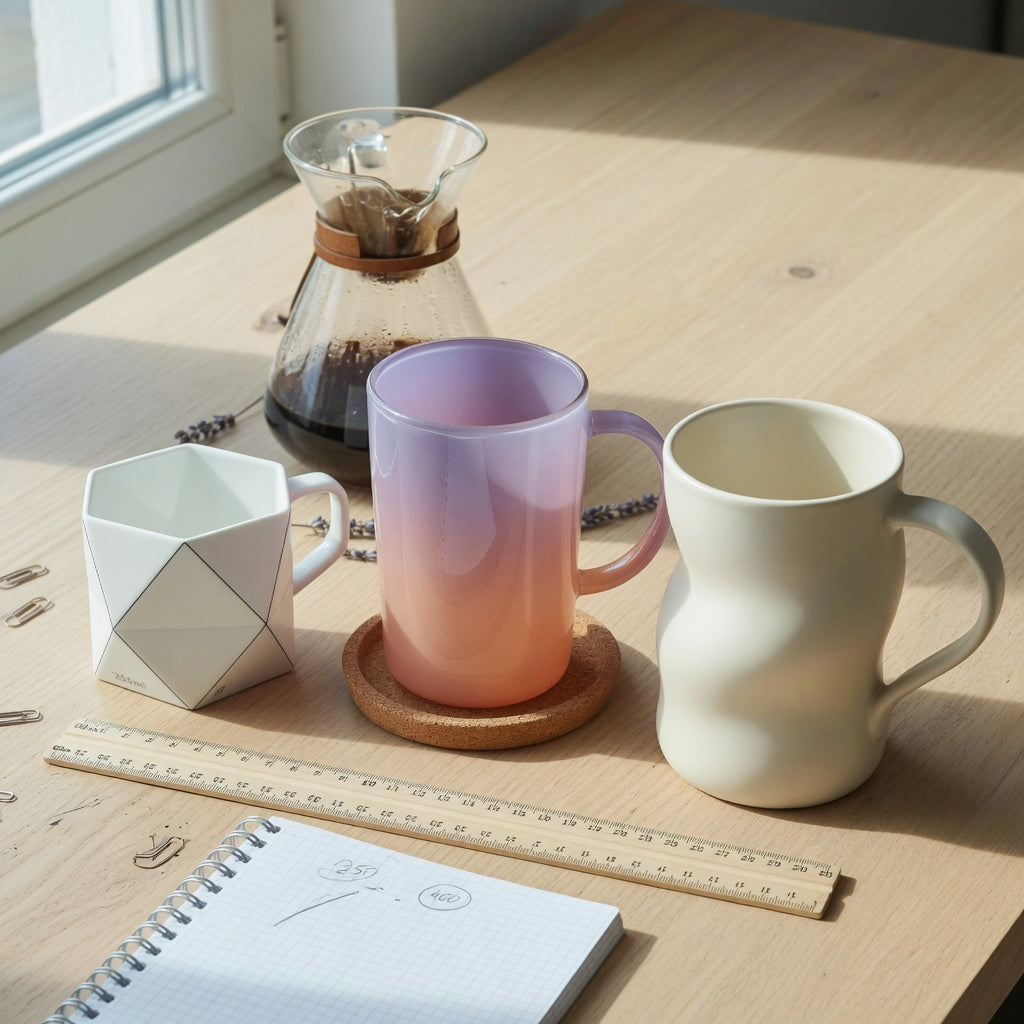
Abstract Coffee Mug Buying Priorities: Capacity, Shape, Space
Compare the verified 250 ml Rhombus with the 400 ml Gradient and The Flow by actual pour size, visible form, and measurable desk or cabinet space. This practical checklist also shows which unlisted...
Read more
Leave a comment
This site is protected by hCaptcha and the hCaptcha Privacy Policy and Terms of Service apply.