




Cute Espresso Cups Gift Choice Product Shortlist Guide: 3 Sizes
Reading time: about 9 minutes
A customer turned the Pleated cup over in her hands last week and asked the question we hear every November: is this an espresso cup or a regular coffee cup? Neither, exactly. It holds 200 ml, and that number should decide who receives it.
Capacity is the unglamorous part of gift shopping, and it is where most of these purchases go sideways. Published ranges put a traditional Italian single shot near 25 ml, a modern specialty espresso definition around 25–35 ml, and the classic china demitasse at roughly 50 ml. Our three cups hold 170 ml, 200 ml, and 250 ml. They are larger than a true espresso cup by a wide margin — good for someone who drinks cortados and cappuccinos, frustrating for someone who pulls ristretto and weighs every shot. That gap is why a useful cute espresso cups gift choice product shortlist guide starts with the number and works outward to routine, machine clearance, and the details only the current listing can settle.
Which cup size matches the drink the recipient actually orders?
Two failures repeat at our counter. A gift-giver buys the biggest cup on the shelf for someone who wanted a shot-glass ritual, and the cup lives in a cabinet. Or someone buys a genuine 50 ml demitasse for a cappuccino drinker, and every pour overflows. Both are capacity mistakes dressed up as taste mistakes.
Here is the mapping we use, stated only in terms we can stand behind: listed capacity, ceramic body, and visible form.
| Capacity | Closest everyday drink | Choose it when | Skip it when |
|---|---|---|---|
| Retro, 170 ml | Cortado, flat white, macchiato | They want a small cup with room for a shot plus a modest milk pour | They drink straight espresso or weigh every dose |
| Pleated, 200 ml | Cappuccino | Milk is the main event and the cup is meant to be seen | They want an exact demitasse for a single shot |
| Ball Handle, 250 ml | Small latte, long black with room, tea | They carry one drink from kitchen to desk and want it to last | They measure espresso in grams and finish it in two sips |
A cute espresso cups gift choice product shortlist guide, mapped to routines
We do not rank these three, because there is no single best cup — only a best match for what someone pours before 9 a.m. All three sit in the compact end of our unique coffee mugs collection, so you can compare silhouettes side by side.
Retro 170 ml: for the cortado and flat white drinker
The situation: your friend orders a cortado at the café and complains that it arrives in a bucket. The Retro 170 ml ceramic cup is the closest fit we stock. At 170 ml it takes a 30 ml shot plus a modest steamed-milk pour with headroom left over, and the retro profile reads as a small cup rather than a mug on a shelf.
Skip it if the recipient pulls single shots and drinks them standing at the machine. A 30 ml shot looks lost in 170 ml, the crema spreads thin across a wide surface, and the point of a small cup evaporates. We also steer affogato makers away from this size — our affogato cup shortlist for 170 to 270 ml works the same capacity logic from the dessert side.
Pleated 200 ml: for the cappuccino person
The situation: someone who makes cappuccino at home and treats the cup as part of the kitchen decor. The Pleated 200 ml ceramic cup holds a cappuccino's worth of volume without crossing into mug territory, and the pleated wall is the reason to choose it over the Retro — that ribbing catches light and reads as texture from across a room.
The honest trade-off: more grooves means more places for milk residue to sit. This is a cup to rinse promptly, not one to leave in the sink overnight with a dried latte ring in the pleats. Skip it if the recipient wants a demitasse; 200 ml is four times a classic 50 ml cup, and no amount of pleating changes that math.
Ball Handle 250 ml: for the desk-bound latte
The situation: the person who makes one drink in the morning and carries it to a desk, or drinks tea as often as coffee. The Ball Handle 250 ml ceramic cup is the largest of the three and the most forgiving. A small latte, a long black with room, or a generous flat white all fit without a nervous pour.
Two things to weigh first. The ball handle is the visual hook, and handle span is not something we publish, so check the current listing or ask if the recipient has large hands — a narrow loop forces a pinch grip on a hot cup. And skip it if espresso is the goal. At 250 ml the drink is a milk coffee; the shot is flavoring, not the drink itself.
When should you skip all three cups?
Some recipients should not get these cups, and saying so costs less than a returned gift.
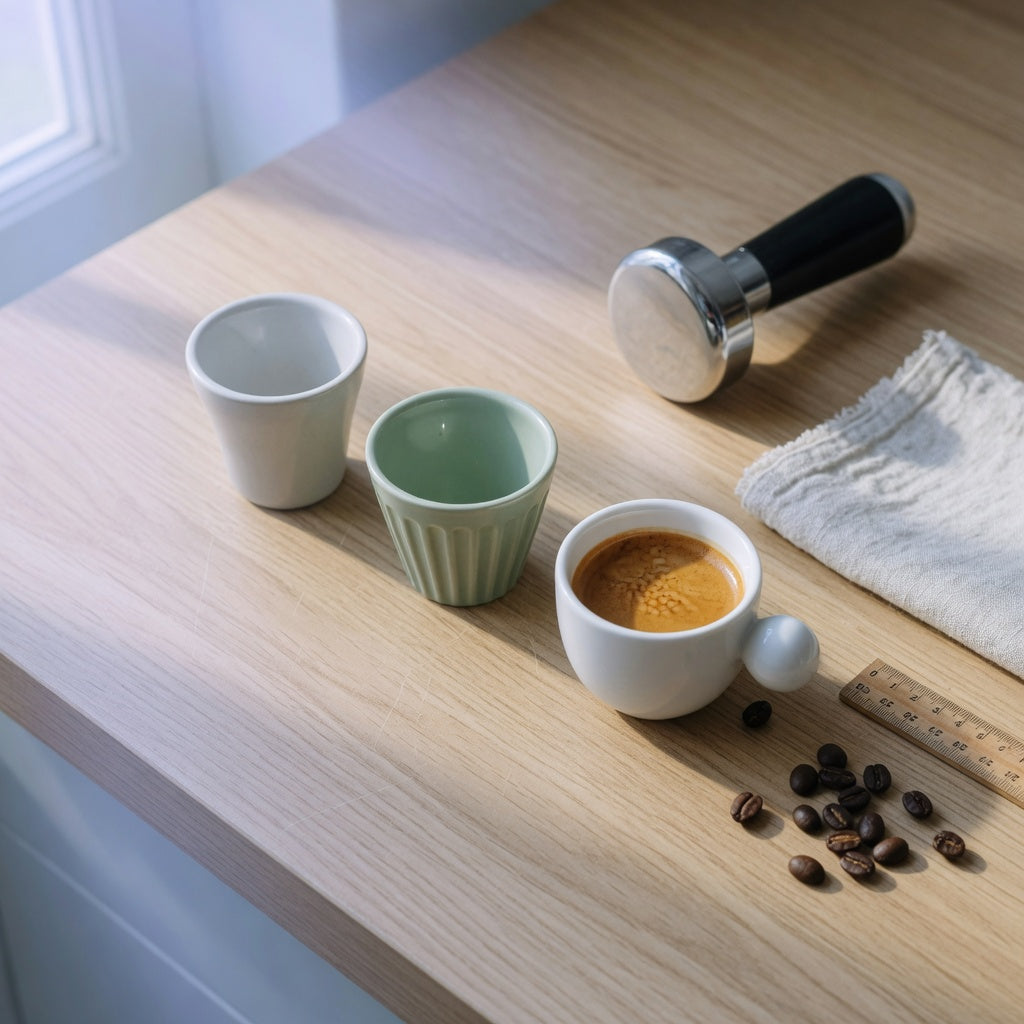
- The scale-and-timer hobbyist. They want 50–60 ml of thick-walled porcelain and will read 170 ml as a downgrade. Start with our ceramic espresso cup shortlist organized by three sizes instead.
- Anyone with a low-clearance machine and no room on the drip tray. See the measurement routine below.
- Someone who asked for glass. Double-wall glass shows the layers of a drink; an opaque ceramic body hides them.
- Anyone shopping for a plush or purely ornamental espresso-cup object. That is decor, not drinkware, and the two should not be compared on capacity at all.
Will a 170–250 ml cup clear your espresso machine spout?
There is no published standard for spout-to-tray clearance, so nobody — including us — can tell you from a product photo whether a cup clears your portafilter. Measure instead.
- Set the cup on the drip tray, slide a scale underneath if you use one, and lower the portafilter into place. Note the gap.
- Measure the rim's inside diameter and compare it with the spread between the two spouts on your double basket.
- Repeat the height check with the scale in place. Scales eat more vertical room than most people expect, and this is the step buyers skip.
Cups in the 170–250 ml range are taller than a demitasse by design, so a machine with generous clearance is the friendlier host. Tight clearance is a reason to rethink the cup or the setup — not something a listing photo can settle for you.
Handle fit, rim width, and whether the interior shows crema
Three details separate a cup that gets used daily from a cup that gets photographed once.
- Handle fit. A ball or loop handle only works if a finger passes through comfortably. Test it or ask before gifting, because a decorative handle on a full 250 ml cup is a genuine usability problem.
- Rim width. A wider opening catches both streams from a double spout without you steering the cup. A narrow rim turns every pour into an event.
- Crema visibility. Plain white interiors show crema's color and texture; dark or busy patterned interiors hide it. Check the interior color in the listing photos before you decide the outside pattern is the whole point.
Glaze safety and dishwasher claims: what to confirm before you pay
Ceramic deserves thirty seconds of attention when you are buying for someone else's kitchen. The U.S. FDA explains that lead in a ceramic glaze binds into the body when a piece is fired correctly, and that an under-fired glaze may not fuse, leaving lead able to contaminate food. The FDA also notes that some traditional pottery labeled lead free has still shown extractable lead, and that ceramicware intended only as decoration must be identified so it is not used with food.
Practically: buy drinkware sold as drinkware, and if food-contact confirmation matters to you, ask the seller directly. Purely ornamental pieces belong on a shelf, not next to a kettle. We do not publish certification claims for these cups, and casual claims from any small retailer deserve a second look.
Dishwasher performance is the second open question. Long-term resistance of painted or novelty glazes is mostly reported anecdotally rather than tested to a public standard, so until the care card is in your hand, hand-washing a decorated cup is the conservative choice — especially with a gift you will not be the one washing.
What we can and cannot promise about gift presentation
We cannot promise gift boxes, ribbons, or personalization on these cups, and we would rather say that plainly than have you discover it at checkout. What ships is the cup. If presentation matters, budget for your own wrap or pair the cup with beans and a handwritten note; in our experience that lands better than branded packaging anyway.
Sets are the other assumption to drop. If the recipient would rather have two matching cups than one, work that out from the current listing rather than from a styled shelf photo. And if you are weighing a mug against a small cup for the same person, our cute ceramic coffee mug shortlist by style is the fairer comparison.
Frequently asked questions
Are these really espresso cups, or just small coffee cups?
They are compact ceramic cups holding 170, 200, or 250 ml, which is larger than a demitasse at roughly 50 ml. Treat them as espresso-adjacent cups for milk drinks and short blacks rather than as competition-grade shot glasses. That gap is exactly why a cute espresso cups gift choice product shortlist guide has to start with the number, not the pattern.
Will a 250 ml cup make an espresso go cold?
A wider, fuller cup exposes more liquid surface, so heat leaves faster than in a narrow demitasse. That is a real trade-off, not a defect. If your recipient sips slowly and dislikes lukewarm coffee, the 170 ml Retro is the safer pick.
Do these come with saucers or in a gift box?
We cannot confirm saucers or gift packaging, and we will not guess on your behalf. Check the current product listing for exactly what is included, then plan your own wrap or a separate saucer if presentation is the priority.
Can the cups go in the dishwasher?
That is a listing-by-listing question, and glaze durability on decorated cups is largely reported anecdotally rather than tested to a public standard. If the recipient runs a load every night, hand-washing a patterned or painted cup is the prudent default.
Work the list in this order: routine first, then machine clearance, then the details only the listing can confirm — handle span, interior color, and what is in the box. If the routine points to cortado or cappuccino, the Retro 170 ml and the Pleated 200 ml are the two we would hand you across the counter. If it points to a long morning drink, start with the Ball Handle 250 ml and browse the rest of the compact ceramic lineup before you commit.
Ready to pick your mug? Two ways to save on today's order:
Ordering 1–3 mugs? Get an extra 10% off your 1st order with code 10_OFF Apply 10% Off & Shop Wooden-Handle Mugs →
Gifting 4+ mugs? Buy 3, Get the 4th Free applies automatically at checkout (no code needed; offers do not stack) · Free standard shipping (Nov pre-Christmas delivery: 15–20 calendar days US) · Free replacement if chipped in transit.
Popular mug buying guides: Wooden-Handle Tea Infuser Mugs Compared · Christmas & Secret Santa Mugs 2026 · Espresso & Cortado Cups Guide · Cup & Saucer Gift Sets · All 25 Mugs Spec Table · Mug Size Guide · Shipping & Promo FAQ
FIRST ORDER 10% OFF (CODE: 10_OFF) · OR BUY 3, GET THE 4TH FREE


Read more
Cute Espresso Cups: First Time Buyer Practical Purchase Checklist
A listing-by-listing checklist for first-time buyers of cute espresso cups: what 170 ml, 200 ml and 250 ml actually hold, how to measure machine clearance at home, and which details to confirm befo...
Read more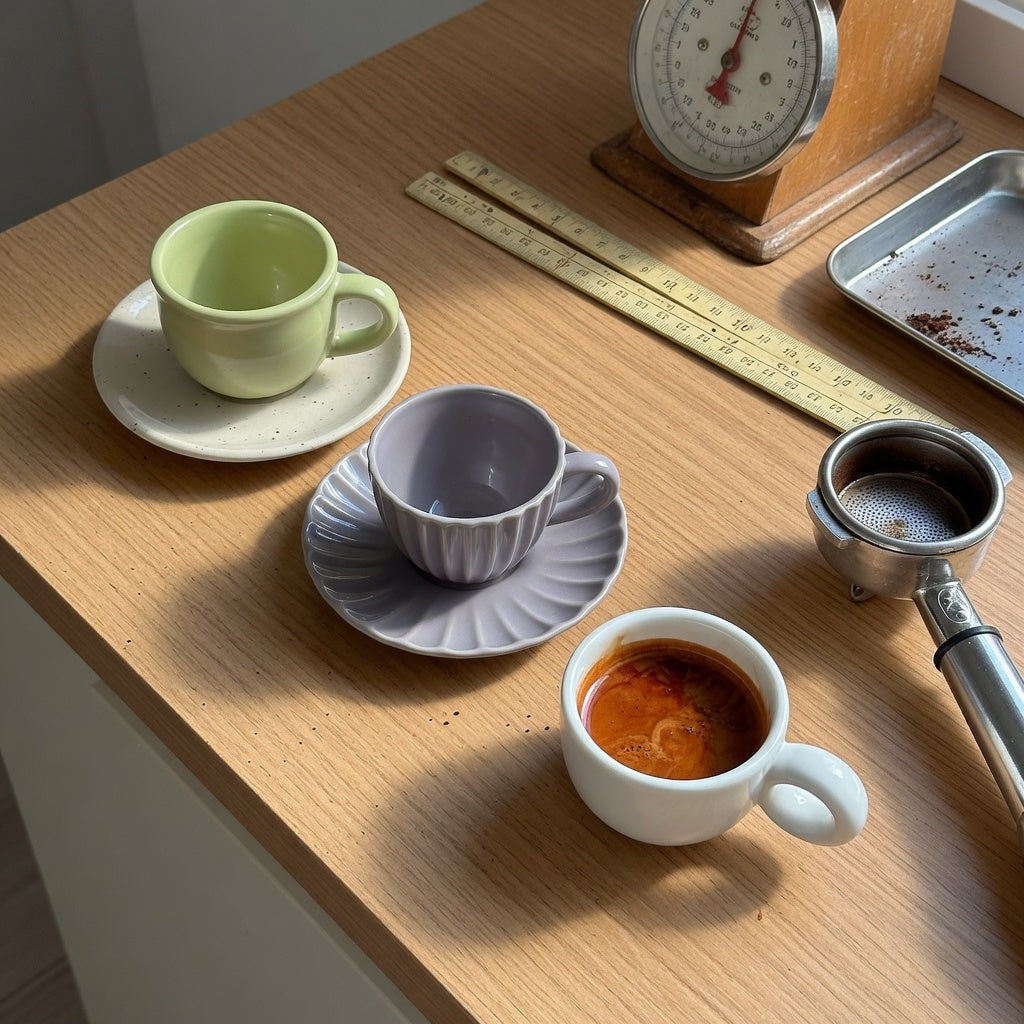
Cute Espresso Cups First Time Buyer Product Shortlist Guide for Real Use
Cute espresso cups first time buyer product shortlist guide: a practical shortlist that covers listing details to verify, capacity bands for real morning routines, and three ceramic cups at 170 ml,...
Read more
Leave a comment
This site is protected by hCaptcha and the hCaptcha Privacy Policy and Terms of Service apply.