
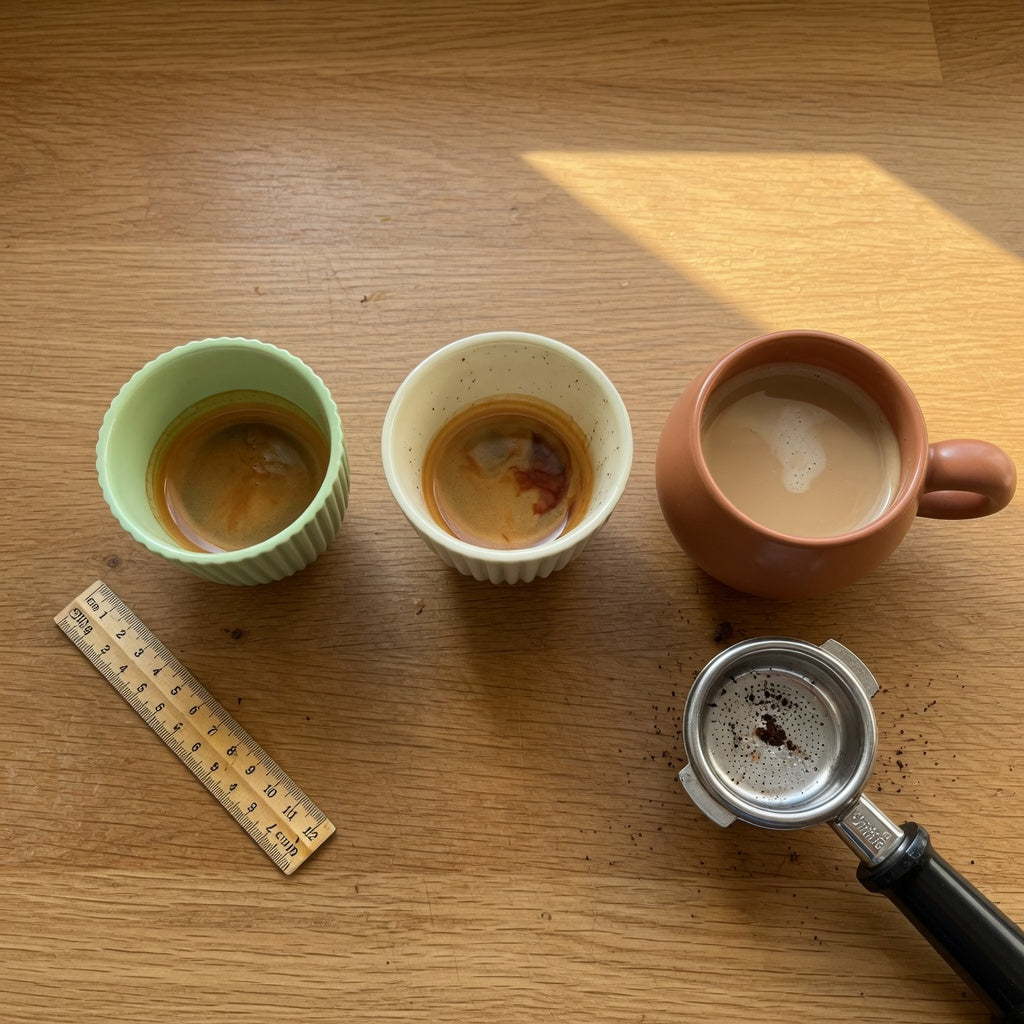
Cute Espresso Cups Capacity Guide: 170 vs 200 vs 250 ml
Reading time: about 10 minutes
A 250 ml mug holds a double shot of espresso and still looks two-thirds empty. That is usually the moment a shopper realizes the cute cup they pictured is really a small coffee mug — which is exactly why this cute espresso cups capacity guide is built around the three volumes we actually keep in stock: 170, 200, and 250 ml.
Those are the listed capacities of the Retro Coffee & Tea Cup at 170 ml, the Pleated Coffee & Tea Cup at 200 ml, and the Ball Handle Coffee & Tea Mug at 250 ml. All three are ceramic, all three are compact, and all three are larger than a traditional single-shot cup. That last point drives most of the questions we answer by email, so this guide stays on volume, refill pattern, and the serving routine each cup genuinely fits.
If you would rather look at the shapes first, the unique coffee mugs collection shows all three in one view. The numbers below assume you are pouring espresso, not brewing a full mug of filter coffee.
What do 170, 200, and 250 ml actually look like once a shot is in the cup?
| Cup | Listed capacity | What it holds comfortably | Refill pattern it suits |
|---|---|---|---|
| Retro Coffee & Tea Cup | 170 ml | A single or double shot with modest headroom | One fresh cup per shot |
| Pleated Coffee & Tea Cup | 200 ml | A double shot plus a real splash | Two pours across the morning, or a short milk drink |
| Ball Handle Coffee & Tea Mug | 250 ml | A double plus a generous pour | One longer drink, fewer refills |
Read that table as volume, not shot count. A double espresso is a small pour by volume — nowhere near 170 ml — so every cup here swallows a double and leaves clear space above the crema. The 170 ml simply leaves the least.
Headroom is not a fussy detail. A small shot sitting in a wide pool with three fingers of air above it behaves differently from one that rises close to the rim: the crema spreads thinner, the aroma has more room to drift away, and the last sip lands cooler than the first. If you drink fast at the counter, none of that matters much. If you carry the cup to a desk and sip over ten minutes, it does.
Cute espresso cups capacity guide: which size fits your daily pour?
170 ml Retro — one shot, drunk now
If your morning is a single shot pulled and finished at the counter, this is the tightest pour we carry. The liquid sits lower in the cup than it would in a true demitasse, the crema gathers toward the middle instead of stretching across a wide surface, and there is just enough room to walk the cup to a desk without sloshing. What it will not do is take a double plus a real pour of steamed milk without feeling crowded. Pair it with a small saucer if you tend to set the cup down mid-sip.
200 ml Pleated — the all-day compromise
That extra 30 ml is roughly a good splash. It is enough that a double shot does not look stranded, and enough for a macchiato or a short milk drink without switching vessels. In our experience this is the capacity most people settle on when they own one set and drink both straight espresso and small milky coffees. The pleated exterior is a form choice as much as anything — it reads decorative on an open shelf, which is a large part of why it gets bought as a gift.
250 ml Ball Handle — for the drink that keeps going
This is the capacity for a longer drink: a double stretched with hot water, or a double with a generous milk pour, still leaves the rim well below your lip. The ball-shaped handle is the most sculptural of the three, though how it sits in your hand depends on finger length — check the listed handle dimensions on the product page rather than assuming it takes a full grip. The trade-off is obvious: a straight single shot looks lost in it.
Why are these cups so much bigger than a classic demitasse?
Because they are not demitasse, and we do not market them as such. Traditional Italian espresso cups are commonly described as holding around 50 ml, and competition-style training cups are often cited up to roughly 90 ml. At 170 ml, our smallest cup is still several times that figure, and the gap widens from there.
That is a deliberate trade-off, and it cuts both ways:
- What you gain: a cup that handles a double, a short milk drink, or a small tea without fuss; a form that reads as cute rather than clinical on an open shelf; and enough ceramic mass that the outside stays comfortable in your hand.
- What you lose: the dense, near-rim fill of a true demitasse, where crema sits thick and the shot stays hot because there is so little air above it.
We would rather say that plainly than let you order a 170 ml cup expecting a 50 ml pour. If a rim-full shot is the goal, none of these three is that cup.
How many pours before you wash? Capacity against refill pattern
Capacity decisions are really about how many pours you make before something goes in the sink. Three patterns cover almost every buyer we talk to:
- One cup, one double, once a day. The 250 ml Ball Handle makes sense if you stretch that shot with water or milk. If you drink it straight, the 170 ml Retro is the better match — same shot, far less empty space.
- Two people, two shots, same minute. Two 170 ml cups beat one 250 ml mug every time. Each pour lands in its own vessel with fresh crema, and nobody is drinking the second half of a shared cup that has been cooling for five minutes.
- One cup, two pours across the morning. The 200 ml Pleated handles this best: the first shot does not look lonely, and the second pour still has somewhere to go. A 170 ml cup starts to feel tight on the refill.
There is a tea angle too, since all three are sold as coffee and tea cups. A 200 ml tea pour is small by mug standards — fine for something concentrated, tight if you like a full morning mug. If that is your habit, size up rather than forcing a decorative cup into a job it was not shaped for.
Will a 170, 200, or 250 ml cup fit under your espresso machine?
No guide can answer this for you, including this one. There is no published spout-to-tray clearance standard, and machine heights vary more than cup capacities do. Measure before you commit:
- Spout height. With the portafilter locked in, measure from the drip tray up to the bottom of the spouts, then compare that against the height listed on the current product page.
- Rim width. A double spout pours two streams a short distance apart. A narrow opening can send espresso over the rim instead of into the cup — measure across the mouth, not the capacity.
- Handle clearance. A wider, sculpted handle needs lateral room under the group head; a slim loop handle does not.
- Drip tray position. Many machines let you drop the tray a level for small cups. If yours does not, that single constraint decides the purchase.
If your machine sits low and the numbers are tight, buy the shortest cup in the lineup and treat the taller ones as desk and table cups. That is the honest answer, and it is cheaper than a return.
Handle, interior colour, and glaze — the details that decide daily use
Three things separate a cute cup that stays in rotation from one that ends up on a shelf:
- The interior colour. A pale interior shows the crema's colour and any blonding at the edge; a dark or heavily patterned interior hides it. If you judge a shot by eye before you taste it, that difference shows up every single morning.
- The handle shape. A sculpted ball handle and a flat loop take different grips. Neither is wrong, but if you drink hot coffee standing up, hold the cup before you judge it by the photo.
- The glaze and the firing. The FDA's guidance on lead-glazed pottery is worth knowing here: lead in a glaze binds during a proper firing, but under-fired pottery can leave extractable lead, and ceramicware sold purely as decoration must be identified so it is not used with food. Glazed ceramic drinkware is routine to produce safely, but if food-contact status matters to you, confirm it on the current product page rather than taking a blog post's word for it — this one included. The same goes for dishwasher and microwave guidance: we point you to the care section on each listing instead of guessing at kiln behaviour.
One habit worth adopting with any of these: pour a little hot water into the cup, swirl, and tip it out before you pull the shot. Twenty seconds of pre-warming does more for a small pour of espresso than a thicker wall ever will.
What these cute ceramic cups are not good for
Straight answers, because the wrong cup becomes a return:
- A latte or an iced latte. 250 ml gets small fast once milk and ice go in. Buy a mug.
- A commuter cup. No lid, no insulation, no seal. These live on a counter or a desk.
- A big morning tea. 170 ml and 200 ml are small tea servings; 250 ml is closer but still not a mug.
- A purist's single-shot demitasse. If you want crema sitting at the rim of a 50 ml cup, none of these is that cup, and we would rather say so before you order.
- Display-only decor. These are drinkware, not ornaments. If you want something that never sees liquid, say so with your wallet.
Where they do earn their place is small-format coffee and dessert. A 170 ml cup is a sensible size for an affogato, and the 200 ml makes a tidy cortado-sized pour without switching to a glass.
Frequently asked questions
What capacity should I buy if I only drink straight espresso?
The 170 ml Retro Coffee & Tea Cup. It is the tightest pour covered in this cute espresso cups capacity guide, so a single or double shot sits with modest headroom instead of a wide expanse of empty ceramic. If you regularly add milk or hot water, step up to the 200 ml.
Is 170 ml too small for a double espresso?
No. A double is a small pour by volume and fits with room to spare. What you get is a shot with headroom rather than a brim-full cup — that is the main difference between this and a true demitasse.
Can I use the 200 ml Pleated cup for a macchiato or cortado?
Yes, that is squarely what the extra 30 ml is for. A traditional macchiato — a shot marked with a spoon of foam — works in any of the three, but anything closer to a cortado needs the 200 ml, because milk takes up volume fast.
Are these ceramic cups dishwasher safe?
Check the care section on the current listing for each cup before the first wash. Glaze and decoration durability vary by piece, and we would rather you confirm than assume a cycle is fine. Hand washing is the safe default for any decorated ceramic.
Will the 250 ml Ball Handle fit under my espresso machine?
That depends on your machine, not on the cup alone. Measure spout-to-tray clearance with the portafilter locked in and compare it to the height on the product page, and check the rim width so both spouts land inside the cup. If the numbers are tight, the 170 ml is the safer starting point.
Pick the cup that matches the pour you make most mornings, then measure your spout clearance before you order — that is the one number that can rule a cup out no matter how good it looks on a shelf. Still torn between the shapes? Browse the full unique coffee mugs collection and compare the 170, 200, and 250 ml versions side by side before you commit.
More from our blog
Read more
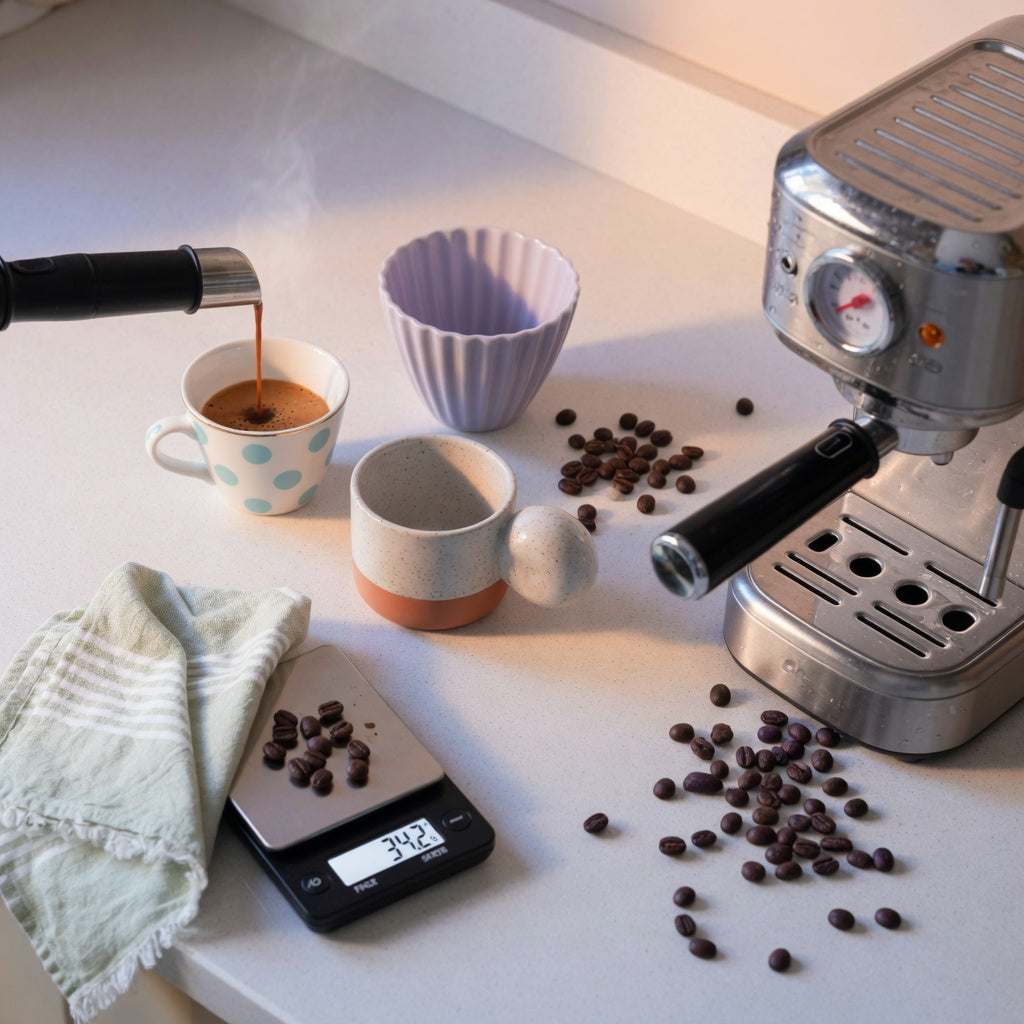
Cute Espresso Cups Comparison: 170 vs 200 vs 250 ml
Our current cute espresso cups comparison lines up three ceramic cups by capacity and routine, so you can pick the one that matches the drink you actually make — and know what to verify before orde...
Read more
Cute Espresso Cups Morning Routine Product Shortlist Guide: 3 Picks
A shortlist built around three real morning variables — the clock, your usual pour, and how many refills you will tolerate — matching 170, 200, and 250 ml ceramic cups to specific habits, with a cl...
Read more
Leave a comment
This site is protected by hCaptcha and the hCaptcha Privacy Policy and Terms of Service apply.