
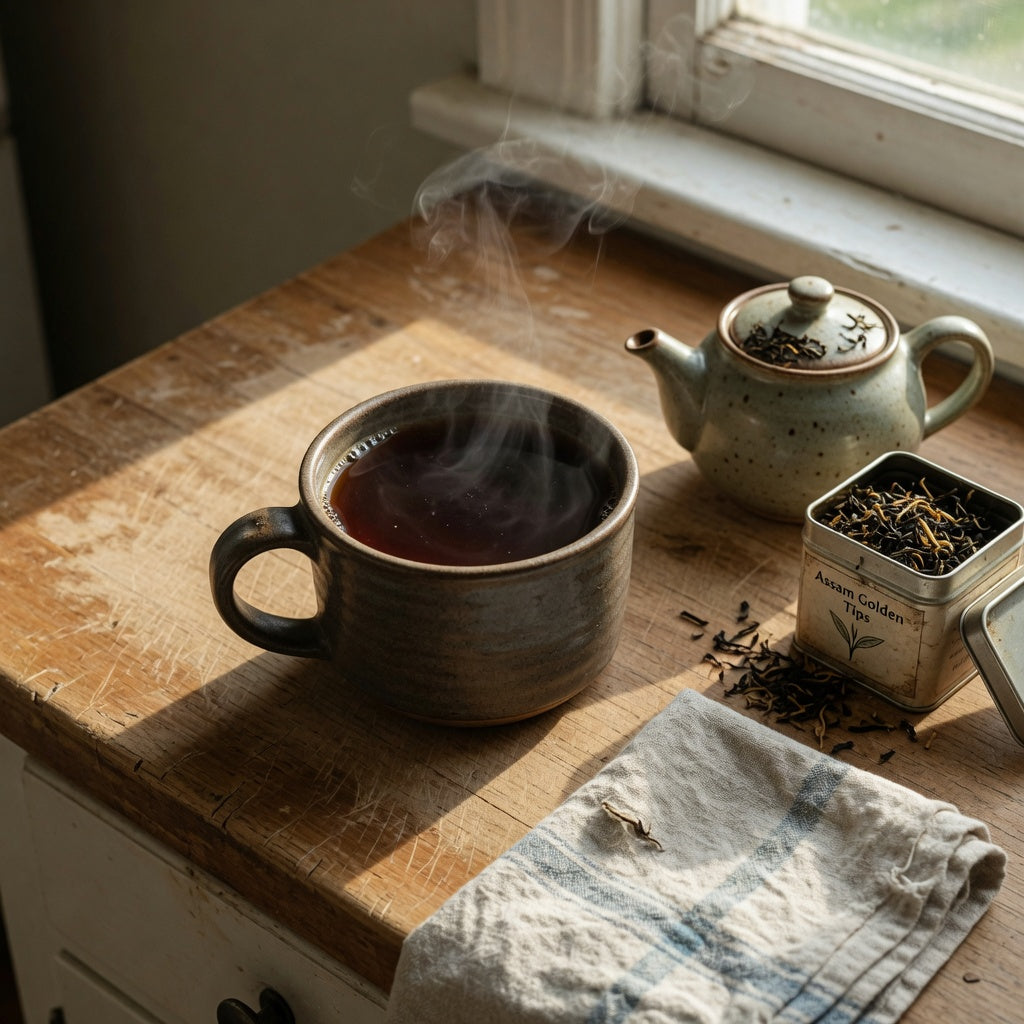
Cuppa Tea Mug Guide: Sizes, Materials, and Care for a Proper Brew
Reading time: about 9 minutes
Last week a customer emailed us a photo of her kitchen shelf — six mugs, none of them right for tea. “They’re all either dainty or enormous,” she wrote, “and I just want one that holds a proper cuppa.” We get some version of that message most weeks, and it’s why the cuppa tea mug deserves a conversation of its own. The mug you pour into decides how long the tea stays hot, whether your fingers fit the handle, and how many trips you make back to the kettle.
So what is a cuppa tea mug, exactly? “Cuppa” is British shorthand for an everyday cup of tea, and the mug itself isn’t a special category of drinkware — it’s ordinary crockery judged by one standard: does it handle a real tea session? In our store the same handful of questions comes up with nearly every tea buyer, so this guide answers them straight: what capacity to buy in ounces and milliliters, which material holds heat (and when that backfires), what lead and Prop 65 labels on decorated mugs actually mean, and how to keep a mug alive through dishwasher cycles and crowded cabinets.
What Counts as a Cuppa Tea Mug — and How Is It Different From a Teacup?
A teacup and a mug are different tools, and the numbers explain why:
- Teacup: roughly 6–8 oz (180–240 ml), thin walls, saucer alongside. Lovely for a sit-down service; maddening if you hate refilling.
- Standard mug: about 10–14 oz (300–410 ml). The everyday sweet spot for most black-tea drinkers.
- Large mug: 16 oz (470 ml) and up — the “big mug for a proper cuppa” range, where a one-person pot’s pour plus milk fits with room to spare.
Before you buy, run the test we give customers: brew your usual pot-for-one, pour it out, and measure what actually lands in the cup. That number is your true capacity target, because plenty of listings state only one unit. Quick conversions help — 12 oz is about 355 ml, 16 oz about 470 ml — so you can translate in either direction while comparing.
Three practical differences settle the teacup-versus-mug question: handle room (a mug fits more fingers), wall thickness (thicker holds heat longer but weighs more), and no saucer to wash. If your tea happens at a desk, in the car before a school run, or balanced on an armrest, the mug wins on practicality alone.
Which Material Keeps Your Cuppa Hot the Longest?
Material is the biggest trade-off in this category, and no single option wins everything:
| Material | Heat retention | Durability | Care notes |
|---|---|---|---|
| Bone china | Thin walls hold less thermal mass — preheat it or the brew cools faster | Surprisingly chip-resistant for its weight | Verify dishwasher tolerance on decorated pieces |
| Porcelain | Denser than bone china; solid mid-range retention | Good everyday toughness, though rims can chip | Neutral taste, easy care |
| Stoneware | Thick walls hold heat the longest | Heavy workhorse; rim chips are the common failure | Heavy in a crowded sink; usually robust glazes |
| Glass | Depends entirely on wall thickness | Sudden temperature swings can crack thinner glass | No glaze questions; shows off the brew |
| Enamel | Metal core, decent retention | Chips expose the metal underneath | Never microwave — there’s metal under the coating |
One honest limitation we repeat to green-tea drinkers: the mugs that keep black tea hot for ages are the same ones that punish delicate brews. A thick, heat-holding stoneware wall keeps a green tea scorching and stewing long past its ideal window, which pulls out bitterness. If green tea is your daily drink, a smaller cup you finish quickly serves you better than a big thermal monster.
Which Cuppa Tea Mug Fits Your Habit? Three Matches From Our Shelves
In our experience, tea buyers sort into three camps, so this is how we’d map each one to a specific mug:
- Grip comes first. Flat, cramped handles are a daily annoyance if you have bigger hands or achy joints. Our ball-handled coffee tea mug does what the name promises — a ball-shaped finish to the handle that your whole hand closes around instead of a tab you pinch. It’s the detail customers mention first when they pick one up. Confirm the exact capacity and care line on the listing before ordering; we’d rather you verify than assume.
- Slow sips, lighter silhouette. The pleated coffee tea cup brings a pleated profile and a teacup-adjacent shape to unhurried sessions. Fair warning from handling this kind of decoration: ridged surfaces are where the first knock shows a chip, so hand-wash it if you’re protective — and check the listing for its stated care.
- Small pour, sit-down brew. The retro coffee tea cup is named a cup rather than a mug, and that distinction matters. Treat it as the smaller, sit-down option until the listed oz/ml tells you otherwise — it suits an after-lunch brew better than an all-morning refiller.
None of these are travel mugs — no lids, no insulation — so they’re the wrong tool for commuting or for sitting dangerously close to a keyboard. If you need a lid or all-morning heat, a dedicated insulated style will serve you better than anything here. For browsing past these three, our unique mugs collection is where most gift-hunters start.
How Do You Brew a Proper Cuppa in a Mug?
- Warm the mug first. Swirl in hot tap water and dump it. A thick stoneware wall steals noticeable heat from your first pour; preheating evens that out.
- Use freshly boiled water for black tea. The UK Tea & Infusions Association recommends fresh, just-boiled water — water that has sat in the kettle loses the dissolved air that carries flavor.
- Steep by the clock. Most black teas land somewhere in the three-to-five-minute window, and the label on your own tea outranks us. Color is a poor guide; time isn’t.
- Settle the milk debate. Milk-in-first was traditionally a way to keep very hot tea from cracking delicate porcelain. In a sturdy mug, steep fully, then add milk to taste — you control the strength.
- Leave headroom. If you take milk with a full pot-for-one pour, a 12 oz mug is often more practical than a 16 oz one. Sloshing tea onto a keyboard is not a personality trait.
If you’ve already decided bigger is better for your routine, our guide to drinking tea in a big mug goes deeper on comfort and heat.
Are Decorated Mugs Safe? Lead, Cadmium, and Prop 65 in Plain Terms
This is the question shoppers ask quietly, so here’s the plain version. Glazes on older and some decorative ceramics historically contained lead and cadmium — especially bright painted colors, metallic rims, and vintage pieces made before modern rules. For ceramics sold for food contact today, the FDA regulates lead and cadmium in glazed ware, and reputable makers formulate glazes to meet those limits.
A California Prop 65 warning on a listing means the seller is flagging that the product can expose you to a chemical on the state’s list. It is a disclosure, not a recall and not a verdict — but it’s a fair prompt to read the maker’s food-safety statement before pouring boiling water into the mug daily.
- Buy mugs whose listing states the glaze is food-safe; a “lead-free ceramic” claim should be explicit, not implied.
- Retire chipped or heavily worn vintage pieces from hot-drink duty — they make fine pen cups.
- Chipped glaze is the everyday risk: exposed clay and worn metallic decor are where off-tastes start.
- Metallic rims and gold detailing never go in the microwave.
We go deeper on matching glaze type to daily use in our hot tea mug guide to material, capacity, and glaze safety.
What Actually Ends a Mug: Dishwashers, Microwaves, and Thermal Shock
Care is where decorated mugs live or die. From what we see come back — or come in as “can you replace this one?” — the pattern is consistent:
- Printed and underglaze decoration generally tolerates dishwashers, but the listing’s care line is the authority. Read it before the first wash, not after.
- Metallic rims, gilded handles, and hand-painted accents are hand-wash only; one dishwasher cycle can dull the finish permanently.
- Thermal shock cracks more mugs than dishwashers do. A fridge-cold mug meeting boiling water is the classic failure — warm it first if it’s been chilling.
- Stacking is the quiet killer. The rim chips we hear about most usually happen in crowded cabinets, not at the sink.
Gifting a Cuppa Tea Mug Without Getting It Wrong
Tea mugs are steady gift sellers for us, and the orders that go smoothly share a pattern. Before you wrap one:
- Confirm the capacity is listed in both oz and ml, so the recipient isn’t surprised by a tiny cup or a two-handed monster.
- Look for an explicit food-safe glaze statement, especially on personalized or brightly decorated pieces.
- Check the microwave and dishwasher line — a “hand wash only” surprise ruins the moment on day two.
- Pair it with loose leaf or a biscuit tin. A mug alone reads generic; a mug plus a brew reads considered. That’s the “cuppa and biscuits” set people actually mean when they say they want to gift a proper cuppa.
Personalized and funny-slogan mugs are usually non-returnable, so double-check spelling at checkout and order ahead of the date. For seasonal timelines, our Christmas mug gifting guide runs the same checklist with holiday deadlines.
Frequently asked questions
What size should a cuppa tea mug be?
For most daily black-tea drinkers, 10–14 oz (300–410 ml) is the sweet spot. Step up to 16 oz (470 ml) or more if you brew a small pot for yourself or nurse your tea slowly. Remember that bigger mugs hold heat longer — great for black tea, harsh on delicate greens.
Can I put a decorated tea mug in the dishwasher and microwave?
Plain glazed ceramic usually handles both, but decorated mugs depend on the finish. Metallic rims, gilded handles, and hand-painted details should be hand-washed and kept out of the microwave. Follow the care line on the specific listing rather than assuming.
What’s the difference between a teacup and a mug?
A teacup runs smaller — roughly 6–8 oz (180–240 ml) — with thin walls, a smaller handle, and traditionally a saucer. A mug holds 10 oz or more with a full-size handle and no saucer needed. Practically: teacups suit sit-down service; mugs suit desks, bigger pours, and everyday drinking.
Do decorated ceramic mugs contain lead?
Some older and vintage decorated ceramics did use lead or cadmium in their glazes, which is why the FDA regulates these metals in food-contact ceramics today. A Prop 65 warning on a modern listing is a prompt to read the maker’s food-safety statement, not an automatic verdict. Skip chipped vintage ware for hot drinks either way.
Is a big mug a good gift for a proper cuppa drinker?
Yes, if they drink black tea and hate refilling — a 16 oz mug holds a small pot’s pour with room for milk. Confirm the capacity is labeled in both oz and ml, check that the glaze is stated food-safe, and add a tea or biscuit pairing so it feels like a set.
Before you buy anywhere, run this five-point check:
- Capacity stated in both oz and ml
- Food-safe glaze spelled out, not implied
- A clear microwave and dishwasher line
- A handle your fingers actually fit
- A shape that matches how you drink — fast and full, or slow and warm
Then browse our tea mugs range and pick the one you’d genuinely reach for at 7 a.m.
Read more

Chunky Mugs: Design Trends, Sizes, and What to Check Before Buying
What actually makes a mug chunky, plus the trade-offs listings skip: realistic weight ranges, why thick walls steal heat before they hold it, glaze and thermal-shock care, and which sculptural shap...
Read more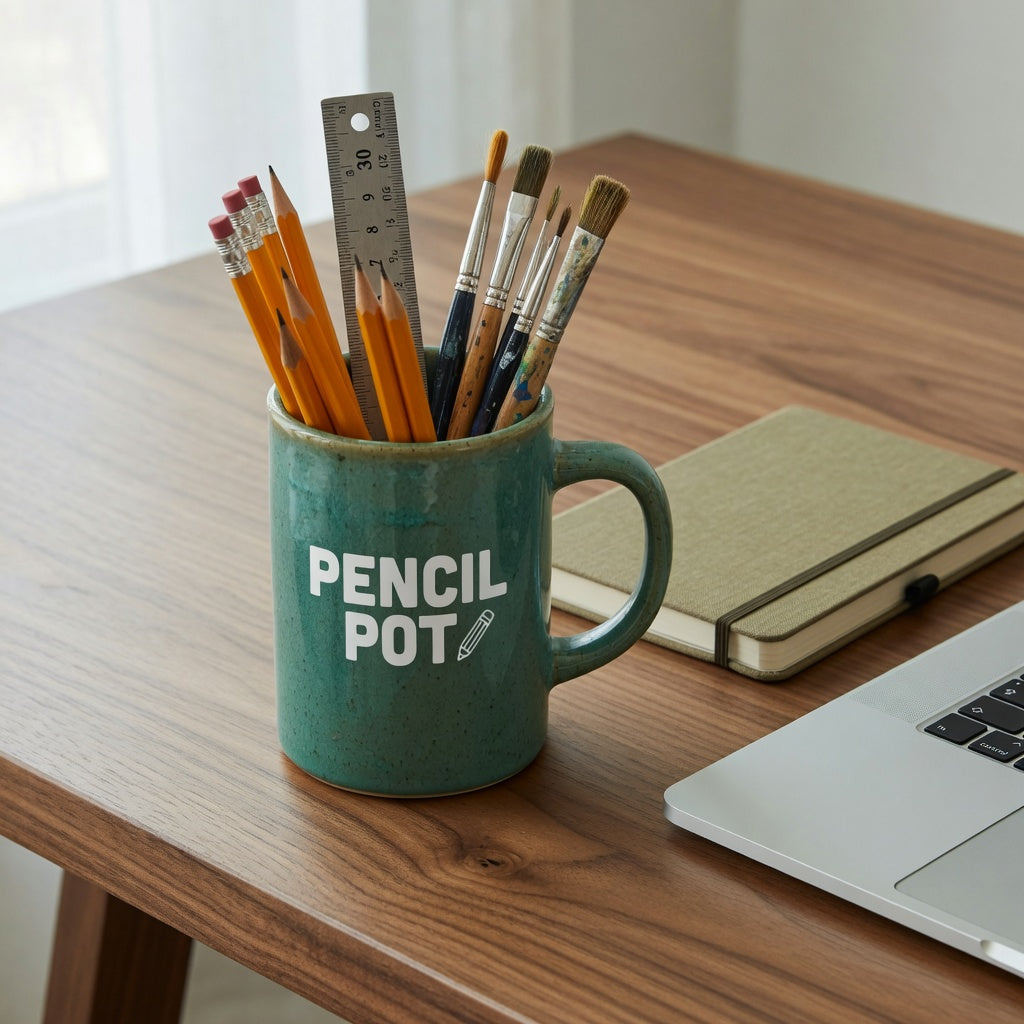
Ceramic Mug Desk Tidy: What to Compare Before You Buy
A ceramic mug desk tidy is usually a repurposed coffee mug — which is why listings rarely tell you what matters. We compare interior depth and mouth width, stability, base finish, drinkware safety,...
Read more
Leave a comment
This site is protected by hCaptcha and the hCaptcha Privacy Policy and Terms of Service apply.