

Hot Tea Mug: How to Match Material, Capacity, and Glaze Safety
Reading time: about 10 minutes
We unpack pallets of ceramic drinkware every week, and the question that lands in our inbox more than any other is oddly specific: "why does my tea go lukewarm before I'm halfway through the cup?" Nine times out of ten, the mug is the culprit — a thin wall that dumps heat, or a wide mouth that vents steam, or a handle that punishes your wrist once the cup is full. A hot tea mug looks like the simplest purchase in your kitchen, but the wrong one quietly works against the tea you paid for.
This guide walks through the four decisions that actually matter: material and heat retention, glaze safety, capacity for your brewing style, and handle fit. We sell and ship mugs every day, and we'd rather you buy once and drink happy for years — which also means telling you where each style falls short, and what to confirm on any listing before you click add-to-cart.
Which Hot Tea Mug Material Actually Holds Heat the Longest?
Heat retention is physics, not marketing. Wall thickness, the mass of the body, and whether there's an insulating air layer determine how long your steep stays drinkable. A thick body banks thermal energy and feeds it back into the liquid; a thin wall hands it to the room. How the common materials behave in real use:
- Thick stoneware: the heat reservoir of the group. Dense walls keep slow sippers happy through long mornings. Trade-off: it's heavy, and a full 16-ounce pour turns it into a wrist workout.
- Porcelain and bone china: thin, vitrified, and refined at the lip — one of the most pleasant sipping experiences there is. Trade-off: it cools noticeably faster, so it rewards drinkers who finish a pour rather than nursing it for an hour.
- Single-wall glass: full theater of blooming leaves and liquor color, with a neutral rim that doesn't interfere with flavor. Trade-off: the exterior gets hot and the tea cools quickly.
- Double-wall glass: an insulating layer between two walls keeps the outside touchable even with freshly boiled water inside — no handle required. Trade-off: it's the most fragile option here and usually wants gentle, hand-wash care.
| Material | Holds heat | Sip feel | Best suited to | Watch out for |
|---|---|---|---|---|
| Thick stoneware | Very good | Solid, substantial lip | Slow sippers, winter blends | Heavy when full |
| Porcelain / bone china | Moderate | Thin, refined lip | Short, focused steeps | Cools fast without a lid |
| Single-wall glass | Modest | Neutral rim, full visibility | Watching leaves unfurl | Hot exterior, quick cooling |
| Double-wall glass | Very good | Cool exterior, no handle needed | Desk sessions, delicate teas | Fragile; hand-wash care |
No entry in that table is a flaw — it's about matching the body to your habits. If your kitchen has a history of breakage, double-wall glass will test that history. If you reheat your cup twice before finishing it, prioritize mass or a lid.
Is Your Tea Mug's Glaze Food-Safe? Lead, Cadmium, and Prop 65 in Plain English
Most mug articles skip this, and it matters for hot tea specifically. Heat plus acidity is the combination that raises leaching risk from an improperly fired glaze — and tart fruit blends with hibiscus, rosehips, or citrus peel hit both conditions at once. Lead and cadmium have historically appeared in low-fire decorative glazes, especially saturated reds, oranges, and glossy over-glaze decals, and the FDA has long advised against putting food or drink in decorative or craft pottery unless it's explicitly food-safe.
Properly made everyday ceramics solve this at the kiln: fired to full maturity, a glaze fuses into a glassy, non-porous surface that locks minerals in place, which is why most commercially produced mugs are safe daily drinkers. California's Proposition 65 labels cause outsized worry. The law requires warnings at thresholds set well below the levels regulators associate with harm, so a warning tag is a prompt to ask the seller questions — not a verdict that the mug is unsafe.
Buying artisan or imported pieces? Run this quick check:
- Look for explicit food-contact language. Reputable sellers state that food-contact surfaces are lead- and cadmium-free. "Decorative use only" means exactly that — shelf, not kettle.
- Check the interior. A fully glazed interior resists staining and sanitizes easily. Raw, matte clay inside a mug absorbs tea tannins, stains fast, and is harder to keep clean — lovely for matcha photos, impractical for daily black tea.
- Treat vintage and unknown pottery as display ware. Unless the glaze history is known, keep boiling tea out of hand-thrown or antique cups.
We ask about glaze firing and food-contact notes before adding any ceramic to our store, and we'd encourage you to do the same with any seller — reading the safety and care details on a listing rather than trusting photos alone.
What Size Hot Tea Mug Matches the Way You Brew?
Capacity should follow the tea, not the other way around. An oversized opening is a steam vent, and a big vessel over-holds delicate greens that turn bitter as you nurse them. Our rough map:
- 8–10 oz: traditional servings of black, green, or oolong — especially if you re-steep leaves in short sessions. Small, focused, refillable.
- 12–14 oz: the everyday sweet spot for standard tea bags and breakfast blends, enough volume that the last third doesn't go cold.
- 14–16 oz: long-steeped herbals, chai, tea lattes with milk, and desk mugs you sip across a work block. Favor a narrower mouth or a lid here.
Loose-leaf drinkers should weigh two designs. A mug with a built-in infuser and lid is a one-vessel workflow — steep, lift the basket, sip — and suits rooibos and fine-cut herbals, though the basket cramps large-leaf oolongs that want room to unfurl. A lidded mug without an infuser is the desk-drinker's friend: the lid traps heat and aroma between sips, something open thin-walled cups can't do.
Can You Hold It Comfortably Full? Handle Clearance, Weight, and Grip
Here's the math we run when testing handles in-house: sixteen fluid ounces of water alone weighs about a pound, and a thick ceramic body can add nearly as much again. All of that hangs off the handle, so a loop that pinches two fingers turns a relaxing cup into a grip workout — and for drinkers with arthritis or reduced grip strength, it turns a favorite mug into a shelf ornament.
Three things a handle must prove before it earns a spot in our lineup:
- Finger clearance: two to three fingers should sit inside the loop without knuckles pressing the hot wall. Large-handed drinkers should treat this as a requirement, not a nice-to-have.
- Grip style: rounded, ball-style handles give the whole hand something to close around; slim flat handles suit lighter cups but fatigue quickly under a heavy pour.
- Balance: a handle mounted too low leaves the mug top-heavy when full. A well-balanced mug feels lighter than its measured weight.
Three Kinds of Tea Drinkers, Three Mugs Worth a Look
Mapping real drinking habits to real stock is the part of this job we enjoy most. These scenarios come straight from customer conversations:
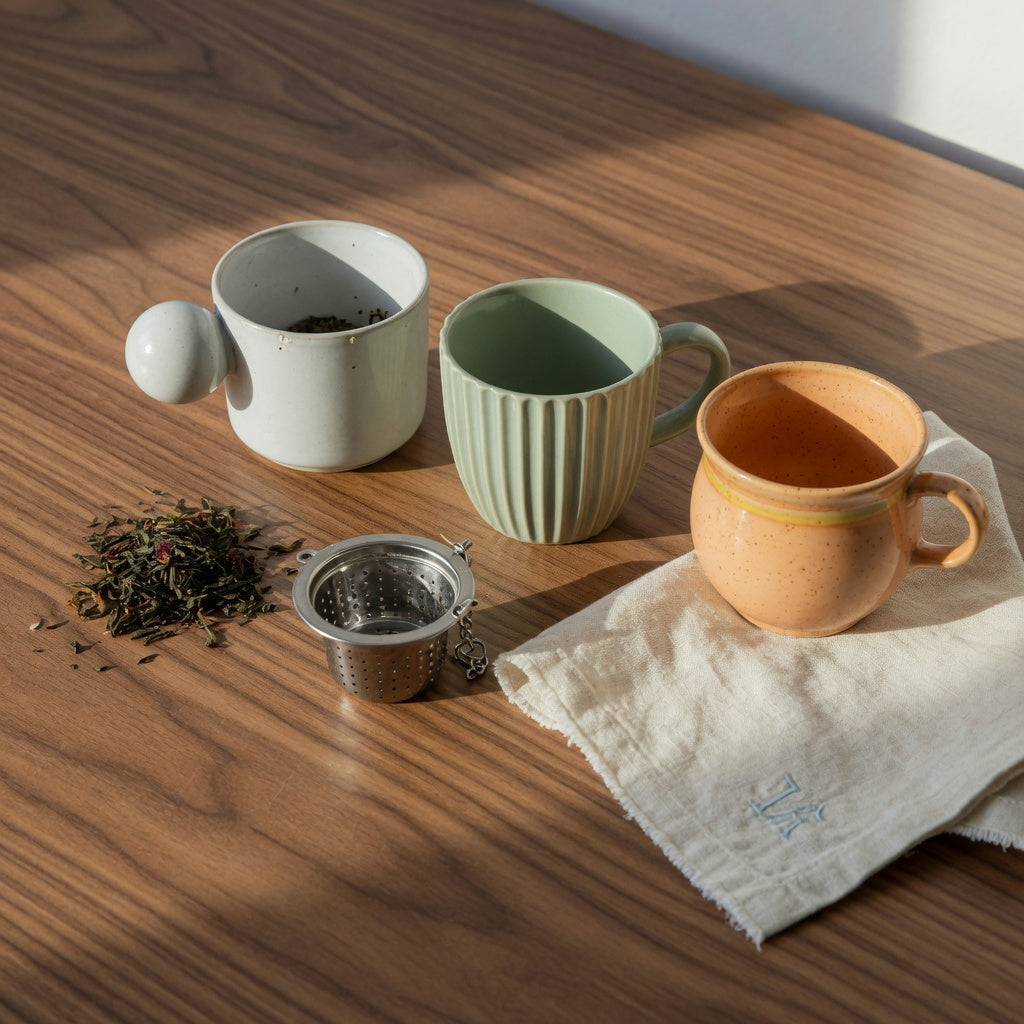
- You want a classic everyday cup with character. If your taste runs to traditional shapes with vintage diner energy, the Retro Coffee Tea Cup is the piece we point you toward first — its name tells you the styling story. Confirm current capacity, material, and care notes on the listing before ordering, since details can change between production runs.
- You want a handle your whole hand can hold. Drinkers with grip fatigue, larger hands, or arthritis do best with a chunky rounded grip. The Ball Handled Coffee Tea Mug does what its name promises — check the listing photos to confirm the loop clearance suits your grip.
- You like texture you can feel. Ridged surfaces add visual depth and a bit of tactile security when your hands are damp. The Pleated Coffee Tea Cup is our pick for that camp; as always, verify capacity and care instructions on the product page itself.
None of these is the only answer — they're starting points. To compare shapes and glazes side by side, browse our full range of unique coffee mugs. Still torn between sizes? Our breakdown of 14 oz coffee mugs covers fit, weight, and comfort in detail.
Microwave, Dishwasher, and Thermal Shock: Care Rules by Decoration Type
Care mistakes kill more mugs than drops do, and the rules change with the decoration:
- Metallic rims and luster decals: those shiny finishes contain actual metal. Microwaving a trimmed mug can spark and permanently mark the glaze — reheat in a plain vessel instead, and hand-wash trimmed pieces to keep the finish bright.
- Dishwasher cycles: harsh detergents and high heat dull glossy glazes gradually, and rack collisions chip rims on heavy pieces. Mugs marked dishwasher-safe can go in; anything artisan, trimmed, or double-walled earns a spot in the sink.
- Glass and thermal shock: sudden temperature swings crack glass. A fridge-cold mug meeting boiling water is the classic failure — pre-warm it with warm tap water first.
Our workshop rule of thumb: if a mug's care instructions aren't printed anywhere, assume hand-wash and no microwave until the listing tells you otherwise.
One flavor note from our own break room: repeatedly microwaving cooled tea flattens it into tannic bitterness faster than a fresh steep would. If lukewarm tea is your recurring enemy, choose for heat retention from the start — our comparison of mugs that actually keep hot drinks warm breaks down what helps, and we've covered the trade-offs of drinking tea from a big mug too.
Frequently asked questions
What size hot tea mug is best for daily use?
For most people, 12 to 14 ounces covers a standard tea bag or a round of loose leaf without the last third going cold. Step up to 14–16 ounces for tea lattes and long herbal steeps, or down to 8–10 ounces if you re-steep oolongs and greens in short sessions.
Which hot tea mug material keeps tea warm the longest?
Thick-walled stoneware and double-wall glass lead the pack for different reasons: stoneware banks heat in its dense body, while the air layer in double-wall glass slows heat loss and keeps the outside touchable. Thin porcelain and single-wall glass cool faster and reward quicker drinking.
Can I microwave a mug with a metallic or gold rim?
No. Metallic trims and luster decals contain real metal, which can spark in a microwave and permanently damage the finish and the glaze beneath it. Reheat your tea in a plain, trim-free vessel instead.
What does a Prop 65 warning on a tea mug actually mean?
California's Proposition 65 requires businesses to label products containing listed chemicals at thresholds set well below the levels regulators associate with harm, so a warning is a prompt to ask questions, not a verdict of unsafe. If a labeled mug also documents lead- and cadmium-free food-contact surfaces, it can still be a fine daily drinker.
Why did my glass mug crack when I poured in boiling water?
Thermal shock: one section of the glass expanded faster than the rest, and the stress found the weakest point. Pre-warm cold glass with warm tap water before adding boiling water, and never move a glass mug straight from the fridge to the kettle.
A 60-Second Checklist Before You Order
Run any candidate through these five checks and you'll skip the returns-and-regrets cycle:
- Material matched to pace: thick stoneware or double-wall glass for slow sippers; porcelain for quick, refined steeps.
- Capacity matched to tea: 8–10 oz traditional, 12–14 oz daily, 14–16 oz for lattes and long herbals.
- Handle tested in your hand: two to three fingers of clearance, with balance you can feel when it's full.
- Safety confirmed in writing: food-contact glaze notes on the listing, and no metallic trim if you microwave.
- Care you'll actually follow: honest about whether a hand-wash-only piece fits your sink habits.
Ready to browse? Start with the unique coffee mugs collection and filter by the checklist above — or jump straight to the three picks above and hold their listings up against it. Either way, you'll end up with a mug that treats your tea the way it deserves.
Read more
Cool Tea Mugs: 3 Distinct Designs Compared for Steeping and Desks
We handle these designs daily. Here's how a ball-handled mug, a pleated cup, and a retro style compare on grip, steeping, cleanup, and desk use — with honest trade-offs and the specs to verify on e...
Read more
Oversize Coffee Mugs Size Guide: Ounces, Handles, Cupboard Fit
A practical size guide to oversize coffee mugs: what 14, 18, and 24 oz actually hold once you leave splash room, which handles stay comfortable when full, and the kitchen measurements to take befor...
Read more
Leave a comment
This site is protected by hCaptcha and the hCaptcha Privacy Policy and Terms of Service apply.