



Coffee Mugs With Big Handles for Small Coffee Setup: What to Compare
Reading time: about 9 minutes
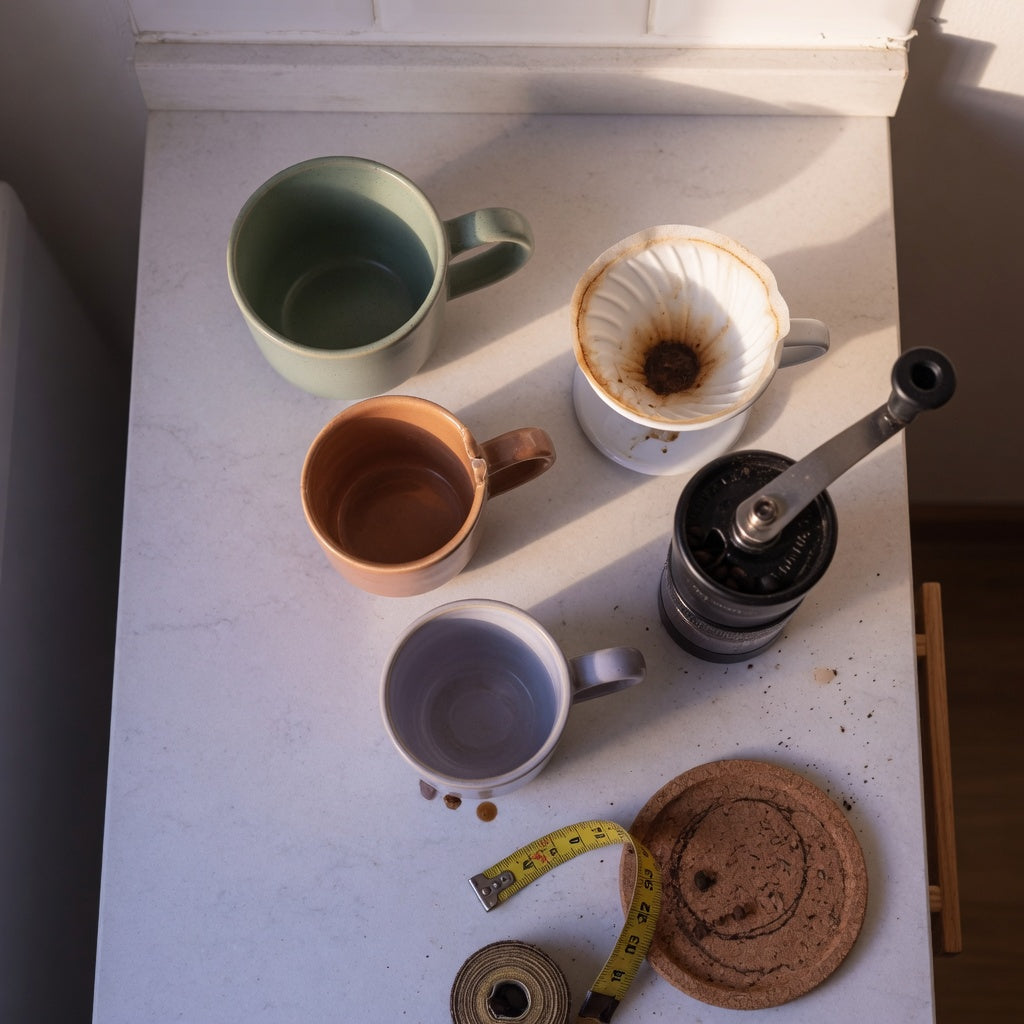
On a 40 cm strip of rental-kitchen counter, a mug's handle decides whether it lives beside the kettle or gets exiled to a cabinet. That is the arithmetic behind most searches for coffee mugs with big handles for small coffee setup: buyers want a loop a whole hand clears, in a footprint that still leaves room for the grinder.
We pack and photograph these mugs in our store every week, and we read the emails that arrive a month after delivery. The pattern holds. The handle is why someone buys; the counter is why they quietly stop using it. Measure the space first, then argue about loop size.
How much counter does a wide handle actually take?
A generous loop does not just widen a mug in one direction. It pushes the whole silhouette outward, so the depth you need — body plus handle — grows faster than the capacity does. On a counter already holding a grinder, a kettle, and a folded drying mat, that extra centimetre is the entire decision.
Four measurements do most of the work:
- Footprint with the handle. Body diameter plus handle projection, measured at the angle you actually hold the mug, not squared up to the wall.
- Vertical clearance. Counter to upper cabinet, or counter to a floating shelf.
- Spout clearance. Height and depth under your brewer or dripper. A tall mug with a forward-sweeping handle can foul the machine housing even when the height looks fine.
- Warmer or coaster diameter. Measure the base, not the rim. A wide base overhanging a small warming plate is a tipping hazard.
Is a big handle a measurement or a photo caption?
Most listings never publish interior clearance in millimetres, which makes the word large almost decorative. Treat it as a description of a photograph, then judge the loop on what you can see or ask about.
Finger count. A 2023 care-home cup study looking at cups for people with reduced strength and dexterity identified cup mass, diameter, handle length, and handle orifice area as the dimensions that mattered. The same paper, citing earlier hand-clearance work, put the minimum mean cross-sectional area at roughly 650 mm² for two fingers to pass through and about 950 mm² for three. A side-on product photo communicates neither number.
Handle diameter. Thick is not the same as easy. In a biomechanics study of people with rheumatoid arthritis using spoons, larger handle diameters were associated with less finger-joint flexion than a slender handle, and most participants chose a 1.50-inch built-up handle over a 1.00-inch version. Diameter and opening size are separate variables, and a fixed handle usually makes you optimise one at the expense of the other.
Standoff and wrist angle. A loop set close to the hot wall pushes heat into your knuckles; one set further out runs cooler but shifts load away from the wrist. The care-home researchers also flagged limiting wrist moment as a design goal. Plain version: if you have to cock your wrist to keep the mug level, the handle has failed however generous it looks.
Coffee mugs with big handles for small coffee setup: 250 ml, 400 ml, and 480 ml compared
Our range is short on purpose, so the comparison stays concrete. Capacities below are the listed figures on each product page — nothing more. We do not quote empty weights, because an unverified number is worse than no number.
| Mug | Listed capacity | Best fit on a tight counter | Confirm on the listing |
|---|---|---|---|
| Ball Handle | 250 ml | Tight counters, single shots, tea for one, a desk beside a keyboard | Interior loop clearance in the gallery photos; height under your brewer |
| The Flow | 400 ml | One full mug-plus serving without going jumbo | Base diameter against your warmer or coaster |
| The Rock | 480 ml | Long mornings, one big brew, drinkers who normally refill twice | Height under a cabinet or brewer; how the loop reads next to a hand |
Start with the 250 ml Ball Handle when the counter is the binding constraint. It suits a single espresso, a long black, or tea for one and takes the least room of the three — but anyone wanting a 350 ml pour without a refill will find it small, and that is a fair reason to skip it. The Flow at 400 ml is the middle answer: a normal mug-plus serving without going jumbo, and the size most people settle on when one mug has to cover the whole morning.
The Rock at 480 ml is for long sittings and for drinkers who refill a standard mug twice. Two honest caveats. First, 480 ml may exceed the largest cup setting on your brewer, so check the machine before committing. Second, the more you pour, the more the mug weighs in the hand — exactly the moment a big loop stops compensating. If you would rather compare shapes than spec lines, our collection of unique coffee mugs shows the loops side by side.
Why can a bigger loop feel worse once the mug is full?
Because opening size and filled weight are different problems, and listing copy tends to merge them. The care-home study is instructive here: participants preferred the cups that were light and had a large handle. Both. A heavy mug with a cavernous loop still loads the wrist on every lift.
Three consequences worth holding onto:
- Fill level changes the verdict. A 480 ml mug filled to a sensible level carries close to twice the liquid of a 250 ml one. Handle comfort judged on an empty mug tells you very little.
- Too wide is a real failure mode. If the loop forces your fingers to splay, you lose the thumb-and-ring-finger support that steadies the mug. A handle sized for a large hand is not automatically comfortable in a small one.
- Two grip points beat one. For tremor, weak grip, or a flare-up, a second handle spreads the load instead of asking a single wrist to stabilise everything.
One loop, twin handles, T-handle, or swivel?
- Single C or D loop. The all-rounder for large hands and ordinary use. Weak for swollen knuckles if the opening is tight, and weak for tremor because there is only one grip point.
- Twin handles. Best for flares and for carrying a full mug from kitchen to desk. They cost counter space and stack badly, since two handles rarely nest.
- T-handle. Works for a pinch grip and for hands that cannot close through a loop. Awkward if you like hooking a finger and carrying loosely.
- Swivel handle. Common on insulated travel mugs because it folds flat. Verify cup-holder fit separately; a folding handle says nothing about base diameter.
On a small setup, twin-handle and swivel designs are the ones most likely to end up unused, because a folded handle still owns a corner of the shelf.
Where do big handles jam against small-kitchen hardware?
- Under a single-serve brewer. Height is only half the test. A forward-projecting handle can hit the housing while the mug itself clears.
- On a mug warmer. Jumbo bases overhang small plates and sit off-centre, which is how mugs slide.
- In the dishwasher. Wide loops eat rack space and can block a spray arm. Whether a given mug is dishwasher safe is a listing question for that mug, not something to infer from the word ceramic.
- On a cabinet shelf. Loops knocked against each other are where chips begin and where glaze crazing first shows. Leave an air gap between handles.
- In a car cup holder. Relevant only for handled travel mugs, and rarely measured. Treat holder fit as unconfirmed until you check it.
What about metallic rims, handmade glaze, and the microwave?
Two safety threads run through oversized ceramic. The U.S. Consumer Product Safety Commission reported that certain ceramic mugs with a metallic coating can overheat or break when microwaved or filled with extremely hot liquid, creating burn and laceration hazards. A March 21, 2024 recall covered about 440,500 Starbucks-branded holiday gift-set mugs with metallic coating; the agency recorded 12 incidents and 10 injuries, including burns or blisters and one cut.
Glaze is the second. The FDA states that lead in glazes or decorations on some traditional pottery can leach into food or drink if the piece is not manufactured and fired properly, and that washing or boiling will not remove it. Everyday commercial factory ware is described as far less likely to be a problem than handmade, antique, damaged, or brightly orange-red-yellow pieces of uncertain origin. Ceramicware with extractable lead above FDA action levels should not be labelled lead free.
At the counter that means two habits: keep metallic-rimmed and heavily decalled mugs out of the microwave, and if you buy handmade or imported pottery from an unknown source, ask the seller for test documentation rather than trusting a badge.
Which numbers should you confirm before adding to cart?
- Interior handle clearance — in millimetres, or a photo with a hand through the loop.
- Listed versus usable capacity — a 480 ml mug filled to a sensible level holds less than 480 ml.
- Base diameter — for warmers, coasters, and cup holders.
- Height — against the brewer spout and the cabinet gap above the counter.
- Empty weight — ask if it is missing. It is the most useful figure for a weak wrist.
- Microwave and dishwasher statements — read them as claims about that mug, not about ceramic in general.
Then look at the handle joint itself. A smooth, generous transition where the loop meets the body separates a well-made mug from a cheap one; thin, abrupt joints are where handles fail first. Work backwards from the volume you drink in one sitting, then check the footprint against your counter. A 250 ml Ball Handle mug with a genuinely open loop beats a 480 ml mug you cannot lift comfortably — and it takes less counter either way.
Frequently asked questions
Will a big handle actually fit four fingers?
Not always, and the label will not tell you. Hand-clearance research puts the minimum opening at roughly 650 mm² for two fingers and about 950 mm² for three, so ask for interior clearance in millimetres or look for a photo with a hand through the loop. If four fingers is a hard requirement, size the loop up and accept a wider footprint.
Can coffee mugs with big handles for small coffee setup work on a 30 cm counter?
Yes, if capacity drives the choice. A 250 ml mug with an open loop adds less depth than a 480 ml mug with the same handle style, because volume drives both footprint and filled weight. Measure body-plus-handle depth, leave a gap for the kettle, and check the loop against a hand in the photos before buying.
Do two-handle mugs beat one oversized loop for arthritis?
Often, yes. Two grip points spread the load instead of asking one wrist to stabilise everything, which matters during a flare when knuckles are swollen. The cost is counter space and stacking, so a twin-handle mug suits a dedicated desk spot better than a crowded shelf.
Can I microwave a mug with a metallic rim?
No. The CPSC has documented overheating and breakage in ceramic mugs with metallic coatings, including a 2024 recall of roughly 440,500 Starbucks-branded gift-set mugs. Keep plain-glaze mugs for reheating and use decorated or metallic pieces for serving only.
Is heavier stoneware better at keeping coffee hot?
Thicker walls hold heat longer, but they add mass, and mass is what makes a large handle feel inadequate once the mug is full. If grip strength is the constraint, a lighter mug you can lift safely usually beats a heavier one that stays warm a few extra minutes.
More from our blog
Ready to pick your mug? Two ways to save on today's order:
Ordering 1–3 mugs? Get an extra 10% off your 1st order with code 10_OFF Apply 10% Off & Shop Wooden-Handle Mugs →
Gifting 4+ mugs? Buy 3, Get the 4th Free applies automatically at checkout (no code needed; offers do not stack) · Free standard shipping (Nov pre-Christmas delivery: 15–20 calendar days US) · Free replacement if chipped in transit.
Popular mug buying guides: Ceramic Tea Cups & Infuser Mugs · Ceramic Mugs with Lids Compared · Wooden-Handle Tea Infuser Mugs Compared · Christmas & Secret Santa Mugs 2026 · Espresso & Cortado Cups Guide · Cup & Saucer Gift Sets · All 25 Mugs Spec Table · Mug Size Guide · Shipping & Promo FAQ
FIRST ORDER 10% OFF (CODE: 10_OFF) · OR BUY 3, GET THE 4TH FREE


Read more
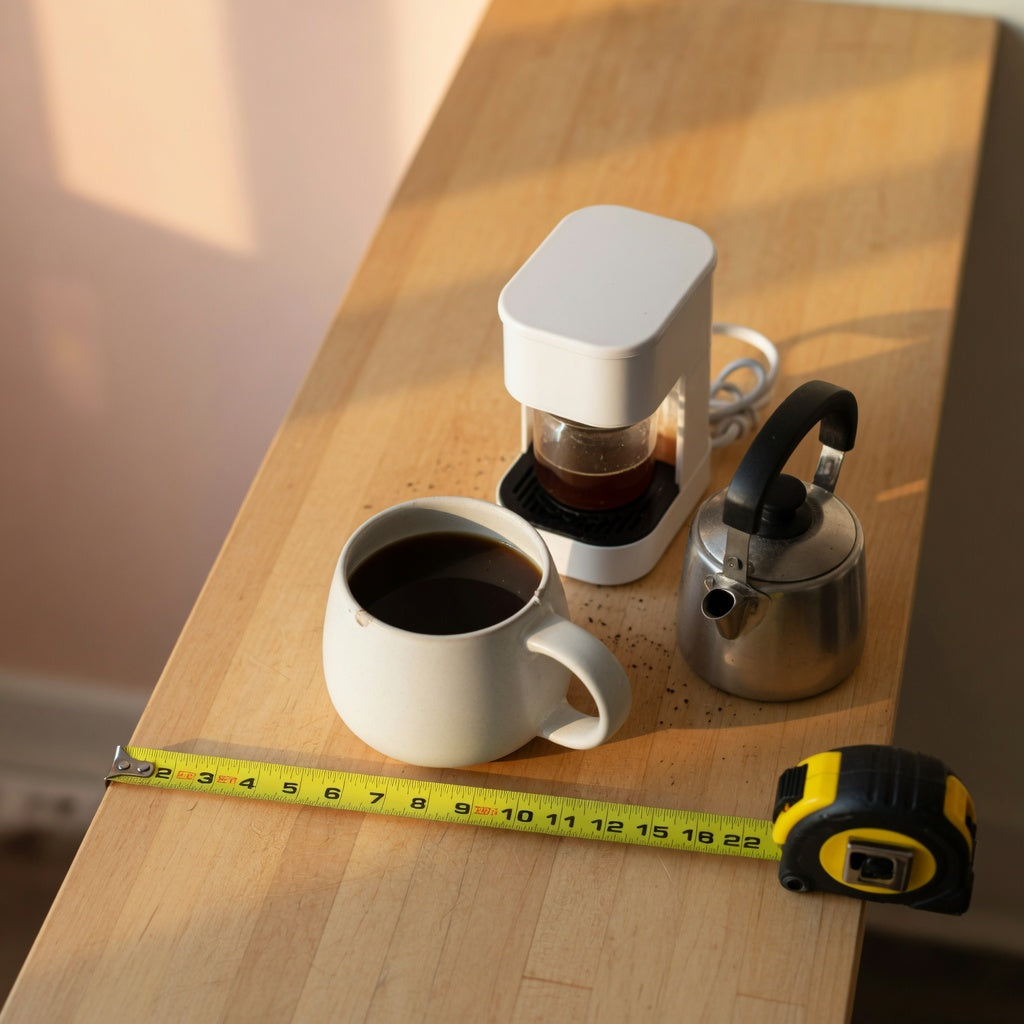
Large Round Coffee Mugs for Small Coffee Setup: What to Compare
A wide round body feels great in two hands and crowded on a 22-inch brew bar. We compare brewer clearance, usable ounces, shelf width, and glaze safety before you buy.
Read more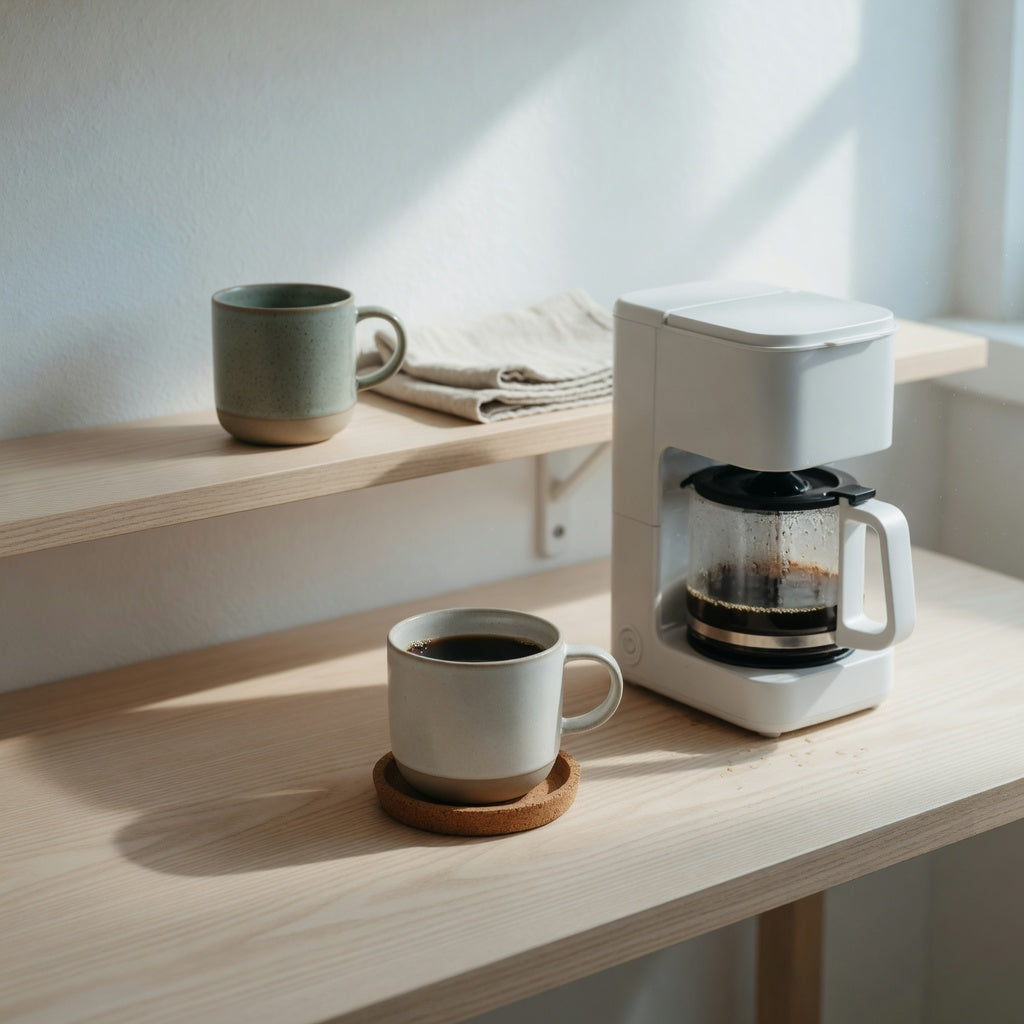
Wide Based Coffee Mugs for Small Coffee Setup: What to Compare
A broad foot is only one variable. We compare listed capacity, counter footprint, brewer clearance, and handle room across three CoffeifyMug options so a tight coffee station stays workable.
Read more
Leave a comment
This site is protected by hCaptcha and the hCaptcha Privacy Policy and Terms of Service apply.