



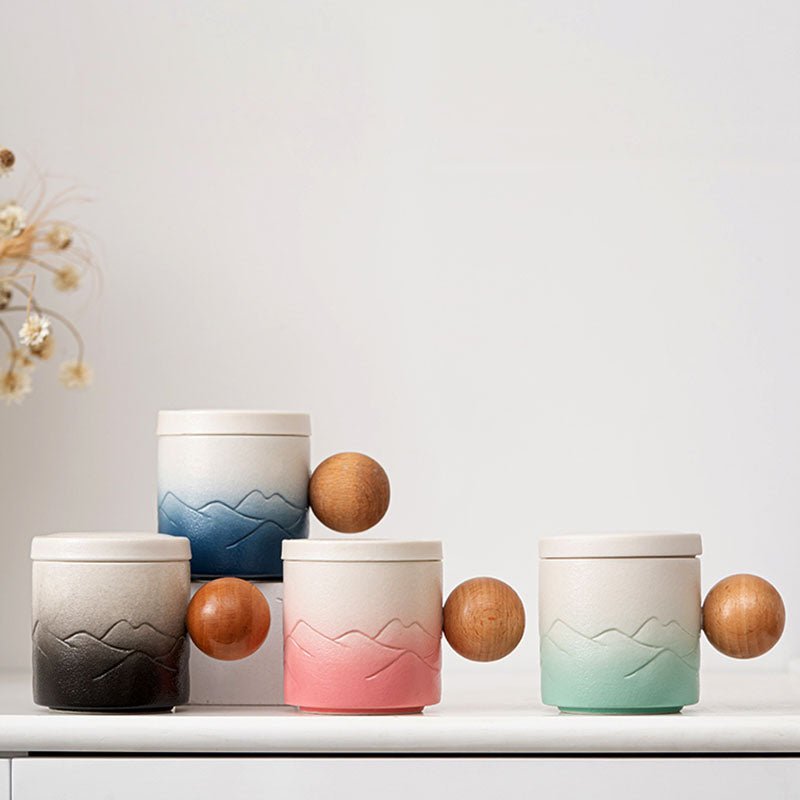
Coffee Mugs With Big Handles: Practical Compact-Kitchen Checklist
Reading time: about 12 minutes
We have watched a shopper reject a perfectly good mug because the handle looked generous in the photo and then trapped two fingers in person. That is the moment this coffee mugs with big handles compact kitchen practical purchase checklist is built around: the counter, the cabinet door, the brewer spout, and the hand that has to lift a full cup.
In our store, returns rarely come back because the coffee tasted wrong. They come back because a handle fouled a cabinet, a base overhung a warmer, or a 480 ml mug turned out to be more cup than the buyer wanted to lift. So we treat 'big handle' as a measurement problem first and a style choice second.
Which measurement decides whether a big handle fits your hand?
'Big' describes two different things on a mug listing, and they are not interchangeable. One is a wide loop — enough open space for fingers to pass through. The other is a thick grip, which stops the hand from closing all the way. A mug can score high on one and low on the other, and the photos rarely show either as a number.
Ergonomic research on cups for people with reduced strength and dexterity splits the same variables apart. In a 2023 care-home cup study, the focus group preferred cups that were light and had a large handle, and the authors named cup mass, cup diameter, handle length and handle orifice area as the dimensions that matter. Drawing on earlier hand-clearance work, that study put the minimum mean cross-sectional area at roughly 650 mm² for two fingers to pass through the opening, and roughly 950 mm² for three.
Two translations for a real kitchen:
- Two fingers is a pinch grip. Workable on a light 250 ml mug. Unpleasant on a full 480 ml mug, because the whole load hangs from two fingers and a wrist that has to stay tense.
- Three fingers plus thumb support is the zone the research describes. The opening passes the fingers while the thumb and ring finger brace the body and the wrist stays close to the wall. A loop that stands far out from the wall buys knuckle room and adds leverage — which is why some enormous handles feel worse, not better, once the mug is full.
Handle thickness is the second half of the same problem. Biomechanics work on people with rheumatoid arthritis using spoons found that larger handle diameters were associated with less finger-joint flexion than a slender standard handle, and most participants chose a 1.50-inch built-up handle over a 1.00-inch option. Spoons are not mugs, so take the exact diameter as a direction rather than a specification — but the direction matches what our customers describe: reducing how far the fingers must curl matters as much as widening the loop.
The coffee mugs with big handles compact kitchen practical purchase checklist: seven numbers to confirm
Ask for these before checkout, or measure them the day the mug arrives and keep the packaging until you have. Adjectives sell; numbers decide.
- Interior handle clearance in millimetres. The open space inside the loop, not the outer width of the handle. Almost no listing publishes it — ask the seller directly and compare the answer against the 650 mm² / 950 mm² reference points rather than against the word 'large'.
- Filled weight, not empty weight. Coffee sits close to a gram per millilitre, so a 400 ml mug carries roughly 400 g of liquid before the ceramic is counted. Empty weight plus liquid weight is what your wrist actually lifts, and it is the one number product pages never combine.
- Height including the handle. A high-set loop can foul the spout housing on a single-serve brewer even when the body slides under cleanly.
- Base diameter. It decides whether the mug sits flat and centred on a warmer plate, and whether it stands steady on a narrow shelf instead of overhanging the edge.
- Handle protrusion. The distance from the mug wall to the outside of the loop is what clips the cabinet door, the shelf above and the dishwasher rack tine.
- Cabinet shelf gap with a mug already in place. Measure with a loaded shelf, not an empty one. Handle protrusion causes more clashes than body height.
- Dishwasher rack clearance. A tall mug with a high loop may not fit between the tines and the upper rack. If it only fits on the bottom rack at an angle, it will pool water and stress the handle joint.
If a listing answers only one of those seven, it is usually base diameter — the least useful of the set for a handle-led purchase.
250 ml, 400 ml, or 480 ml — which CoffeifyMug size fits a tight counter?
Capacity is a storage question as much as a coffee question. Three 480 ml mugs take more shelf height and more dishwasher footprint than three 250 ml mugs, and they are heavier to move when wet. Here is how our three listed sizes map to real situations. The capacities are the listed figures; everything in the last column still has to be confirmed on the live listing.
| Mug | Listed capacity | The reader it suits | Confirm on the listing |
|---|---|---|---|
| Ball Handle Coffee & Tea Mug | 250 ml (about 8.5 US fl oz) | Smaller hands, a painful or weak grip, tea and short espresso-length pours — the smallest listed capacity, so the least liquid to lift when full | Interior handle clearance, overall height, empty weight |
| The Flow Coffee & Tea Mug | 400 ml (about 13.5 US fl oz) | The everyday default when one fill has to last a meeting without demanding jumbo shelf space | Base diameter for a warmer, handle protrusion, dishwasher wording |
| The Rock Coffee & Tea Mug | 480 ml (about 16 US fl oz) | A long desk session or a soup-sized serving — and the mug that most needs a measured brewer gap | Filled-weight expectation, height under your machine, rack fit |
Two honest limits on that table. First, we are comparing visible handle shape and listed millilitre capacity, not tested weights — if lifting a full mug is the deciding factor, drop a size rather than switching handle styles. Second, plenty of buyers report that wide open mugs cool faster than tall narrow ones at the same volume, and there is no clean published test we can point to. Treat it as a hunch: if you sip slowly, it is a reason to favour the 400 ml over the biggest option.
All three sit side by side in our unique coffee mugs collection, which is the fastest way to compare handle shapes before committing.
One big loop, two handles, or a swivel — what helps swollen knuckles?
A wider loop and a thicker grip are separate fixes, and only one of them addresses knuckle pain. During a flare, this is the ranking we give customers, best first:
- Light body, moderate loop. Easiest to control. A 250 ml mug filled halfway is a better tool than a 480 ml mug you have to reach around.
- Two handles or a T-handle. Genuinely useful for a two-handed lift or a whole-hand grip. The cost is footprint — two handles roughly double the shelf and counter space, and they do not stack.
- Swivel or rotating handles. Helpful for tremor and for tilting without rotating the wrist, but they add a moving joint that collects drips and takes longer to clean.
- One oversized loop on a heavy body. The combination that most often ends up at the back of the cupboard, because the loop solved a problem the weight created.
None of that fixes a mug that is simply too heavy when full. If lifting is your limiting factor, cut capacity first and change handle style second. A two-handle mug is not the right answer for a narrow shelf, and a swivel handle is not the right answer if you rinse dishes by hand and hate crevices.
Will the handle clear the brewer, warmer, cabinet door, and dishwasher rack?
This is where most of our returns originate, and none of it is about coffee quality. Five checks, in the order they usually fail:
- Single-serve brewer. Measure from the drip tray to the spout housing. Many machines let you pull the tray out for extra height, but a tall body plus a high loop can still foul the housing — confirm your model allows it before counting on the space.
- Mug warmer. The base needs to sit flat and fully on the plate. An overhanging base heats unevenly, and a heavy 480 ml mug on a slim warmer is a tipping risk when someone catches the cord.
- Cabinet shelf and door swing. Measure the gap with an existing mug already on the shelf, not an empty one. Handle protrusion causes far more clashes than body height.
- Dishwasher rack. Check the distance between the tines and the rack above. A high loop that clears the counter may still hit the upper basket.
- Cup holder, for handled travel mugs. A comfort-grip or swivel handle makes a mug too wide for the holder long before the base is. A lid does not fix a handle that will not drop in.
Metallic rims, lead glaze, and what 'dishwasher safe' actually covers
Handle comfort is worthless if the mug is not safe to heat. Two documented problems belong in your checklist.
The U.S. Consumer Product Safety Commission announced a recall on 21 March 2024 covering about 440,500 Starbucks-branded holiday gift-set mugs with a metallic coating, which could overheat or break when microwaved or filled with extremely hot liquid. The commission recorded 12 incidents and 10 injuries, including burns or blisters and one cut. The lesson is not that ceramic is risky — it is that decorative metallic coatings and microwaves are a bad pairing, so read the microwave statement on the exact mug rather than assuming it from the material.
The FDA's guidance on lead-glazed pottery is the second. Lead in glazes or decorations on some traditional pottery can leach into food or drink if the piece was not properly manufactured and fired, and washing or boiling will not remove it. Everyday factory-made commercial ware is described as much less likely to be a problem than handmade, antique, damaged, brightly orange/red/yellow or uncertain-origin pieces, and ceramicware with extractable lead above FDA action levels should not be labelled 'lead free'. If you are considering an imported oversized mug with a bright red or orange glaze, ask for a test report — 'lead free' as a line of seller copy is not a lab result.
On care, we go by what each listing states and nothing more. We do not carry a dishwasher claim from one mug across to another, because glazes and coatings differ between designs. Ceramic, stoneware, porcelain, and insulated bodies also hold heat differently, so confirm the material and care wording on the exact product page. One habit regardless: lift a hot mug out of the dishwasher by the body, not the handle. The handle joint is under the most stress when the piece is hot and wet, and that joint is the failure point customers complain about most.
How do you read a listing that publishes no handle numbers?
Send one message with three questions before you order: interior handle clearance, empty weight, and overall height including the handle. A seller who handles the stock can answer all three in a few minutes. A seller who cannot is telling you something useful too.
Then run this final pass:
- Ignore 'ergonomic' and 'lead free' as standalone claims. Ask what backs them.
- Check the capacity in millilitres and convert it yourself — 250 ml is about 8.5 US fl oz, not a jumbo 16.
- Confirm microwave and dishwasher wording for the specific design, not the brand.
- Measure your brewer gap, warmer plate, shelf clearance and dishwasher rack before the mug arrives, not after.
If lifting a full mug is the concern, start with the Ball Handle Coffee & Tea Mug at its listed 250 ml. If you want one fill to last a morning at a compact desk, the Flow at 400 ml is the middle ground. Move up to the 480 ml Rock only after you have measured the space above your drip tray — and you can see all three handle shapes together in the unique coffee mugs collection before you decide.
Frequently asked questions
Will the handle fit four fingers, or only two?
You cannot tell from a photo, and 'large' is not a measurement. Ask for the interior clearance in millimetres and compare it to hand-clearance research figures of roughly 650 mm² of opening for two fingers and roughly 950 mm² for three. Anything under the two-finger figure is a pinch grip regardless of how big the handle looks.
Will a 480 ml mug with a big handle fit under my single-serve coffee maker?
It depends on two things we cannot confirm for your machine: the mug's height with the handle included, and whether your brewer lets you remove the drip tray for clearance. Measure from the tray to the spout housing and compare against the listed height. A high-set loop can foul the housing even when the body fits fine.
Are these mugs microwave and dishwasher safe?
Check the current listing for each individual mug — we do not extend a care claim from one design to another, because glazes and coatings differ. As a hard rule, any mug with a metallic rim or coating should stay out of the microwave; a 2024 CPSC recall involved metallic-coated mugs that overheated or broke when microwaved.
Is one big loop better than two handles for arthritis?
Not automatically. Reducing the weight you lift comes first, a thicker grip that limits finger curl comes second, and loop size comes third. Two handles or a T-handle genuinely help if you need a two-handed lift, but they roughly double the counter and shelf footprint and cannot be stacked.
Which measurement matters most on this coffee mugs with big handles compact kitchen practical purchase checklist?
Interior handle clearance, because it is the number sellers omit and the one your fingers actually meet. After that, filled weight decides whether the mug is pleasant to lift, and handle protrusion decides whether it survives your cabinet door. Pick the 250 ml Ball Handle if lifting is the concern, the 400 ml Flow as the compact-counter default, and the 480 ml Rock only after measuring brewer and shelf clearance.
More from our blog
Ready to pick your mug? Two ways to save on today's order:
Ordering 1–3 mugs? Get an extra 10% off your 1st order with code 10_OFF Apply 10% Off & Shop Wooden-Handle Mugs →
Gifting 4+ mugs? Buy 3, Get the 4th Free applies automatically at checkout (no code needed; offers do not stack) · Free standard shipping (Nov pre-Christmas delivery: 15–20 calendar days US) · Free replacement if chipped in transit.
Popular mug buying guides: Ceramic Tea Cups & Infuser Mugs · Ceramic Mugs with Lids Compared · Wooden-Handle Tea Infuser Mugs Compared · Christmas & Secret Santa Mugs 2026 · Espresso & Cortado Cups Guide · Cup & Saucer Gift Sets · All 25 Mugs Spec Table · Mug Size Guide · Shipping & Promo FAQ
FIRST ORDER 10% OFF (CODE: 10_OFF) · OR BUY 3, GET THE 4TH FREE


Read more
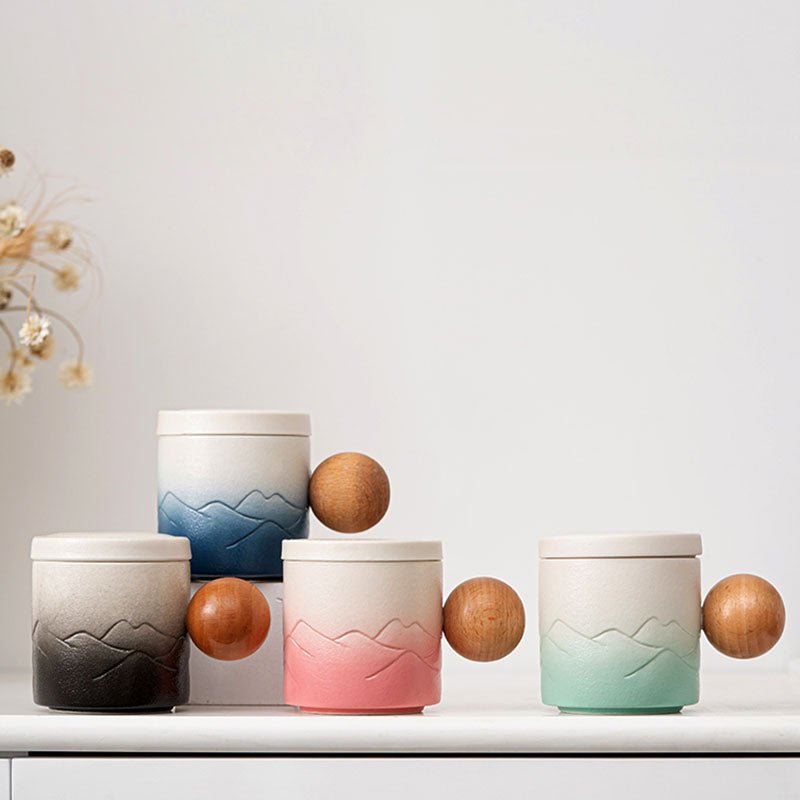
Coffee Mugs With Big Handles Weekend Coffee Product Shortlist Guide
A scenario-first shortlist of three CoffeifyMug capacities for slow weekend coffee, with plain reasons to choose or skip each one, handle-fit checks, kitchen clearance, and the questions the listin...
Read more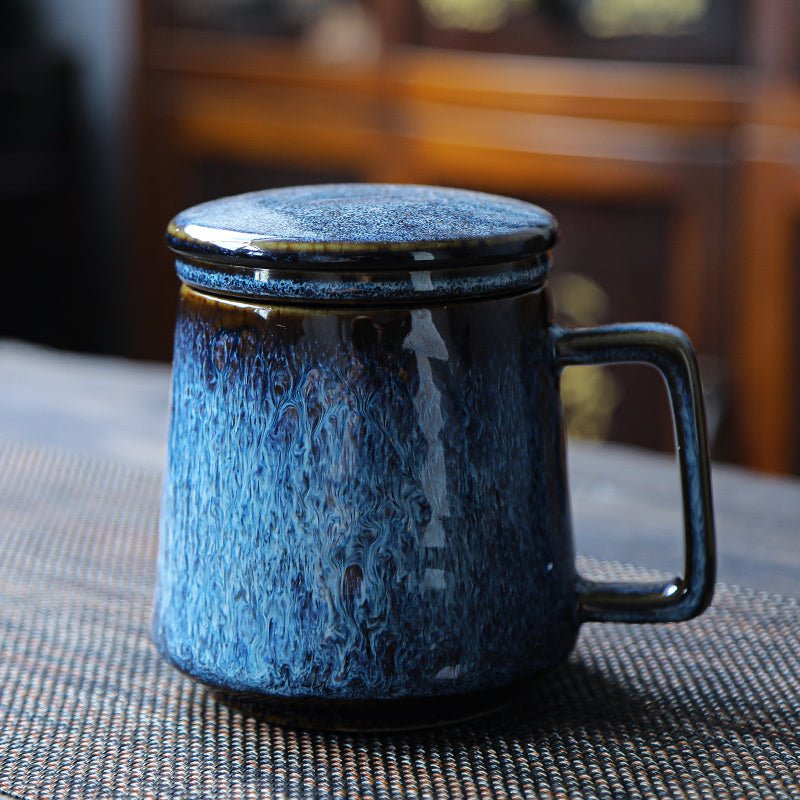
Large Round Coffee Mugs First Time Buyer Product Shortlist Guide
A practical first-purchase shortlist for wide, rounded mugs: compare listed capacity, brewer clearance, handle space, filled weight, care claims, and food-contact details before choosing among thre...
Read more
Leave a comment
This site is protected by hCaptcha and the hCaptcha Privacy Policy and Terms of Service apply.