
Coffee Mugs Unique Shape Compact Kitchen Product Shortlist Guide
Reading time: about 9 minutes
A mug can clear the shelf and still fail at the cabinet door. The handle clips the frame, an angular corner steals the space reserved for a second cup, or the mug ends up beside the toaster because nobody wants to rearrange the cabinet twice a day. We built this coffee mugs unique shape compact kitchen product shortlist guide around those everyday failures, not broad style labels.
When we handle shaped mugs for packing and compare them with the storage questions shoppers bring to our store, a front-facing photo is rarely enough. We look at the complete outer outline, including the base, body, widest corner, and handle. The live product page remains the authority for current dimensions, capacity, material, variants, and care instructions.
Use the coffee mugs unique shape compact kitchen product shortlist guide with four measurements
The checks below are general compact-kitchen guidance. They are not product dimensions or fit guarantees for any of the three mugs.
- Usable shelf depth: Measure from the rear cabinet wall to the inside face of the closed door, not merely to the front edge of the shelf. A door lip or frame can reduce the practical depth.
- Clear shelf height: Measure between the surface holding the mug and the shelf or cabinet structure above it. Include any under-shelf rack that occupies part of that space.
- Access opening: Measure the narrowest opening through which you actually lift the mug. Hinges, partly opening doors, and neighboring appliances can make the opening smaller than the shelf itself.
- Side-to-side allowance: Record how much width one mug can use without touching the next item. Compare that figure with the mug at its widest point, including a handle or angular corner.
Keep your measurements in the same unit used on the current product page. Do not estimate scale from a spoon, saucer, hand, or other object in a photograph because camera angle can distort the comparison. If a dimension that controls your cabinet fit is not listed, ask before ordering or choose a shape with fewer clearance variables.
Which shape matches the way your compact kitchen actually works?
The useful shortlist is only three products long. Each one suits a different situation, and each introduces a trade-off that should be settled before checkout.
Handbag shape for a mug stored in open view
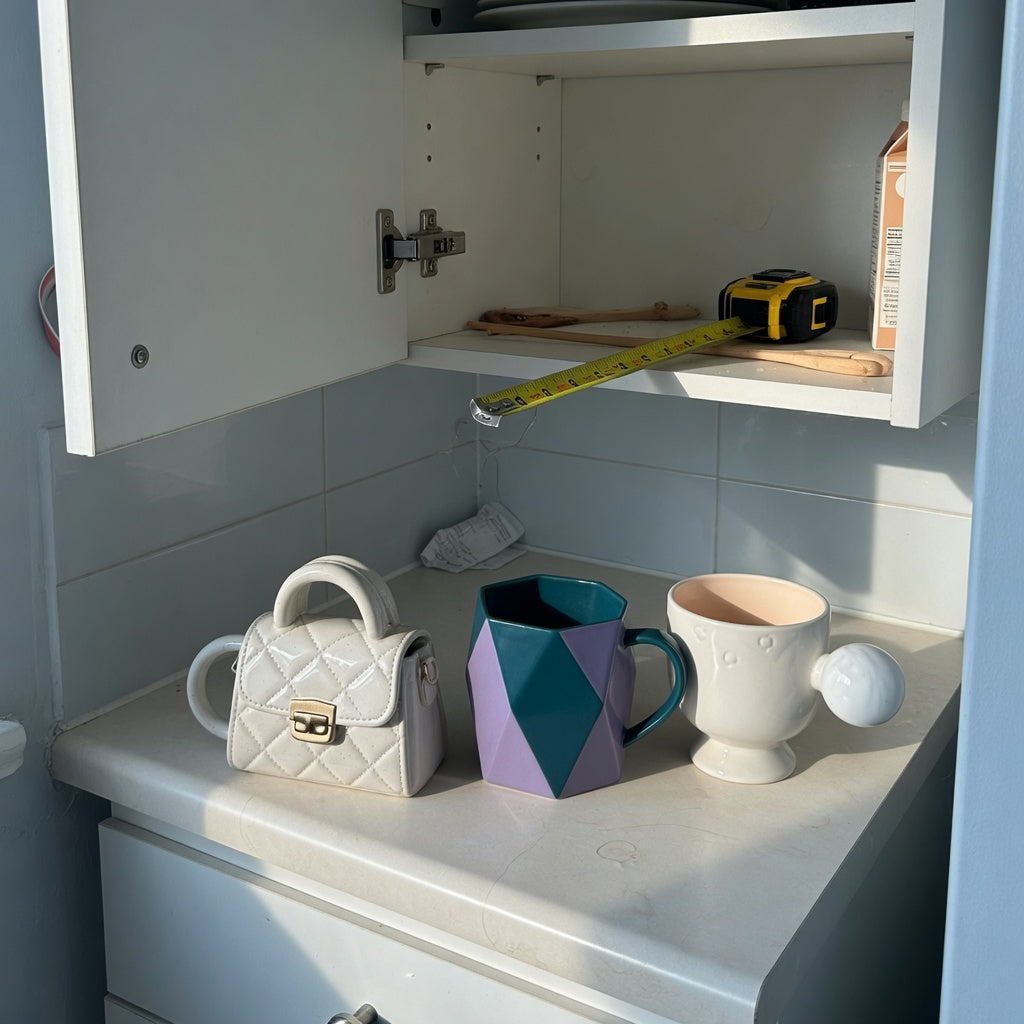
Reader situation: You keep one or two mugs on an open shelf or a clear section of counter, and the silhouette is part of the reason for buying. The handbag-shaped coffee and tea mug is the first product to inspect because its handbag-inspired form remains visually distinctive when it is not in use.
Why it fits: This is a shape-led choice for a visible kitchen, personal tea station, or gift recipient who enjoys object-like drinkware. You are not spending limited storage space on a design detail that disappears inside a closed cabinet.
Reason to skip it: Do not choose it on the assumption that it will stack or pack as tightly as a straight-sided mug. A conventional mug is the more practical option if your cabinet depends on uniform rows, confirmed stackability, or a familiar loop-handle grip. Open the product page next and compare every listed measurement with the full storage space, not just the shelf height.
Rhombus shape for a measured, dedicated shelf position
Reader situation: You have one defined mug position and prefer an angular ceramic form over a round cylinder. Start with the rhombus coffee and tea mug if you can compare the product's complete width and depth with that dedicated space.
Why it fits: The faceted rhombus body supplies the visual character without relying on a printed novelty message. For fit, pay attention to the widest corner-to-corner measurement. An angular mug can occupy more space at a point than its flat face suggests.
Reason to skip it: It is not our first recommendation for a cabinet where mugs are pushed tightly against one another or removed in a hurry. Corners can become contact points, and faceted surfaces require a little more attention during washing than a continuous round wall. Choose a smooth cylinder instead if fast loading and dense side-by-side storage matter more than the angular profile.
Ball handle for shoppers comparing a different grip format
Reader situation: You dislike threading your fingers through a narrow loop, want a more sculptural handle, and have enough side clearance around the mug. The ball-handled coffee and tea mug is the relevant next page because the rounded handle changes how the hand meets the mug.
Why it fits: A ball-form handle offers a solid exterior grasp point rather than a standard open loop. That can appeal on a personal desk or drink station where grip preference matters as much as the mug's appearance.
Reason to skip it: Grip comfort is personal, so we would not promise that this shape is easier for every hand or mobility need. It also deserves careful width measurement, and it may not suit storage that relies on conventional mug hooks. If you need several fingers inside a loop or have no spare lateral clearance, a standard handle is the safer shortlist choice.
Where can a distinctive shape make compact storage worse?
A unique silhouette is not automatically a space-saving silhouette. In our experience, the buying mistake is treating visual compactness as proof of cabinet compatibility. Check these failure points before choosing any statement mug:
- Stacking: Do not assume that an irregular mug is stackable unless the product page states or clearly demonstrates it. Unsupported stacking can put pressure on the rim, handle, or raised parts.
- Door movement: A mug that fits on the shelf may still block the cabinet door. Compare your closed-door depth with the mug's widest complete dimension.
- Neighboring items: Allow clearance from plates, glasses, and other mugs. Repeated ceramic-to-ceramic contact is a more practical chip concern than shape alone.
- Mug hooks: A handbag profile, faceted body, or ball-form handle may not work with a storage rail designed around conventional loops. Confirm compatibility instead of treating hanging storage as a fallback.
- Drying and dishwasher space: Protruding handles and corners need room around them. A tightly loaded rack can turn an otherwise good cabinet choice into a poor cleaning choice.
A plain, straight-sided mug is better if maximum storage density, standardized stacking, hook compatibility, or easy replacement matters most. The three products here are for shoppers who have room for a deliberate shape choice and can verify the fit.
How do ceramic corners and handles change cleaning and chip risk?
The linked product listings identify these designs as ceramic. That material detail does not, by itself, confirm dishwasher or microwave suitability. Treat those as separate care claims and follow the instructions on the current product page for the exact item or variant you select.
- At delivery or gift unboxing: Inspect the rim, base, handle attachment, and prominent corners under clear light. Place the empty mug on a flat, dry counter and check for unexpected rocking or visible shipping damage before use.
- During hand-washing: Use a soft, non-abrasive sponge when that matches the listed care guidance. Follow the facets and the handle junction rather than scrubbing only the main body, where coffee or tea residue is easiest to see.
- During a dishwasher cycle: Load the mug in a dishwasher only if its care instructions permit it. Leave space between the ball handle or angular edges and the rack tines so vibration does not cause repeated hard contact.
- Before cabinet storage: Let the mug dry completely. Do not force one shaped mug inside another unless the listing confirms that the design is intended to stack.
Ceramic can chip after impact, especially at rims, handles, corners, and other projecting areas. That is general category guidance, not a claim that these particular mugs are unusually fragile. Careful spacing matters more than treating a distinctive mug as display-only drinkware.
Which shape suits a gift, office desk, or shared cabinet?
At gift unboxings, an unusual silhouette makes an immediate impression, but the recipient still has to store and wash the mug afterward. The handbag design makes the most sense for someone who displays expressive drinkware. The rhombus design suits a shopper who has asked for angular, faceted pieces and has a dedicated shelf or desk position.
The ball-handled option should be chosen because the recipient likes that grip format, not because of an assumed accessibility benefit. Hand size, grip strength, and preferred drinking posture vary. For a shared office cabinet that holds many anonymous mugs and runs frequent group dishwasher loads, a conventional, confirmed stackable design may be more practical than any of these three.
Five-minute cabinet test before checkout
- Empty the exact shelf or counter position and close every nearby door to expose the real usable space.
- Record shelf depth, clear height, access opening, and available side-to-side width.
- Choose one primary scenario: visible statement mug, angular dedicated-slot mug, or alternative ball-handle grip.
- Open the relevant product page and verify all listed dimensions, capacity, material, care instructions, and selected variant.
- Picture the full daily path from cabinet to counter, sink, drying rack, or dishwasher. A mug must clear each point, not only its storage shelf.
- Name the compromise before buying: less certain stacking, extra side clearance, a nonstandard grip, or more careful rack placement.
That final page check is what keeps this coffee mugs unique shape compact kitchen product shortlist guide grounded in current product information. If the listing does not confirm a detail that controls your purchase, do not replace the missing fact with an estimate.
Frequently asked questions
How do I shortlist a unique coffee mug for a compact kitchen?
Use this coffee mugs unique shape compact kitchen product shortlist guide as a fit test: measure the cabinet, select the grip and silhouette that match your routine, and verify the current listing. Start with the handbag mug for visible storage, the rhombus mug for a measured angular-design slot, or the ball-handled mug for a different grip format. Skip any option whose widest dimension or care needs cannot be confirmed.
Can handbag, rhombus, and ball-handled mugs be stacked?
Do not assume they can be stacked unless the individual product page confirms it. Irregular outlines may leave gaps or place pressure on rims, corners, and handles. A conventional stackable mug is a better choice if vertical storage density is your main concern.
Are these ceramic mugs dishwasher and microwave safe?
Check the care instructions on each current product page before using either appliance. The word ceramic does not automatically confirm dishwasher or microwave suitability because finishes, decorative details, and construction can require different care. Follow the listing for the exact item you order.
Is a ball-handled mug easier to hold than a loop-handled mug?
It offers a different grasp, but easier is not universal. Compare the product photos and listed handle dimensions with your hand size and preferred grip. Choose a standard loop handle if you need several fingers inside the handle or use mug hooks for storage.
Your next step: Keep your four cabinet measurements open beside the CoffeifyMug unique coffee mugs collection. Eliminate any option whose current dimensions, grip format, or care instructions do not suit your routine, then choose the shape you will be comfortable storing and using every day.
More from our blog
Read more
Large Decorative Coffee Mugs: Shared Household Purchase Checklist
Match each household member's drink volume, shelf space, care habits, and style preference to an individual decorative mug. This checklist also flags the product details to verify before ordering.
Read more
Ceramic vs Porcelain Coffee Mugs: Shared Household Product Shortlist
Compare ceramic and porcelain by construction, grip, working capacity, cabinet fit, and care requirements. Then match three separate CoffeifyMug options to the people and routines in your shared ki...
Read more
Leave a comment
This site is protected by hCaptcha and the hCaptcha Privacy Policy and Terms of Service apply.