

Ceramic vs Porcelain Coffee Mugs: Shared Household Product Shortlist
Reading time: about 9 minutes
At 7:15 a.m., one housemate has taken the largest mug to a desk, another wants a lighter cup for tea, and the only clean option has a handle that catches against the crowded dishwasher rack. This ceramic vs porcelain coffee mugs shared household product shortlist guide starts with that ordinary problem: a mug can be well made and still be wrong for the person, drink, or storage space using it.
At CoffeifyMug, we build a better shortlist by separating the material label from the construction details people actually handle. Porcelain is a type of ceramic, while retail products described simply as ceramic may use other clay bodies and construction methods. Wall thickness, rim shape, handle clearance, base stability, decoration, and care instructions can matter more than the category name alone.
Use the live listing as the source of truth. Material, capacity, dimensions, available variants, and care requirements can differ by product. The material guidance below is general and does not override the details shown on a linked CoffeifyMug product page.
What should a ceramic vs porcelain coffee mugs shared household product shortlist guide settle first?
Start by assigning each mug a household job. A shared cabinet rarely needs one universal winner, and the options discussed here are separate products rather than a matching set. The aim is to identify one sensible candidate for each distinct serving preference.
- Slow coffee at a desk: prioritize comfortable handle clearance, usable capacity, and enough body mass for the drinker's routine.
- Tea or shorter servings: check total weight, rim feel, and whether the cup remains comfortable during frequent lifts.
- Iced coffee: compare the opening with the ice used at home and leave enough working volume after the ice is added.
- Guest or gift use: give more weight to finish, decoration, presentation, and clearly stated care requirements.
Our practical rule is to record one reason to choose and one reason to skip every candidate. That keeps a decorative favorite from winning despite poor cabinet fit, and it stops a durable-looking mug from becoming the default when nobody enjoys holding it.
Does the material label predict durability in a busy kitchen?
Not by itself. Porcelain is commonly highly vitrified and may be made with thinner walls and a fine rim, but porcelain does not automatically mean fragile. A well-constructed porcelain mug can be strong. The exposed edge may still chip if it repeatedly strikes a faucet, another mug, or a dishwasher tine. A thicker non-porcelain ceramic mug may feel more substantial, yet it can also chip at the rim or develop damage around a poorly protected handle joint.
| Construction detail | Why it matters in a shared household |
|---|---|
| Rim profile | A fine rim can feel precise while drinking, but the edge needs space during washing and storage. |
| Wall thickness and mass | More material often means more weight and thermal mass. It does not guarantee better heat retention in every shape. |
| Handle joints | The upper and lower attachment points should be checked for hairline cracks, glaze gaps, or uncomfortable knuckle contact. |
| Base and foot | A flat base reduces rocking. Any unglazed foot should feel smooth enough for the household's counters and shelves. |
| Glaze and decoration | Special finishes can affect dishwasher or microwave suitability, so the product care statement controls the decision. |
Heat retention also depends on the mug's shape, wall thickness, starting temperature, fill volume, and room conditions. We would not tell a shopper that every porcelain mug cools quickly or every heavier ceramic mug holds heat longer. Compare the actual construction and the way the drink will be served.
Which CoffeifyMug option fits each household routine?
The three linked choices sit on the ceramic side of this shortlist. They are not presented as a set, and they are not identical shapes offered in both ceramic and porcelain. Their value is in giving three different style directions after the household has decided that a ceramic option suits the job.
Round Coffee Tea Mug: a straightforward daily role
Reader situation: one person wants a visually simple mug for everyday coffee or tea. Why it fits: the round form does not rely on pronounced exterior texture or decorative scenery to define it. Skip it if: the user needs an obvious ownership cue or strongly prefers a textured surface. Review the current material, dimensions, capacity, and care details on the Round Coffee Tea Mug product page before adding it to the shortlist.
Pleated Coffee Tea Cup: a distinct textured option
Reader situation: a housemate likes tactile surfaces or wants a cup that is easy to distinguish by touch and outline. Why it fits: the pleated exterior gives this option a clear visual and tactile identity. Skip it if: the intended user prefers completely smooth walls or does not want to wipe around a textured exterior. Texture should not be treated as proof of slip resistance without handling the cup. Check the Pleated Coffee Tea Cup listing for its current specifications and care instructions.
Landscape Coffee Tea Mug: clear visual ownership
Reader situation: one person consistently reaches for a decorative mug, or the purchase is intended as an individual gift rather than communal drinkware. Why it fits: the landscape design makes the mug easier to recognize in a mixed cabinet. Skip it if: the household prefers uniform, minimal pieces or cannot accommodate any care limits associated with the decoration. Use the Landscape Coffee Tea Mug page to verify the live product details before buying.
If none of those roles matches the people in your kitchen, apply the same choose-or-skip test while browsing our collection of unique coffee mugs. Do not add extra candidates merely to create a coordinated cabinet. A smaller group of mugs that people willingly use is more practical than a larger group chosen only for visual consistency.
How do cabinet space, grip, and serving size remove weak candidates?
Many shortlist failures become obvious at the cabinet or sink, not during the material comparison. In our experience handling this category, the useful measurements are shelf clearance, base diameter, total width across the handle, and the space between the handle and mug body.
- Measure the storage space. Compare the listing dimensions with shelf height and depth. Include the handle when checking how mugs will sit beside one another.
- Use working capacity, not brim capacity. Leave the headspace normally needed for milk, ice, stirring, and carrying the drink to another room.
- Check the normal grip. A handle may fit two fingers comfortably but press against the knuckles with a fuller grip. Exterior texture can also feel different in a damp hand.
- Do not assume stackability. Unless the page specifically describes a mug as stackable, plan for separate shelf positions so rims, bases, and handles do not bear against each other.
- Decide how ownership will work. A landscape design or pleated exterior is easier to identify than several similar round mugs in a morning rush.
This process often leaves the Round Coffee Tea Mug as the neutral candidate, the Pleated Coffee Tea Cup as the texture-led candidate, and the Landscape Coffee Tea Mug as the visually distinctive candidate. Material and care requirements still have to pass before any option earns a place.
Which care rules matter when several people share the dishwasher?
Do not infer dishwasher or microwave safety from the word ceramic or porcelain. Follow the care instructions on each product page, especially when a mug has printed, painted, metallic-looking, or otherwise decorative details.
- Load approved mugs so rims and handles cannot strike neighboring pieces during the cycle.
- Keep enough space for water to reach the interior instead of wedging a mug tightly between bowls or plates.
- Avoid abrupt temperature changes, such as pouring an icy drink into a mug that has just come out of a hot wash cycle.
- For hand-washing, use the cleaning method stated by the maker and avoid aggressive abrasion that can dull or mark a finish.
- Let water drain from the base or foot ring before returning the mug to a stack or enclosed cabinet.
Hand-washing is not automatically gentler. A crowded sink can expose a rim to metal utensils, a faucet, and heavier dishes. The better routine is the one every housemate can repeat without forcing mugs into contact. Remove any mug with a sharp rim chip or a visibly cracked handle from daily use.
What should you inspect at delivery and after the first week?
A quick inspection matters during an individual purchase or gift unboxing. Handmade-looking finishes may include intentional variation, so compare the item with the description and product photography before deciding that a visual difference is a defect.
- Run a finger carefully near the drinking rim and check for a sharp chip or rough interruption.
- Look at both handle attachment points for a visible crack or gap.
- Place the mug on a flat, dry counter and check for unexpected rocking.
- Confirm that the actual dimensions and capacity suit the intended shelf and serving routine.
- Read any care marking or included instructions before the first dishwasher or microwave use.
After a week, ask the practical questions again. Does the mug fit the dishwasher without touching another piece? Is the working pour large enough? Can the intended user grip it comfortably? A mug that fails those routine checks should leave the shortlist even if its material and appearance looked right online.
Frequently asked questions
Is porcelain always more fragile than a regular ceramic coffee mug?
No. Porcelain is a ceramic material and can be strong, but many porcelain mugs use thinner walls or finer rims that need protection from edge impacts. Actual chip resistance depends on the construction, rim geometry, glaze, and handling rather than the material name alone.
Can ceramic and porcelain mugs go in the same dishwasher load?
They can share a load only if each product is approved for dishwasher use. Position them so the rims, handles, and bodies cannot knock together, and do not crowd a finer-rimmed mug between heavier pieces.
Should everyone in a shared household buy the same mug?
Usually not. The ceramic vs porcelain coffee mugs shared household product shortlist guide works best when each distinct drinker has a defined job and a short list of suitable options. Matching pieces are reasonable only if the users also agree on capacity, weight, handle feel, design, and care.
Which material is better for coffee that stays on a desk?
Material alone does not answer that question. Compare wall thickness, total mass, usable capacity, opening size, and the drinker's preference for weight. A porcelain mug with substantial construction may suit the job better than a thin ceramic mug, and the reverse can also be true.
How many products belong on a shared-household shortlist?
Use one candidate for each genuinely different routine rather than setting a fixed number. For many households, a neutral round option, a textured option, and a decorative option provide enough contrast to make a decision without turning the cabinet into a trial shelf.
Write down each person's usual drink, preferred grip, available shelf space, care limits, and one reason to reject a mug. Verify those points on the three linked product pages, then use the unique coffee mugs collection only where a role remains unfilled. Buy for the routines already happening in the kitchen, not for the matching arrangement people hope they will maintain.
More from our blog
Read more
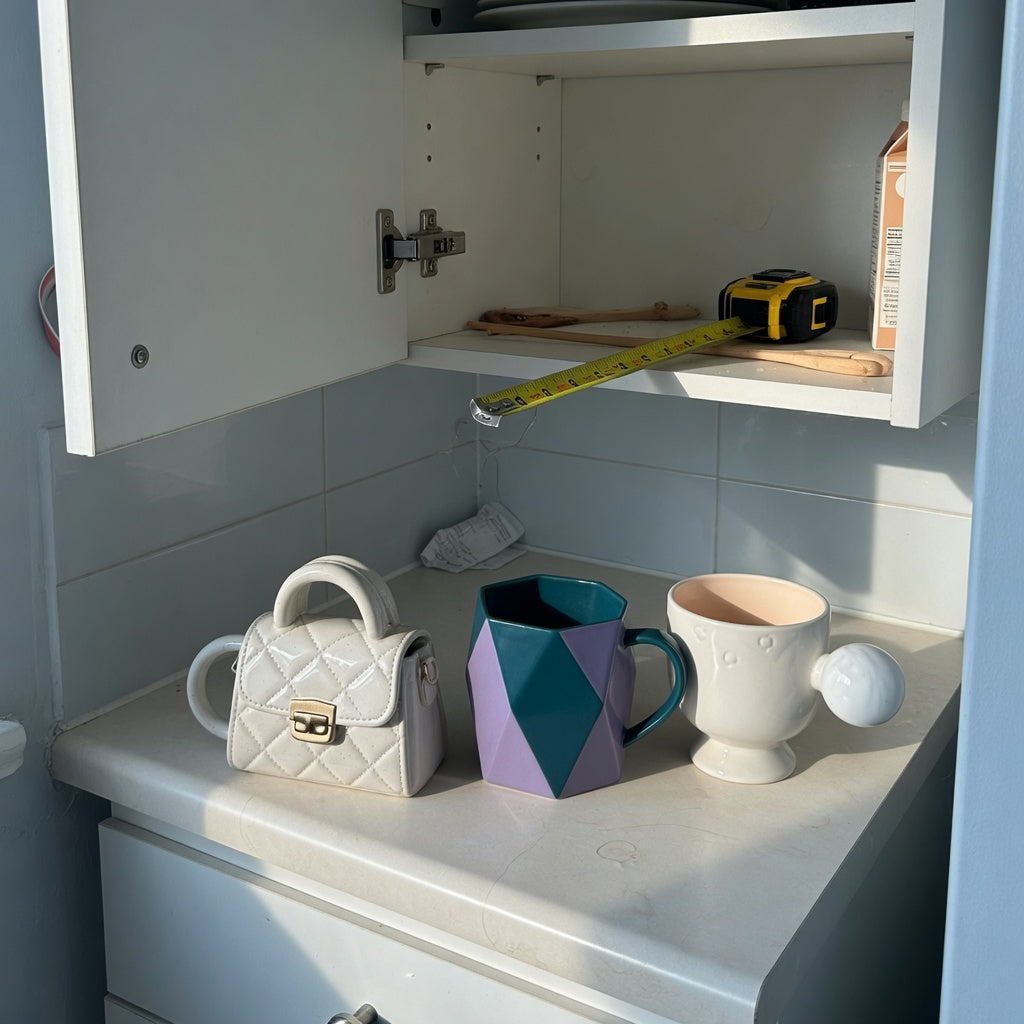
Coffee Mugs Unique Shape Compact Kitchen Product Shortlist Guide
Compact cabinets expose fit problems that front-facing photos can hide. This shortlist compares handbag, rhombus, and ball-handled ceramic mugs by cabinet clearance, grip style, care, and reasons t...
Read more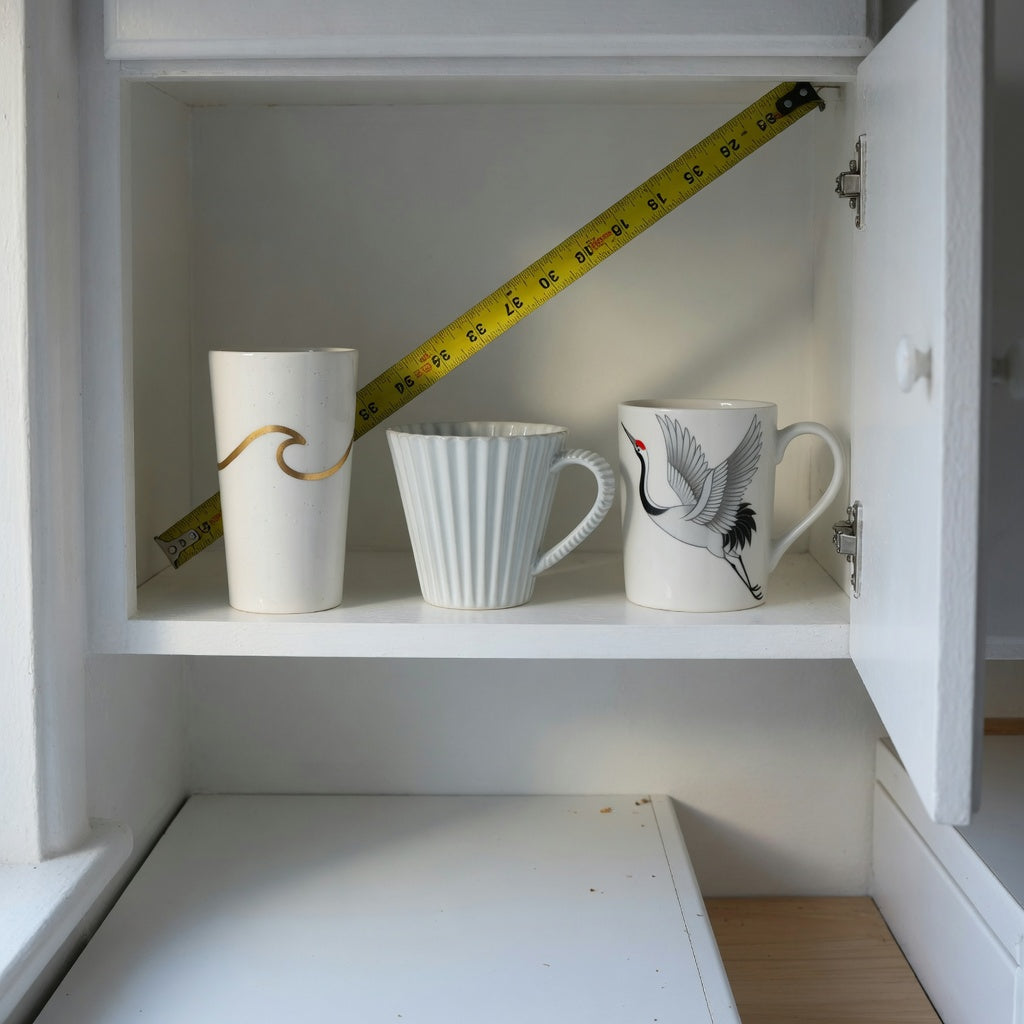
Plain White Ceramic Coffee Mugs Compact Kitchen Product Shortlist Guide
A compact-kitchen mug must clear the cabinet, fit beside its neighbors, and suit your wash routine. We compare three CoffeifyMug options with clear reasons to choose or skip each one.
Read more
Leave a comment
This site is protected by hCaptcha and the hCaptcha Privacy Policy and Terms of Service apply.