
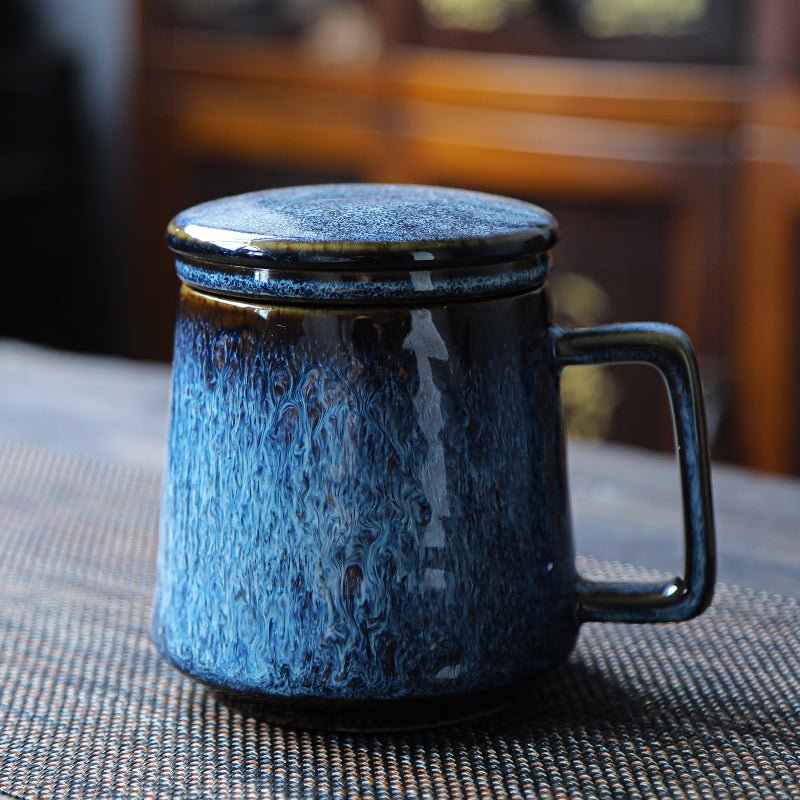
Thick Ceramic Coffee Mugs Compact Kitchen Product Shortlist Guide
Reading time: about 9 minutes
A wall-cabinet door can clear a mug's body and still catch its handle. On a narrow counter, the same mug can occupy the only dry landing spot beside the kettle. Our thick ceramic coffee mugs compact kitchen product shortlist guide starts with those small collisions, because they decide whether a mug becomes the daily favorite or stays boxed after one use.
We routinely handle distinctive ceramic mugs in our store, and the practical comparison is rarely just about capacity. The outside profile, shelf home, grip, cleaning route, and normal pour all matter. A thick-walled mug can look generous from the outside while giving up some interior space to the ceramic itself.
Scope of this shortlist: The fit and care methods below are general guidance for ceramic mugs. Check each linked product page for its current materials, listed measurements, capacity, and care instructions. We do not infer microwave safety, dishwasher safety, weight, or stackability from a product photo.
Thick ceramic coffee mugs compact kitchen product shortlist guide: set the fit envelope
A fit envelope is the maximum space a mug can occupy without disrupting storage or preparation. Define it before comparing colors or decorative details.
- Permanent home: Decide whether the mug will live inside a cabinet, on an open shelf, beside the coffee maker, or on a hook.
- Full outline: Include the handle, widest body point, rim, base, and any sculpted detail. The body diameter alone is not enough.
- Use path: Trace the trip from coffee maker or kettle to milk, sugar, desk, table, or sofa. Look for drawer fronts and appliance doors along that route.
- Cleaning path: Account for sink space, dishwasher rack clearance, and the area needed to dry the mug without knocking another item.
In our handling checks, we consider the dry grip and the wet cleaning grip. A mug may be easy to lift by its handle yet awkward to support by the body while washing. In a small kitchen, both movements count.
Which measurements decide cabinet, counter, and drying-rack fit?
Use a tape measure on the actual storage spot. Product photographs are useful for studying shape, but they are not reliable measurement tools because scale and camera angle vary.
| Buyer variable | Measure or check | Why it changes the shortlist |
|---|---|---|
| Cabinet opening | Measure the vertical opening at its narrowest point, including any shelf lip. | A mug may fit on the shelf but fail to pass cleanly through the opening. |
| Closed-door depth | Measure from the cabinet back to the inside plane of the closed door. | A projecting handle can stop the door even when the mug body fits. |
| Maximum width | Measure from the far side of the body to the outer edge of the handle. | This controls side-by-side storage and finger clearance between mugs. |
| Counter footprint | Mark the widest area the mug can occupy beside the kettle or coffee maker. | A broad profile can crowd a spoon rest, grinder, or preparation area. |
| Drying space | Check rack slots, tine spacing, or the available area on a drying mat. | Unusual bodies and handles may need more separation from other dishes. |
| Usable capacity | Compare the currently listed capacity with your normal pour and required headspace. | Coffee, milk, foam, or tea infusers need room below the rim. |
Write down the maximum height, width including the handle, and depth your space accepts. Compare those limits only with measurements stated on the current product page. If a dimension you need is not listed, ask before ordering rather than estimating it from the image.
Three product-page candidates for three compact-kitchen routines
This is where the thick ceramic coffee mugs compact kitchen product shortlist guide becomes a buying tool. These options are not ranked from best to worst. Each earns a place through a specific routine, followed by a clear reason to choose or skip it.
One visible daily mug: The Rock Coffee Tea Mug
The Rock Coffee Tea Mug belongs on the shortlist for someone who keeps one favored coffee-and-tea mug at the front of a cabinet or in a dedicated counter spot. Choose it if the page's current listed dimensions fit your envelope, the displayed handle suits your grip, and the listed capacity matches your usual drink. Skip it if several mugs must stack or line up on one narrow shelf. If low carrying weight is a priority, do not assume the name or substantial-looking design tells you the actual weight; confirm that detail before buying.
Counter-to-desk use: The Flow Coffee Tea Mug
The Flow Coffee Tea Mug is the comparison candidate for a drink that regularly moves from the brewing area to an office desk, dining table, or sofa. Choose it if the listed outside dimensions clear your route and the handle and body shown on the page look workable for your hand. Also check that the base fits the coaster or desk space you use. Skip it if your real need is a sealed commuter vessel, a mug guaranteed to fit a vehicle cup holder, or the densest possible cabinet storage. Those jobs call for product features that should be explicitly listed, not assumed.
A display-led gift: Spittoon Coffee Tea Mug
Spittoon Coffee Tea Mug is the design-led candidate for a shopper who wants an unconventional mug to remain visible. Choose it for a recipient who appreciates the spittoon-inspired concept and has a measured shelf or counter position for it. Skip it if the kitchen depends on stackable cups, quiet matching tableware, or tightly packed cabinet rows. Gift unboxing puts the unusual design first, but the recipient still has to store and wash the mug after that first impression.
If all three fail a hard limit, use the unique coffee mugs collection to compare other silhouettes. Treat every new design as a fresh candidate: verify its own measurements, capacity, material details, and care instructions instead of transferring assumptions from a similar-looking mug.
What does thick ceramic change about capacity, grip, and heat?
Wall thickness is a construction variable, not an automatic quality grade. Its effects need to be considered alongside the mug's complete shape and your routine.
- Interior capacity: At the same outside dimensions, thicker walls leave less internal space than thinner walls. Use the listed capacity rather than judging volume from the exterior.
- Full carrying weight: Your hand supports the ceramic plus the drink. A comfortable empty-mug grip can feel different after a full pour.
- Rim feel: A thicker rim changes how the mug meets the lip. Some shoppers like that substantial feel; others prefer a finer drinking edge.
- Thermal behavior: Ceramic mass can influence cooling, but drink volume, surface area, starting temperature, room conditions, and any lid also matter. We do not promise that a mug stays hot longer based on appearance alone.
A shopper who makes large milk drinks or high-volume iced coffee may get a better capacity-to-footprint ratio from a slimmer, straighter vessel. Thick ceramic makes more sense when its feel and design justify the cabinet and counter space it uses.
Which care routine fits a small sink, drying rack, or dishwasher?
Ceramic construction alone does not establish care status. Glaze, decoration, form, and manufacturing instructions can affect whether a specific mug is approved for a dishwasher or microwave.
- Read the current care statement on the individual product page before ordering.
- If dishwasher use is permitted, position the mug so its rim and handle cannot knock against another item during the cycle. Exposed rims and handle joints are common impact points.
- For hand washing, support the mug by its body and use a non-abrasive sponge. Avoid burying an unusual shape beneath a slippery stack of dishes.
- Avoid abrupt temperature changes unless the maker's instructions explicitly permit them. Moving hot ceramic directly into cold water can create unnecessary thermal stress.
- After an impact, inspect the rim, body, handle joint, and foot. A loose handle or a crack extending through the body is a reason to retire the mug from hot-drink use.
Drying also consumes space. Before choosing a broad or sculpted mug, make sure it can sit securely on your rack or mat without leaning against glassware, tap hardware, or another ceramic edge.
Who should choose a slimmer, stackable, or lidded mug instead?
A compact kitchen does not automatically rule out a thick statement mug, but some routines point clearly toward another style.
- Choose a purpose-built stackable set if several cups must share one short cabinet shelf.
- Choose a lighter mug if low carrying weight matters more than a substantial ceramic feel; compare listed weights where available.
- Choose a lidded travel mug if the drink goes outdoors, into a bag, or through a commute.
- Choose a slimmer high-capacity vessel if large iced drinks or milk-heavy pours are the daily priority.
A useful shortlist includes a skip decision. Buying a different mug style is more practical than forcing a decorative design into a cabinet, cleaning routine, or travel job it was not selected to handle.
Frequently asked questions
What should a thick ceramic coffee mugs compact kitchen product shortlist guide compare?
A thick ceramic coffee mugs compact kitchen product shortlist guide should compare the full outside dimensions, handle projection, listed capacity, storage position, and care instructions. It should also identify the mug's daily route and give a reason to skip each candidate when it exceeds a hard space or use limit.
How do I measure a mug for a shallow kitchen cabinet?
Measure the cabinet opening height, usable shelf depth to the closed-door plane, and available side-to-side space. Compare those limits with the mug's height, depth, and maximum width including its handle. Do not rely on body diameter alone.
Are The Rock, The Flow, and Spittoon dishwasher and microwave safe?
Check the current care statement on each product page at the time you order. We do not apply one mug's care status to another or treat ceramic material as proof of microwave or dishwasher approval. Ask for confirmation if the required care detail is unclear.
Which CoffeifyMug option makes sense as a gift for a small kitchen?
Spittoon is the more deliberately unconventional candidate for a recipient who enjoys a visible conversation piece and has space for it. The Rock or The Flow may suit a daily-use routine better, but the recipient's normal pour, grip, cabinet clearance, and care preferences should make the final decision.
Do thick ceramic mugs always keep coffee hot longer?
No blanket claim is reliable from thickness alone. Wall mass can affect thermal behavior, but capacity, exposed surface area, starting temperature, room conditions, and drinking pace also influence cooling. Use product-specific information and avoid choosing solely on a heat-retention assumption.
Five checks before you add a compact-kitchen mug to cart
Keep these five lines beside the product tabs and eliminate any candidate that fails a hard requirement:
- The listed outside dimensions fit the cabinet opening, shelf depth, and side clearance.
- The listed capacity holds your normal drink with enough room below the rim.
- The handle and body suit your grip and the route from counter to table or desk.
- The stated care instructions match the way you actually wash and reheat drinks.
- The mug has a permanent storage or display position that does not crowd daily preparation.
Compare The Rock, The Flow, and Spittoon against the same five checks, then browse the full unique coffee mugs selection if none clears every limit. The practical next purchase is the mug whose current product page answers all five checks, not the one that requires your kitchen to work around it.
More from our blog
Read more
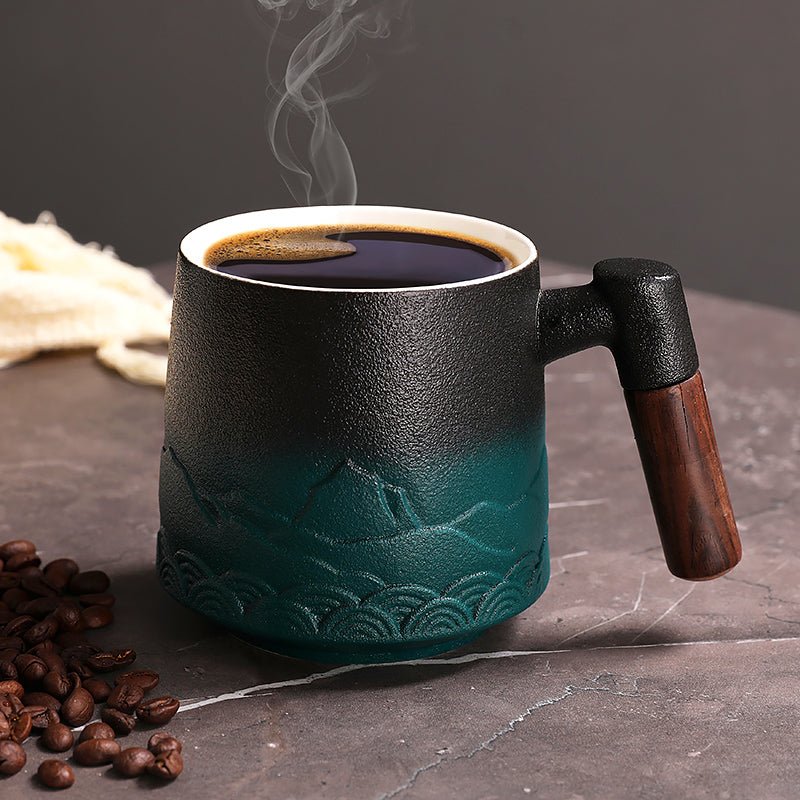
Coffee Mug Gift Ideas for Him Home Office Practical Purchase Checklist
Compare his desk routine, usual pour, handle preferences, care habits, and office style before choosing among Mountain Sea, The Rock, Elk and Moon, or the wider CoffeifyMug collection.
Read more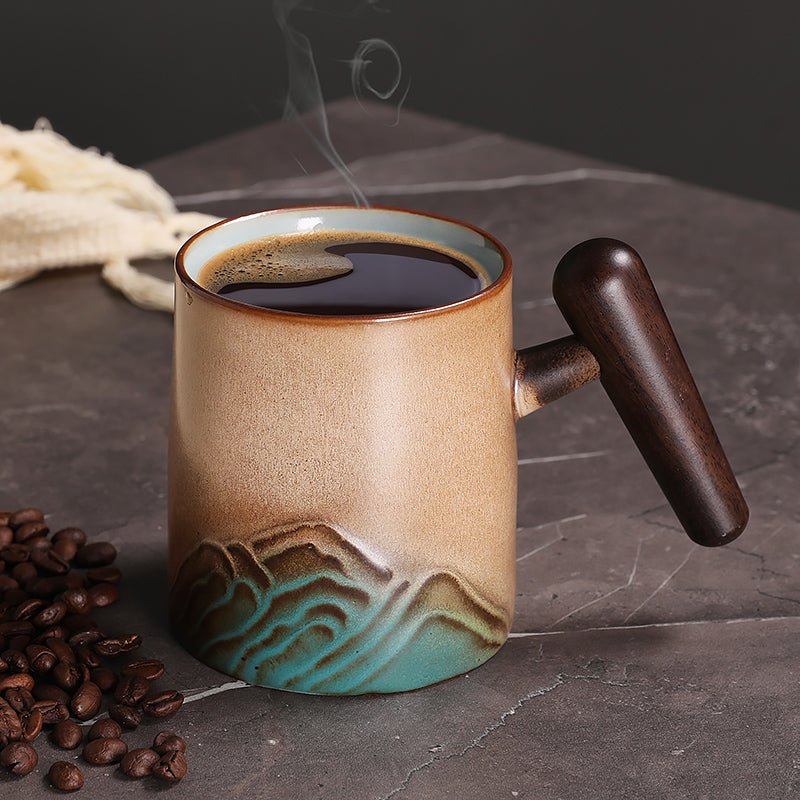
Vintage Pottery Coffee Mugs Home Office Practical Purchase Checklist
A desk-specific checklist for comparing vintage-style pottery mugs by actual pour, outside dimensions, handle clearance, base contact, glaze condition, and confirmed care instructions, with Coffeif...
Read more
Leave a comment
This site is protected by hCaptcha and the hCaptcha Privacy Policy and Terms of Service apply.