



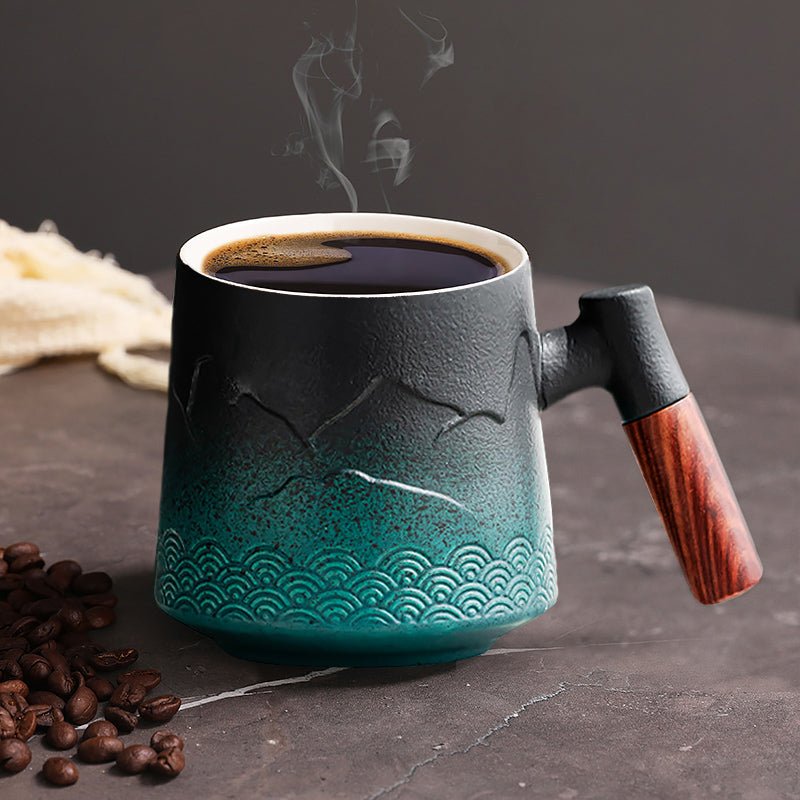
Coffee Mug With Wooden Handle Comparison: Wood, Grip, and Care
Reading time: about 9 minutes
Three mugs sit on a kitchen counter with nearly identical listing photos. One handle flexes a millimetre at the joint. One finish went chalky after a single hot rinse. The third still feels smooth and balanced with twelve ounces of coffee in it. A coffee mug with wooden handle comparison is really about catching those differences before you pay, because no product photo will show you any of them.
We sell drinkware and handle these mugs constantly — packing them, processing returns, answering care questions weeks after delivery. The concerns we hear are never about colour. They are about wobble, staining, and whether the mug feels front-heavy once it is full. Here is the sequence we run ourselves when a new wooden-handle mug lands on our shelf.
What does a coffee mug with wooden handle comparison actually reveal?
It separates the vessel from the handle. Those are two different purchases bundled into one product, and most listings describe only one of them well. Two mugs can look identical in a grid of thumbnails and behave nothing alike after a month of coffee, tea, and sink time.
- Body material and glaze: ceramic, stoneware, glass, and enamelled metal hold heat and carry weight differently. The listing should name the body material outright — never infer it from the handle.
- How the wood meets the body: a visible screw, a rivet, or a bonded seam each gives you something different to inspect later. Look closely at the joint in the second and third photo, not just the hero shot.
- Named wood species and finish: bamboo, maple, ash, and acacia are common in this category and feel genuinely different in the hand. If the wood is unnamed, treat that as a gap rather than a mystery to solve at checkout.
- Usable capacity versus full weight: a generous mug that is comfortable empty can drag at the wrist when filled. Compare the fill line, not the headline number.
- Care wording, word for word: hand wash only, top-rack dishwasher safe, and wipe clean are three completely different ownership experiences.
For a benchmark, open the Mountain Sea II Coffee and Tea Mug with Wooden Handle and score your shortlist against those five points. It is the coffee-and-tea model in our current catalogue, and we use it as the anchor for this category — but confirm capacity, wood type, and care instructions on the live listing before you treat any of those details as settled.
Bamboo, maple, ash, or acacia — which handle wood feels right in the hand?
Wood is not one material, and the handle is where you notice that first. Bamboo is a grass with a tight, linear grain. Hardwoods such as maple and ash usually show more visible figure and accept a smoother sanded finish. Acacia varies noticeably from piece to piece, which matters if you are buying two mugs that need to look like a set.
| Handle wood | What buyers tend to notice | Maintenance note |
|---|---|---|
| Bamboo | Tight linear grain, often lighter and more uniform between units | Can show water marks along the grain; dry it right after washing |
| Maple | Dense, fine-grained, takes a very smooth sanded finish | Holds a clean feel longer, but still dislikes soaking |
| Ash | Pronounced grain and visible character, slightly springier feel | More open grain can take on water once a finish wears thin |
| Acacia | Heavier and darker, with real variation piece to piece | Colour and grain differences between units are normal, not defects |
Those are general tendencies in the category, not a spec sheet for any single mug. The named species and finish on the listing you are reading is what you compare against.
- Check grain direction: lengthwise grain on a handle usually looks and feels more consistent than a cross-grain block.
- Look for raised grain or rough patches: the first sign of a low-cost wooden handle is roughness that appears after a few washes, not on arrival.
- Note the finish type: an oil or wax finish feels closer to bare wood but may need refreshing; a film finish wipes clean more easily but can wear at the edges where fingers rub.
- Verify food-contact wording: if the wood sits near the rim or touches your lips, the listing should say the finish suits that use. Do not assume it from a photo.
Does the handle still feel balanced when the mug is full at a desk?
Fill your current mug with water and hold it by the handle for thirty seconds. That test tells you more than any empty product shot. A full mug pushes the centre of gravity forward, and a handle that felt fine while empty can become tiring by mid-morning.
Check the opening against your actual hand. Two adult fingers should pass through without scraping, and your thumb needs a natural landing spot rather than a sharp edge. Larger hands and weaker grips feel a narrow opening every single morning. Cold hands notice the opposite — a smooth, rounded wood handle is far kinder than thin metal or moulded plastic at 7 a.m.
Desk use adds clearance to the list. The handle should not foul a monitor stand, a keyboard, or a mouse mat when you set the mug down. A mug that is perfect on a kitchen counter can be genuinely awkward on a crowded work surface. If you are still narrowing the field, browse our unique coffee mugs collection and shortlist two or three before you start comparing handle construction in detail.
What goes first — heat, condensation, or the dishwasher cycle?
In our experience the first failure is never dramatic. The joint develops a little movement. The finish turns dull or whitish. A water stain blooms near where the wood meets the body. Repeated soaking and hot dishwasher cycles are almost always behind it, because wood moves with moisture and heat, and detergent strips finishes that were never built for that environment.
- Hand wash in warm water with mild soap. Do not park the mug in a sink full of water overnight.
- Towel-dry the handle immediately. Faster and gentler than air drying, especially around the joint.
- Stand it so water drains away from the wood. Laying it handle-down in a puddle is the fastest way to a stain.
- Skip the dishwasher unless the exact listing permits it. A category-level phrase is not a care instruction for your specific mug.
- Inspect the joint monthly. If you can feel movement, stop soaking it and check the listing or contact the seller.
Do not oil a wooden handle unless the maker tells you to — some finishes are meant to be refreshed, others are sealed and should be left alone. The same restraint applies to heat. Wood feels different from metal, but handle thickness, vessel material, and joint design all affect how warm the handle gets. Pour hot water in and hold it before you trust the mug with a full boil-and-steep tea session.
Which buyer does a wooden handle suit, and who should pick something else?
The fit is narrower than the marketing suggests, and that is worth saying plainly. A wooden handle rewards someone who drinks slowly, keeps a mug in one place, and does not mind a thirty-second drying step.
- One long coffee at a desk: prioritise balance and clearance over looks. A steady mug you set down fifty times a day beats a dramatic one.
- Tea drinkers who refill often: favour a handle that stays comfortable through repeated hot rinses, and keep a towel within reach.
- Gifting: the receiver's dish habits matter more than their taste. Hand-wash instructions nobody reads turn a thoughtful gift into a cupboard ornament.
- Shelf display or a slow weekend brew: this is where the wood earns its place — warm, tactile, and visibly different from a plain ceramic cylinder.
It is a poor fit for a dishwasher-only household, a shared office kitchen where mugs vanish into a communal rack, a commercial café, or anyone who wants zero maintenance. It is also the wrong tool as a travel mug; wooden handles are not built for being tossed in a bag or jammed into a cup holder. If any of those describe your day, a straightforward all-ceramic or stainless mug will serve you better, and there is no shame in that.
The two-minute checklist we run before adding a wooden-handle mug to cart
Use this when you have two or three tabs open. It keeps the comparison concrete and stops you buying on looks alone.
- Confirm body material and usable capacity. Look for fl oz or ml, and check whether that figure is to the brim or a practical fill line.
- Name the wood and the finish. Bamboo, maple, ash, and acacia are not interchangeable purchases. Unnamed wood is a question, not a detail.
- Size the handle opening against your own hand. Two fingers, comfortably. Thumb lands on something smooth.
- Read the care line exactly. Hand wash only means hand wash only; dishwasher claims should name that model, not the whole category.
- Look at joint construction. Visible hardware or a bonded seam tells you what to inspect in six weeks.
- Imagine it full. Heavy body plus generous capacity can strain a wrist through any handle.
- Decide: gift or daily driver. Gifts need care instructions someone will actually follow. Daily drivers need forgiveness.
Make the Mountain Sea II wooden-handle mug your first tab, then hold the second and third listings against its stated capacity, wood details, and care wording. Anything the listing does not answer stays a question — do not fill the gap yourself. And if you want to see how wooden handles sit alongside the rest of our drinkware, the unique coffee mugs lineup is the fastest place to compare silhouettes side by side.
Frequently asked questions
Is a coffee mug with wooden handle comparison worth doing before buying a gift?
Yes, because the person receiving it may not hand wash or dry it the way you would. Compare the care instructions, the handle opening, and whether gift packaging is actually mentioned. Do not assume a box is included unless the listing says so.
Can a wooden handle go in the dishwasher?
Only if that exact product listing says so. Many wooden handles are hand wash only, and heat combined with detergent can dull the finish or loosen the joint over time. When the care line is unclear, hand wash and dry immediately.
What is the most common failure on wooden-handle mugs?
A slightly loose joint or a dull, water-marked finish shows up far more often than a dramatic break. Repeated soaking and hot dishwasher cycles accelerate both. Check the joint every few weeks and towel-dry the handle after washing.
Does wood keep the handle cooler than metal?
Wood feels different from metal, but do not lean on a general claim for a specific mug. Vessel material, handle thickness, and joint design all affect heat transfer. Test yours with hot water before committing it to a full boil-and-steep tea session.
How do I compare capacity when listings use different terms?
Look for fl oz or ml and check whether the figure is to the brim or a usable fill line. A mug rated 12 oz to the rim holds less in real use. Weigh that against full weight and handle opening size before deciding.
More from our blog
Ready to pick your mug? Two ways to save on today's order:
Ordering 1–3 mugs? Get an extra 10% off your 1st order with code 10_OFF Apply 10% Off & Shop Wooden-Handle Mugs →
Gifting 4+ mugs? Buy 3, Get the 4th Free applies automatically at checkout (no code needed; offers do not stack) · Free standard shipping (Nov pre-Christmas delivery: 15–20 calendar days US) · Free replacement if chipped in transit.
Popular mug buying guides: Ceramic Tea Cups & Infuser Mugs · Ceramic Mugs with Lids Compared · Wooden-Handle Tea Infuser Mugs Compared · Christmas & Secret Santa Mugs 2026 · Espresso & Cortado Cups Guide · Cup & Saucer Gift Sets · All 25 Mugs Spec Table · Mug Size Guide · Shipping & Promo FAQ
FIRST ORDER 10% OFF (CODE: 10_OFF) · OR BUY 3, GET THE 4TH FREE


Read more
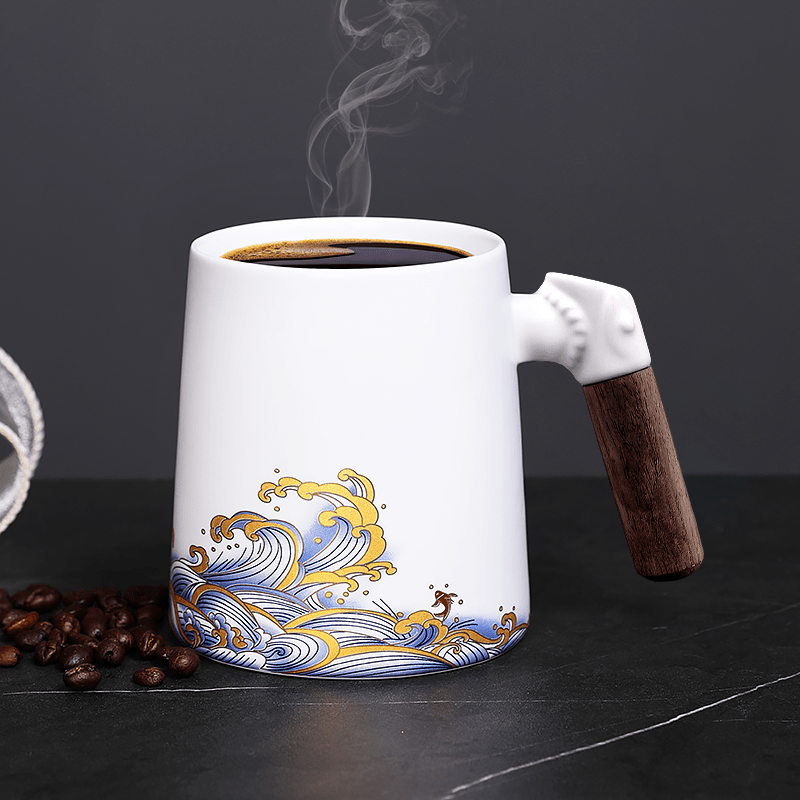
Golden Waves Ceramic Mug Comparison: What Buyers Should Compare
A spec-first golden waves ceramic mug comparison: how capacity is really measured, why gold luster changes your care routine, how handle geometry decides comfort, and the checks that matter before ...
Read more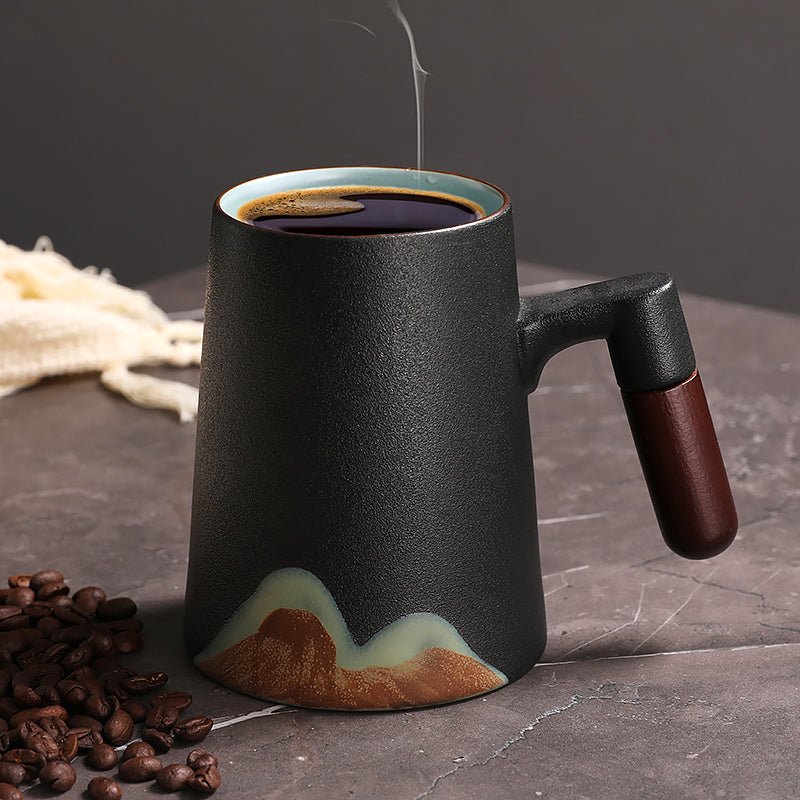
Ceramic Mug for Coffee and Tea Enthusiasts: Buyer Comparison
Wall mass, opening width, rim thickness and glaze decide whether a mug still holds drinkable heat an hour after you pour. Here is the comparison our team runs on every mug we stock, plus the detail...
Read more
Leave a comment
This site is protected by hCaptcha and the hCaptcha Privacy Policy and Terms of Service apply.