



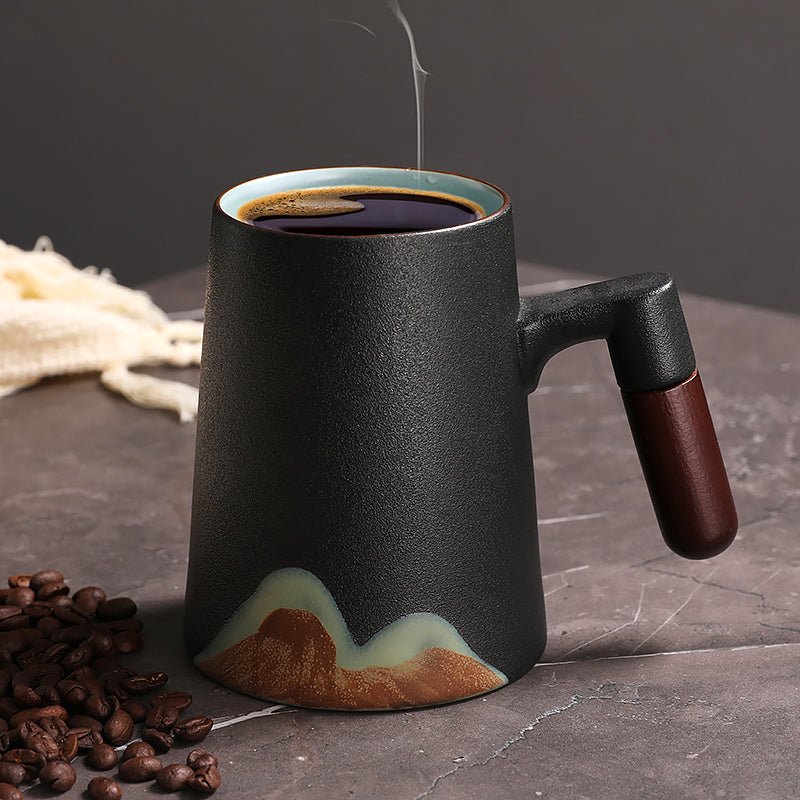
Ceramic Mug for Coffee and Tea Enthusiasts: Buyer Comparison
Reading time: about 10 minutes
A ceramic mug for coffee and tea enthusiasts fails in a very specific way. The first two inches are hot, the last third is tepid, and somewhere around the second refill the mug migrates to the back of the cupboard. We have unboxed that mug at our store more than once — handsome in photos, nearly weightless in the hand, cold before the first meeting of the day ends. What separates it from the mug you reach for daily is wall mass, opening width and glaze, not the pattern on the outside.
We sell ceramic drinkware, so the same questions land in our inbox every week: will it stain, can it go in the microwave, does the handle fit a hand at six in the morning, will it survive the dishwasher. What follows is the comparison our team runs through when judging a mug for hot coffee and loose-leaf tea — where our own Morning Night mug fits, and the cases where a different shape would serve you better.
Which ceramic mug for coffee and tea enthusiasts actually holds heat longest?
Heat leaves a mug by three routes: through the walls, off the open liquid surface, and into whatever cold counter the base is sitting on. More ceramic mass means more material to warm up before the drink itself starts losing temperature, which is why a chunky earthenware mug usually feels warmer for longer than a delicate porcelain one of the same stated capacity.
The opening matters as much as the body. Wide, shallow bowls shed heat off the surface quickly — useful when you want coffee to reach drinking temperature fast, unhelpful when you brew a pot of tea and plan to work through it over an hour.
| Ceramic body | Typical firing range | Wall feel | Heat behaviour | Best fit |
|---|---|---|---|---|
| Earthenware | Roughly 1,000–1,150°C | Thick, rustic, warm to the touch | Holds heat well once warmed; slow to react to temperature change | Slow morning tea, relaxed weekend coffee |
| Stoneware | Roughly 1,200–1,300°C | Substantial but tighter-grained | Balanced; the usual daily-driver compromise | One mug for both coffee and tea, desk use |
| Porcelain | Typically above 1,300°C | Thin, light, translucent at the rim | Cools fastest; rewards preheating | Black coffee, short strong pours, finer table settings |
Preheat the mug, not the kettle. Fill a cold mug with hot tap water, let it stand for thirty seconds, tip it out, then pour. Raising the starting temperature of the ceramic is the cheapest improvement to heat retention available — no lid, no double wall, no gadget required.
Earthenware, stoneware, porcelain: what those three labels actually mean
Earthenware — thick walls, slow warmth, a little fragile
Fired at roughly 1,000–1,150°C, earthenware stays porous unless it is fully glazed, so the clay body keeps more air in it. That is where the thick, rustic wall and even warmth come from. The trade-off is chipping: earthenware rims mark more readily than stoneware, and a hairline in the glaze or an unglazed foot lets liquid into the body. If a listing shows a crackle finish, check whether it is a decorative surface sealed under a gloss glaze or an open texture that will stain.
Stoneware — the everyday compromise
Fired higher, around 1,200–1,300°C, stoneware vitrifies enough to feel dense and reasonably tough while staying heavy in the hand. It is the body behind most everyday ceramic mugs, and it is what we suggest for anyone who wants a single mug handling a seven o'clock coffee and a nine o'clock herbal tea without fuss. Be aware of the weight: a large stoneware mug filled to a sensible level is genuinely a two-hand object for some people.
Porcelain and bone china — thin walls, quick cooling
Porcelain is fired at the top of the range, typically above 1,300°C, and can be thrown thin enough to feel almost weightless. It is the most refined option and the best for black coffee or a short, strong pour you finish in minutes. It is also the weakest at holding heat, and thin rims chip if they meet a granite worktop. Bone china behaves similarly with a warmer tone and usually a higher price.
Does rim thickness and wall shape change how the drink tastes?
Rim thickness is the detail product copy skips and every drinker notices. A thick, rounded rim reads as generous and forgiving; a thin, tapered rim puts liquid closer to the tongue and makes the same coffee taste slightly sharper. For tea, a narrower opening concentrates aroma. For a latte, a broad rim gives you room to work.
Handle construction is the other quiet failure point. Look for one you can get three fingers through rather than hooking two, a comfortable thumb rest at the top, and enough clearance that your knuckles do not scrape the body. A pretty handle that only fits two fingers becomes the mug you avoid when it is full and hot.
The desk test: capacity, footprint and handle clearance
Stated capacity is not usable capacity. A mug listed at 11 oz, filled to a sensible level with an inch of headroom, holds closer to 9 oz of liquid — so if you brew 12 oz of coffee you will be filling it near the rim every single time. Measure the pour you actually make before you judge a mug.
- Base diameter — a wide foot will not sit in a car cupholder or a narrow coaster.
- Height under the cabinet — measure the gap between counter and upper cabinets if you store mugs upright.
- Total width including handle — often noticeably wider than the body diameter on the listing.
- Weight when full — a heavy stoneware mug plus a full pour is a different object from the empty one you handled.
Microwave, dishwasher and thermal shock: what to verify first
Three things decide whether a mug survives your kitchen: the glaze, the trim and how you treat temperature swings.
- Metallic trim and gold rims are not microwave safe — the metal arcs and can scorch or spark.
- Crackle glazes and unglazed feet can trap liquid; hand washing is the safer routine.
- Matte glazes can dull and pick up detergent film in a dishwasher over months, even where the mug itself is rated dishwasher safe.
- Thermal shock is the real killer — boiling water into a mug straight from a cold cupboard, or a hot mug into a sink of cold washing-up water, is how rims crack.
We cannot tell from a photo whether a specific mug is microwave safe, and neither can a marketplace listing that reuses another seller's copy. Check the product page, the base stamp, or the care card in the box. If the listing is silent, treat it as hand-wash and no-microwave until confirmed.
Staining, crazing and chips: what to inspect in the first week
Fifteen minutes of checking when a mug arrives saves an argument later.
- Crazing — a web of fine lines in the glaze. Some crackle finishes are intentional; random crazing on a gloss glaze is not, and it lets liquid into the body.
- Rim chips — run a fingernail around the rim; a chip will catch.
- Rocking base — set it on a flat surface and press the rim; a warped foot wobbles and eventually cracks.
- Rough foot ring — unpolished bases scratch wooden tables and feel gritty on a coaster.
- Fast staining — if a tea mark appears within days and will not lift with a baking-soda paste, the glaze is porous.
For everyday tannin marks, a paste of bicarbonate of soda and water left for ten minutes lifts the stain without scuffing. Skip abrasive cream cleaners on matte finishes; they leave a dull patch you cannot polish out.
Where the Morning Night Coffee and Tea Mug fits — and where it does not
Most shoppers want one mug covering both ends of the day: coffee at seven, tea at nine, no flavour carry-over between them. That is the brief behind the Morning Night Coffee and Tea Mug, and it is the one we point to when someone asks for a single mug rather than a matched set.
Two details we will not guess at, because we would rather you check the current listing than take our word for it: the stated capacity, and the manufacturer's care guidance for microwave and dishwasher use. Both live on the product page and together they decide whether the mug suits your routine. If you fill to the brim for a long tea session, a larger body with a narrower opening will serve you better. If you drink espresso-length coffee, this mug will read oversized in the hand.
To compare silhouettes first — glazes, shapes, novelty finishes — start with our unique coffee mugs collection. Shape tells you more about heat loss and hand feel than colour ever will.
Should style outrank heat retention for gifting and shelf presence?
Sometimes, yes. When a mug is a gift or a piece that lives on an open shelf, the receiver registers glaze, weight in hand and whether it suits the room. A mug that reads as decor gets used more often than a technically superior one that stays in the cupboard. If that is your priority, pair this guide with our notes on ceramic coffee mugs for home decor, which cover how matte and gloss finishes sit next to wood and linen. For a tick-box list to take shopping, the ceramic tea mug buying checklist runs through ten checks in order.
The five-minute check before you add it to the cart
- Measure your usual pour, not the mug's stated capacity — headroom eats 10–20% of it.
- Confirm microwave and dishwasher guidance on the listing or the care card; assume hand-wash if silent.
- Check total width with the handle, then check your cupboard gap and your coaster.
- Decide whether you want one mug for coffee and tea or two dedicated shapes.
- Pick the body first — earthenware for slow warmth, stoneware for daily balance, porcelain for short pours.
If you would rather compare shapes in one place, look through the ceramic mug range in our store and start with the silhouette you already know works on your counter, then verify capacity and care on each listing.
Frequently asked questions
Is a ceramic mug for coffee and tea enthusiasts better than stainless steel?
For drinking at a desk or table, usually yes. Ceramic does not hold onto flavours the way an unlined metal interior can, and a thick ceramic rim feels better against the mouth. Stainless steel wins on heat retention over long stretches and on surviving a bag — it is the better travel choice and the worse sitting-still choice.
Can I pour boiling water straight into a ceramic mug?
Better to warm it first. Pouring rolling-boil water into a cold, thick-walled mug stresses the glaze and rim through thermal shock. Half-fill with hot tap water, wait thirty seconds, tip it out, then pour. The same rule applies in reverse — never plunge a hot mug into cold washing-up water.
Why does the same tea taste different in two different mugs?
Rim thickness, opening width and glaze all change the experience. A narrow opening concentrates aroma, a thick rim delivers liquid further back on the tongue, and a porous or crazed glaze can carry residue from previous drinks. If a tea tastes flat in one mug and bright in another, preheat both before blaming the leaves.
How do I remove coffee and tea stains from a ceramic mug?
Bicarbonate of soda mixed with water into a paste, left for ten minutes, then rinsed. For heavier tannin build-up, a denture tablet in warm water overnight works without abrasion. Avoid scouring pads on glazed interiors — they leave micro-scratches that stain faster next time.
What capacity should I buy for tea versus coffee?
Tea drinkers generally want more usable volume, because a session lasts longer and you do not want to refill constantly. Coffee drinkers making milk drinks are often happier with a wider, shorter mug that leaves room for foam. Confirm the actual fill level on the listing rather than trusting the number in the product title.
More from our blog
Ready to pick your mug? Two ways to save on today's order:
Ordering 1–3 mugs? Get an extra 10% off your 1st order with code 10_OFF Apply 10% Off & Shop Wooden-Handle Mugs →
Gifting 4+ mugs? Buy 3, Get the 4th Free applies automatically at checkout (no code needed; offers do not stack) · Free standard shipping (Nov pre-Christmas delivery: 15–20 calendar days US) · Free replacement if chipped in transit.
Popular mug buying guides: Ceramic Tea Cups & Infuser Mugs · Ceramic Mugs with Lids Compared · Wooden-Handle Tea Infuser Mugs Compared · Christmas & Secret Santa Mugs 2026 · Espresso & Cortado Cups Guide · Cup & Saucer Gift Sets · All 25 Mugs Spec Table · Mug Size Guide · Shipping & Promo FAQ
FIRST ORDER 10% OFF (CODE: 10_OFF) · OR BUY 3, GET THE 4TH FREE


Read more
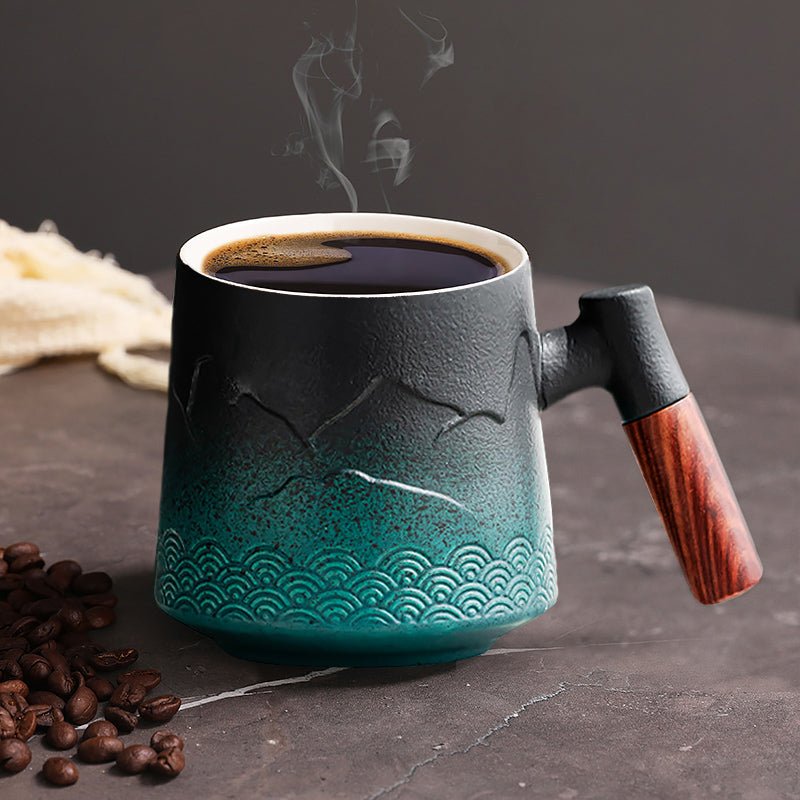
Coffee Mug With Wooden Handle Comparison: Wood, Grip, and Care
We handle wooden-handle mugs every day — packing them, checking returns, answering care questions. This coffee mug with wooden handle comparison covers what actually differs: wood species, grip bal...
Read more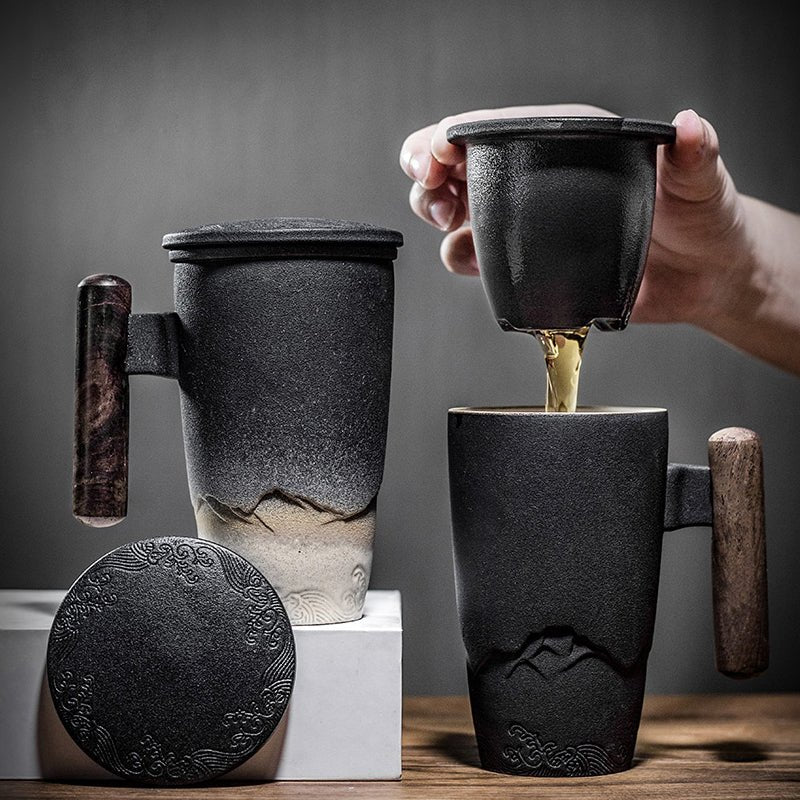
Tall Landscape Coffee Mug Ceramic for Home Decor: What to Compare
A store-side comparison of tall ceramic mugs with landscape prints: shelf clearance math, which ceramic body makes a scene look right, handle ergonomics, glaze care, and the placements where a tall...
Read more
Leave a comment
This site is protected by hCaptcha and the hCaptcha Privacy Policy and Terms of Service apply.