
Ceramic vs Porcelain Coffee Mugs Buying Priorities: Fit First
Reading time: about 9 minutes
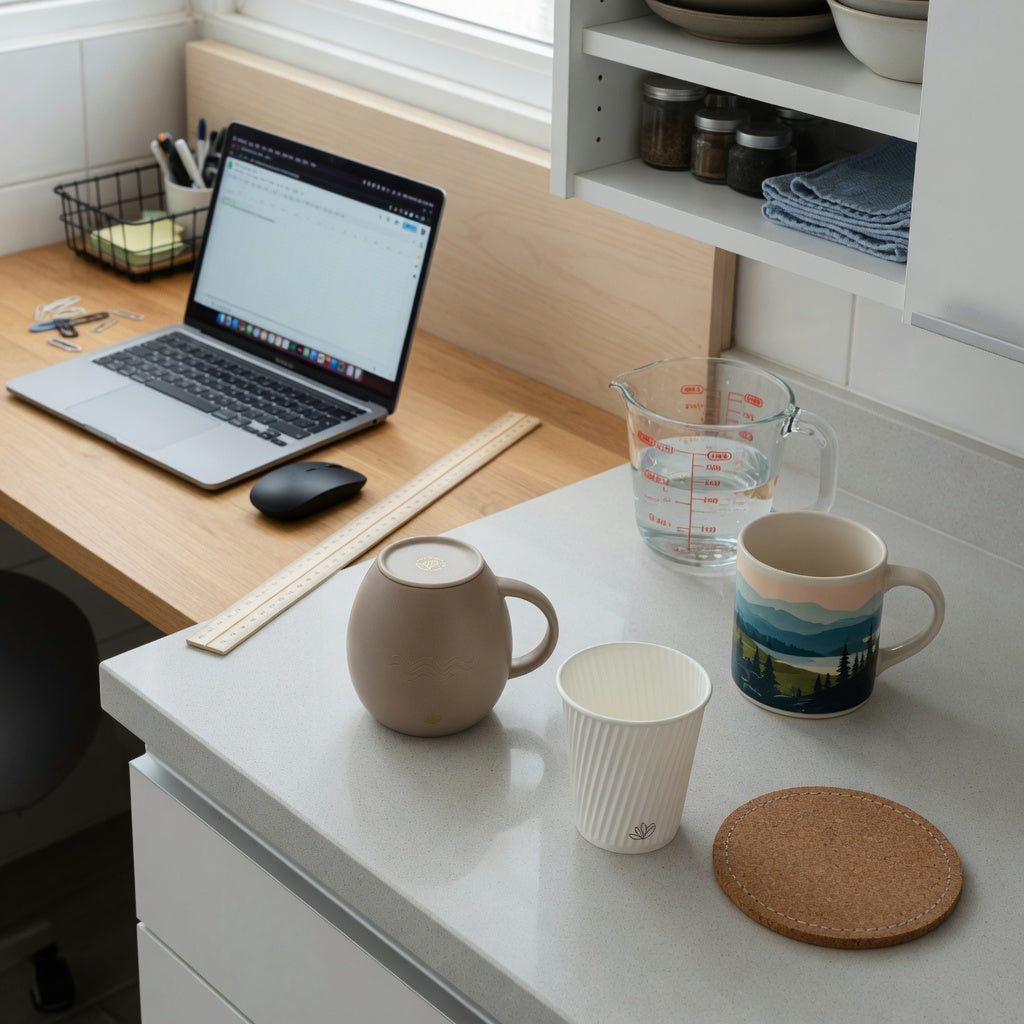
A mug can clear the cabinet shelf and still be wrong for the routine. The handle may crowd a mouse, the comfortable fill line may sit well below the stated capacity, or the base may overhang a favorite coaster. Our ceramic vs porcelain coffee mugs buying priorities start with those practical conflicts: usable capacity, visible shape, and the space the entire mug must occupy.
In our store, we begin with measurements instead of treating the material label as the decision. When our team handles mugs for product checks and packing, we pay attention to the rim, handle junctions, exterior texture, and foot ring because those details affect carrying, cleaning, and placement. We also keep product-specific claims tied to the current listing. If a page does not state a capacity, dimension, material, or care method, we do not fill the gap with an assumption.
Which ceramic vs porcelain coffee mugs buying priorities matter first?
Porcelain is itself a ceramic material. In retail comparisons, ceramic commonly serves as shorthand for non-porcelain ceramic bodies, so this is not a choice between unrelated material families. The specific mug construction still matters more than the category name alone.
- Usable capacity: Match the amount you actually pour, including milk, foam, or ice.
- Total footprint: Count the body, base, and handle projection, not just the diameter shown from above.
- Shape and grip: Consider rim width, balance, texture, and room for your fingers.
- Material and care: Use these to settle the decision after the mug fits your drink and space.
This order prevents a common buying mistake: choosing porcelain for a lighter visual impression or ceramic for a substantial look, then discovering that the mug does not fit the shelf, dishwasher rack, or desk where it will be used.
How much usable capacity does your routine require?
Listed capacity and comfortable drinking capacity are not always identical. Unless a product page explains how capacity was measured, allow roughly 10 to 15 mm of headspace below the rim for carrying. Iced coffee needs additional room because ice displaces liquid, while a small tea top-up may need far less volume than a morning coffee with milk.
- For one full morning pour: Fill your current mug to its normal level, transfer the drink to a measuring jug, and record the result in milliliters or fluid ounces.
- For lattes or coffee with milk: Measure the finished drink rather than the coffee portion alone.
- For iced drinks: Add your usual amount of ice first, then measure the remaining liquid capacity without filling to the rim.
If your measured volume matches the capacity currently shown on the Round Coffee Tea Mug page, its visibly rounded form gives you a familiar starting point for an everyday hot-drink setup. Confirm the listed dimensions and care information before buying. It is not the right choice merely because the word mug appears in the name, and it will not replace a sealed travel cup if your drink needs to leave the kitchen or office.
Product names such as cup and mug are not standardized capacity units. The current listing and your measured pour are more useful than the name.
Will the shape fit your hand, coaster, desk, and cabinet?
Product photos help with style, but they may not reveal scale unless a familiar object or dimensions are provided. We recommend checking five separate measurements whenever they are listed: overall height, maximum body width, base or foot-ring diameter, handle projection, and handle opening. The last two are easy to miss, yet they determine whether a mug clears a wall, fits beside a keyboard, and leaves enough room for your knuckles.
- Round profiles: Compare the widest part of the body with your coaster and dishwasher rack, then include the handle in the desk footprint.
- Pleated surfaces: Decide whether you prefer exterior texture under your fingers. Texture can change the tactile experience, but it does not guarantee a nonslip grip because glaze, hand size, and condensation also matter.
- Design-led mugs: Check the actual silhouette instead of inferring dimensions from the product name or artwork.
The Pleated Coffee Tea Cup is the relevant next page for a shopper who specifically wants a textured exterior rather than a completely smooth body. Verify its current capacity, handle arrangement, dimensions, and care directions against your routine. Someone who wants the fastest possible wipe-down or a plain matching office set may prefer a smoother style.
The Landscape Coffee Tea Mug is a more natural starting point for a shopper prioritizing visual character or a gift with a distinct theme. Treat landscape as a design cue, not proof of a wide or low shape. For a small cabinet or crowded desk, the listed measurements still decide whether it fits.
What does the ceramic or porcelain label actually tell you?
A material name does not establish the finished mug's weight, wall thickness, heat retention, chip resistance, or care compatibility by itself. A porcelain mug can be made with a fine, thin wall, but it can also be substantial. A non-porcelain ceramic mug can feel heavy or relatively light depending on its clay body, dimensions, and construction.
- Thermal feel: Wall thickness, total mass, preheating, and drink volume all affect how quickly the mug and beverage change temperature.
- Balance: Base geometry and handle placement matter more than assuming one material is automatically steadier.
- Care: Glaze and decoration can affect microwave and dishwasher suitability, so follow the product-specific directions rather than relying on the material category.
- Wear points: Rim chips, hairline damage near handle joints, glaze irregularities, and rough foot rings are practical areas to inspect after unboxing.
This is why we do not present ceramic as the rugged option and porcelain as the delicate option without examining the individual product. Those shortcuts can mislead shoppers. Construction and intended use have to support the claim.
Which current CoffeifyMug page matches your buying situation?
These are starting points based on the visible product concept, not substitutes for the current specifications on each page.
| Reader situation | Priority to settle first | Relevant next step | Check before checkout |
|---|---|---|---|
| Everyday coffee on a kitchen counter | A familiar profile and a capacity close to the usual pour | Compare the rounded coffee and tea mug | Capacity, full width with handle, height, and care directions |
| Desk use with a preference for tactile texture | Available footprint and how the exterior feels in hand | Review the pleated cup option | Base size, handle clearance, weight if listed, and cleaning guidance |
| A visually distinctive home or office gift | Recipient's style followed by shelf and pour fit | Open the landscape mug listing | Actual dimensions, capacity, material, variants, and care |
| No fixed silhouette yet | Side-by-side comparison of shapes and visible details | Browse our unique coffee mugs collection | Use the same measurements for every product being compared |
None of these options is a universal answer. A decorative mug may be a strong gift choice but a poor fit for a minimalist matching set. A textured cup may appeal to someone who likes tactile surfaces but not to a shopper who wants a completely smooth exterior. For commuting, outdoor use, frequent drops, or a drink that must stay sealed in a bag, a lidded and impact-resistant vessel is a better category than an open ceramic or porcelain mug.
What should you verify about care before checkout?
Care directions are product-specific. Do not assume that every glazed ceramic or porcelain mug is microwave-safe or dishwasher-safe. Decoration, glaze, construction, and manufacturer guidance can change the answer.
- Use a microwave only when the current product instructions permit it, especially if the design includes metallic-looking details.
- During dishwasher cycles, leave enough space to prevent the rim or handle from striking another piece or a rack component.
- Avoid sudden temperature changes, such as taking a cold mug and immediately filling it with boiling water, unless the care guidance supports that use.
- After delivery or gift unboxing, inspect the rim, handle joints, glaze, and foot ring before the first drink. Ask about any unexplained crack, sharp edge, or unstable base.
Fine lines in a glaze can be an intentional finish on some ceramics and an unintended issue on others. The product description should establish that distinction. If it does not, confirm before use instead of guessing from a photo.
A 60-second capacity, shape, and space check
- Measure your normal finished drink, including milk or ice.
- Allow carrying headspace below the rim.
- Mark the available desk or counter area with a ruler.
- Check body width, base diameter, total height, and handle projection when listed.
- Confirm the material and care instructions on the current product page.
- Reject any option that misses a daily constraint, even if its material or design is appealing.
That short process turns ceramic vs porcelain coffee mugs buying priorities into a fit decision rather than a broad debate about which material is best.
Frequently asked questions
Which ceramic vs porcelain coffee mugs buying priorities matter most for a small desk?
Start with the total footprint, including the handle, then check base stability and usable capacity. Measure the clear area beside your keyboard, mouse, cables, and notebook. Material should come later unless weight or care requirements create a specific constraint.
Is porcelain always thinner and lighter than ceramic?
No. Porcelain is a type of ceramic, and the finished weight depends on the mug's wall thickness, size, handle, and construction. Compare the individual product's listed weight and dimensions when available instead of relying on the category label.
Does listed mug capacity include carrying headspace?
That depends on how the seller measured it. Unless the listing defines usable capacity, measure your regular pour and leave roughly 10 to 15 mm below the rim. This is especially useful for walking from a kitchen counter to an office desk.
Which CoffeifyMug style should I consider for a gift?
Start with the Landscape Coffee Tea Mug if the recipient values a distinct visual theme, or the Pleated Coffee Tea Cup if tactile texture is part of the appeal. If you do not know the recipient's preferred capacity or cabinet space, compare the collection and avoid assuming that the most decorative option will be the most practical.
Can every ceramic or porcelain mug go in a dishwasher and microwave?
No. Use only the care directions stated for the specific product because glaze, decoration, and construction can affect suitability. Even for dishwasher-approved pieces, spacing mugs so their rims and handles do not knock together helps reduce avoidable damage.
Keep the checklist open while reviewing the current product pages. If the first shape misses a capacity or space requirement, compare the full selection of unique coffee mugs and prioritize measured fit over the material label or product photo alone.
More from our blog
Read more
Oversized Ceramic Coffee Mugs Current Product Facts Compared
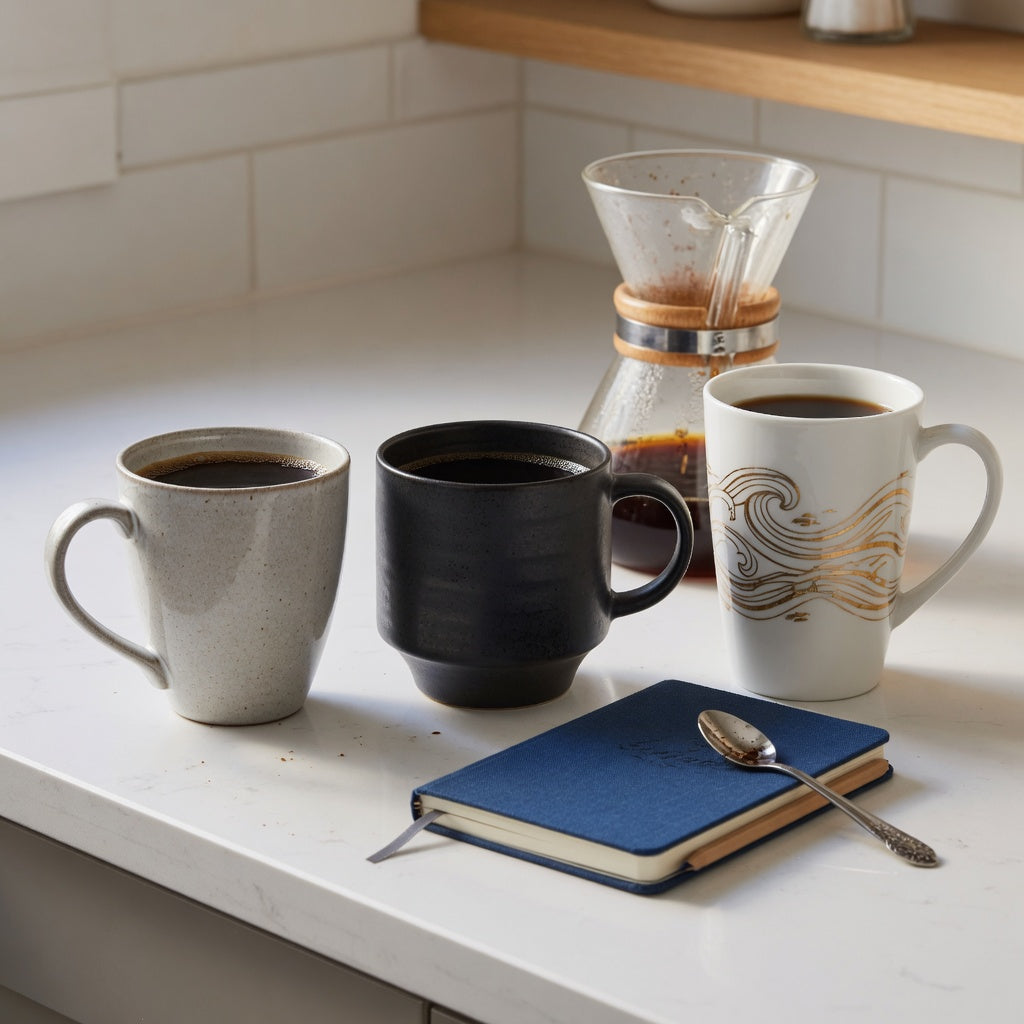
Compare the listed 400 ml, 440 ml, and 480 ml capacities, body shapes, finishes, practical trade-offs, and unconfirmed details for three CoffeifyMug ceramic mugs.
Read more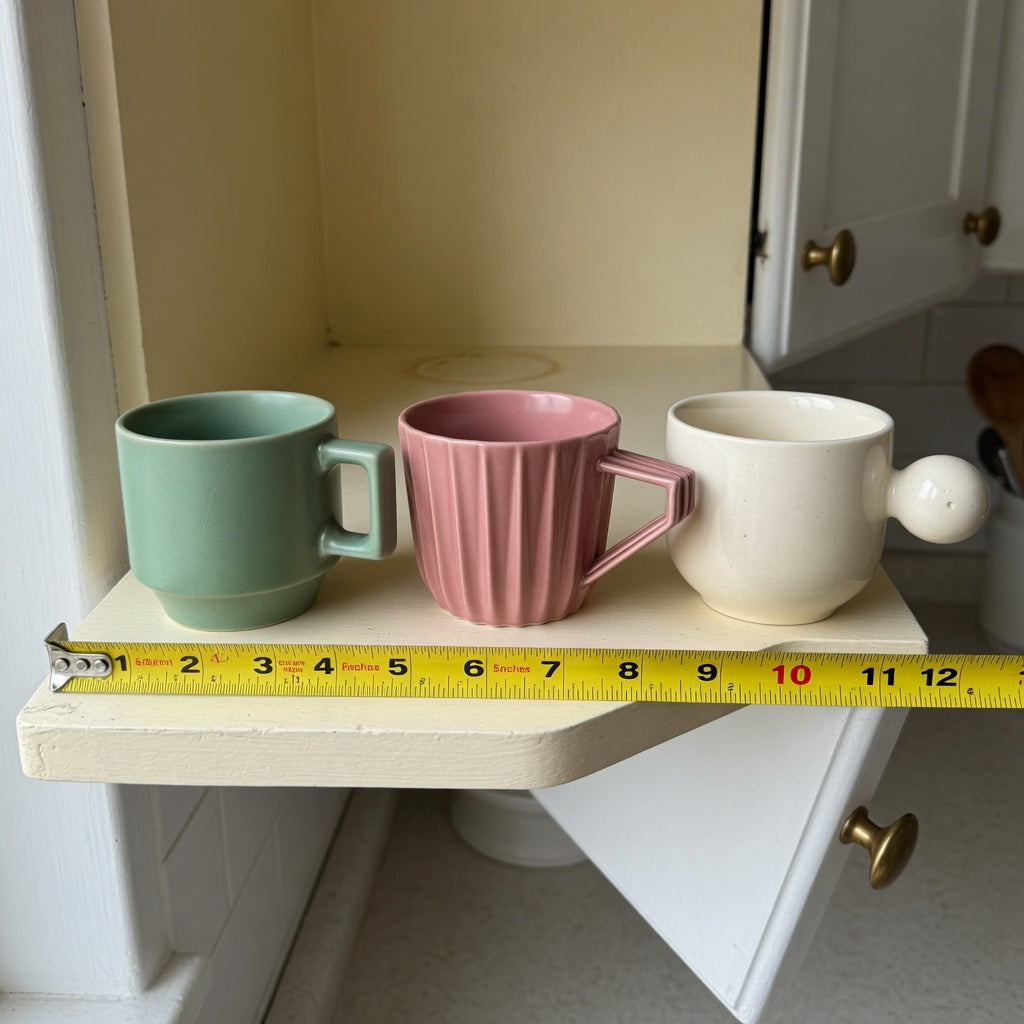
Macchiato Cup Storage Fit Guide: Shapes and Shelf Space
Compare the Retro 170 ml, Pleated 200 ml, and Ball Handle 250 ml cups by visible form, handle clearance, and realistic cabinet needs. Includes a no-guesswork measuring method for crowded cupboards,...
Read more
Leave a comment
This site is protected by hCaptcha and the hCaptcha Privacy Policy and Terms of Service apply.