
Ceramic Tea Mug Replacement Purchase Practical Purchase Checklist
Reading time: about 9 minutes
A favorite mug usually earns its replacement during an ordinary moment: a rim chip catches your attention, a line appears near a handle joint, the base no longer sits evenly, or the serving size stops fitting your routine. On a crowded kitchen counter or beside a laptop, handle clearance and body shape can matter more than decoration. From handling and comparing this category, we have found that a useful ceramic tea mug replacement purchase practical purchase checklist must start with the old mug, not the new product photos.
Our comparison stays within facts the current CoffeifyMug listings can support: ceramic material, listed capacity, visible form, and handle shape. A photograph can help you judge silhouette, but it cannot prove grip comfort, wall thickness, impact resistance, care compatibility, or long-term durability. We treat those unstated details as unknown rather than turning visual cues into promises.
Why is the old mug leaving the cupboard?
Separate physical damage from an everyday fit problem. A broken mug and an inconvenient mug can look like the same replacement purchase, but they require different filters. Ceramic can chip or break after an impact, and choosing another silhouette does not create a guarantee against the same event.
- Rim or body damage: Note where the chip or crack appeared. The replacement goal is an intact ceramic vessel, not an unsupported promise of impact resistance.
- Handle mismatch: Record whether the opening cramped your fingers, the loop projected too far across the desk, or the grip felt awkward when the mug was full.
- Serving mismatch: Decide whether the usual pour was too small, too large, or already right. Do not change capacity simply because a larger mug looks generous online.
- Space mismatch: Check the shelf, coffee station, or desk area where the mug normally sits. Body height and handle projection can decide whether a new form works there.
Circle one primary reason for replacing the mug. That reason should control the decision. If the old rounded body worked well but the handle did not, preserve the body style and change the handle shape. If capacity was the only problem, avoid changing every other familiar detail at the same time.
Listed capacity versus the amount you actually pour
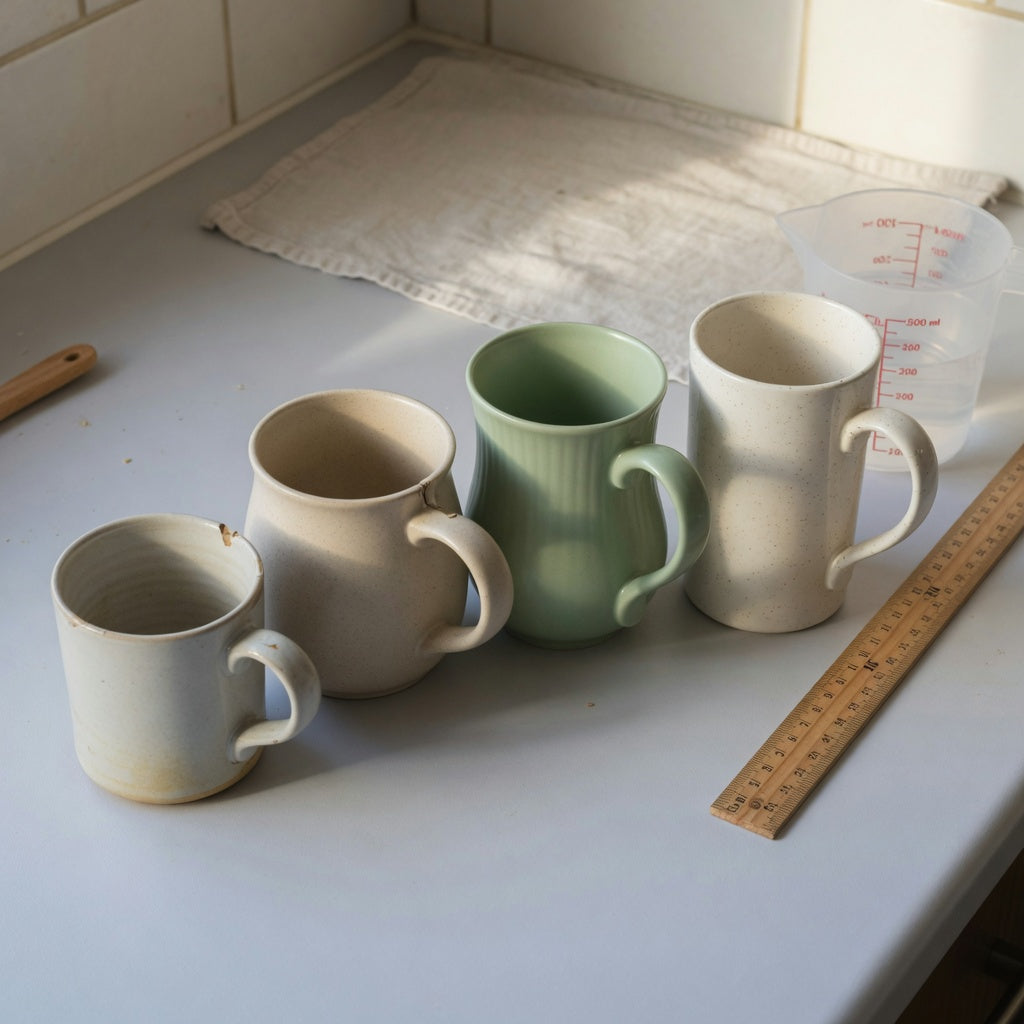
Listed capacity gives you a consistent comparison point, but it may not equal your normal serving because most people leave space below the rim. Before discarding the old mug, fill it to the level you usually use and pour that water into a marked measuring jug. Record the result in milliliters or fluid ounces. That is your working volume.
Compare that measurement with the current capacity stated on each product page. If the old serving felt right, stay close to it. If tea was regularly left behind, choose a smaller listed capacity deliberately. If you repeatedly refilled the mug, a larger option may make sense, provided its visible body and handle still fit the usual counter, shelf, or desk space. Do not estimate capacity from a photograph alone.
Visible form, counter footprint, and shelf clearance
A product image can show whether a mug is rounded, flowing, straight-sided, or taller-looking. It cannot reliably provide scale unless dimensions are also stated. Measure the old mug's external height, widest body diameter, base footprint, and total width including the handle. These four checks are especially useful in compact kitchens, under low cabinet shelves, and on office desks shared with a keyboard or notebook.
Form should be treated as a fit and familiarity decision, not automatic evidence of performance. A rounded body does not by itself prove that the base is wider or more stable. A flowing outline does not guarantee drip-free pouring. A taller-looking profile does not establish a larger capacity. Use the silhouette to narrow the options, then verify the listed capacity and any available measurements on the current page.
Handle opening and desk-side grip
Handle shape is easy to overlook until the first full cup. We check both the exterior loop and the usable interior opening because a visually large handle can still leave limited finger room. Measure the old handle opening at its narrowest horizontal and vertical points. Also note whether you normally use one, two, three, or four fingers inside the loop.
A traditional-looking loop preserves a familiar grip and may occupy less visual space. A more open-looking handle may offer easier finger entry, but the photo alone cannot confirm pressure points, balance, or comfort. At an office desk, also check how far the handle appears to project from the body. A shape that feels spacious in a product image may compete with a mouse, notebook, or desk edge in daily use.
For a replacement gift, photograph the recipient's existing mug beside a ruler and record the usual finger grip before shopping. That small step is more useful than guessing from the pattern or trying to infer hand fit during the gift unboxing.
Use this ceramic tea mug replacement purchase practical purchase checklist
Run each candidate through the same sequence. Our team uses this replacement-first approach to keep an attractive new shape from hiding a practical mismatch.
- Write down the main reason the old mug is being replaced.
- Identify one feature that must stay familiar, such as serving volume, rounded form, or handle style.
- Measure the amount normally poured into the old mug.
- Copy the current listed capacity from each candidate's product page.
- Compare visible body height, width, base shape, and handle projection with the old vessel.
- Measure the old handle's interior opening and note your usual finger count.
- Confirm that the candidate is listed as ceramic and presented for ordinary coffee and tea serving.
- Mark unstated dimensions, weight, care compatibility, and grip comfort as unknown.
- Choose the option that fixes the primary problem without introducing a new space, capacity, or grip conflict.
The ceramic tea mug replacement purchase practical purchase checklist should leave you with a reason for selecting one mug, not merely a preference for its photograph. If two or more non-negotiable points remain unresolved, pause and verify the current listing details before ordering.
Which current CoffeifyMug mug is the closest replacement?
These recommendations map the old mug's successful features or limitations to listing-backed comparison points. They do not assign performance that the product pages and visible forms cannot establish.
| Current option | Relevant comparison points | Start here when | Trade-off or unknown |
|---|---|---|---|
| Round Coffee Tea Mug | Ceramic coffee and tea mug, current listed capacity, rounded body, and traditional-looking loop handle | The old mug's rounded silhouette and conventional handle worked, and you want to minimize visual and grip changes | The rounded appearance does not prove a wider base, heavier weight, or greater impact resistance |
| The Flow Coffee Tea Mug | Ceramic coffee and tea mug, current listed capacity, flowing outline, and a more open-looking handle shape | You deliberately want a less conventional visible form or more apparent finger entry than a tight loop provides | The image cannot confirm grip comfort, balance, or cleaner pouring |
| Morning Night Coffee Tea Mug | Ceramic coffee and tea mug, current listed capacity, a taller-looking profile, and a mid-size-looking loop | The old mug had a taller proportion, or that visible form better suits its usual kitchen or desk location | The name and profile do not establish serving duration, thermal performance, or care compatibility |
If none of these situations matches the mug being replaced, compare the visible forms in our unique coffee mugs collection. Keep the old mug's measurements and usual serving volume beside you while scanning. The collection is the better next step for shoppers who need another silhouette rather than a forced choice among three options.
What the listings do not establish
Product names and photographs have limits. Unless a current listing explicitly states otherwise, do not infer exact external dimensions, wall thickness, empty weight, base flatness, glaze durability, dishwasher compatibility, microwave compatibility, or included items. Ceramic material alone does not answer those questions. We would rather leave a detail unresolved than convert an assumption into buying advice.
These linked products are presented as ceramic coffee and tea mugs for ordinary serving. They are not the right purchase if your primary requirement is a documented sealed travel function or another feature the listing does not establish. A purpose-built style with clearly stated features would suit that situation better. The same rule applies when a specific care method is non-negotiable: confirm the exact current product language before purchasing.
Inspect the replacement before it joins the daily rotation
Unboxing is the first point at which visible listing cues can be compared with the actual vessel. Under good light, inspect the rim, ceramic body, handle attachment points, and base for visible chips or cracks. Set the empty mug on a level, dry counter to check that it sits as expected, then test the handle with your normal finger grip over the counter. Confirm that the received form and product match the order before regular use.
This inspection cannot predict long-term service life, but it can catch an immediate mismatch. If the handle opening is clearly wrong or the vessel conflicts with the shelf or desk space you measured, address that before the mug becomes part of the routine.
Frequently asked questions
What should a ceramic tea mug replacement purchase practical purchase checklist include?
Record why the old mug is being replaced, its usual serving volume, visible form, and usable handle opening. Compare those details with the candidate's ceramic material, current listed capacity, product images, and handle shape. Keep any unstated dimensions or performance details in an unknown column.
Should a replacement ceramic tea mug have the same capacity?
Stay close to the old mug's working volume if that serving felt right. Choose a different listed capacity only to fix a specific problem, such as frequent refills or unfinished tea. Measure your normal pour rather than estimating from the old mug's appearance.
Should I choose the Round Coffee Tea Mug or The Flow Coffee Tea Mug?
Start with the Round Coffee Tea Mug if a familiar rounded body and traditional-looking loop are priorities. Consider The Flow Coffee Tea Mug if you intentionally want a more flowing visible form and a more open-looking handle. Neither photograph can prove comfort or durability, so compare the handle opening with your current grip.
Can a product photo tell me whether the handle will be comfortable?
Not completely. A photo can show the handle's outline and approximate openness, but it cannot confirm pressure points, balance, weight, or how the mug feels when full. Measure the interior opening of a handle you already like and compare that shape with the listing images.
Can I assume a ceramic coffee and tea mug has travel or care features?
No. Ceramic material and a coffee-and-tea product name do not establish a sealed travel function or a particular care method. Use only the features and instructions explicitly stated on the current product page, and choose a different documented style if those requirements drive the purchase.
Put the old mug beside a ruler, record its normal serving volume and handle opening, and choose the row above that fixes the main limitation. Confirm the current listed capacity on that product page, then use the unique coffee mugs collection only if the three visible forms do not provide a close enough replacement.
More from our blog
Read more
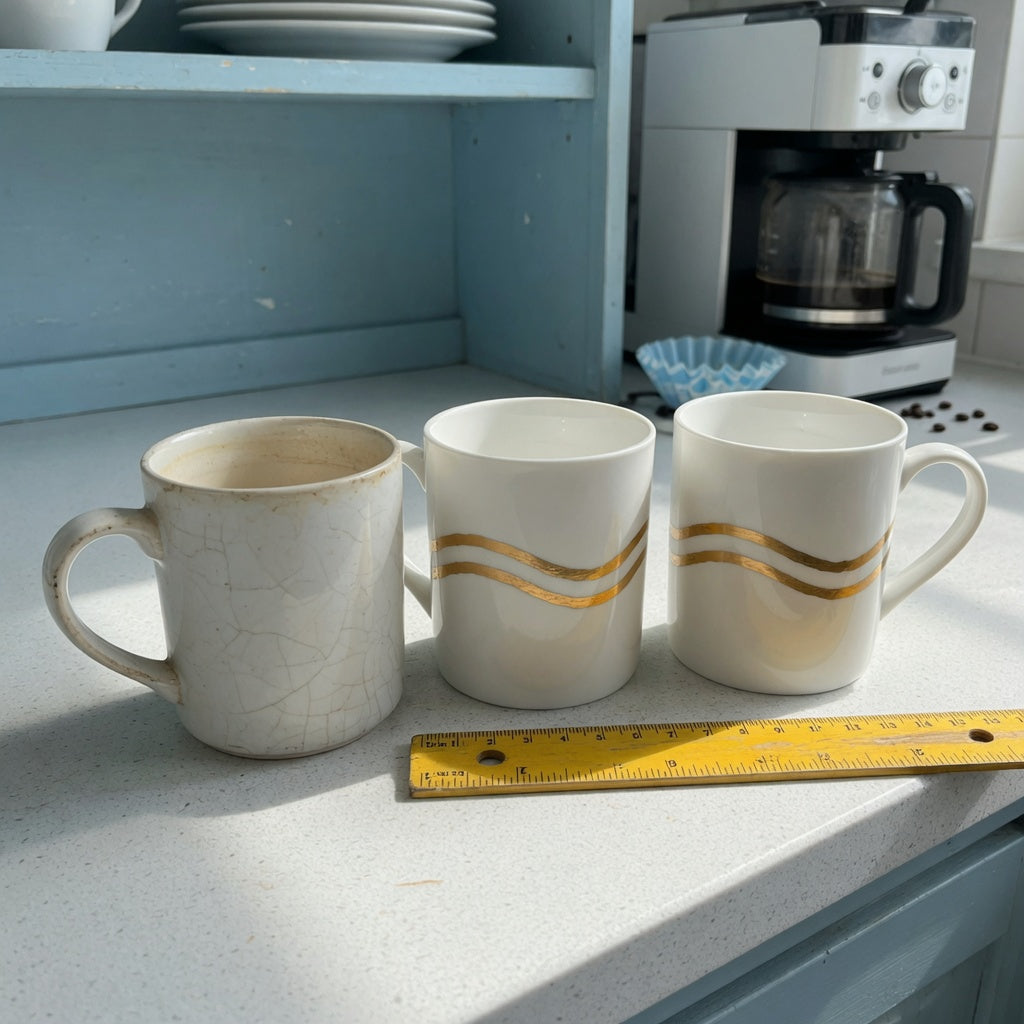
White and Gold Coffee Mug Replacement Purchase: Practical Checklist
Start with the mug you are retiring: its everyday fill, exterior height, handle clearance, and storage limits. This checklist compares two current white-and-gold wave mug forms while marking materi...
Read more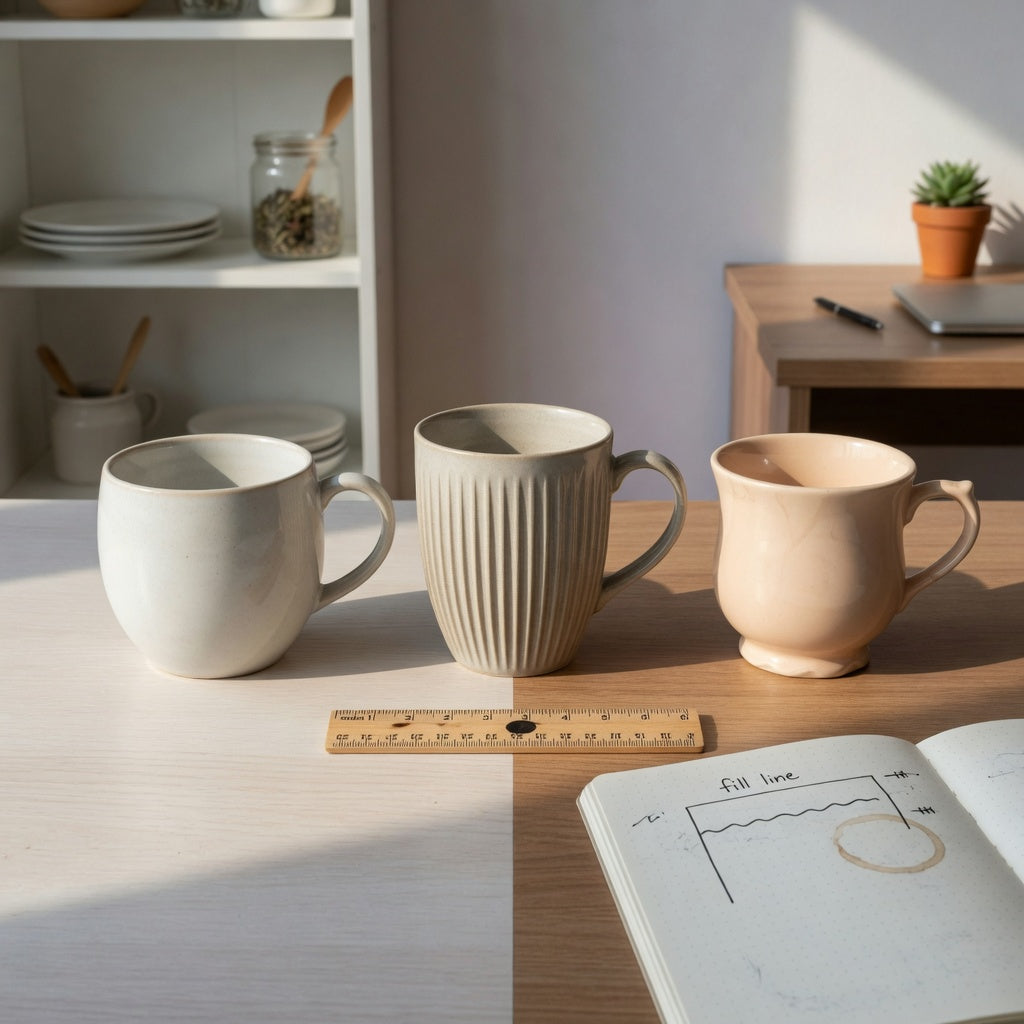
Minimalist Ceramic Mug Replacement Purchase Product Shortlist Guide
Replacing one mug is easier when you start with the old piece's actual limitation. This scenario-based shortlist compares CoffeifyMug's round, pleated, and retro ceramic options by listed capacity,...
Read more
Leave a comment
This site is protected by hCaptcha and the hCaptcha Privacy Policy and Terms of Service apply.