
Ceramic Sculptural Mug Compact Kitchen Practical Purchase Checklist
Reading time: about 10 minutes
A mug can fit comfortably in your hand and still fail the kitchen test. The handle projects into prep space, the cabinet door will not close, or the mug cannot sit beneath the coffee-machine spout. These problems matter more in a compact kitchen, where a few unmeasured centimeters can decide whether a mug is used daily or left on display.
Use this ceramic sculptural mug compact kitchen practical purchase checklist before choosing among CoffeifyMug's three confirmed forms: The Flow at 400 ml, the Ball Handle at 250 ml, and the Handbag at 310 ml. We sell these as three-dimensional designs, meaning the ceramic form itself creates the visual effect. Capacity and silhouette are confirmed here; exterior dimensions, appliance compatibility, stacking, and care permissions should be checked on the current product page or confirmed with our store before purchase.
Why does three-dimensional form change small-kitchen fit?
Surface artwork does not usually alter the space a mug occupies. Sculptural form can. A curved body may have different widest and deepest points, a rounded handle becomes part of the storage footprint, and a purse-shaped silhouette may need a different cabinet orientation from a straight cylinder.
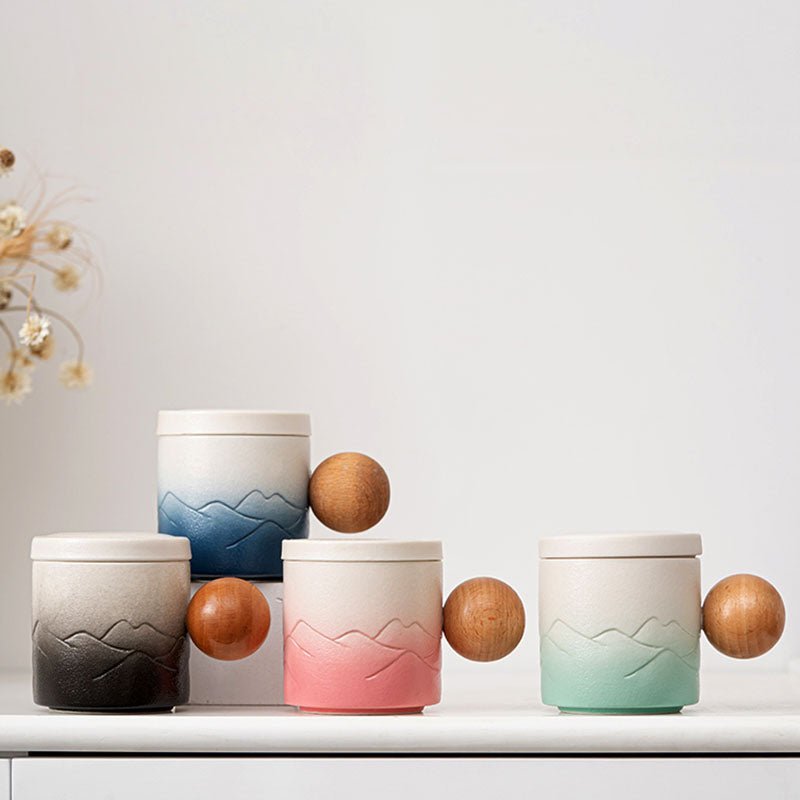
The distinction is easy to miss in product photography. The Flow 400 ml mug is defined by sculptural curves. The Ball Handle 250 ml mug places the visual emphasis on its rounded sculptural handle. The Handbag 310 ml mug uses a purse-shaped silhouette. Those descriptions tell you what makes each design distinctive, but they do not establish total height, width, depth, weight, or stackability.
That claim boundary is important. A 400 ml mug is not automatically taller than every 250 ml mug, and a lower capacity does not guarantee a smaller exterior footprint. Capacity measures how much the vessel is listed to hold. It does not replace exterior measurements.
Which capacity and silhouette match your daily pour?
In our store, we start with the amount a shopper actually drinks, then consider the form. This prevents a striking silhouette from distracting from an inconvenient capacity.
| Product | Confirmed catalog details | Reader situation | Verify before checkout |
|---|---|---|---|
| The Flow | 400 ml with sculptural curves | You normally prepare the largest serving among these three options and want the body of the mug to be the design feature. | Exterior dimensions, coffee-machine clearance, cabinet fit, and whether 400 ml matches your preferred fill level. |
| Ball Handle | 250 ml with a rounded sculptural handle | You prefer the smallest listed capacity in this comparison and want a handle-led form. | Total width including the handle, finger clearance, grip comfort, and available side-to-side shelf space. |
| Handbag | 310 ml with a purse-shaped silhouette | You want a capacity between the other two and specifically like an object-shaped mug for a desk or gift. | Widest and deepest points, storage orientation, drinking-rim access, and current care instructions. |
If you do not know your usual serving, measure it rather than guessing. Pour the amount you normally drink into a marked measuring jug. Compare that figure with 250 ml, 310 ml, and 400 ml, allowing room below the rim if you carry the mug between the kitchen and a desk.
You can open the unique coffee mugs collection to compare the available forms, but use each individual product page for its current details. Lifestyle images help you assess style. They should not be treated as scale drawings.
Measure the cabinet, counter, and coffee-machine slot
Measure the exact place where the mug will live. Whole-cabinet dimensions are less useful than the clear space between neighboring cups, shelf lips, hinges, doors, and other items that remain in place.
- Usable cabinet height: Measure from the shelf surface to the lowest obstruction above it. Include any shelf lip or under-cabinet fitting that reduces the opening.
- Door-closing depth: Measure from the back of the usable shelf to the inside of the closed door. A handle or curved edge that crosses that line can stop the door from closing.
- Side-to-side allowance: Record the width of one realistic mug slot, not the entire shelf. For the Ball Handle, the total width including its rounded handle is the relevant figure to verify.
- Coffee-machine clearance: Measure from the drip tray or platform used during brewing to the lowest point of the spout. Keep removable trays in the same position you use each morning.
- Counter depth: Check the area between the wall, appliance, and front edge. This matters if the mug will remain beside a kettle or machine rather than returning to a cabinet.
- Drying-rack space: Identify a stable place where the mug can drain without leaning against glassware or sitting across several narrow rack slots.
Write the maximum acceptable height, width, and depth on one note. If a required exterior measurement is not available on the product page, ask our team before ordering. Estimating from a photograph is especially unreliable with curved and object-shaped ceramics.
Your ceramic sculptural mug compact kitchen practical purchase checklist
The ceramic sculptural mug compact kitchen practical purchase checklist works because it separates confirmed product information from details that depend on your room, appliance, grip, and routine. Run through these steps in order:
- Measure your normal drink. Decide whether 250 ml, 310 ml, or 400 ml is closest to the amount you prepare.
- Choose the form intentionally. Pick sculptural curves, a rounded handle, or a purse-shaped silhouette because you want that three-dimensional feature, not because surface decoration made the mugs appear interchangeable.
- Record the storage slot. Measure usable height, width, and door-closing depth at the exact cabinet position.
- Verify total exterior dimensions. Include the handle and the widest point of the body. Capacity alone cannot answer this question.
- Check direct-brew clearance. If coffee dispenses into the mug, compare the mug's confirmed exterior height with the measured spout opening.
- Decide whether stacking is required. Do not assume a sculptural mug nests or stacks unless the current product information confirms it.
- Confirm care permissions. Look for explicit dishwasher and microwave guidance instead of treating all ceramic products alike.
- Plan the first inspection. On arrival, check the rim, base, body, and handle area before using the mug with a hot drink.
Which product fits each compact-kitchen scenario?
A smaller measured pour with a handle-first design
If your regular serving is at or below 250 ml and the handle is the sculptural feature you care about, start with the Ball Handle coffee and tea mug. Its confirmed advantage for this situation is capacity: it is the smallest of the three listed options. It is not automatically the smallest externally, so verify its total width and make sure a rounded handle suits your grip.
A middle capacity for a desk or purse-themed gift
For someone who normally pours around 310 ml and specifically enjoys a purse-shaped object, consider the Handbag coffee and tea mug. The recognizable silhouette gives the gift a clear theme when unboxed. Before choosing it for an office desk, measure the clear area beside the keyboard and confirm the recipient's washing routine.
The largest listed capacity with a curved body
If 250 ml or 310 ml would require a refill, the Flow coffee and tea mug provides the largest confirmed capacity here at 400 ml. It fits a shopper who wants a longer drink and prefers sculptural curves over an object-shaped outline. The next step is checking its exterior dimensions against the coffee-machine opening and upper-cabinet slot.
If none of those situations clearly matches, browse the sculptural and unique mug options with your measurements beside you. Eliminate any option that cannot be confirmed to fit, even if it is your favorite in the photograph.
What should you verify about ceramic care and delivery condition?
Ceramic identifies the product category, but it does not provide universal care instructions. We do not recommend assuming that a mug is dishwasher safe, microwave safe, freezer safe, or suitable for any other appliance unless the current product information explicitly says so.
- Before a dishwasher cycle: Confirm dishwasher compatibility. If approved, place the mug where its sculptural body and handle will not be struck by neighboring dishes or moving rack parts.
- Before microwave use: Look for an explicit microwave statement on the current product page or ask our store. Shape and material name alone are not enough to confirm appliance use.
- During hand washing: Follow the listed care directions and use a non-abrasive sponge unless instructed otherwise. Let the mug dry fully before returning it to a tight cabinet.
- During temperature changes: Avoid moving very hot ceramic directly into cold water. Abrupt temperature changes can stress ceramic.
- At gift unboxing or delivery: Inspect visually for chips at the rim or base, hairline cracks around the handle and body, and rough points along the drinking edge. Set the empty mug on a level counter and check that it sits securely before use.
A sculptural body can be intentionally asymmetrical, so visual irregularity is not automatically damage. A sharp rim, visible crack, loose section, or unstable base is different. Stop before using the mug for a hot drink and contact the store if its condition raises a safety concern.
When is a sculptural mug the wrong choice?
A different style will serve you better if cabinet efficiency matters more than three-dimensional form. Sculptural mugs are also a poor match when you need confirmed nesting, a car cup-holder fit, a sealed travel lid, or direct-brew compatibility but do not have the required exterior measurements.
Capacity can rule out all three options. If your normal drink exceeds 400 ml before adding ice, milk, or foam, none of these listed capacities fits that routine. A larger conventional mug is the practical choice. The same applies if you need a familiar open handle for a particular grip and cannot confirm that the Ball Handle's rounded form will be comfortable.
For a household that runs every mug through the dishwasher, choose a product with explicit dishwasher guidance. For a cabinet that depends on stacked sets, choose a straight-sided mug with confirmed stacking compatibility. A surface-decorated cylinder can still provide visual interest without requiring the same kind of sculptural-form planning.
Frequently asked questions
Which CoffeifyMug sculptural mug holds the most?
The Flow has the largest confirmed capacity of the three at 400 ml. The Handbag holds 310 ml, and the Ball Handle holds 250 ml. Capacity does not confirm which mug has the largest exterior dimensions, so check those separately.
Can I stack a sculptural mug in a small cabinet?
Do not assume that a curved, handle-led, or purse-shaped mug will stack or nest. Stacking compatibility is not one of the verified facts in this comparison. If stacking is essential, obtain explicit confirmation before buying or choose a conventional stackable design.
Are these ceramic sculptural mugs dishwasher and microwave safe?
This article does not assign dishwasher or microwave claims because those care permissions are not among the confirmed catalog facts supplied for the comparison. Review the current care information on the relevant product page or ask our team before using either appliance. Ceramic material alone does not establish appliance compatibility.
What measurements belong in a ceramic sculptural mug compact kitchen practical purchase checklist?
Record the cabinet slot's usable height, width, and door-closing depth, plus coffee-machine spout clearance and available drying space. Then compare those figures with the mug's total exterior dimensions, including its handle and widest sculptural point. If a needed dimension is unavailable, confirm it before checkout.
Is the 250 ml Ball Handle automatically the smallest mug?
It has the smallest listed capacity in this three-product comparison, but that does not prove it has the smallest exterior footprint. The rounded sculptural handle contributes to total width. Compare confirmed exterior measurements rather than ranking physical size by capacity.
For the next step, write down one target capacity and the maximum height, width, and depth your space accepts. Then open the unique coffee mugs collection, compare the three forms, and verify every measurement or care detail your routine depends on before placing the order.
More from our blog
Read more

Decaf Coffee Cup Compact Kitchen Practical Purchase Checklist
Compare the verified 170 ml, 200 ml, and 270 ml capacities, then check the details that determine real compact-kitchen fit: outer dimensions, handle clearance, care, and stackability. Each shopper ...
Read more
Heavy Ceramic Coffee Mugs Compact Kitchen Practical Purchase Checklist
Measure the cabinet opening, shelf depth, handle clearance, and lifting route before choosing a substantial ceramic mug. This checklist separates verified product details from the fit and care ques...
Read more
Leave a comment
This site is protected by hCaptcha and the hCaptcha Privacy Policy and Terms of Service apply.